
II. Diet and Nutrition
2. High-Fat Diet
a) Understand the Fat-Microbiota Link
Fat feeds you – but what is it feeding inside you?
High-fat diets, particularly those rich in saturated and trans fats, are associated with negative changes in the gut microbiota. While fats are essential macronutrients, excessive intake – especially from processed foods, red meat, or fried items – can reduce microbial diversity and favor the growth of pro-inflammatory bacteria. This shift may impair gut barrier integrity, leading to increased intestinal permeability or “leaky gut.” In turn, it contributes to low-grade systemic inflammation and may play a role in metabolic disorders, such as obesity, insulin resistance, and type 2 diabetes. Animal studies have shown that high-fat diets decrease levels of beneficial bacteria like Bifidobacteria and Lactobacillus, while increasing endotoxin-producing strains.
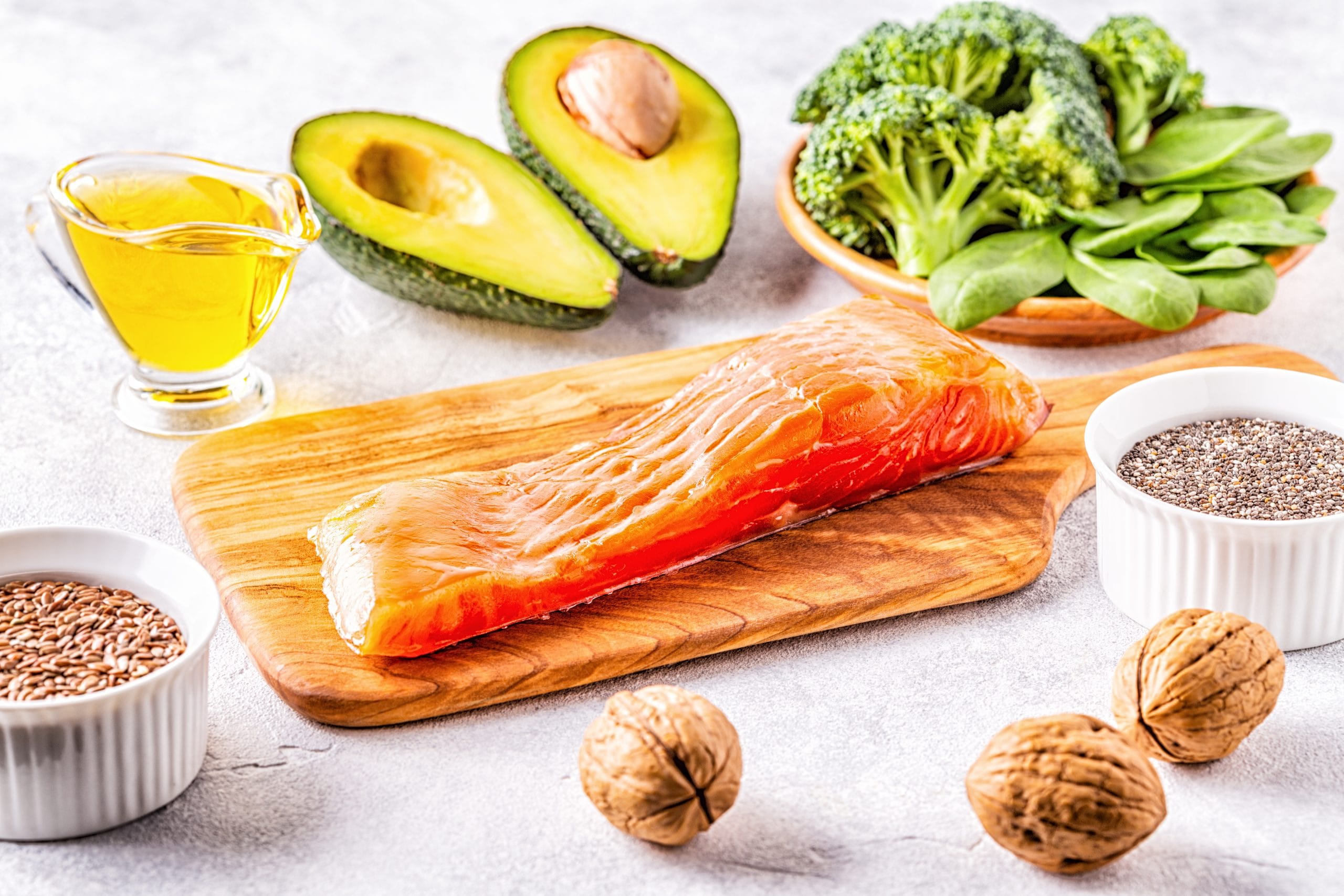
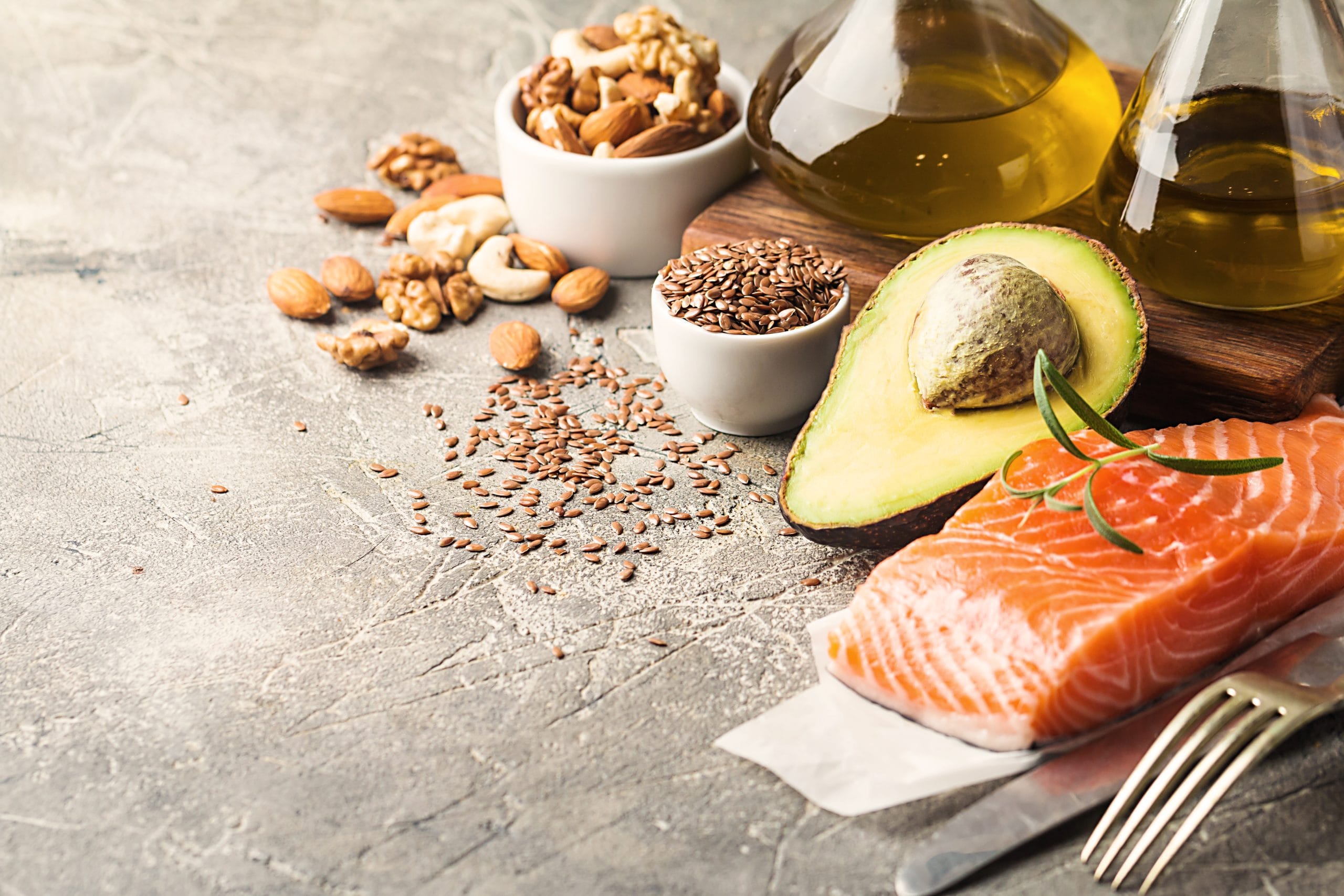
However, not all fats are equal – unsaturated fats from nuts, seeds, avocado, and oily fish may have neutral or even positive effects. Balancing fat sources and pairing them with fiber-rich foods is key to reducing harm. [1], [2], [3], [12]
Furthermore, recent research shows that not only fat type but also fatty acid chain length influences microbial and metabolic outcomes: medium-chain triglycerides (MCTs) are absorbed differently and can transiently reduce microbial diversity if consumed in excess, while short-chain fatty acids (SCFAs) – produced by microbial fiber fermentation – counteract the pro-inflammatory effects of high-fat diets and help preserve gut barrier integrity. [5], [13]
High-fat intake also alters bile secretion and composition, reshaping the gut environment. Increased bile acids promote the growth of bile-tolerant bacteria such as Bilophila wadsworthia and Alistipes, which can trigger inflammation. Secondary bile acids generated by microbial conversion act as signaling molecules through FXR and TGR5 receptors, linking fat metabolism to immune regulation. [1], [2], [7]
Beyond metabolic effects, fat-driven dysbiosis has been linked to the gut–brain axis. Animal studies show that sustained high-fat feeding induces neuroinflammation and alters appetite-regulating pathways via changes in microbial metabolites and neurotransmitter-producing bacteria (e.g., Lactobacillus reuteri, Bifidobacterium adolescentis). [10], [11], [15]
b) Daily Habits to Manage Fat Intake
- Focus on fat quality over sheer quantity: Favor extra virgin olive oil, flaxseed oil, avocado, nuts, and seeds as primary fat sources. Eliminate hydrogenated oils and industrial trans fats completely. [12]
- Control portion size while respecting daily limits: Even beneficial fats are calorie-dense. Aim for a total of 55–65 g fat per day, of which no more than 20 g should come from saturated fats. Use measuring spoons for oils and limit cheese, cream, and fatty meats to occasional use. [12]
- Pair fats with fermentable fiber: Every fat-containing meal should be accompanied by high-fiber foods such as legumes, vegetables, or whole grains to maintain microbial diversity and slow fat absorption. [5], [13]
- Restrict ultra-processed fat sources: Minimize fried foods, processed meats, creamy snacks, and packaged pastries, as they are rich in harmful fats and additives that disrupt the gut barrier. [3], [4]
- Integrate omega-3s regularly: Consume fatty fish (e.g., salmon, sardines, mackerel) at least 2 times per week, or rely on plant-based options such as chia seeds, flaxseeds, and walnuts for a steady supply of microbiota-supportive omega-3s. [6]
- Time fats strategically: Incorporate most fats earlier in the day (e.g., avocado toast at breakfast), and keep evening meals lighter and fiber-dominant to reduce nocturnal endotoxemia. [8], [9]
- Track and adjust: Use a food log to monitor fat intake and ensure it aligns with the microbiota-restoration goal of 25–30% of daily energy from fat with a two-thirds majority from unsaturated sources. [12]
Whenever possible, choose minimally processed, cold-pressed oils and whole-food fat sources. Heating oils at high temperatures produces lipid peroxidation products that can damage intestinal epithelial cells and increase oxidative stress, whereas antioxidant compounds naturally present in unrefined oils (vitamin E, polyphenols) protect the microbiota. [3], [4]
c) Microbiota Benefits
- High-fat diets without fiber support reduce microbial richness and disrupt gut ecosystem balance, favoring pro-inflammatory taxa over beneficial commensals. [1], [3], [12]
- Excess saturated fat (>10% of daily calories) increases endotoxin levels in the bloodstream through microbial translocation, triggering chronic low-grade inflammation and weakening gut barrier function. [4], [13]
- Fat quality shapes microbial composition: diets high in saturated and processed fats promote bile-tolerant, pro-inflammatory bacteria such as Bilophila wadsworthia and Alistipes, while diets emphasizing unsaturated fats (olive oil, nuts, fatty fish) sustain more diverse and beneficial strains. [1], [2], [12]
- Fiber is the corrective factor: when fats are paired with ≥40 g/day of fermentable fibers and resistant starches, microbial communities shift toward short-chain fatty acid (SCFA)-producing species, improving barrier integrity and systemic metabolic health. [5], [13]
- Unsaturated fats, especially omega-3s, counteract inflammatory shifts: they enhance the abundance of butyrate-producing bacteria and may mitigate the endotoxemic effects of saturated fat intake. [6], [12]
- High-fat diets impair tight junction proteins in the gut wall, but this damage can be buffered by a plant-forward, fiber-rich diet that restores mucosal integrity and balances bile acid metabolism. [3], [7], [13]
- Balanced fat intake (25–30% of daily calories, mostly unsaturated) within a high-fiber framework supports microbiota restoration, preserves microbial diversity, and reduces the risk of metabolic and inflammatory disorders. [1], [2], [3], [5], [6], [7], [12], [13]
Emerging evidence suggests that individual responses to dietary fat depend on baseline microbiota composition and host genetics (e.g., FADS and APOE variants), influencing lipid metabolism, endotoxemia risk, and inflammatory tone. Personalizing fat type and ratio (omega-6 : omega-3, MUFA : PUFA) according to these factors may optimize microbiota restoration outcomes. [16], [18]
d) Suggestion Template
- Keep total fat intake at 25–30% of daily calories (≈55–65 g/day on a 2000 kcal diet).
- Limit saturated fat to...
The sugestion template is only available for signed in Patients under treatment and their Medical Personnel.
e) Integrating Fat with Fiber in the 7-Day Program
The original 7-Day Fiber Program was designed to deliver 40–50 g of fiber daily, a level shown to support microbial diversity and short-chain fatty acid (SCFA) production. While fiber remains the cornerstone of microbiota restoration, dietary fat is equally important to regulate bile acid metabolism, maintain cell membranes, and modulate inflammation. The challenge lies in balancing fat quality and quantity: excess saturated and trans fats disrupt gut homeostasis, while monounsaturated and polyunsaturated fats—particularly omega-3 fatty acids—can support beneficial bacterial populations.
In this revised version, we have added specific fat sources or accounted for fats already present in the original plan. The result is a more balanced program that maintains high fiber intake while keeping daily fat in the optimal range of 55–65 g (25–30% of calories), with saturated fat consistently below 10% of total energy. Each day specifies the exact type and amount of fat included at breakfast, lunch, and dinner, ensuring the synergy of fiber and fat for microbiota restoration.
The integrated plan is only available for signed in Patients under treatment and their Medical Personnel.
[1] David LA, et al. Diet rapidly and reproducibly alters the human gut microbiome. Nature. 2014. Available at: https://pmc.ncbi.nlm.nih.gov/articles/PMC3957428/ pmc.ncbi.nlm.nih.gov
[2] Devkota S, et al. Dietary-fat-induced taurocholic acid promotes pathobiont expansion and colitis in IL10−/− mice. Nature. 2012. Available at: https://pubmed.ncbi.nlm.nih.gov/22722865/ PubMed
[3] Rohr MW, Narasimhulu CA, Rudeski-Rohr TA, Parthasarathy S. Negative effects of a high-fat diet on intestinal permeability: a review. Advances in Nutrition. 2020. Available at: https://pubmed.ncbi.nlm.nih.gov/31268137/ PubMed
[4] Erridge C, et al. A high-fat meal induces low-grade endotoxemia. Atherosclerosis. 2007. Available at: https://pubmed.ncbi.nlm.nih.gov/17991637/ PubMed
[5] Nogal A, et al. The role of short-chain fatty acids in the interplay between gut microbiota and diet. Nutrients. 2021. Available at: https://pmc.ncbi.nlm.nih.gov/articles/PMC8007165/ pmc.ncbi.nlm.nih.gov
[6] Watson H, et al. A randomised trial of the effect of omega-3 polyunsaturated fatty acid supplements on the human intestinal microbiota. Gut. 2018. Available at: https://pubmed.ncbi.nlm.nih.gov/28951525/ (Open access preprint: https://eprints.whiterose.ac.uk/121282/) PubMed+1
[7] Wahlström A, et al. Intestinal crosstalk between bile acids and microbiota and its impact on host metabolism. Cell Metabolism. 2016. Available at: https://www.cell.com/cell-metabolism/fulltext/S1550-4131(16)30223-6 cell.com
[8] Leone V, et al. Effects of diurnal variation of gut microbes and high-fat feeding on host circadian clock function and metabolism. Cell Host & Microbe. 2015. Available at: https://www.cell.com/cell-host-microbe/fulltext/S1931-3128(15)00123-7 cell.com
[9] Zarrinpar A, et al. Diet and feeding pattern affect the diurnal dynamics of the gut microbiome. Cell Metabolism. 2014. Available at: https://pmc.ncbi.nlm.nih.gov/articles/PMC4255146/ pmc.ncbi.nlm.nih.gov
[10] Thaler JP, et al. Obesity is associated with hypothalamic injury in rodents and humans. Journal of Clinical Investigation. 2012. Available at: https://www.jci.org/articles/view/59660 jci.org
[11] Cryan JF, Dinan TG. Mind-altering microorganisms: the impact of the gut microbiota on brain and behaviour. Nature Reviews Neuroscience. 2012. Available at: https://pubmed.ncbi.nlm.nih.gov/22968153/ PubMed
[12] Schoeler M, et al. The interplay between dietary fatty acids and gut microbiota influences host metabolism and hepatic steatosis. Nature Communications. 2023. Available at: https://www.nature.com/articles/s41467-023-41074-3 Nature
[13] Kelly CJ, et al. Crosstalk between microbiota-derived short-chain fatty acids and intestinal epithelial HIF augments tissue barrier function. Cell Host & Microbe. 2015. Available at: https://www.sciencedirect.com/science/article/pii/S1931312815001225 sciencedirect.com
[14] Cani PD, et al. Metabolic endotoxemia initiates obesity and insulin resistance. Diabetes. 2007. Available at: https://diabetesjournals.org/diabetes/article/56/7/1761/12590/ diabetesjournals.org
[15] Mayer EA, et al. The microbiota–gut–brain axis: from basic research to clinical implications. Annual Review of Medicine. 2022. Available at: https://www.annualreviews.org/content/journals/10.1146/annurev-med-042320-014032 annualreviews.org
[16] Zeevi D, et al. Personalized nutrition by prediction of glycemic responses. Cell. 2015. Available at: https://www.cell.com/fulltext/S0092-8674(15)01481-6 cell.com
[17] Reyes-Pérez SD, et al. FADS1 genetic variant and omega-3 supplementation are associated with changes in fatty acid composition in red blood cells of subjects with obesity. Nutrients. 2024. Available at: https://pmc.ncbi.nlm.nih.gov/articles/PMC11509948/ pmc.ncbi.nlm.nih.gov
[18] Minihane AM, et al. Impact of genotype on EPA and DHA status and responsiveness to increased intakes. Nutrients. 2016. Available at: https://www.mdpi.com/2072-6643/8/3/123 mdpi.com