


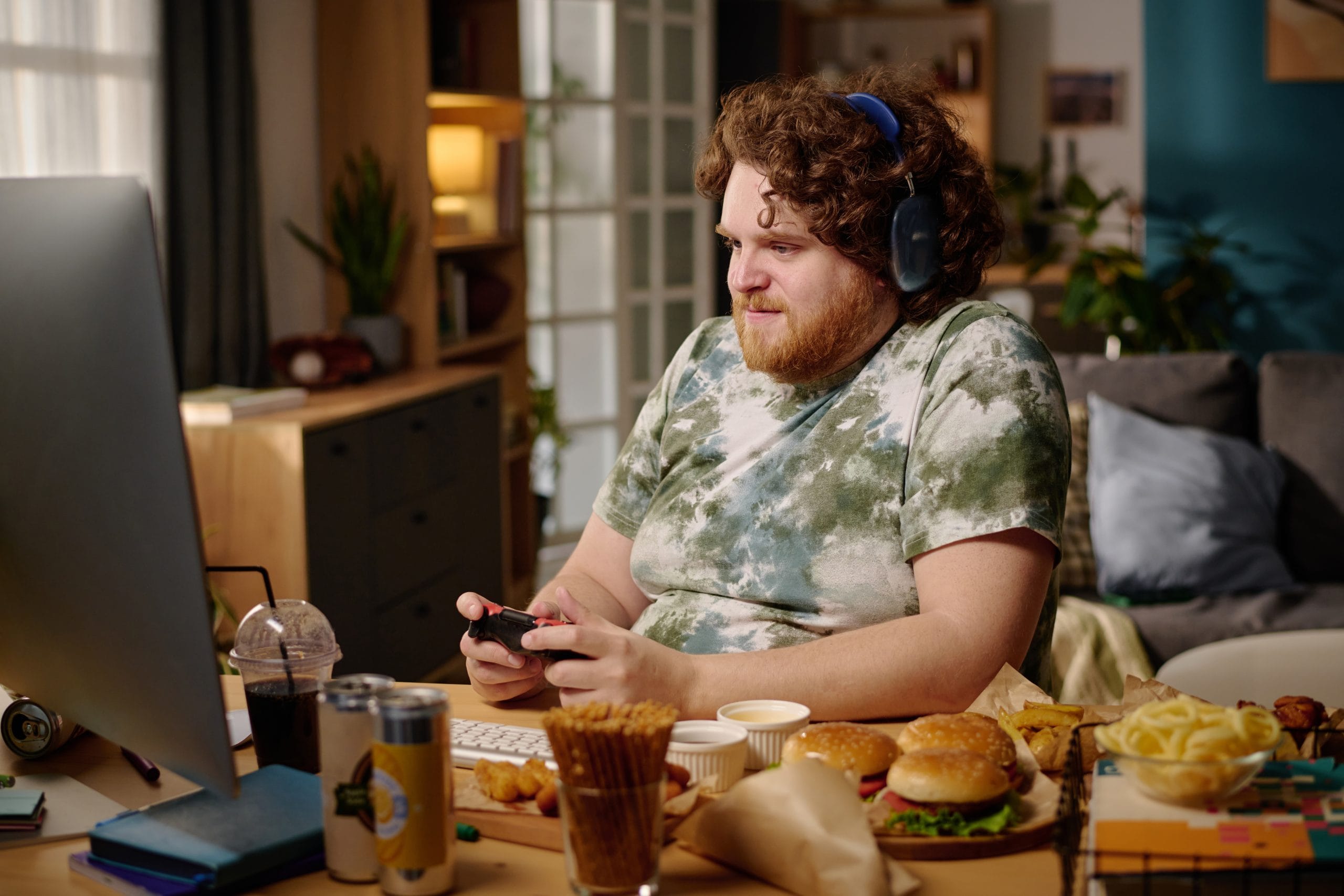
III. 2 - Sedentary Lifestyle
a) Sedentary Behavior – Starving Your Microbiota Through Inactivity
A sedentary lifestyle affects more than muscle strength or calorie balance.
Over time, low day-to-day movement is associated with a gut environment that is less stable and less adaptable (flexible), especially when it is paired with other common features of inactivity such as weight gain, poorer sleep, and higher stress. What matters here is not athletic performance, but the steady physiological “signal” that regular movement provides to the digestive system.
Human studies and reviews generally suggest that people who are more physically active tend to show more favorable microbial patterns, including differences in the abundance of short-chain fatty acid (SCFA)–related taxa and, in some cohorts, higher overall diversity. At the same time, the literature is clear about its limits: results vary widely between studies, and diet, body composition, medication use, and sampling methods can strongly influence what is observed. In other words, the direction is consistent, but the details are not always identical.
One practical pathway is intestinal transit. Reduced movement can slow gut motility, making constipation more likely and prolonging the contact time between luminal contents and the intestinal wall. This does not automatically “cause dysbiosis,” but it can create conditions in which microbial fermentation patterns and metabolite exposure shift in an unfavorable direction—particularly in individuals who are already sensitive to gastrointestinal disturbances.
Some studies comparing active and sedentary groups report higher levels of SCFA-related bacteria in active participants, including taxa such as Faecalibacterium prausnitzii and Roseburia, and in some cohorts Akkermansia muciniphila. These findings are important, but they should be read as population-level associations, not universal rules. Inactivity does not guarantee a specific microbial profile, and activity does not guarantee the opposite—yet the overall trend supports the clinical intuition that movement helps maintain a more resilient gut ecosystem.
A second pathway is barrier and immune regulation. SCFAs—especially butyrate—are widely discussed because they support epithelial biology and immune signaling. It is therefore plausible that reduced SCFA-supporting activity patterns could contribute to low-grade inflammatory tone in some people. However, claims about “endotoxemia” or “translocation” here and now should remain cautious in writing: the evidence is suggestive, but human markers are indirect and influenced by many confounders.
A key point, often missed in popular summaries, is that the evidence for sedentary behavior as an independent factor is still developing. Reviews note that direct evidence on sedentary time is more limited than evidence on exercise training, and separating inactivity from diet and adiposity is methodologically difficult. For a book chapter, the most accurate phrasing is that low activity may contribute beyond diet alone, but it rarely acts in isolation.
This becomes clinically relevant in chronic neurological disorders such as multiple sclerosis or Parkinson’s disease, where mobility can be reduced for long periods. In MS, bowel dysfunction (including constipation) is common and may reflect neurological and autonomic factors as well as reduced movement, so gut-support strategies often need to work within those constraints. In Parkinson’s disease, mechanistic links between gut microbes and motor features are supported strongly in animal models; these data are valuable, but they should not be presented as definitive proof of causality in humans.
From a clinical perspective, the takeaway is simple: movement is a supportive input for gut physiology, not a fitness target. Even small, feasible increases in daily activity—short walks, light resistance work, or movement breaks—may help gut motility and support a more robust microbial ecosystem. When mobility is limited, gut-focused care usually needs to be broader and more individualized, rather than relying on a single lever.
b) How to Counteract Sedentary Lifestyle-Induced Dysbiosis
- From a clinical standpoint, change tends to be most sustainable when physical activity is introduced gradually and predictably. This allows gut physiology and microbial function to adapt step by step, rather than being challenged by abrupt increases that may provoke fatigue or gastrointestinal symptoms.
- The initial phase commonly focuses on reducing prolonged, uninterrupted sitting, as even frequent low-level movements can improve intestinal transit and peripheral circulation before any formal exercise program is in place.
- Aerobic movement is typically introduced at low intensity, where metabolic demands remain manageable and stress-related hormonal responses are limited. At this level, activity can support insulin sensitivity and gut motility without placing excessive strain on the gastrointestinal system.
- Over time, benefits are more likely to persist when movement becomes part of the daily structure—embedded into work routines, commuting patterns, or household activities—rather than being confined to isolated exercise sessions.
- Early inclusion of outdoor activity may provide additional regulatory effects. Natural environments are often associated with lower perceived stress and broader immune engagement, factors that indirectly support microbial stability.
- Light resistance work is usually added once basic tolerance for regular movement has been established. This supports muscle mass and glucose handling, which in turn shape the metabolic environment in which the gut microbiota operates.
- Nutritional adjustments are best aligned with these changes. A gradual increase in fermentable substrates, particularly dietary fiber, helps match improving motility and reduces the likelihood of bloating or discomfort during adaptation.
- Attention to sleep regularity remains central, as circadian alignment influences gut motility, immune signaling, and microbial rhythmicity. Disrupted sleep can undermine gains achieved through increased movement.
- Stress regulation is often addressed alongside physical activity. Psychological strain and inactivity can amplify one another’s effects on gut sensitivity, so supporting autonomic balance is an integral part of the process.
- Tracking everyday non-exercise movement offers a practical way to monitor progress. Increases in habitual activity often reflect meaningful lifestyle change more accurately than isolated workout metrics.

c) Microbiota Effects
- Physical inactivity is associated with a reduced abundance of key SCFA-producing bacteria (e.g., Faecalibacterium prausnitzii, Roseburia spp.) and with a decline in mucus-associated taxa such as Akkermansia muciniphila.
- It contributes to a decrease in overall microbial diversity, weakening the ecological resilience and functional redundancy of the gut ecosystem.
- Reduced physical activity can slow intestinal transit time, which may favor bacterial overgrowth and increase the risk of constipation-related dysbiosis.
- Stagnant luminal conditions and low-grade inflammation may promote expansion of pathobionts (e.g., Enterobacteriaceae, certain Clostridioides).
- Inactivity is linked to increased intestinal permeability, facilitating translocation of microbial metabolites and contributing to systemic inflammation.
- Lower levels of microbiota-derived metabolites impair immune regulation within gut-associated lymphoid tissue (GALT) and reduce mucosal tolerance.
- Sedentary lifestyle–associated dysbiosis may aggravate metabolic disturbances, including insulin resistance and adiposity.
- Microbiota alterations related to inactivity can negatively influence mood, cognitive performance, and stress resilience via the gut–brain axis.
- Lack of exercise amplifies the detrimental impact of poor dietary patterns, delaying restoration of a balanced microbial community.
- Decreased production of beneficial SCFAs (butyrate, propionate, acetate) compromises epithelial integrity, neuroendocrine signaling, and metabolic homeostasis.

d) Suggestion Templates
- Try to interrupt sitting every 30–60 minutes with standing, light walking, or simple movement.
- Aim to increase daily movement gradually, rather than relying on occasional intense exercise.
- Include easy aerobic activity (walking, cycling, swimming) most days to support bowel rhythm and metabolic balance.
- Add light resistance exercises 2–3 times per week to maintain muscle mass and glucose control.
- Avoid pushing through persistent fatigue or digestive discomfort; recovery is part of gut health.
- Spend time moving outdoors when possible to support stress regulation and immune balance.
- Increase dietary fiber slowly, in parallel with rising activity levels, to avoid bloating.
- Pay attention to sleep regularity, as poor sleep can counteract the benefits of movement.
- Use low-stress movement (stretching, mobility, breathing) to calm the gut–brain axis.
- Focus on consistency over intensity—small daily steps support microbiota adaptation better than extremes.