

Quickstart: triage and launching the first course
You don't have to understand everything before you can start getting better. This chapter gets you going within three days: where you stand right now, which course is right for you, and how to take the first capsules correctly.
With recurrent Clostridioides difficile infection, time matters, which is why this book does not begin with the science but with action. The aim of the first three days is simple: to assess how severe your condition is right now, on that basis to start the appropriate DiffBiome course together with your treating physician, and to learn how to take the capsules correctly. The "why it works" and the full lifestyle change can wait for the coming weeks — for now the task is to get your recovery started. If you experience any of the warning signs listed at the end of the chapter, do not sit reading this book — turn to a doctor immediately!
How severe is it? — a quick assessment
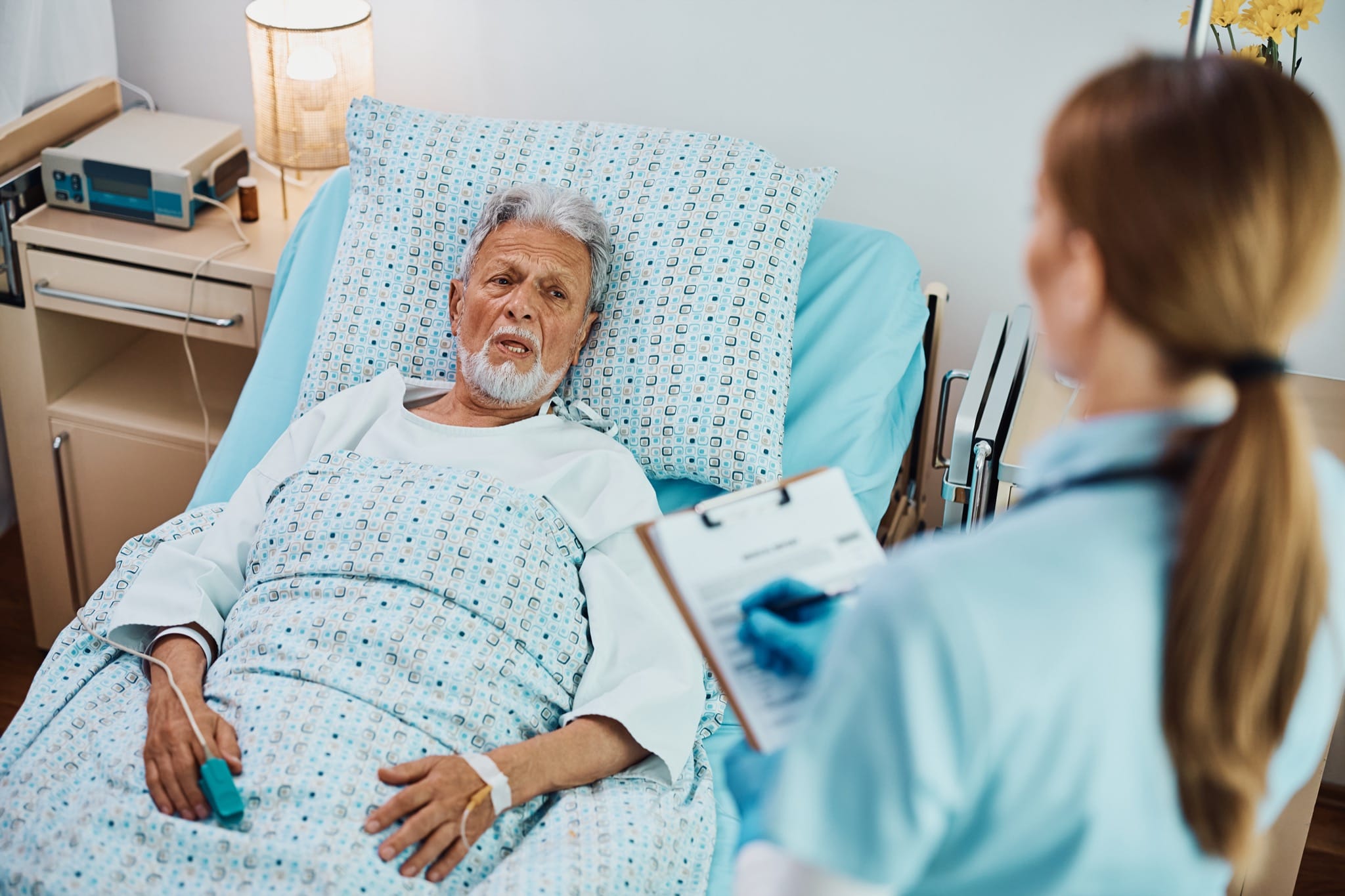
The first step of treatment is to assess how severe your condition currently is, because this determines the treatment intensity you should begin with. For this, your treating physician uses a simple score (called the SIS — Symptom Severity Scale): a few questions about your symptoms, your previous relapses and your risk factors, from which a number and a category emerge. You don't need to know this by heart — the key point is that the category tells you whether your condition can be managed at home, or whether medical, possibly hospital, care is needed.
Broadly speaking there are three situations. In a mild case the emphasis is on fluid replacement and observation, and often a lower-intensity treatment together with lifestyle change is already enough. In a moderately severe case the actual DiffBiome course begins, with a few capsules a day, under your treating physician's supervision. In a severe case a higher number of capsules, a higher-density preparation and closer medical follow-up are needed — here hospital admission is not an overreaction but the only acceptable, safe path.
image3
The triage is always carried out by your treating physician, because they see the whole picture. Your job right now is simply to report your symptoms honestly — especially the daily number of stools, the consistency of the stool, and whether you have seen any blood — and to recognise those signs where you should not wait but ask for help at once. If you would like to speed up the process, our own medical colleagues can help assess the severity of your condition: Link
Launching the course
Once the triage is done, your treating physician (or the MicroBiome Bank team) selects the DiffBiome preparation that suits you and its daily dose. The most common form of home treatment is DiffBiome 30(V)+: a dark glass bottle containing 30 capsules, which corresponds to roughly a 7–10 day course; the daily number of capsules (2–5) is set by your category. The "30" indicates the number of capsules, and the Roman numeral in brackets indicates the density — the more concentrated a preparation is, the fewer capsules are needed for the same effect. You can read more about capsule density here: Link
The key point is to launch the course with medical help: using DiffBiome capsules requires the supervision of a doctor experienced in FMT, and the exact preparation, the daily number of capsules and the duration are tailored by them to your condition. The more severe the category, the higher the starting daily dose in capsules and the longer the recovery takes. If in the first days your complaints — especially the daily number of stools — do not decrease, your doctor may raise the daily dose or switch to a higher-density, hospital preparation (HospBiome).
image4
Don't be put off by the thought that it is "only" a capsule. The living gut flora it contains, sourced from a rigorously screened donor, replaces exactly what the infection and the antibiotics wiped out — and what probiotics cannot restore — and this is precisely what durably pushes the pathogen back. The details are covered in the following chapters; for now the most important thing is that you start feeling better.
How to take it correctly
Taking it correctly is just as important as the capsule itself. In the morning, on an empty stomach, take the prescribed number of capsules with plenty of water, swallowing them whole — do not chew or open them. About thirty minutes later, drink another large glass of fluid; after that you can have breakfast, take your other medications and start your usual daily routine. Never take the capsules with alcohol or a hot drink, as these can harm the living bacteria.
Two things that matter a great deal: if you are still taking an antibiotic, finish it — on medical advice — at least 48 hours before starting DiffBiome, otherwise the antibiotic would also destroy the freshly delivered flora. And during the course, stop any probiotic preparations, unless your doctor advises otherwise. The capsules contain many thousands of strains, a probiotic at most a few dozen — it does not seem a logical supplement. Keep the unopened bottle in the refrigerator, in a dark place, standing upright.
The tool for triage is the SIS (Symptom Importance Scale, Clinical protocol guide v2.1): two independent subscores — A-SIS (acute severity, max 44 points) and P-SIS (prognostic/recurrence risk, max 56 points), totalling 0–100 points; 23 weighted variables from four domains (patient-reported symptoms and their severity, laboratory results, prior treatment data, risk factors).
*The five treatment categories directly specify the recommended preparation and its dosing:
- 0–24 (mild) home treatment, fluid replacement, observation (no capsule needed);
- 25–39 (moderate) DiffBiome 30(V)+ 1–3 capsules/day, tapering from day 10 or once symptoms settle;
- 40–59 (moderate–severe) DiffBiome 30(V)+ intensive 3–6 capsules/day, tapering from day 20;
- 60–79 (elevated) hospital admission may be required, intensive protocol under medical supervision, 6+ capsules/day starting dose;
- 80–100 (intensive) immediate hospital admission, HospBiome 5(XX) or 5(L), 5 capsules/day.*
Clinical override (independent of the calculated score): on detecting critical signs (suspected toxic megacolon, fulminant colitis, severe dehydration, sepsis criteria) → immediate hospital admission is required. The SIS is a decision-support, not a decision-making tool; automatic triage must not be carried out without medical review. Pathway reassignment: persistent SIS < 40 → dysbiosis pathway (FindBiome compatibility test → personalised TransferBiome); SIS ≥ 50–60 in a dysbiosis/IBS/IBD patient → temporarily the acute CDI pathway. (Source: Clinical protocol guide v2.1, May 2026.)
*Most commonly used capsules (v2.1):
- home — DiffBiome 30(V)+ (pooled, fivefold density, moderate–severe SIS 25–59; 2/3/4–12 capsules/day depending on the band) and DiffBiome 15(V) (first line, for laboratory-confirmed CDI without antibiotics — physician-dispensed only);
- hospital — HospBiome 5(L) (50× density, induction, min. 3 days), 5(XX) (20× density, continuation if the stool count decreases), 5(V) (5× density, late phase).
The density system refers to 150 g of donatum: I ≈ 1200, II ≈ 600, V ≈ 240, X ≈ 120, XX ≈ 60, L ≈ 24 capsules produced from a single donation. Hyperbolic model: a more severe condition → a more concentrated and/or a higher number of capsules. Tapering by band from day 10/20/30. The tools of the dysbiosis pathway: FindBiome (4×15 capsules, donor–recipient compatibility test) → TransferBiome (60, 2–5 capsules/day, min. 60 days, then tapering). Regulation: "Medical Laboratory Services (869015)", SoHO; tied to medical supervision.*
Today your treatment begins! Together with your treating physician, complete the necessary assessment, and take the first dose of capsules — correctly. Start keeping the diary too — it will be your guide to recovery over the next 90 days.
- Triage with the treating physician (SIS); determining the preparation and the daily number of capsules;
- The first dose in the morning, on an empty stomach, with plenty of water; more fluid 30 minutes later;
- Antibiotic: if you took one, check that you finished it at least 48 hours before taking the first capsule;
- Starting the diary: date, preparation and dose (capsules/day), LOT number, daily number of stools, Bristol value, bloating, fluid intake, well-being.
Today the goal is continuity: the same intake routine and conscious fluid replacement, because diarrhoea entails the loss of a lot of fluid.
- Taking the daily dose according to yesterday's routine (morning, on an empty stomach, with plenty of water);
- Fluids: on top of your usual intake, an extra glass of clean, still water after every looser stool;
- Diary: recording the number of stools, the Bristol-scale rating, bloating, fluids, well-being;
- Watch for the warning signs (see the box at the end of the chapter)!
Today, assess briefly: is your condition improving, holding steady or worsening? Share this with your treating physician too!
- Taking the daily capsule dose;
- Diary: the 3-day stool-count and Bristol trend in one place;
- If the number of stools does not decrease, alert your doctor (the capsule dose may need to be raised relative to the original classification);
- If any warning sign appears → see a doctor immediately;
- Sleep from now on: keep a fixed wake-up time and get natural light within 10–15 minutes of waking — a stable daily rhythm gives the transplanted flora a stable home.
🍽️ Eating during these days
The first three days are about triage, the safe launching of the course and fluid replacement — and your eating serves the same purpose. Since at this point diarrhoea and dehydration are the main danger, a gentle, firming diet is what belongs on your table now: plenty of fluids, easily digestible foods and soluble fibre. Soluble fibre forms a gel in water, which slows the passage of bowel contents and thus supports a firmer stool; and plenty of fluids replace what the looser stool takes away. Your concrete tasks during these three days: on the first day take the first dose in the morning, on an empty stomach, with plenty of water, and 30 minutes later drink another large glass of fluid; on the second and third days keep to this routine, and after every looser stool drink an extra glass.
In this early phase there is not yet a daily plant — the Plant Calendar only starts from day 15. For now the goal is for your bowel to settle, so stay with easily digestible, gentle foods (for example boiled, steamed or peeled), and avoid raw, coarse, strongly gas-forming foods. Building up a varied, diverse diet can wait for the coming weeks, when your symptoms settle.
In the first three days, record daily:
- DiffBiome dose (capsules/day) and the LOT number;
- daily number of stools;
- stool Bristol scale (1–7);
- bloating (0–5);
- bloody stool (yes/no);
- fluid intake (litres);
- well-being (1–5).
- Movement: type + minutes, step count (target/actual)
- Stress level (1–5) and mood (1–5)
- Sleep (hours + quality 1–5)
Don't wait with the book if you experience any of the following: strong, cramping abdominal pain or a tense, tender abdomen; high fever; signs of dehydration (you barely pass urine, dizziness, weakness, confusion); fresh blood in the stool; or if you feel so unwell that you cannot get up. These situations require urgent medical care — the DiffBiome course does not replace the hospital at such times.
These three days are about getting your recovery started: about the right triage, the safe beginning of the course, and starting the diary. Understanding and the lifestyle change build up step by step over the coming weeks — for now your job is to make a start.
#Cdifficile #DiffBiome #gyorsindítás #SISbesorolás #kapszulabevétel #vöröszászlók