
Leek
The Welsh national vegetable — milder onion aroma, same fructan + quercetin foundation.
In 1 minute
What does it provide? Inulin-type fructans — ITF (soluble prebiotic fiber, in the white part approx. 3–10 g/100 g) and quercetin glycosides (flavonoid antioxidant, mainly in green leaves) — together selective bifidogenic effect (dose-dependent increase in Bifidobacterium ratio) and SCFA production (butyrate, propionate). Sulfur compounds (thiopropyl sulfoxides) provide mild anti-aggregant effect.
How much? The white part of 1 medium leek (≈ 80–100 g) cooked into food 2–3×/week; dark green leaf is unlimited for IBS-sensitive too (low-FODMAP). In prebiotic RCTs the ITF effect appears with 5–8 g/day fructan intake over 4 weeks.
When to avoid? Large doses during warfarin/DOAC therapy (vitamin K + anti-aggregant effect, INR monitor), IBS elimination phase (white part — high FODMAP), active GERD flare, Allium allergy (IgE-mediated), severe kidney disease with potassium restriction (≈ 180 mg/100 g), 2 weeks before scheduled surgery.
Onions have been cultivated since ancient times in the Mediterranean and Near East; classical sources such as Theophrastus's Historia Plantarum discuss "kitchen-garden species" including the onion family in detail. Leek's distinct cult, however, traces back to imperial Rome: legend has it that Emperor Nero got the nickname "Porrophagus," meaning "leek-eater," because as a heroic singer he consumed large daily portions of leek to preserve his voice — this strange imperial diet remained one of the era's frequently cited anecdotes. According to Welsh tradition, in the 7th century Saint David recommended to his soldiers that they pin leeks to their helmets in the battle against the Saxons for distinction — leek then became one of Wales's national symbols, and still appears today on March 1, Saint David's Day, in the province's ceremonial dress.
In the Middle Ages, royal and gardening decrees — including Charlemagne's famous Capitulare de villis — listed onion among the obligatory plants in royal estates; folk medicine from Europe to Asia used it as a digestion-supporting, expectorant, and "warming" plant. Leek became particularly fundamental in Northwestern European cuisines — it became a reliable source of winter greens in Belgian, Dutch, and French peasant dishes, and the foundation of classic dishes such as vichyssoise. Overall: the onion family has been food and medicinal herbs for millennia, with continuous written mentions from antiquity. (Wikipedia, gardenvisit.com)
🔬 Scientific Background
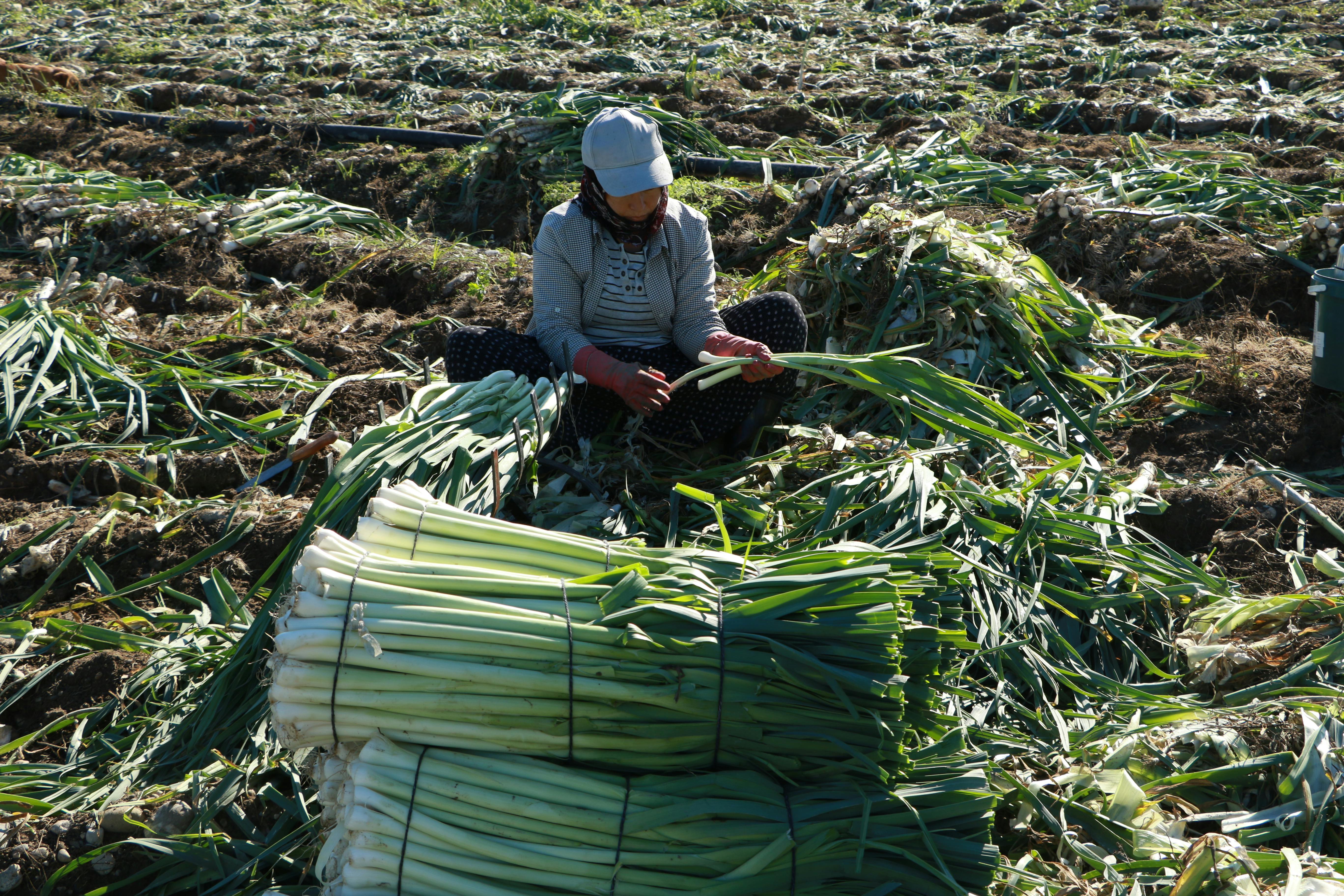
Leek is a cultivar of the species Allium ampeloprasum (closer to garlic and Chinese chives than to onion). Bioactive profile: fructans (short to medium chain length, mainly in the tender white part), sulfur-containing amino acids (alliin-like precursors, but in more moderate amounts than in garlic), quercetin and kaempferol glycosides (more in the greener part), as well as folate, vitamin K, and manganese.
The fructan fraction is capable of dose-dependently increasing the Bifidobacterium ratio; leek is one of the important "hidden" fructan sources in the daily diet. From a FODMAP perspective, a clinically relevant observation (Monash): the white part of leek (like onion) is high FODMAP, but the dark green leaf already receives a low-FODMAP designation — providing a practical IBS-friendly Allium substitution.
Sulfur compounds (particularly thiopropyl sulfoxides formed in crushed tissue) provide moderate anti-aggregant and antimicrobial effects, with a mechanism similar to garlic's allicin but at weaker intensity. In vitro fermentation studies (Holgado, Pérez-Burillo) showed leek fiber's SCFA-increasing capacity and Bifidobacterium stimulation.
- + Extra-virgin olive oil + potato (vichyssoise): classic French cold soup, RS3 synergy if eaten chilled.
- + Live cultures (kefir, yogurt): synbiotic principle.
- + Legumes (lentil, white bean): ITF + GOS dual prebiotic.
- + Resistant starch (cooked-cooled side): more stable SCFA profile.
- + Fish (butter-braised leek + salmon): omega-3 + ITF combination.
- + Long slow braising in butter/oil (15–20 min): sweet, creamy flavor development.
- Warfarin/DOAC in large amounts: moderate anti-aggregant + vitamin K (green leaf) — INR monitor.
- GERD flare + raw leek: severe reflux.
- Long boiling with discarded liquid: water-soluble ITF + polyphenols into the liquid — reincorporation recommended.
- 2 weeks before scheduled surgery in large doses + other anti-aggregants: reduce.
- Large amount of raw leek on empty stomach: GI irritation.
- Allergic reaction + other Allium: cross-reactivity.
- IBS elimination phase (white part): avoid; green leaf is safe.
- GERD flare: avoid raw leek, cooked acceptable in moderate amounts.
- Anticoagulant therapy: large amounts with medical supervision.
- Infant under 8 months: don't give.
- Allium allergy (rare, IgE-mediated): complete avoidance.
- Severe kidney disease with potassium restriction: leek has moderate potassium (≈ 180 mg/100 g) — portion control.
- 2 weeks before scheduled surgery: reduce consumption.
Daily/weekly serving
1 medium leek white part (≈ 80–100 g) in food 2-3×/week. Dark green leaf: unlimited for IBS-sensitive too, low-FODMAP.
Preparation pattern
- Cut off the root end and the toughest dark green leaves (for stock!).
- Halve lengthwise (or quarter), wash sand from leaf spaces by opening under running water.
- Crosswise into thin slices — white part for cooking, light green for flavoring, dark green for sautéing or raw sprinkling.
Classic patterns
Vichyssoise (cold): leek-potato cream soup with cream, served cold.
Tarte aux poireaux: French leek quiche, butter pastry + braised leek + egg + creamy base.
Welsh leek soup (cawl cennin): leek + potato + stock + lamb stew.
Sautéed leek + Parmesan (Italian): braised leek + oil + grated Parmesan — side dish.
Green leek smoke: dried green leek leaves into stock → umami depth.
Storage
Fresh: refrigerated (vegetable drawer) 7-10 days. Frozen (blanched slices): 8-10 months. Cooked: refrigerated 3 days.
What not to do
Don't discard the dark green leaves. Don't cook covered 30+ min (sulfur compounds break down, unpleasant smell). Don't wash slowly in standing water — sand stays inside.
References
[1] Bystrická J et al. Bioactive compounds in different parts of leek (Allium ampeloprasum L.). J Microbiol Biotechnol Food Sci 2015;4(Spec. issue 3):39–42.
[2] Monash University. Leek (white and green) FODMAP content. Monash FODMAP database.
[3] Holgado F et al. In vitro fermentation of Allium by-products by gut bacteria. Bioact Carbohydr Diet Fibre 2021.
[4] Pérez-Burillo S et al. Effect of in vitro digestion-fermentation on Allium polyphenols. Food Funct 2018.
[5] EFSA NDA Panel. Scientific Opinion on dietary reference values for vitamin K. EFSA Journal 2017.
[6] Capitulare de villis vel curtis imperii (Charlemagne, ca. 800 AD).
[7] Lanzotti V. The analysis of onion and garlic. J Chromatogr A 2006;1112(1-2):3–22.
[8] Diat L. Cooking à la Ritz. J.B. Lippincott, 1941.