


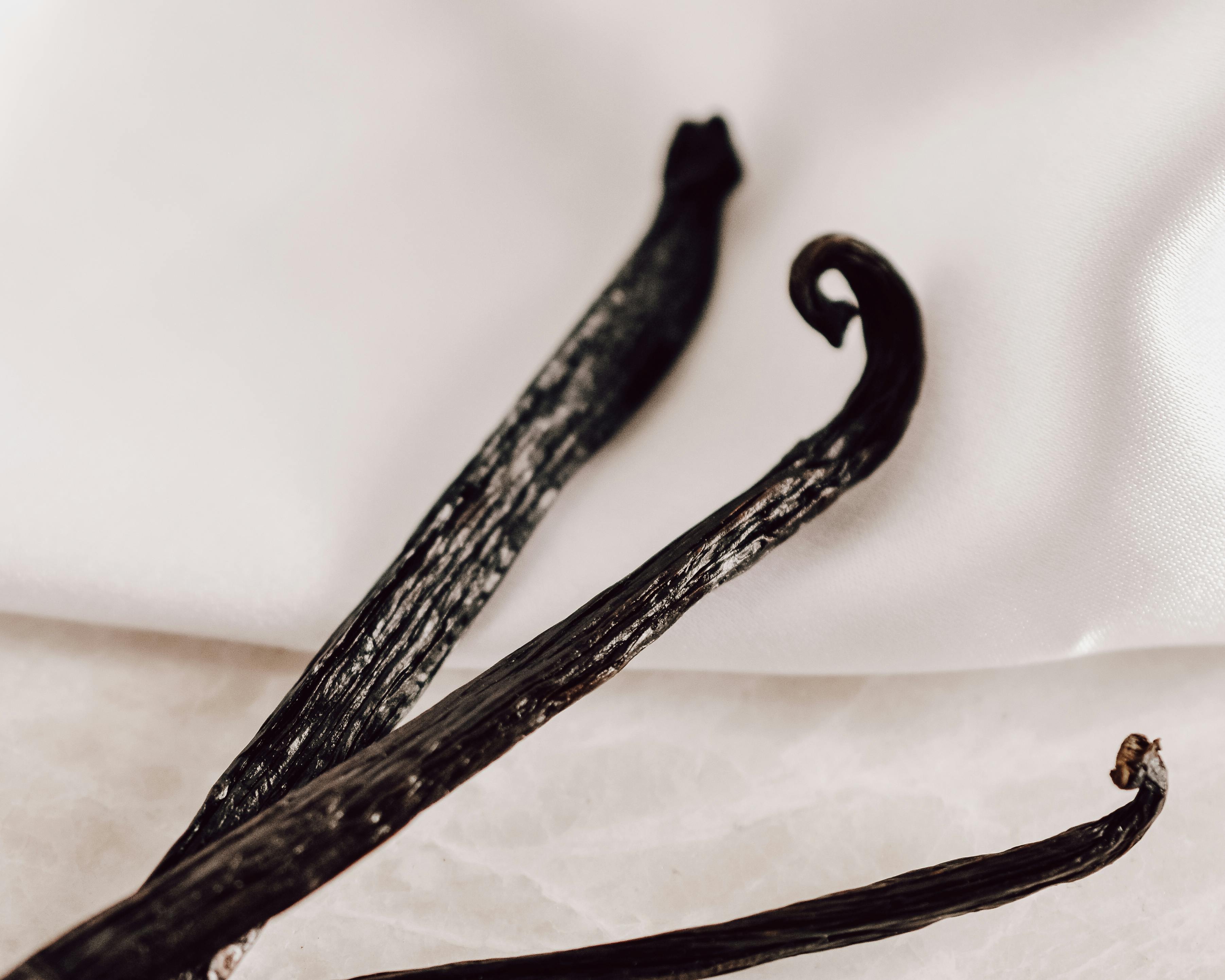
Vanilla
The real bean versus synthetic vanillin — phenol-aromatic polyphenols, anxiolytic aroma, and a microbiome-modulating
Vanilla in 1 minute
What does it provide? Real vanilla bean (NOT synthetic vanillin flavoring) contains more than 250 volatile and non-volatile compounds: the main active is vanillin (4-hydroxy-3-methoxybenzaldehyde), but the full matrix also carries vanillic acid, p-hydroxybenzaldehyde, and small phenolics. Vanillin is in vitro antioxidant and anti-inflammatory; animal data show anxiolytic aroma-mediated effects (Anuradha 2013). Synthetic vanillin offers a single molecule — the natural bean provides the entire polyphenol matrix.
How much? In the kitchen, ½–1 real bean (≈ 2–3 g) split lengthwise, seeds scraped, for a 4–6 person dessert or dish. A few tenths of a gram daily is biologically and gastronomically ideal. Vanillin content in a real bean is ≈ 1–3% on a dry-weight basis.
When to avoid? Vanillin allergy (rare but documented — contact dermatitis, rarely systemic reaction); orchid family cross-reactivity; in coumarin sensitivity, avoid "Mexican vanilla" (frequently adulterated with tonka bean — high coumarin content, anticoagulant interaction). Vanilla-sweetened products are not recommended for infants (taste socialization and sugar content). Detailed contraindications in the condition-specific section.
Vanilla originates from Mesoamerica, the rainforests of today's Veracruz region in Mexico, where the Totonac people cultivated it for centuries under the name "tlilxochitl" (black flower). The Aztecs conquered the Totonacs and collected vanilla beans as tribute; in the court of Moctezuma it became the inseparable flavoring of "xocoatl" (chocolate drink). Hernán Cortés brought it to Europe around 1520, where it quickly became popular at the court of Philip II of Spain. For centuries Mexico was the only producer, because vanilla could only be pollinated by the local melipona bee. The breakthrough came in 1841: Edmond Albius, a 12-year-old enslaved boy on Réunion island, developed the technique of hand pollination — enabling the world-market dominance of Madagascan Bourbon vanilla (today ≈ 80% globally).
Synthesis of vanillin in 1874 (Tiemann and Haarmann from eugenol, later from lignin by-product) made the "vanilla" flavor dramatically cheaper — in today's market, > 99% of vanillin is synthetic. The real bean goes through a 4–6 month fermentation cycle (sweating, sun-drying, conditioning), during which vanillin glucoside is enzymatically converted to free vanillin and the complex aroma develops. In 2017–2019, Madagascan cyclones and crop losses pushed real vanilla bean prices to USD 500/kg, which triggered a wave of "vanilla extract" adulteration. Modern molecular-biological research (Anuradha 2013, Kumar 2014) confirms the vanillin matrix's complex antioxidant and anxiolytic profile — clearly distinguishing it from pure synthetic vanillin.
Scientific Background
The vanilla bean is a fermentation product: the freshly harvested green pod is tasteless because vanillin is bound in glucoside form (vanillin-β-D-glucoside). During the 4–6 month traditional curing, β-glucosidase enzymes hydrolyze the bond and free vanillin (4-hydroxy-3-methoxybenzaldehyde) is released. A quality Madagascan bean has ≈ 1–3% vanillin on a dry-weight basis; alongside, ≈ 200 additional small molecules contribute to the complex aroma (p-hydroxybenzaldehyde, vanillic acid, anisic acid, acid esters).
Vanillin's in vitro antioxidant capacity is moderate-to-high (DPPH, ORAC assays), and its NF-κB-modulating activity is documented. In rat models it is anxiolytic (Open Field, Elevated Plus Maze) — the effect is partly mediated by the olfactory pathway, partly by systemic GABAergic modulation. Human data are limited: small studies have shown vanilla aroma reduces MRI-related anxiety in newborns and general stress scores in adults, but robust RCT evidence is lacking (Goubet 2002, Rattaz 2005, Anuradha 2013, Kumar 2014).
For glycemic considerations, real vanilla bean creates a sense of sweetness even without added sugar — vanillin mildly activates sweet receptors on taste buds. This enables a reduction in added sugar in desserts (10–15% added sugar savings documented in gastronomy studies).
At the microbiome level, vanillin glucoside requires gut bacterial β-glucosidase activity — colonic Bacteroides, Bifidobacterium, and Lactobacillus strains hydrolyze it. The released vanillin is partly absorbed, partly exerts local antioxidant/antimicrobial activity. Vanillin selectively inhibits the growth of some pathogenic bacteria (E. coli, Listeria) while sparing commensals — explaining the traditional use as a food preservative.
- + Fatty matrix (milk, cream, butter, coconut milk): vanillin is fat-soluble — the classic crème brûlée, vanilla ice cream, and panna cotta matrix maximizes aroma release and bioavailability.
- + Long, low heat (60–70 °C, 20–30 min): aromas from the vanilla bean are released optimally through slow warm infusion. Boiling (≥ 90 °C) reduces the aroma profile.
- + Natural sweeteners (honey, maple syrup, coconut sugar): vanillin reduces the perceived sweetness threshold — useful even in gluten-free desserts.
- + Dark chocolate (≥ 70%): the classic Mesoamerican pairing — cocoa polyphenols and vanillin synergistically reduce oxidative stress in vitro.
- + Fiber-rich dessert matrix (oatmeal, chia pudding, yogurt muesli): vanilla flavor reduces added sugar demand, and fiber supports vanillin glucoside hydrolysis by gut bacteria.
- + Evening, pre-sleep ritual (vanilla milk, vanilla-chamomile tea): anxiolytic aroma profile supports pre-sleep relaxation.
- Mexican "vanilla extract" + anticoagulants (warfarin, DOACs): Mexican-market "vanilla" is often adulterated with tonka bean (Dipteryx odorata), which has significant coumarin content — additive bleeding risk. Buy only from reputable sources.
- High-sugar vanilla milkshake + GERD/reflux disease: sugar and high fat together worsen reflux symptoms; vanilla itself is neutral.
- Vanillin-allergic skin (contact dermatitis history) + topical cosmetic/fragrance: cross-reactivity with topical products.
- Sweetening infant formula with vanillin: WHO and pediatric bodies do not recommend — distorts taste socialization, allergen risk.
- MAO inhibitor therapy + large amounts of fermented vanilla paste: theoretical tyramine content (low but nonzero); use caution with clinical-dose vanilla supplements.
- Decompensated diabetes + sugary vanilla desserts: vanilla itself doesn't cause issues, but the matrix (sugar) does.
- Vanillin sensitivity/allergy (rare): contact dermatitis, rarely systemic reaction — cross-reactivity with orchid family possible.
- Suspected tonka bean adulteration: "Mexican vanilla" typically contains tonka — high coumarin → liver damage and anticoagulant interaction (especially with warfarin).
- Infants (< 12 months): vanilla-sweetened flavoring not recommended — taste socialization (fixing sweet-preference) and sugar exposure risk.
- Decompensated diabetes mellitus: vanilla itself is neutral, but the typical matrix (sugary dessert) is NOT compatible with glucose targets.
- GERD/reflux disease flare: fatty-sugary vanilla desserts may aggravate.
- Migraine, tyramine trigger: long-aged vanilla paste may carry minimal tyramine — theoretical caution.
- Pregnancy and breastfeeding: culinary dose is safe. Human data on clinical-dose vanillin supplements are lacking — avoid.
- Adulteration suspicion (cheap "vanilla flavoring"): almost always synthetic vanillin, often from lignin by-product (or ethylvanillin) — the polyphenol matrix and clinical potential are absent. 99% of standard "vanilla sugar" industrial products are synthetic.
Daily serving (culinary): ½–1 real bean (≈ 2–3 g) for a 4–6 person dessert.
Infusion base: split 1 vanilla bean lengthwise, scrape out the seeds, infuse in 250 ml warm (60–70 °C) milk or cream for 20–30 min. Use this in pudding, cream, ice cream.
Classic patterns:
- Crème brûlée: egg yolk + cream + real vanilla seeds + sugar — the classic French dessert.
- Vanilla ice cream (Bourbon vanilla): milk-cream + egg + vanilla bean steeped 20 min.
- Panna cotta: cream + sugar + vanilla + gelatin — simple Italian dessert.
- Vanilla milk (evening): 200 ml warm milk + ½ vanilla bean + 1 tsp honey, steeped 15 min.
- Baked apple with vanilla: apple + ½ bean + cinnamon + walnut + ghee — autumn-winter classic.
- Vanilla sugar: 1 kg sugar + 2 used pod husks in an airtight jar for 2 weeks → natural sweetener.
Storage: in an airtight glass jar, in a dark, cool place (NOT in the refrigerator — dries out and crystallizes). Quality bean is soft, flexible, glossy. Use within 2 years of fresh purchase. Crystallized "vanillin frost" on the bean surface — a quality sign, not a defect.
What not to do: don't boil in too-hot (≥ 90 °C) liquid — volatile loss. Don't use alcoholic vanilla extract at high temperatures — ethanol evaporates. Don't discard the scraped bean husk — perfect for vanilla sugar.