


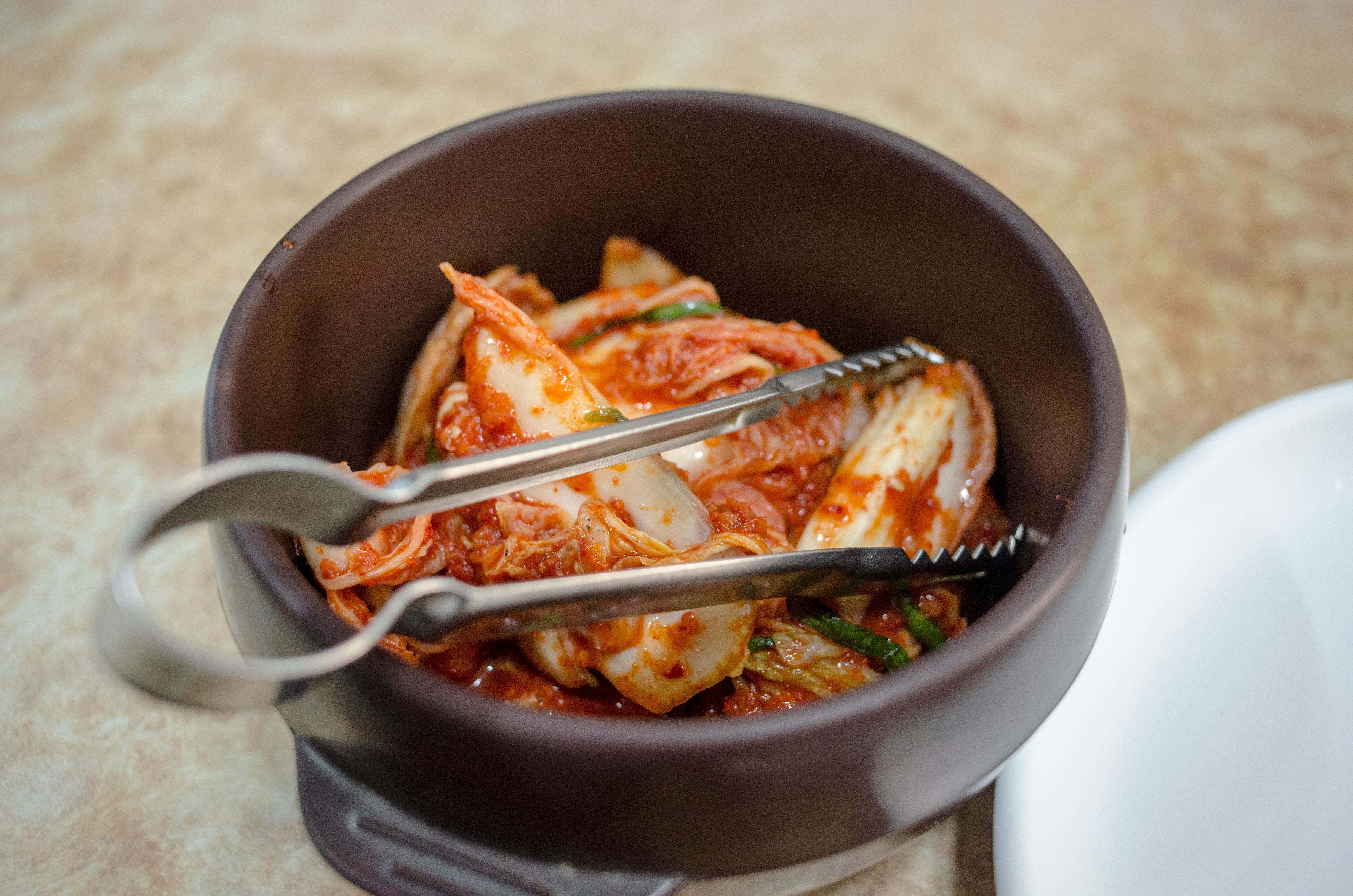
Kimchi
The Korean fermented vegetable matrix — UNESCO heritage, gochugaru pepper, and phytochemicals, with modern RCT evidence.
In 1 minute
What does it provide? Live lactic acid bacteria (Leuconostoc, Lactiplantibacillus plantarum, Lb. sakei — fermentation-derived probiotic strains), Brassica fibers, and a multilayered phytochemical matrix: capsaicin (the pungent compound of gochugaru pepper — TRPV1-receptor modulation), allicin (the sulfur compound of garlic — antimicrobial), and gingerols (anti-inflammatory polyphenols of ginger). Stanford RCT (Wastyk 2021): a 10-week fermented-food program increased microbiome diversity and reduced 19 inflammatory signaling proteins.
How much? As an introduction ⅓ cup (≈ 30 g, Monash green), maintenance 50–100 g (½–1 cup)/day. Refrigerated, live (NON-pasteurized, NOT boiled) product.
When to avoid? Active reflux disease or peptic ulcer flare (capsaicin + acidity), histamine intolerance (biogenic amines: histamine, tyramine, putrescine), MAO inhibitor therapy (phenelzine, tranylcypromine — tyramine/hypertensive crisis), severe hypertension with strict sodium restriction (kimchi: 500–900 mg Na/100 g), severe immunosuppression (avoid live microbes), infant <2 years.
The history of kimchi is the intertwined story of peasant and court life on the Korean peninsula: the first written mention of pickled vegetables appears in the 1145 Samguk Sagi chronicle, but archaeology shows that as far back as the Goryeo era (10th–14th century) winter cabbage and radish were ripened in huge onggi jars buried in the ground. During the Joseon dynasty, the royal court maintained a separate kimchi kitchen (chimchae-bang), where the queen personally oversaw the preparation of variants. Chili pepper — gochugaru — only appeared in Korea in the late 16th century via Portuguese traders, in the wake of Hideyoshi's Japan-Korea wars, and only became the basis of the classic "red" kimchi by the 18th–19th centuries.
During the early-20th-century Japanese occupation, kimchi became almost a national identity symbol: kimjang — the communal winter ritual of large-scale preparation and sharing — became one form of cultural survival for Koreans forced to speak the occupiers' language, which is why it was added to the UNESCO Intangible Cultural Heritage list in 2013. Today there are several hundred regional variants — from the watery mul-kimchi to the dry baechu-kimchi — and the diversity of this tradition has made kimchi one of the favorite arenas of 21st-century microbiome research.
🔬 Scientific Background
Kimchi is a complex, multi-component fermentation matrix: a mixture of Brassica cabbage, radish, onion, garlic, ginger, gochugaru pepper, and fish sauce (jeotgal), salted at 1.5–3% and ripened at 0–15 °C for 1–14 days. The LAB succession is well documented: initially Leuconostoc mesenteroides and Weissella koreensis dominate, then as acidity rises Lactiplantibacillus plantarum, Lb. sakei, and Lb. brevis take over.
Kimchi is not just "fermented cabbage": gochugaru's capsaicin, garlic's sulfur compounds (allicin), ginger's gingerol, and Brassica glucosinolates together form a multifunctional phytochemical matrix that acts synergistically with LAB and fiber substrates on the microbiota.
Clinical evidence (2023–2024 reviews): - Body fat/lipids: 2024 controlled clinical trials reported body-fat reduction and LDL/TG improvement in overweight adults. - IBS: a 2022 Food & Nutrition Research study with kimchi showed symptom improvement, serum cytokine reduction, and a favorable fecal enzyme shift. - Microbiota: L. plantarum K50 and L. sakei kimchi-derived strains improved metabolic and inflammatory endpoints in separate RCTs. - Functional vs. compositional: kimchi RCTs often do NOT show large taxonomic shifts, but rather SCFA profile and gut-barrier marker (zonulin, LBP) improvement — this is the "functional microbiome effect" pattern.
The 10-week Stanford study (Wastyk 2021), with a fermented-food portfolio that included kimchi, showed microbiome diversity increase and reduction of 19 inflammatory signaling proteins.
- + Resistant starch (cooked-then-cooled rice, bibimbap base): classic Korean pattern — RS3 + kimchi LAB → enhanced butyrate production.
- + Legumes (tofu, tempeh, lentils): synbiotic synergy.
- + Live yogurt, kefir, sauerkraut: multi-fermented pattern, Wastyk-validated.
- + Oily fish (salmon, mackerel): omega-3 + fermented vegetable = anti-inflammatory synergy.
- + Deep-green leafy greens (spinach, kale): broader polyphenol matrix.
- + Cold or warm-lukewarm serving (NOT boiled): if live LAB is the goal, don't heat ≥ 70 °C.
- High-Na meals (instant noodles, salted fish): kimchi 500–900 mg Na/100 g.
- MAO inhibitor therapy: tyramine → risk of hypertensive crisis.
- Acid blockers (PPI) during a flare: acidic kimchi can paradoxically irritate.
- Hot soup with direct boiling: loss of live LAB — add at serving.
- Capsaicin-sensitive IBS flare: gochugaru pepper can irritate.
- Iron supplementation: separate by ≥ 2 hours (polyphenols chelate).
- Active reflux disease, peptic ulcer flare: capsaicin + acidity irritate.
- Histamine intolerance: biogenic amines (histamine, tyramine, putrescine) — test with a small portion.
- MAO inhibitor (phenelzine, tranylcypromine) therapy: strictly avoid.
- Severe hypertension, heart failure with Na restriction: portion control or rinsing.
- Active IBS flare: garlic + onion + capsaicin together can be provoking — start with ⅓ cup (Monash green).
- Thyroid disease, Hashimoto's: Brassica glucosinolates are moderately goitrogenic — dietary amounts are safe.
- Severe immunosuppression: avoid live microbes.
- Infant, < 2 years: high Na + spicy — avoid.
- Histamine allergy to fish sauce (jeotgal): choose vegan kimchi.
Daily serving
Introduction: ⅓ cup (≈ 30 g, Monash green FODMAP serving) daily.
Maintenance: ½–1 cup (≈ 50–100 g) daily.
Preparation pattern — simplified baechu kimchi
- 1 kg napa cabbage cut in quarters, soaked with 80 g salt for 3–4 hours → rinsed, drained.
- Paste: 3 tbsp gochugaru (Korean chili powder), 2 tbsp fish sauce (or vegan-friendly soy sauce), 3 garlic cloves, 1 cm ginger, 1 tbsp sugar, 2 tbsp cooked rice-flour paste.
- Add: 1 radish thinly sliced, 2 scallions.
- Mix thoroughly → pack tightly into a jar, airtight.
- Room temperature for 24–48 hours, then refrigerate.
Classic patterns
Baechu-kimchi: classic, napa-cabbage based.
Kkakdugi: cubed radish kimchi.
Mul-kimchi: watery, cold soup-like.
Bibimbap topping: resistant-starch cooled rice + kimchi + sesame oil.
Kimchi-jjigae: classic ripened kimchi stew (HOT — live LAB is lost, but the postbiotic matrix remains).
Breakfast on egg: 2 tbsp kimchi + scrambled eggs.
Storage
Refrigerated airtight for 6 months. Ripeness keeps changing: 1–2 weeks fresh, 1–2 months ripe (umami), 3–6 months deeply sour.
What not to do
Don't heat to ≥ 80 °C if you want live LAB. Don't open daily (oxygen → surface mold). Don't leave at room temperature past 3 days.
References
[1] Park KY et al. Health benefits of kimchi (Korean fermented vegetables). J Med Food 2014;17(1):6–20.
[2] Wastyk HC et al. Gut-microbiota-targeted diets modulate human immune status. Cell 2021;184(16):4137–4153.
[3] Han K et al. Contrasting effects of fresh and fermented kimchi consumption on gut microbiota composition. Mol Nutr Food Res 2015;59(5):1004–1008.
[4] Kim HY et al. Kimchi improves IBS symptoms — randomized clinical trial. Food Nutr Res 2022;66.
[5] Choi IH et al. Kimchi, a fermented vegetable, improves serum lipid profiles in overweight subjects. J Med Food 2013;16(3):223–229.
[6] UNESCO. Kimjang, making and sharing kimchi in the Republic of Korea. 2013 Intangible Cultural Heritage list.
[7] Patra JK et al. Kimchi and other widely consumed traditional fermented foods of Korea: a review. Front Microbiol 2016;7:1493.
[8] Monash University. Kimchi serving FODMAP data — green at 47 g.