

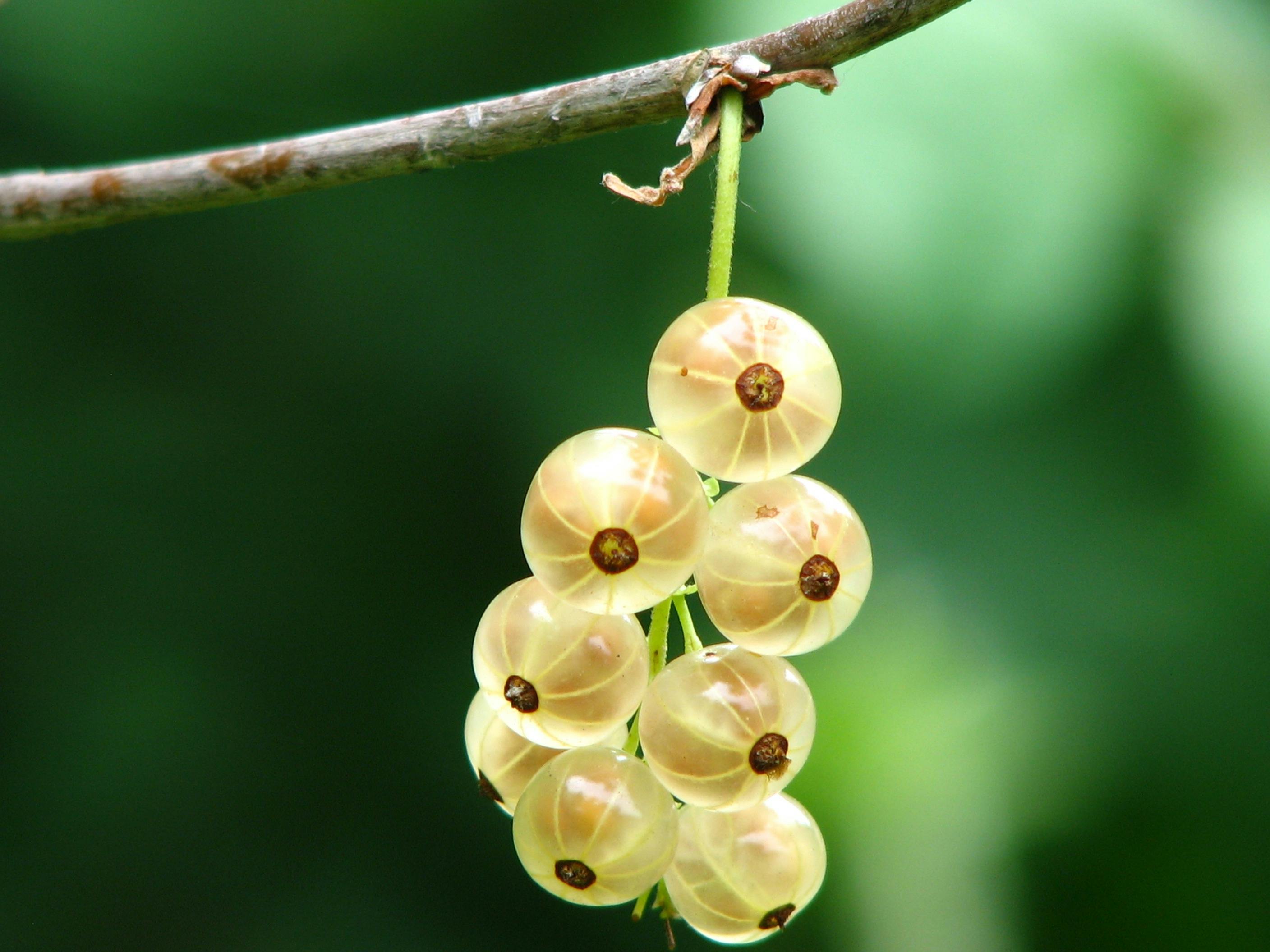
Gooseberry
The garden gooseberry — a tart vitamin-C bomb, low FODMAP, with a colorful anthocyanin spectrum.
Gooseberry in 1 minute
What does it provide? High vitamin C (25–60 mg/100 g, twice that of blueberry), an anthocyanin spectrum (in red and crimson cultivars mostly cyanidin-3-rutinoside and delphinidin-3-glucoside), quercetin glycosides, ellagic acid, and pectin (1.4–2 g/100 g). Its tartness comes from high malic and citric acid content until ripening; at full ripeness anthocyanin peaks and the polyphenol profile broadens (Pantelidis 2007). Pectin is a substrate for SCFA-producing Bifidobacterium and F. prausnitzii in the colon, while the ellagic-acid fraction may, in urolithin-A-metabotype populations, induce mitochondrial effects (similar mechanism to the pomegranate-berry group).
How much? Fresh berry 80–150 g/day (about ½–1 cup). As preserves with sugar, moderate; jam is also sugar-rich at 1–2 tablespoons. Frozen preserves anthocyanin and vitamin C well (Pantelidis 2007).
When to avoid? Severe GERD active phase (acidity — pH ≈ 2.8–3.2 unripe, ≈ 3.5–3.8 ripe), Ribes allergy (possible blackcurrant cross-reactivity), oxalate-sensitive kidney stones (moderate-high oxalate), anticoagulant therapy + large dose (theoretical vitamin K + polyphenol interaction), infants under 1 year (whole-berry choking risk).
The gooseberry (Ribes uva-crispa) is a native member of the European temperate flora: wild forms ranged from the Carpathian Basin through Scandinavia to the British Isles. Domestication was relatively late — it first appeared in 13th-century French monastery gardens as groseille à maquereau ("gooseberry for mackerel"), because the tart, sour fruit in green sauce was the classic accompaniment to mackerel. In England, the name gooseberry is not necessarily about "goose" — it may be a corruption of the Middle English "gorse-berry" (thorny berry), since the gooseberry bush is prickly. In the 16th–17th centuries, it became the competitive hobby ground of English gardeners through the "gooseberry fancier" movement: by 1810, more than 700 varieties competed in Lancashire for the largest and most flavorful berry.
In Hungarian cuisine, gooseberry or "köszméte" is a centuries-old summer berry: picked unripe and green it goes into the spring cream "gooseberry sauce" (a Highland classic with fish or veal), and ripe red or yellow it enters preserves, jams, and raw fruit. In 19th-century grandmother's gardens, a few blackcurrant bushes were always planted alongside the gooseberry — they ripened together, and the polyphenol profile of the blackcurrant complemented the gooseberry's vitamin C. By the late 20th century, gooseberry production had declined in favor of more easily machine-harvested berries (raspberry, blueberry), but since the 2000s the slow-food and garden-fruit movement has revived it. Modern nutrition science increasingly studies the shared anthocyanin–ellagic-acid–vitamin-C profile of Ribes species (currants, gooseberry, blackcurrant).
Scientific Background
Gooseberry's vitamin C (ascorbic acid) content is 25–60 mg/100 g fresh weight (Pantelidis 2007, Mikulic-Petkovsek 2012) — roughly twice that of blueberry and approaching citrus levels. Ascorbic acid is well preserved frozen (10–20% loss in 6 months at -18 °C), but cooking (≥ 90 °C, ≥ 10 min) can cause 40–60% loss. The anthocyanin profile is cultivar-dependent: red and crimson cultivars are dominated by cyanidin-3-rutinoside and delphinidin-3-glucoside; green and yellow cultivars carry mostly quercetin and kaempferol glycosides with little anthocyanin. Mikulic-Petkovsek 2012 measured total polyphenol concentrations of 100–250 mg/100 g (GAE).
Ellagic acid and related ellagitannins are also present in Ribes species (gooseberry, currants), though at lower concentrations than in raspberry or pomegranate. Colonic bacteria (Gordonibacter, Ellagibacter) convert them to urolithins — in UM-A metabotype individuals (≈ 70% of the population), urolithin-A's mitophagy effect can manifest (Tomás-Barberán 2017). The quercetin glycosides (rutin, isoquercitrin) are anti-inflammatory and capillary-stabilizing; in Edwards 2007's human RCT, quercetin supplementation reduced blood pressure in mildly hypertensive individuals.
Pectin and other soluble fiber (1.4–2 g/100 g) act prebiotically on Bifidobacterium and F. prausnitzii groups, inducing propionate and acetate production (Larsen 2019, Holscher 2017). Total fiber content is 4.3 g/100 g — high among temperate berries. Gooseberry is low FODMAP (Monash data: ½ cup fresh = green), so it is well tolerated by IBS patients.
The berry's malic acid (1.5–3%) and citric acid (0.5–1%) content gives the characteristic tartness — together with ascorbic acid it provides a biologically available iron synergy (favorable plant-iron Fe³⁺ → Fe²⁺ reduction). The berry and leaf also contain small amounts of salicylates — worth attention in salicylate-sensitive individuals.
- + Iron-rich plant foods (spinach, legumes): vitamin C × non-heme iron enhances absorption.
- + Yogurt, kefir: synbiotic dessert or breakfast — polyphenol × live culture.
- + Cream, mascarpone (classic "gooseberry fool"): classic English dessert, in moderation.
- + Game meat, fish (mackerel, salmon): classic French pairing, sour cut for fattier meats.
- + Blackcurrant, raspberry: Ribes synergy, broader polyphenol spectrum.
- + Elderflower, mint: classic English-Hungarian summer combination, additive polyphenol effect.
- High-sugar syrup-laden preserves: polyphenol benefit partly lost, glycemic spike.
- Iron supplementation in the same meal (tablet form) + acidic medium: small correction — vitamin C aids Fe absorption, but tablets should be temporally separated.
- Prolonged high-heat cooking: 40–60% vitamin C loss, anthocyanin breakdown.
- Anticoagulant therapy + significant vitamin K-content food at the same time: gooseberry's K content is low-moderate, but the combination requires monitoring.
- Aspirin / salicylate treatment + large dose: theoretical salicylate additive (small effect).
- Cream overload in desserts: polyphenol retention is fine, but fat and calorie concentration reduce the benefit.
- Severe GERD active phase: unripe, sour berry may provoke symptoms.
- Ribes allergy (blackcurrant, redcurrant): possible cross-reactivity.
- Kidney stones, on high-oxalate diet: moderate-high oxalate — moderate the serving.
- Anticoagulant therapy (warfarin, DOAC): medical supervision required for significant, sustained consumption.
- Salicylate sensitivity: small natural salicylate content — avoid in sensitive individuals.
- Infant (under 1 year): whole berry is a choking risk; chop or purée.
- IBS elimination phase: low FODMAP, but some patients may be bothered by the acidity.
- Celiac / NCGS: gooseberry itself is safe, but commercial jam / pie may contain flour.
References
[1] Pantelidis GE et al. Antioxidant capacity, phenol, anthocyanin and ascorbic acid contents in raspberries, blackberries, red currants, gooseberries and Cornelian cherries. Food Chem 2007;102(3):777–783. Link
[2] Mikulic-Petkovsek M et al. Composition of sugars, organic acids, and total phenolics in 25 wild or cultivated berry species. J Food Sci 2012;77(10):C1064–C1070. Link
[3] Edwards RL et al. Quercetin reduces blood pressure in hypertensive subjects. J Nutr 2007;137(11):2405–2411. Link
[4] Larsen N et al. Effect of potato fiber on survival of Lactobacillus species at simulated gastric conditions and composition of the gut microbiota in vitro. Food Res Int 2019;125:108644. Link
[5] Holscher HD. Dietary fiber and prebiotics and the gastrointestinal microbiota. Gut Microbes 2017;8(2):172–184. Link
[6] Tomás-Barberán FA et al. Urolithins, the rescue of "old" metabolites to understand a "new" concept. Mol Nutr Food Res 2017;61(1):1500901. Link
[7] de Ferrars RM et al. The pharmacokinetics of anthocyanins and their metabolites in humans. Br J Pharmacol 2014;171(13):3268–3282. Link
[8] Khan N et al. Anthocyanins improve endothelial function: a systematic review of human studies. Mol Nutr Food Res 2014;58(5):951–963.
[9] Monash University. High and Low FODMAP foods — gooseberry. Monash FODMAP database. Link