


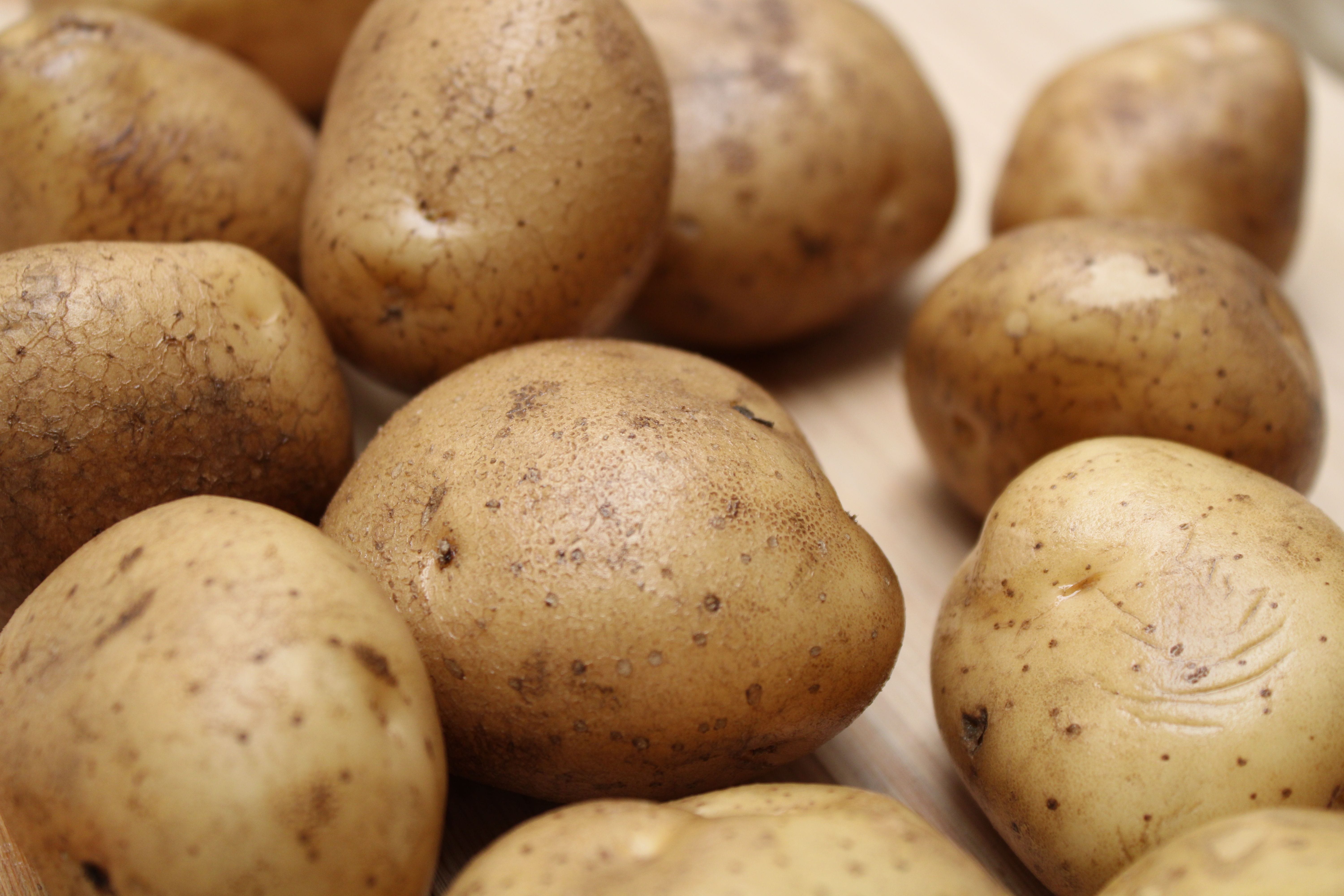
Potato
The cook-cool-eat rule — RS3 resistant starch, low glycemic, butyrate-positive.
In 1 minute
What does it provide? Starch, which through the "cook → cool" technique transforms into retrograded resistant starch (RS3 — not digested in the small intestine, ferments in the colon), feeds butyrate-producing bacteria (Faecalibacterium, Roseburia). Plus potassium (≈ 425 mg/100 g), vitamin C (≈ 20 mg/100 g cooked), B6. Chilling reduces the glycemic index from ≈ 80 to ≈ 50-55.
How much? 150–250 g cooked-cooled (4 °C, 12–24 h), then served cold or reheated to max 60–70 °C, 3–4×/week — RS3 is heat-stable. Clinical RCT (Wang 2024): daily RS3 potato over 4 weeks improves stool frequency and consistency.
When to avoid? Green-skinned or sprouted tubers (solanine > 200 mg/kg — neurotoxic); frying above 180 °C (acrylamide — WHO "probably carcinogenic"); CKD 4–5 stage with potassium restriction (double-cooking halves it); acute Crohn's/UC flare (only peeled purée); infant < 6 mo.
Potato was domesticated in the Andean highlands more than 7–8 thousand years ago; microbotanical and archaeological evidence supports this from the Peru and Lake Titicaca region. The Incas preserved long-storable potato through outdoor freeze-drying as chuño, owing to the cold nights and high-mountain sunshine's natural lyophilization effect — perhaps the world's first industrial-scale food processing. The Spaniards brought it to Europe in the second half of the 16th century, first appearing in Spain and the Canary Islands in sources from the 1560s–70s, then gradually spreading across the continent and becoming a staple food. (PMC, SpringerLink)
After initial suspicion — it belongs to the nightshade family, and many considered it poisonous due to its belladonna-like flower — by the late 18th century it had become a mass crop throughout Europe. In France, Antoine-Augustin Parmentier the pharmacist was potato's legendary popularizer: he learned in Prussian captivity that it was viable food, and in 1772 succeeded in lifting prohibition laws. In Ireland's history, the potato blight that struck in the mid-19th century and the related famine remained forever defining: from 1845, crop failure caused the death of about 1 million people and the emigration of several million more — this historic catastrophe showed how life-saving and how risky a diet built on a single staple plant had become. (Natural History Museum)
🔬 Scientific Background
Potato's starch fraction provides dramatically different microbiome effects depending on preparation method. Hot, freshly cooked: the starch is α-amylase-digestible, gives a rapid glucose peak (GI ≈ 78–85), and doesn't reach the colon. Chilled (4 °C, 12-24 h): the starch structure retrogrades — the α-1,4 chains re-crystallize into resistant structure (RS3), no longer hydrolyzed in the small intestine, and reaching the colon becomes substrate for butyrate-producing bacteria (Faecalibacterium, Roseburia).
The clinical consequence: the same potato, served hot fresh, has GI ≈ 80; served after 24h chilling (even reheated, because RS3 is heat-stable), GI ≈ 50–55. The difference is also measurable in postprandial insulin response (Sonia 2015 RCT). 2024 RS3 intervention (Wang) confirmed increased stool frequency and subjective stool quality improvement.
Acid synergy: if vinegar/citrus dressing is added to chilled potato (classic potato salad), the glycemic response is further moderated (acetate-mediated gastric emptying slowdown).
Solanine consideration: the glycoalkaloid solanine and chaconine concentrate in green-skinned, sprouted, or light-exposed potatoes. Fresh, well-stored white potato solanine content is 20–100 mg/kg (safe); green-skinned can be 200–500+ mg/kg (toxic symptoms above 1-3 mg/kg body weight). Acrylamide: potato cooked at high heat (180+ °C) (chips, fries) forms acrylamide from the Maillard reaction of asparagine + reducing sugars, which WHO classifies as "probably human carcinogen" — boil instead of frying at high heat.
- + Chilling 12-24h after cooking: RS3 formation, butyrate boost.
- + Vinegar/citrus dressing: classic potato salad, glycemia-reducing.
- + Extra-virgin olive + herbs (rosemary, thyme): polyphenol synergy.
- + Yogurt or kefir sauce: synbiotic, RS3 + LAB.
- + Legumes (potato + lentil salad): RS3 + GOS, butyrate-positive.
- + Green leaves + olive: Mediterranean "patatas con verduras" matrix.
- + Cooking/roasting in skin: more fiber + polyphenol retained.
- 180+ °C fried/chips: acrylamide formation.
- Green-skinned or sprouted potato: solanine concentration.
- Hot fresh + sweet drink (cola): double glucose peak, insulin spike.
- Severe kidney disease potassium restriction + lots of potato: potassium monitor (≈ 425 mg/100 g).
- Diabetes + large hot potato serving: glycemic peak (use "cook-cool" technique).
- Lithium therapy + regular fried-salted potato: sodium balance.
- Severe kidney disease (CKD 4-5) potassium restriction: "double cooking" technique (rinse, boil, drain) reduces potassium by 50%.
- Diabetes mellitus: "cook-cool" form is fine, hot fresh form in moderation.
- Suspected solanine poisoning (green skin, sprouted): don't consume.
- Acute Crohn's/UC flare: peeled cooked-pureed is safe.
- Infant under 6 months: avoid (texture, allergen-introduction rules).
- Raw potato only — avoid (hard starch indigestible, tannins).
- Solanaceae allergy (rare): avoidance.
- Gout: low purine — safe.
Daily/weekly serving
150–250 g cooked-cooled or "reheated cold" potato 3-4×/week. "Cook-cool" protocol for RS3.
Preparation pattern
- Classic protocol: wash, boil in skin 25-30 min in salted water, drain.
- Chill 12-24h in refrigerator (4-5 °C) — RS3 retrogradation.
- Serving: cold in potato salad, or reheated to max 60-70 °C (RS3 is heat-stable).
Classic patterns
Traditional potato salad (German-Hungarian): cooked-cooled potato + onion + vinegar + oil + mustard — classic RS3 carrier.
Creamy potato salad (American): mayonnaise + egg + cucumber — less glycemia-friendly than the vinegar version.
Patatas bravas (Spanish): fried potato + bravas sauce — condition: don't fry above 180 °C.
Niçoise salad: cooked-cooled potato + egg + tuna + olive + tomato.
Baked potato (roasted in skin): in skin at 180 °C for 50-60 min, with butter + sour cream + chives.
Storage
Fresh raw: dark, cool (8-12 °C), ventilated place 1-2 months (NOT in fridge! — sweetens). Cooked: refrigerated 3-5 days. Potato salad: refrigerated 2-3 days. Frozen (cooked-diced): 6-8 months.
What not to do
Don't store in light (turns green = solanine). Don't cook raw potato skin (hard, not edible). Don't fry above 180 °C for long (acrylamide). Don't leave cooked potato at room temperature longer than 2 hours (rapid B. cereus growth).
References
[1] Sonia S et al. Effect of cooling of cooked white rice on resistant starch content and glycemic response. Asia Pac J Clin Nutr 2015;24(4):620–625.
[2] Robertson MD et al. Insulin-sensitizing effects of dietary resistant starch and effects on skeletal muscle and adipose tissue metabolism. Am J Clin Nutr 2005;82(3):559–567.
[3] Wang Y et al. Resistant starch from potatoes improves stool frequency and consistency: a randomized controlled trial. Sci Rep 2024.
[4] Bouchard J et al. Resistant starch type 3 (RS3) and the gut microbiome: a review. Foods 2022.
[5] EFSA Panel on Contaminants in the Food Chain (CONTAM). Risks for human health related to the presence of glycoalkaloids in feed and food, in particular in potatoes and potato-derived products. EFSA Journal 2020;18(8):e06222.
[6] Mottram DS et al. Acrylamide is formed in the Maillard reaction. Nature 2002;419(6906):448–449.
[7] Ostman EM et al. Vinegar dressing and cold storage of potatoes lowers postprandial glycaemic and insulinaemic responses in healthy subjects. Eur J Clin Nutr 2005;59(9):983–988.
[8] Monash University. Potato FODMAP content. Monash FODMAP database.