

Swiss Chard
The nitrate-betalain-magnesium triad — a colorful leafy green that brings the NO axis and antioxidant matrix together.
Swiss Chard in 1 minute
What does it provide? Nitrate concentrate (200—400 mg/100 g — on par with spinach and beetroot), betalain pigments (betacyanin in red-veined leaves, betaxanthin in yellow ones), high magnesium (81 mg/100 g — 20% of adult daily requirement), folate (14% RDI), vitamins K and A.
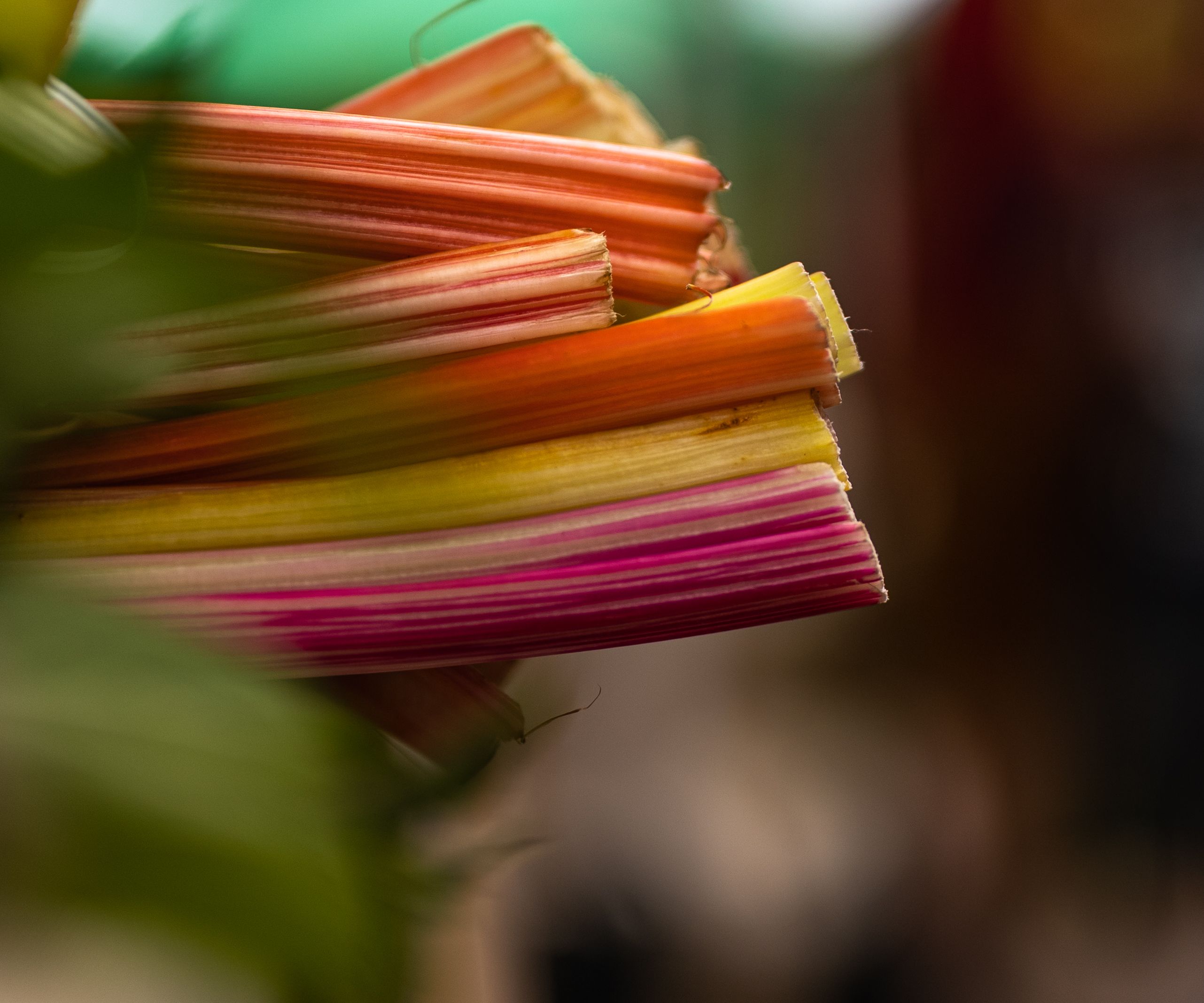
How much? 50—75 g raw or lightly steamed leaves/day. The multicolored "rainbow chard" provides the maximum betalain matrix.
When to avoid? Kidney stone predisposition (moderate-to-high oxalate ≈ 645 mg/100 g — soaking and boiling reduce it). Warfarin (vitamin K — constant intake). Infants under 6 months: nitrate-methemoglobinemia.
Swiss chard is the leaf-developed variant of wild beet (Beta vulgaris) — a Mediterranean vegetable cultivated already in the time of Aristotle and Theophrastus. Italian "bietola" and French "blette" were woven into the dietary traditions of the Roman Empire, and by the Renaissance gardening books the multicolored "Swiss chard" had appeared. At the end of the 19th century, Adolf von Baeyer (1879) isolated the betalain pigments — research continues today on their polyphenol-like health effects.
Scientific Background
Swiss chard's nitrate content is similar to that of spinach and beetroot (200—400 mg/100 g fresh weight) — it is also a member of the **Bondonno 2016 *J Nutr*** "nitrate-rich vegetable portfolio." Activation of the oral nitrate → nitrite → NO pathway lowers blood pressure and improves flow-mediated dilation.
The betalain pigment (betacyanin + betaxanthin) has strong antioxidant capacity — according to Clifford 2015 Nutrients review, in vitro inhibition of lipid peroxidation by betalain is comparable to that of anthocyanins, but it acts through different pathways. Small-sample human RCTs have documented decreased plasma malondialdehyde and inhibition of LDL oxidation.
The magnesium content is clinically relevant: 81 mg/100 g — magnesium deficiency is common across Europe (according to Schiopu 2022 review, 25—40% of the adult population). Magnesium is a cofactor for insulin sensitivity, NMDA receptor modulation, and vascular function.
- + Olive oil + lemon: classic Mediterranean "chard sauté" — fat enhances carotenoid and vitamin K absorption.
- + Beetroot + walnut: dual nitrate matrix + omega-3.
- + Eggs (omelet, frittata): classic Italian "frittata di bietole" — protein + iron + fat.
- + Citric acid (in the cooking liquid): reduces oxalate content.
- + Trout or salmon: Mediterranean omega-3 + nitrate combination.
- Very long boiling (> 10 min): partial loss of nitrate + vitamin K.
- Iron supplement at the same meal: oxalate chelation.
- Dairy + high-oxalate context: calcium-oxalate formation.
- Calcium-oxalate kidney-stone predisposition: high oxalate content (≈ 645 mg/100 g) — soaking + boiling in plenty of water reduces it.
- Warfarin: vitamin K (≈ 830 µg/100 g!) — strictly constant intake.
- Infants under 6 months: methemoglobinemia risk.
- Active Crohn's disease, IBD: high oxalate + nitrate to be avoided.
- Hashimoto + high raw dose (≥ 200 g/day): moderate goitrogenic potential as a Brassica relative.
- Clifford T et al. The potential benefits of red beetroot supplementation in health and disease — review. Nutrients 2015;7(4):2801—2822 (betalain-matrix evidence). https://pmc.ncbi.nlm.nih.gov/articles/PMC4425174/
- Bondonno CP et al. Vegetable-derived bioactive nitrate and cardiovascular health. J Nutr 2016;146(8):1485S—1492S.
- Pyo YH et al. Antioxidant activity and phenolic compounds of Swiss chard. Food Chem 2014;145:108—115.
- Ninfali P, Angelino D. Nutritional and functional potential of Beta vulgaris cicla and rubra. Fitoterapia 2013;89:188—199. https://pubmed.ncbi.nlm.nih.gov/23751216/
- USDA FoodData Central — Chard, Swiss, raw (NDB #11147). https://fdc.nal.usda.gov/
- Monash University. Swiss chard — Low FODMAP serving guidance (75 g green). https://www.monashfodmap.com/about-fodmap-and-ibs/high-and-low-fodmap-foods/
- EFSA. Scientific opinion on nitrate in vegetables. EFSA Journal 2008. https://doi.org/10.2903/j.efsa.2008.689