


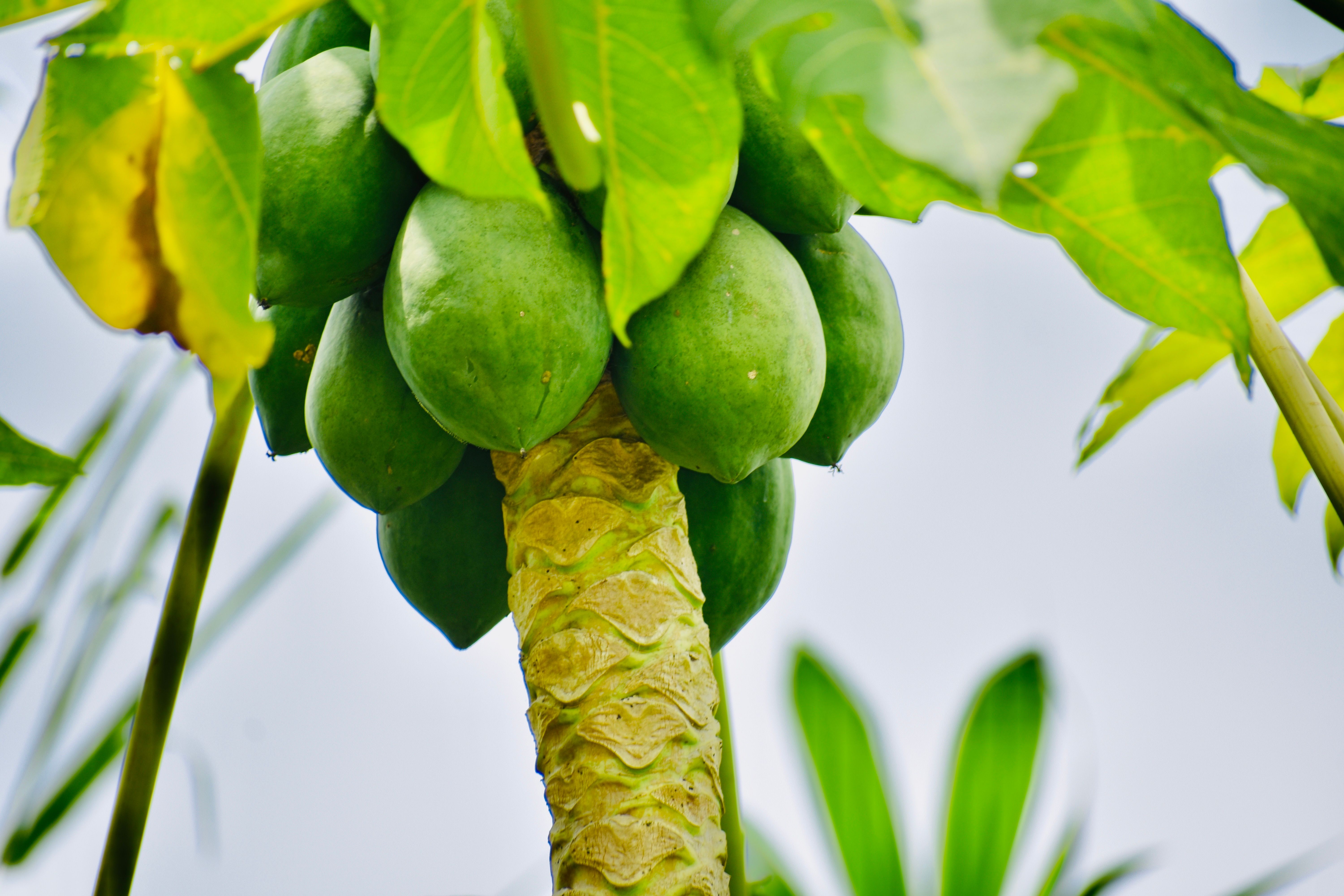
Papaya
The tropical papain workshop — proteolytic enzyme, lycopene, and postprandial glucose regulation.
In 1 minute
What does it provide? Papain and chymopapain (plant cysteine protease enzymes — aid protein digestion between pH 4.5–8), lycopene (red carotenoid — 3× better absorbed from papaya than from tomato, Schweiggert 2014), β-carotene (vitamin A precursor) and vitamin C (≈ 60 mg/100 g). Fermented papaya has a favorable effect on small intestinal permeability and Lactobacillus populations.
How much? 1 slice (≈ 140–200 g, 1 cup cubed) of fresh ripe fruit daily. Muss 2013 RCT: 8 weeks of fermented papaya (Caricol) significantly improved functional dyspepsia (bloating, early satiety). Add a fat source (coconut milk, avocado) — 2–3× more carotenoid is absorbed.
When to avoid? Latex-papaya allergic syndrome (cysteine protease cross-reaction — oral allergy, rarely anaphylaxis); first trimester of pregnancy with UNRIPE green papaya (high carpaine and latex — uterine contraction risk; the ripe one is safe); warfarin/DOAC therapy (moderate platelet-inhibiting effect — stop 2 weeks before surgery); severe kidney failure (potassium).
Papaya comes from the southern Mexican and Central American region; 16th-century Spanish conquistadors brought it to the Caribbean, then to the Philippines and the Indian subcontinent. Columbus called it the "fruit of the angels." The Mayan and Aztec cultures used the leaves for anti-inflammatory and the seeds for antiparasitic purposes — the former return today in fermented papaya preparations (Yariv-style).
The papain enzyme was first isolated by Adolph Wurtz in Paris in 1879; modern clinical research began in the 1960s, when Indian research groups first described papain's role in dyspepsia. The digestion-supporting role of "green papaya" (unripe) derives partly from higher papain concentration and partly from resistant starch content (Wikipedia, PMC).
🔬 Scientific Background
Papaya acts through three mechanisms. The papain–digestion axis: papain and chymopapain cysteine proteases are active in the pH 4.5–8 range — partially functional in the stomach and small intestine. Muss et al. (2013) showed in a randomized, double-blind study that a fermented papaya preparation (Yariv-style) significantly improved functional dyspepsia symptoms (bloating, early satiety, GERD-like complaints) over 8 weeks. Papain also cleaves denatured collagen — hence its traditional wound treatment application.
The carotenoid axis: red-fleshed papaya contains 270–500 µg β-carotene and 1820–3500 µg lycopene per 100 g. Lycopene bioavailability is higher in papaya than in tomato — Schweiggert et al. (2014, British Journal of Nutrition) in a direct human crossover study measured 3× greater serum lycopene AUC after the same lycopene dose of papaya vs. tomato, due to the cell wall matrix difference.
The microbiome and gut barrier: Aravind et al. (2013) indicate that fermented papaya has a favorable effect on small intestinal permeability (zonulin reduction) and Lactobacillus populations. Evidence level: human RCT (★★★) for dyspepsia and lycopene absorption; preclinical (★) on microbiome endpoints.
- + Fresh lime juice: the acidic pH preserves papain activity and gives synergistic vitamin C–lycopene antioxidant capacity.
- + High-protein meal (chicken, fish, tuna salad): papain aids protein digestion; classic tropical dietary culture.
- + Fat source (coconut milk, avocado): carotenoid and lycopene bioavailability rises 2–3×.
- + Yogurt or kefir for breakfast: prebiotic fiber + probiotic lactic acid bacteria + papain synergy.
- High-dose anticoagulant supplements (omega-3, ginkgo, garlic capsule): papain's moderate platelet-inhibiting effect can be additive.
- Dairy-gelatin desserts: papain cleaves gelatin and milk proteins — texture falls apart.
- High-dose iron solution-tablet: polyphenols can moderately reduce absorption.
- Canned/pasteurized papaya juice for "enzyme supplementation": heat treatment inactivates papain — no functional effect.
- Latex-papaya allergy syndrome: papain and other proteins cross-react with natural rubber (Hevea brasiliensis) latex — oral allergic syndrome, rarely anaphylaxis.
- Anticoagulant therapy (warfarin, DOAC): moderate papain activity on platelet function — to be avoided 2 weeks before planned surgery.
- First trimester of pregnancy — unripe, GREEN papaya: high latex content and carpaine concentration may pose uterine contraction risk; ripe papaya, however, is safe.
- Severe kidney disease: moderate potassium content — individual titration.
Daily serving: 1 slice (~140–200 g) of fresh ripe papaya, about 1 cup cubed.
Preparation pattern: Fresh, drizzled with fresh lime juice; in tropical salad; in smoothie (with yogurt or coconut milk); in green salad filling (ripe or green strips).
Classic patterns: Thai som tam (green papaya salad — unripe, low glycemic, high papain); Mexican ensalada de papaya; Caribbean "green papaya" soup (green papaya hard to find in Hungarian market, worth looking for in Asian shops).
Storage: Whole papaya at room temperature 2–4 days for after-ripening; peeled refrigerated 3–4 days; frozen 6–8 months (structure changes).