


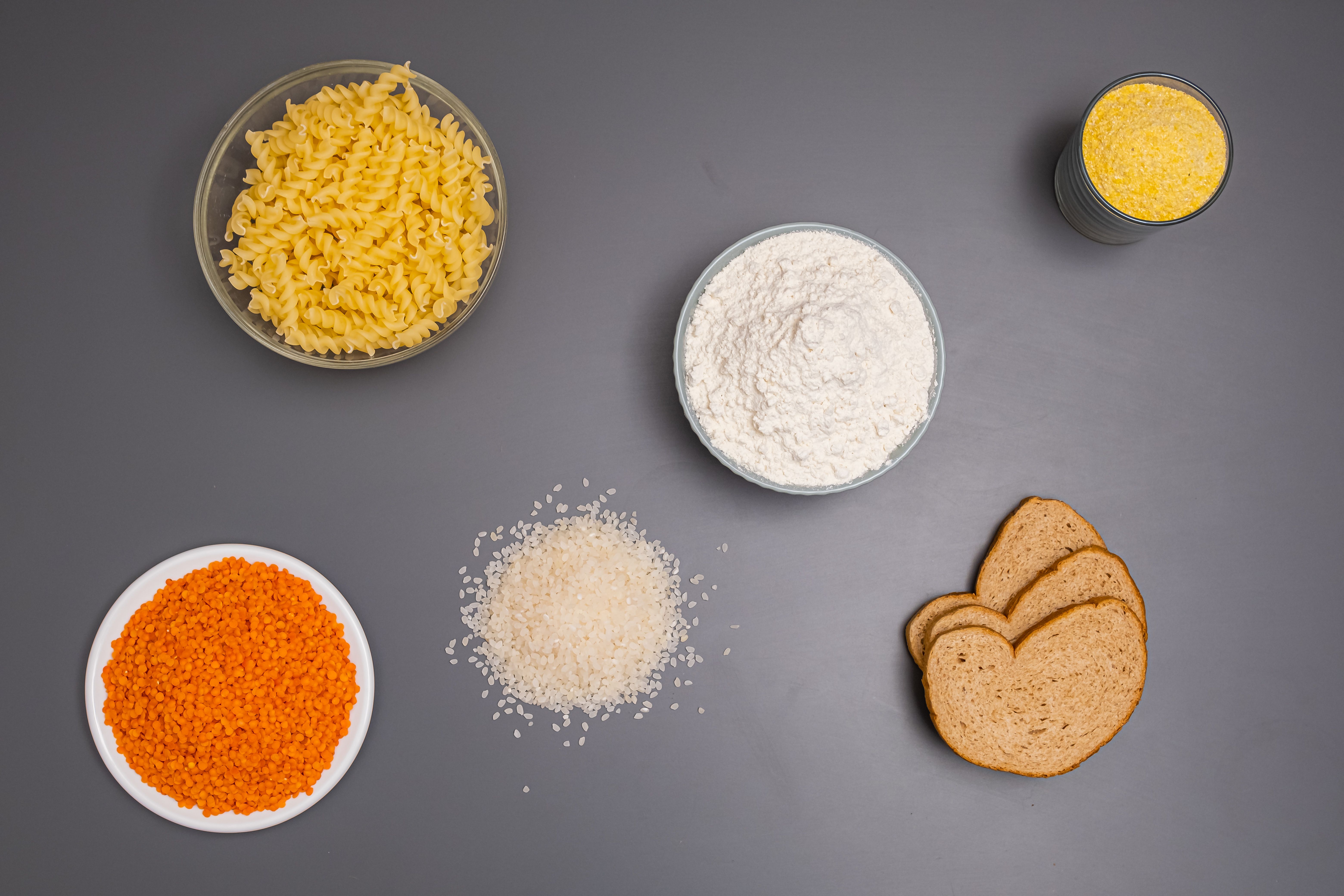
Resistant Starch RS3
The "cook-and-chill" magic — retrogradation, butyrate boost, and the millennial intuition of sushi rice.
In 1 minute
What does it provide? The retrograded, double-helix-structured fraction of cooked → cooled → (reheated) starch, which is not broken down in the small intestine but reaches the colon and fuels butyrate fermentation. The main RS type in processed foods — the main contributor to daily RS intake.
How much? 15–30 g RS3/day (1 cup cooked-and-chilled potato/rice/pasta).
When to avoid? B. cereus infection risk (improperly cooled rice), severe IBS flare, acute diverticulitis.
RS3's history illustrates how nutritional science sometimes "discovers" phenomena that have been happening in the kitchen for millennia. The so-called retrogradation of starch — the rearrangement and "solidification" of cooked starch upon cooling — was observed by early 20th-century baking technologists in connection with bread "staling": as early as 1852, French agrochemist Jean-Baptiste Boussingault described the "crystallization" of starch (retrogradation) in cold bread crumb in the Annales de chimie et de physique. Interestingly, earlier kitchen cultures were already intuitively using the RS3 phenomenon: the cold serving of Japanese sushi rice, Tunisian-Moroccan cold potato summer salads, or Central European potato salads have become part of traditions, although the operational mechanism only became clear in the late 20th century.
The "RS" (resistant starch) concept was developed by Cambridge researchers Hans Englyst and John Cummings in the 1980s, to understand why some starch types are not fully digested. In their classic 1992 paper, they systematized the RS1–RS3 classes; RS3 has since been called "retrograded starch" and is considered the main RS type occurring in processed foods — meaning that the largest part of our daily RS intake comes from RS3. From the 1990s, industry also offered RS3 concentrates (powder starches produced through repeated heat-moisture cycles), and many clinical trials analyze RS3 microbiota and glycemic effects. From the 2010s, the home "cook-and-chill" strategy (overnight cooling of rice, potato, or pasta) became a recurring topic of nutritional lifestyle advice, and "after sous-vide" cold potato sides appear as test foods in clinical laboratories.
🔬 Scientific Background
RS3 is the digestion-resistant fraction formed during retrogradation of starch: gelatinized starch (after cooking), upon cooling, partly forms crystalline, double-helix structures (especially the amylose chains), which are not broken down in the small intestine, so they reach the colon and ferment there.
RS3 is the main RS type occurring in processed foods, and thus the main contributor to daily RS intake.
Human RCT evidence: - Sonia 2015 (APJCN) — cooked → 24 hour 4 °C cooled → reheated white rice gave higher RS content and lower postprandial glycemic response than freshly hot-served. - For pasta as well, smaller glycemic benefit was shown after cooling-reheating, but results depend on recipe, duration, and individual. - In vitro and ex vivo: RS3 stimulates butyrate-producing fermentation; multiple studies detail the butyrate-boosting potential of "intrinsic RS3" preparations and the division of labor between microbes.
Keystone bacterium: Ruminococcus bromii is a key player in RS degradation (certainly for RS2, important for RS3 too); Bifidobacterium adolescentis only breaks down certain RS3 types in a limited manner.
Heat stability: retrograded starch is heat-stable under food conditions (up to ≈ 100 °C) — so it can persist with reheating. This is RS3's main practical advantage over RS2 (which gelatinizes with cooking). Multiple studies have shown an explicitly "thermally stable RS3" fraction with lower glycemic response even after cooling-reheating.
Factors influencing RS3 formation: - Amylose content (high amylose = more RS3) - Temperature-time profile (12–24 hours at 4 °C optimal) - Water content (moderately moist) - Repeated cooling-heating (further raises the RS ratio)
Food safety — B. cereus warning! Cooked rice and pasta should be cooled with particular care: - Cool to ≤ 5 °C within 1 hour - Maximum 24–48 hours in the fridge - When reheating, ≥ 74 °C internal temperature - Never reheat multiple times - For potatoes, similar principle (Bacillus cereus + Clostridium botulinum for foil-baked potatoes)
Realistic expectation: the glycemic benefit and microbiome effect are moderate — not always demonstrable short-term in everyone, but with ≥ 2–4 weeks of regular RS3 consumption, the favorable direction is more common.
- + Repeated cooling-heating cycle: further raises the RS3 ratio.
- + High-amylose base ingredient (basmati rice, distinctly high-amylose potato variety): more RS3 formation.
- + Fermentable fibers (inulin, FOS, AXOS, β-glucan): broader SCFA profile.
- + Polyphenol sources (vegetables, nuts, olive oil): microbiome-synergistic.
- + Live cultures (yogurt, kefir): Bifidobacterium + R. bromii cooperation.
- + Cold-served form (sushi, cold rice salad, potato salad): maximum RS3 retention.
- Cooked rice left at room temperature 2+ hours: B. cereus proliferation — food poisoning risk (especially rice!).
- Repeated multiple reheating: microbial risk escalates.
- Acute antibiotic course: microbiota is transiently reduced → RS3 fermentation ↓.
- Too low-amylose starch (some versions of gluten-free pasta): barely forms RS3.
- Foil-baked potato left at room temperature for a long time: C. botulinum risk in anaerobic environment.
- Active bowel inflammation (IBD flare): avoid in acute phase due to fermentation gas.
- Severe IBS flare: temporarily avoid, gradual introduction in remission phase.
- Acute diverticulitis: avoid in acute phase.
- Severe SIBO: RS3 fermentation occurs also in the small intestine → exacerbates symptoms.
- Type 1 diabetes on insulin pump treatment: RS3 reduces glycemia — dose recalculation.
- Immunocompromised patients + improperly cooled rice: B. cereus sensitivity.
Daily serving
15–30 g RS3 (1 cup cooked-and-chilled potato/rice/pasta) per meal.
Preparation pattern
- Rice "cook-and-chill": cook 100 g basmati rice → within 1 hour cool to 4 °C → 24 hour storage → consume cold (sushi style) or reheated to ≥ 74 °C.
- Potato: boil in skin 25 minutes → cool 12–24 hours → potato salad cold or lightly reheated.
- Pasta "pasta fredda": al dente cooking → drain → 12 hour cooling → as salad the next day + olive oil.
- Bread 1–2 days old: leave at room temperature 24–48 hours → toast back when consuming.
Classic patterns
Japanese sushi rice: vinegar + sugar + salt seasoning, served at room temperature (short time!).
Italian pasta fredda: cooked-and-chilled pasta + olive oil + tomato + basil.
Central European potato salad: cooked-and-chilled potato + onion + vinegar + oil + mustard.
Indian biryani next day: chilled, reheated.
Modern fusion bowl: cooked-and-chilled basmati + roasted vegetables + tahini.
Storage and avoidances
Storage (CRITICAL): Cooked rice cool to ≤ 5 °C within 1 hour, max 24–48 hours in the fridge. Reheat to ≥ 74 °C. Never leave at room temperature more than 2 hours.
Potato: refrigerated 4 days cooked. Pasta: 3 days. Bread at room temperature 2–3 days (older = RS3-richer).
What not to do: Don't leave rice/potato at room temperature (B. cereus, C. botulinum). Don't reheat multiple times. Don't wrap baked potatoes in foil for a long time (anaerobic environment).
References
[1] Englyst HN, Kingman SM, Cummings JH. Classification and measurement of nutritionally important starch fractions. Eur J Clin Nutr 1992;46 Suppl 2:S33–S50.
[2] Sonia S et al. Cooling of cooked white rice reduces the postprandial blood glucose response in healthy subjects. Asia Pac J Clin Nutr 2015;24(4):620–625.
[3] Raben A et al. Resistant starch: the effect on postprandial glycemia, hormonal response, and satiety. Am J Clin Nutr 1994;60(4):544–551.
[4] Bird AR et al. Resistant starch, large bowel fermentation and a broader perspective of prebiotics and probiotics. Beneficial Microbes 2010.
[5] Ze X et al. Ruminococcus bromii is a keystone species for the degradation of resistant starch in the human colon. ISME J 2012;6(8):1535–1543.
[6] Lockyer S, Nugent AP. Health effects of resistant starch. Nutr Bull 2017;42(1):10–41.
[7] Patterson MA et al. Resistant starch content in foods commonly consumed in the United States: a narrative review. J Acad Nutr Diet 2020.
[8] Food Standards Agency. Cooked rice — fried rice syndrome (Bacillus cereus) safety guidance. 2022.
[9] EFSA BIOHAZ Panel. Update of the risk assessment of Bacillus cereus group bacteria in foodstuffs. 2016.