


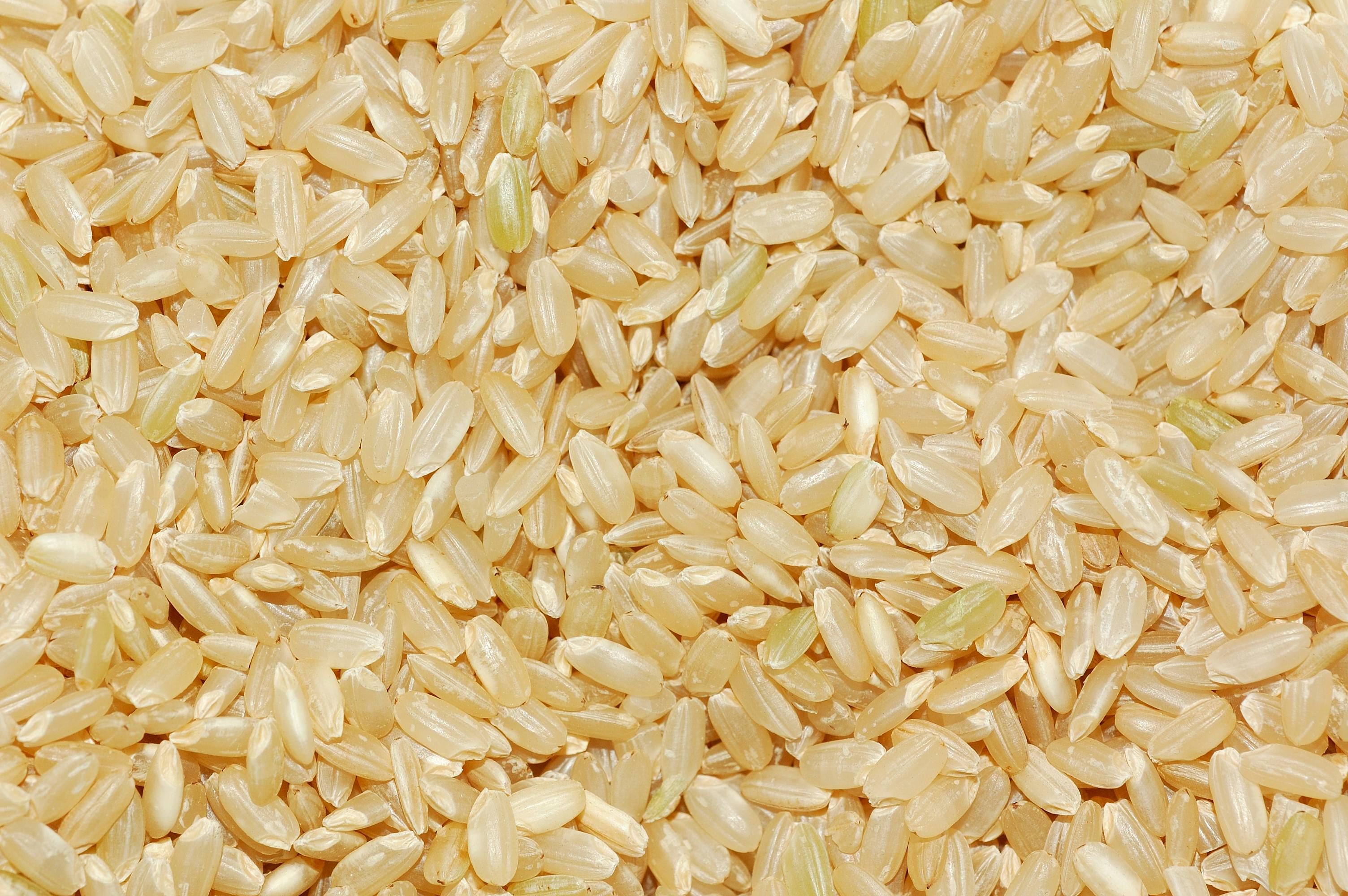
Rice / Brown Rice
Half of Earth lives on it — γ-oryzanol, phytate balance, and arsenic caution.
In 1 minute
What does it provide? In the bran of brown rice, arabinoxylan fiber (fermentable prebiotic), γ-oryzanol (ferulic acid ester — LDL-lowering: 300 mg/day RCT –6.3% LDL, Cicero 2001), B vitamins, and magnesium. White rice is quick starch, low allergenicity, tolerated even during IBS flares. The "cook-and-chill" protocol forms RS3 resistant starch (butyrate-producing substrate).
How much? 60–80 g dry per meal (≈ 1 cup cooked). Rice bran in a targeted prebiotic protocol 20–30 g/day (human RCT: 30–40 g/day for 2–24 weeks). Plentiful-water cooking (1:6 ratio + draining) reduces arsenic content by 30–45%.
When to avoid? Infant <12 months as the exclusive carbohydrate source (inorganic arsenic accumulation — WHO/EFSA), chronic kidney disease (CKD 3b–5: potassium ≈ 80 mg/100 g, phosphorus), hemochromatosis (iron overload with brown rice), high-arsenic source countries (Bangladesh, India, Texas), cooked rice left at room temperature >2 hours due to B. cereus prevention, white rice served fresh-hot in uncontrolled T2D (high GI — choose brown rice or the chilled RS3 form).
The century-long scientific debate surrounding rice has only quieted in recent decades: researchers now agree that cultivated Asian rice (Oryza sativa) was domesticated about 8,000–9,000 years ago in the lower and middle Yangtze region — phytolith finds, charred rice grains, and genetic analyses all confirm this. The ancient wild rice (Oryza rufipogon) can still be found today in the region's deeper marshes, and the Hubei and Zhejiang Neolithic sites bear witness to earlier domestication attempts. In the marshland villages of the Hemudu culture (around 5000 BCE), rice was already cultivated in an organized way, harvested in bundles with wooden hoes — the world's first wet rice paddies also came from here.
From there, rice split into two branches: the cold-tolerant japonica spread north and toward Japan, and the heat-loving indica toward India and Southeast Asia. Through the Silk Road and maritime routes, by the end of the 1st millennium BCE it reached Persia, and by the early centuries CE the Mediterranean — today's Italian risotto culture only developed into truly gastronomic force from the 15th century onward, following Arab mediation that brought rice to Spain. In China between 1000 and 1800, rice was the backbone of the entire economy: during the Song dynasty, the early-ripening "Champa rice" allowed two harvests per year, triggering rapid population growth. Today it is a staple food for about half of the Earth's population — and nutritional science is rediscovering its brown, polyphenol-rich bran varieties. In the early 21st century, however, the scientific community also confronted the arsenic accumulation question: according to the 2014 EFSA report, rice is the main source of inorganic As intake in adults and especially in infants.
🔬 Scientific Background
Brown rice (unhulled whole grain) retains the bran and germ, where arabinoxylans, γ-oryzanol (ferulic acid-trimethylglycol ester), tocotrienols, phenolic acids, and B vitamins are concentrated. White rice (polished) essentially loses these — as compensation, in many countries it is enriched with B1, niacin, and Fe.
γ-Oryzanol in human RCTs (Cicero & Gaddi 2001) at a 300 mg/day dose showed ≈ 6.3% LDL reduction. Whole brown rice in a meal provides about 50–80 mg γ-oryzanol/100 g — supplementing with rice bran oil gives a concentrated source.
The prebiotic potential of rice bran: 30–40 g heat-stabilized rice bran/day in human interventions (2–24 weeks) modulated microbiota composition — increases in Lactobacillus, Bifidobacterium, and some Firmicutes taxa were documented, with SCFA elevation.
The "cook-and-chill" RS3 protocol: cooked rice at 4 °C over 12–24 hours retrogrades, forming RS3. Randomized controlled human experiments (Sonia 2015, Strocchi group) confirmed that chilled → reheated white rice significantly lowers the glycemic curve compared to freshly hot-served — sushi rice and rice salad cultures have intuitively used this for centuries.
Phytate content: the phytate in brown rice can limit Fe/Zn absorption; soaking for 6–8 hours reduces it. Sprouted brown rice (GABA-rice) has significantly lower phytate and higher GABA content.
Arsenic caution: rice tends to accumulate inorganic arsenic (iAs) because it is grown in water. According to EFSA's 2014 opinion, the adult BMDL01 is ≈ 0.3 µg/kg/day. Reduction strategies: (1) plentiful-water cooking (1:6 ratio, draining) → 30–45% iAs reduction (Sengupta 2006); (2) source rotation (Italian, Spanish rice is lower in As; Bangladeshi, Indian higher); (3) infants: per WHO, rice should not be the exclusive carbohydrate source under 12 months of age.
- + "Cook-and-chill" RS3 protocol: 24-hour chilling → consume cold or reheated; lower glycemia + butyrate boost.
- + Vinegar (rice vinegar) with the meal: RCT-confirmed postprandial glycemia reduction.
- + Legumes (beans, lentils): classic global pattern (rice-and-beans), complete amino acid profile + broader prebiotic matrix.
- + Fatty fish or tofu: omega-3 + complete protein balance.
- + Soaking 6–8 hours before cooking: phytate reduction, improved Fe/Zn bioavailability.
- + Plentiful-water (1:6) cooking + draining: As reduction, safer consumption.
- From high-arsenic source (Bangladesh, India, Texas-USA): avoid, or use plentiful-water cooking.
- Strong tea/coffee with the meal: tannin-mediated iron absorption reduction (utilization of brown rice's iron).
- Calcium supplement (> 500 mg) at the same meal: decreases Fe absorption.
- Primary carbohydrate source in infant diet (< 12 months): per WHO, vary the source.
- Freshly hot-served white rice in diabetes: high GI worsens glycemic control — choose brown or the cook-and-chill protocol.
- Chronic kidney disease (CKD 3b–5): brown rice's potassium (~80 mg/100 g) and phosphorus in moderation; CKD patients often receive white rice instead.
- Hemochromatosis / iron metabolism disorder: regular large amounts of brown rice can elevate Fe.
- Infants (< 12 months): As sensitivity; per WHO, varied carbohydrate sources.
- Severe diabetes insulin resistance: due to white rice's high GI — choose brown rice, RS3 protocol, or vinegar pre-load.
- B. cereus sensitivity: cooked rice quick cooling (within 1 hour to below 4 °C), reheat to ≥ 74 °C — mandatory hygiene rules.
- Rice bran allergy (rare): avoid.
Daily serving
60–80 g dry (1 cup cooked) per meal, max 3–5×/week; rice bran in a targeted prebiotic protocol 20–30 g/day.
Preparation pattern
- Soaking: 6–8 hours in cold water → phytate ↓, As ↓, cooking time ↓.
- Plentiful-water (1:6) method: 100 g rice + 600 ml water → 18–25 minutes, drain → As ↓ 30–45%.
- Classic (1:2) method: 100 g rice + 200 ml water → to a boil, then on low heat 15–20 minutes covered, rest 5 minutes.
- "Cook-and-chill" RS3: cooked rice → quick cooling (under 1 hour to below 4 °C) → 12–24 hour storage → cold (sushi-style) or ≥ 74 °C reheating.
Classic patterns
Sushi rice (japonica): rice vinegar + sugar + salt seasoning — natural RS3 application.
Italian risotto (arborio): slow-stirred, with parmesan, mushrooms.
Indian biryani: basmati + spices + saffron + onion.
Central European adaptation: side dish for stews, or pilaf with dried fruit-seeds.
Mexican rice-and-beans: brown rice + black beans + tomato + peppers.
Storage and avoidances
Storage: Dry rice in an airtight jar in a dark place 12 months. Cooked rice in the fridge 3–4 days, frozen 1 month.
What not to do: Don't leave at room temperature more than 2 hours (B. cereus). Don't toast at too high a temperature (acrylamide). From high-As source countries, don't consume rice as a daily staple.
References
[1] EFSA Panel CONTAM. Dietary exposure to inorganic arsenic in the European population. EFSA Journal 2014;12(3):3597.
[2] Sengupta MK et al. Arsenic burden of cooked rice: traditional and modern methods. Environ Sci Technol 2006;40(2):512–518.
[3] Cicero AF, Gaddi A. Rice bran oil and γ-oryzanol in the treatment of hyperlipoproteinaemias and other conditions. Phytother Res 2001;15(4):277–289.
[4] Sonia S et al. Cooling of cooked white rice reduces the postprandial blood glucose response in healthy subjects. Asia Pac J Clin Nutr 2015;24(4):620–625.
[5] Sheflin AM et al. Stabilized rice bran improves stool frequency: a randomized controlled trial. Br J Nutr 2017.
[6] Park HY et al. Brown rice intake and gut microbiota modulation. Nutrients 2020.
[7] EFSA NDA Panel. Scientific Opinion on dietary reference values for carbohydrates and dietary fibre. EFSA Journal 2010;8(3):1462.
[8] WHO. Arsenic in drinking water and rice-based foods — public health guidance. 2018.
[9] Monash University. High and Low FODMAP foods — rice (white and brown). Monash FODMAP database.