
Kvass
The Eastern European ancient rye ferment — low-alcohol live LAB drink, postbiotic + B-vitamin matrix.
Kvass in 1 minute
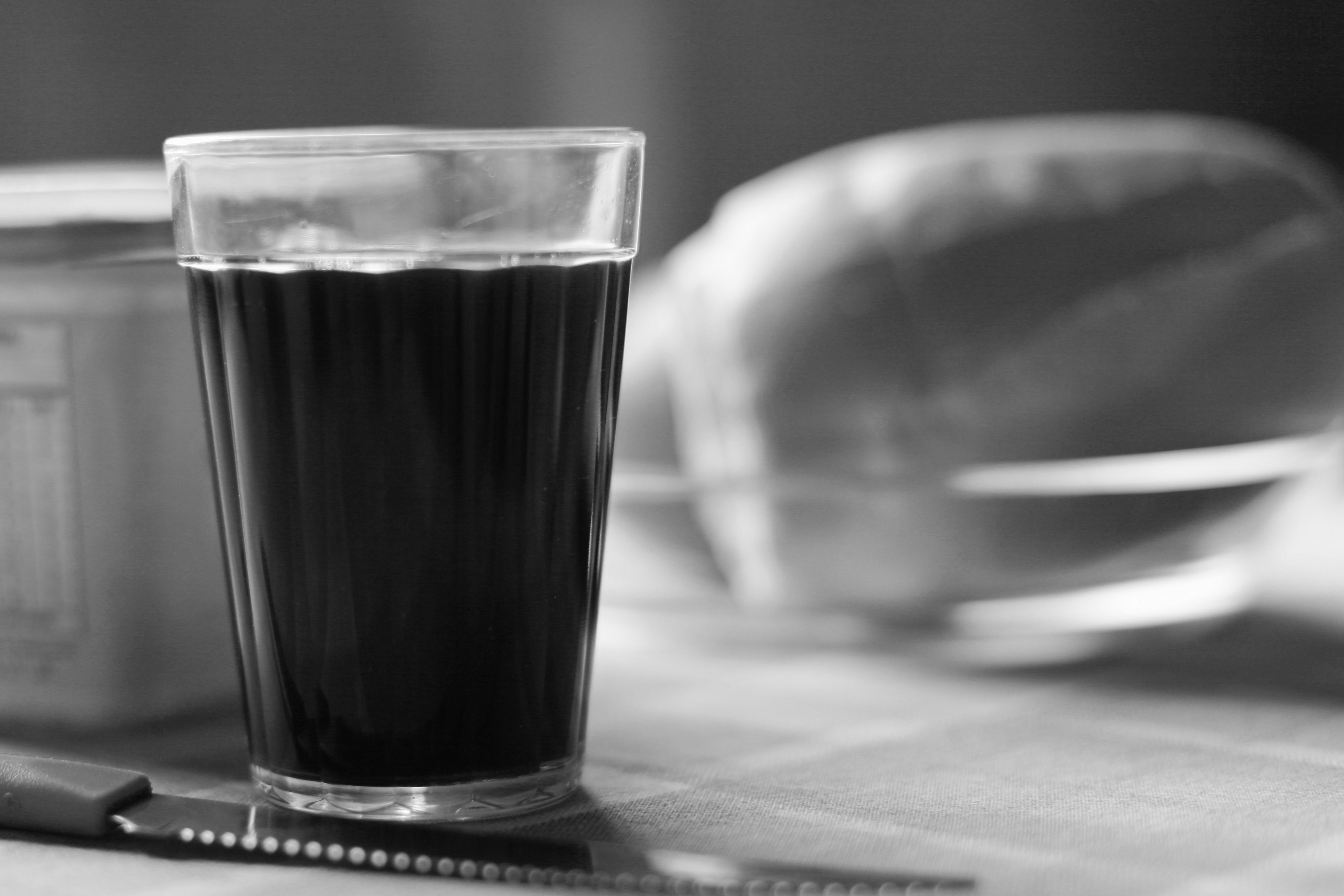
What does it provide? A rye- (often started from sourdough bread) or barley-based spontaneous ferment. Live Lactobacillus + Saccharomyces community (10⁶—10⁸ CFU/ml), lactic acid, acetic acid, B-complex (B1, B2, B5, B6), and a small amount of ethanol (0.5—1.2%). Traditional Russian, Ukrainian, and Baltic refreshing drink.
How much? 100—250 ml / day (1 glass). Start with a small portion (50 ml) and titrate over 1—2 weeks.
When to avoid? Celiac disease / NCGS (rye/barley-based, gluten-containing). Diabetes (sugar residue 3—6 g/100 ml). Infants under 1 year (alcohol trace).
Kvass is one of the oldest Eastern European ferments — Russian, Ukrainian, Belarusian, Baltic, and Polish sources have documented it since the 10th century. The Slavic name "kvass" (sour) already appears in the records of Old Kievan Rus. At the end of the 19th century Mendeleev himself recommended it as a dietary reform; during the Soviet era, street kvass barrels were a typical urban sight. The modern microbiome movement rediscovered it after 2010 as a "traditional Slavic" water-kefir-analogue drink.
Scientific Background
Kvass is a spontaneous microbial ferment: sourdough bread (or malted rye) contains LAB spores (Lactobacillus brevis, Lb. plantarum, Pediococcus) and wild yeasts (Saccharomyces cerevisiae, Kazachstania humilis). Fermentation time (1—5 days) and temperature (18—25 °C) influence the final product's acidity, ethanol content, and character.
Clinical evidence is limited — the postbiotic direction is accepted, but specific human RCTs are sparse. Coda 2014 Trends Food Sci Technol categorizes kvass-like cereal-origin ferments as "underexplored functional foods." The classic B-vitamin-supplementing role is of historical significance and context-sensitive in a modern adequate diet.
At the microbiome level, analogous to water kefir (IX.4), it provides indirect Lacto- and Bifidobacterium support. The fiber residue (rye kvass more than barley kvass) represents bifidogenic potential.
- + Classic Russian "okroshka" soup: kvass + cucumber + radish + green onion — refreshing.
- + Fresh salad + olive oil: acid + fat base matrix.
- + 15 minutes before a meal (aperitif): classic tradition.
- + Berries (raspberry, blueberry): flavoring + anthocyanin matrix.
- + Fermented vegetables (sour pickles): Slavic synbiotic.
- High-dose antibiotic treatment: live LAB ineffective; 2—4 hour separation.
- Glass bottle over-pressure storage (> 5 days at room temperature): explosion risk.
- With high-dose ethanol: additive (0.5—1.2% kvass + alcohol).
- Celiac disease / NCGS: absolutely to be avoided (rye/barley origin — gluten-containing).
- Diabetes with insulin pump: monitor sugar residue (3—6 g/100 ml).
- Histamine sensitivity / DAO deficiency: test in small portions.
- Active Candida: yeast content may worsen.
- Infants under 1 year: FORBIDDEN (alcohol trace + yeast).
- Pregnancy: small portions with moderation; trimester 1 to be avoided.
- Coda R et al. Sourdough lactic acid bacteria: exploration of non-wheat cereal-based fermentation. Food Microbiol 2014;37:51—58. https://www.sciencedirect.com/science/article/abs/pii/S0740002013001329
- Dlusskaya E et al. Microbiota analysis of traditional kvass. Curr Microbiol 2008;57(1):31—36. https://doi.org/10.1007/s00217-007-0719-4
- Stancheva I et al. Kvass — traditional Bulgarian rye beverage: microbiology and chemistry. Bulg J Agric Sci 2014;20(5):1190—1196.
- Marsh AJ et al. Fermented beverages with health-promoting potential: past and future perspectives. Trends Food Sci Technol 2014;38(2):113—124. https://www.sciencedirect.com/science/article/abs/pii/S0924224414001058
- Sengun IY, Karabiyikli S. Importance of acetic acid bacteria in food industry — review (kvass context). Food Control 2011;22(5):647—656.
- Monash University. Kvass — preliminary low FODMAP guidance (rye matrix red). https://www.monashfodmap.com/about-fodmap-and-ibs/high-and-low-fodmap-foods/