


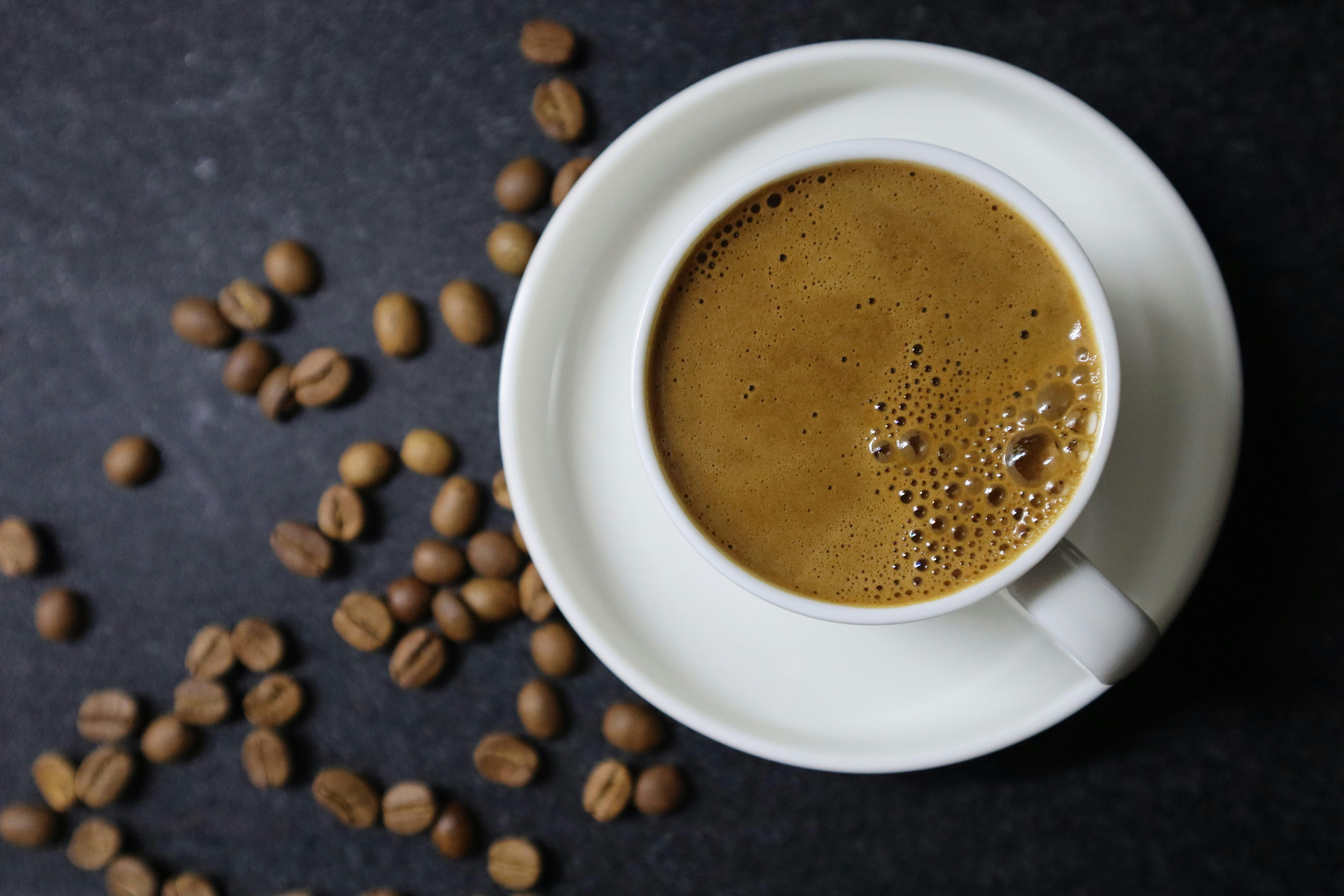
Chicory coffee
A caffeine-free coffee substitute — roasted chicory root with melanoidins, NOT a significant inulin source (only native root is).
In 1 minute
What does it provide? A CAFFEINE-FREE coffee substitute. The roasted chicory root provides melanoidins (the antioxidant, fiber-like polymers of the Maillard reaction), small amounts of chlorogenic acid (polyphenol), and residual inulin (a soluble prebiotic fiber — roasting has broken down most of it: only ≈ 0.5–2 g/cup). IMPORTANT: native (unroasted) chicory root contains 60–80% inulin, and according to an EFSA-recognized health claim, 12 g/day of native chicory inulin improves bowel frequency — roasted coffee does NOT reach this threshold.
How much? 1–3 cups (≈ 250–600 ml) daily. For prebiotic purposes, can be combined with native chicory-inulin powder (3–5 g/cup).
When to avoid? Asteraceae allergy (ragweed, mugwort, chamomile — cross-reactivity), gallstone or active biliary disease (choleretic effect — colicky attack), active gastric ulcer/GERD flare, severe IBS flare with fructan sensitivity (residual inulin can also provoke), infant/young child <2 years (lack of established safety data).
Chicory — wild catawampus — was known in ancient Egyptian and Greco-Roman cuisine: Pliny writes about it in detail in Naturalis Historia as a bitter root that aids digestion, and Galen also mentions it among remedies for melancholy and liver diseases. In the late 18th century, Frederick the Great of Prussia promoted the roasted chicory root drink by decree: for economic-policy reasons he wanted to push back the expensive colonial coffee imports, and in 1769 the first industrial chicory roasterhouse was established in Brunswick. The real breakthrough came with the Napoleonic Continental Blockade (1806–1814), when the British naval blockade made it nearly impossible to import coffee to Europe, and so French and German burghers reluctantly mixed chicory with the remaining beans — or drank it on its own.
In the 19th century, French and Belgian tradition carried on the habit, and French Creole culture in New Orleans also adopted it: during the American Civil War, when the southern port blockade stopped coffee imports, Louisiana housewives again blended chicory with the beans, and this "café au lait avec chicorée" is still one of the city's signature drinks. In the 20th century, chicory coffee remained more out of taste and tradition; today, nutritional science is interested in it because chicory root in its native form is one of the richest sources of inulin (ITF) — although roasting breaks down much of the inulin, the remainder together with melanoidins provides an interesting prebiotic-postbiotic matrix.
🔬 Scientific Background
In its native state (dried, unroasted), chicory root is one of the richest natural sources of inulin-type fructans (ITF) — 60–80% of the dry matter. This is a classic prebiotic: in human RCTs, 12 g of chicory inulin daily produced elevation of Bifidobacterium levels and improvement of bowel frequency, and EFSA officially recognized: ≥ 12 g/day of "native chicory inulin" contributes to maintaining normal defecation (CFR 432/2012/EU).
The roasting paradox: Chicory root is roasted at 100–150 °C for 30–90 minutes to imitate coffee's flavor/color. This hydrolyzes and caramelizes most of the inulin → a finished cup of chicory coffee contains only ~ 0.5–2 g fructan, NOT enough for the EFSA threshold. Therefore, chicory coffee on its own DOES NOT replace native chicory-inulin powder for prebiotic goals.
What does roasted chicory still provide?
1. Melanoidins: Roasting's Maillard reaction produces high-molecular-weight, "fiber-like" products, similar to coffee's melanoidins. Antioxidant, antimicrobial (in vitro) effect. Upon reaching the colon, they are microbiota substrates.
2. Residual polyphenols: Chlorogenic acid, caffeic acid derivatives in smaller amounts.
3. Residual inulin: Although reduced, it provides some prebiotic substrate.
4. CAFFEINE-FREE: This is its main dietary value — a coffee substitute for evening, pregnancy, caffeine-sensitive, insomnia-related situations.
Clinical human data: - For native chicory inulin: strong evidence (Costabile 2010, Slavin meta-analyses). - For roasted chicory coffee: limited direct human RCTs. In vitro and animal data are promising. - Antioxidant: ORAC value above-below coffee's — comparable.
Practical conclusion: Chicory coffee is a good caffeine-free coffee substitute on a flavor basis and provides a small prebiotic boost. But if prebiotic inulin is the goal, native chicory-inulin powder (mixed into coffee or yogurt) is the effective route.
- + Native chicory-inulin powder (3–5 g/cup): "double prebiotic" boost — flavor + proven inulin.
- + Plant milk (almond, coconut): flavor complement.
- + Honey, cinnamon in small amounts: prebiotic oligosaccharides.
- + Fiber-rich breakfast (oats, legumes): synergistic SCFA profile.
- + Live yogurt, kefir at breakfast: synbiotic pattern.
- + Coffee blend (50:50 or 25:75): Napoleonic classic, caffeine reduction.
- High added sugar: worsens metabolic profile.
- Over-roasted version: little residual fructan, only melanoidin remains.
- Anticoagulant + high amounts of chicory extract: choleretic effect → caution.
- Iron supplementation + high polyphenols: separate by ≥ 2 hours.
- Choleretic overdose on an empty stomach: GI irritation.
- Asteraceae allergy (ragweed, mugwort, chamomile): cross-reactivity — to be avoided.
- Gallstones, active biliary disease, cholangitis: choleretic effect → risk of colicky attack.
- Active gastric ulcer, reflux disease flare: GI irritation possible.
- Severe IBS flare (FODMAP sensitivity): residual fructan can also provoke — test with a small portion.
- Pregnancy: moderate dose is safe (caffeine-free benefit!), but the choleretic effect in high doses warrants caution.
- Infant, young child < 2 years: no established safety.
- Chronic liver disease (cirrhosis): moderate.
- Inulin-sensitive (marked FODMAP intolerance): to be avoided.
- Coumarin sensitivity: chicory root has small coumarin content — very rarely a problem.
Daily serving
1–3 cups (250–600 ml) daily. Particularly good as an evening coffee substitute.
Preparation pattern — homemade chicory coffee
- 1 tbsp (≈ 8 g) roasted-ground chicory root.
- 200 ml water at 95 °C.
- 3–5 min infusion or french press.
- Strain.
- Optionally 3 g native chicory-inulin powder stirred in (prebiotic boost).
Classic patterns
Chicory latte (Austrian): chicory coffee + milk + a little honey.
Café au lait avec chicorée (New Orleans): coffee + chicory 50:50 + warm milk.
Evening warm drink: chicory coffee + coconut milk + cinnamon.
Caffè d'orzo + chicory: Italian barley-coffee alternative blended.
Coffee-reduction blend (50:50): regular coffee + chicory — half the caffeine, double the microbiota matrix.
Storage
Roasted-ground: airtight, dark, cool — 6 months. Inulin powder: 2 years dry.
What not to do
Don't over-brew (burnt flavor). Don't consider it a high inulin source. Don't combine with high doses in biliary disease.
References
[1] EFSA Panel. Scientific Opinion on chicory inulin and maintenance of normal defecation. EFSA Journal 2015;13(1):3951.
[2] Kolida S, Tuohy K, Gibson GR. Prebiotic effects of inulin and oligofructose. Br J Nutr 2002;87(Suppl 2):S193–S197.
[3] Janda K et al. Chicory (Cichorium intybus L.) — biological activity. Foods 2021;10(7):1641.
[4] Innocenti G et al. Phenolic compounds in roasted chicory. J Agric Food Chem 2005.
[5] Slavin J. Fiber and prebiotics: mechanisms and health benefits. Nutrients 2013.
[6] EMA/HMPC. Cichorium intybus L., radix — herbal monograph. 2020.
[7] Wilson R, Komitopoulou E. Functional properties of chicory melanoidins. Food Funct 2018.
[8] Roberfroid M. Inulin-type fructans: functional food ingredients. J Nutr 2007;137(11 Suppl):2493S–2502S.