


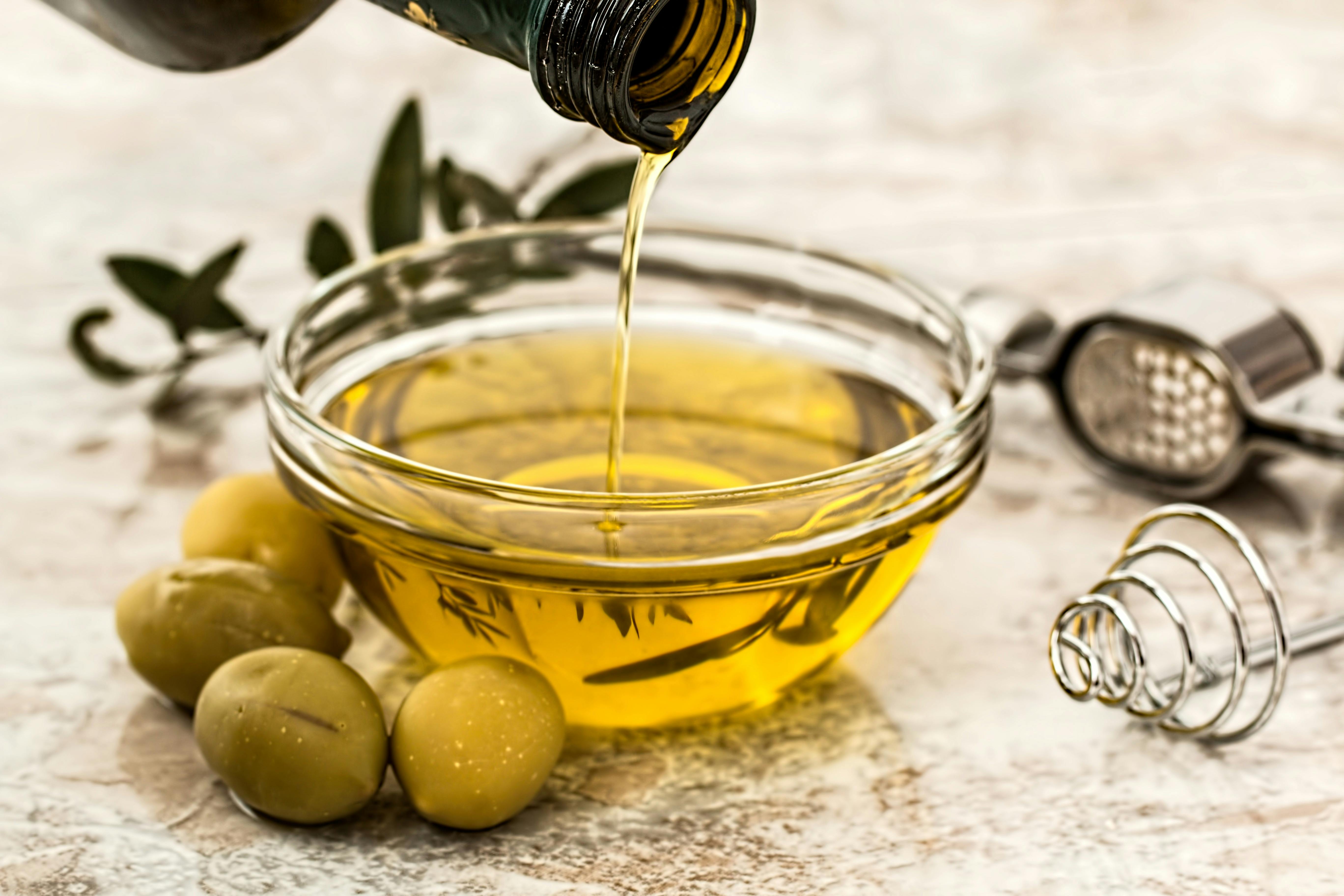
Extra-virgin olive oil
Mediterranean polyphenol-MUFA pact — EFSA-recognized LDL oxidation protection, oleocanthal with an ibuprofen-like profile, ESEM RCT gut-barrier evidence.
In 1 minute
What does it provide? Monounsaturated oleic acid (MUFA ≈ 70–80%, cardiometabolic fat) and secoiridoid polyphenols: oleocanthal (the source of the throat-burning sensation — a selective COX-1/COX-2 inhibitor with an ibuprofen-like anti-inflammatory profile, Beauchamp 2005, Nature), oleacein, hydroxytyrosol, and oleuropein aglycones (EFSA-recognized protection against LDL oxidation at ≥ 5 mg hydroxytyrosol per 20 g oil). Reduces postprandial zonulin and LPS (gut-barrier protection).
How much? 20–40 g/day (1.5–3 tbsp) — 1 tbsp for cooking, 1–2 tbsp raw for salads. The PREDIMED RCT (Estruch 2018, n=7447): Mediterranean diet + ≥ 1 liter EVOO/week reduced cardiovascular event risk by 30%. High-polyphenol (early harvest, "bitter-peppery" flavor) versions are preferred.
When to avoid? Acute severe pancreatitis (full fat restriction), active biliary disease or large gallstones (fat triggers contractions — small portions only at meals), Oleaceae allergy (extremely rare but case reports exist), uncontrolled GERD in some sensitive individuals, very high-temperature use (≥ 220 °C, repeated deep frying — polyphenol loss, oxidative products), overdosing during weight loss (9 kcal/g, portion control required).
The history of olive oil is nearly as old as Mediterranean civilization itself: according to Greek mythology, the goddess Athena herself gifted the first olive tree to the Athenians after her fruit — the oil — proved more valuable than Poseidon's salty seawater spring in their famous contest. Archaeology supports this nicely: off today's Israeli coast, the submerged Hishuley Carmel and Kfar Samir sites preserve olive press remnants from the 6th–5th millennium BCE, the world's earliest known oil-production installations. In classical antiquity, olive oil was simultaneously food, cosmetic, medicine, and lamp fuel — Columella's De re rustica and Pliny describe the techniques of pressing (trapetum, hydraulic press) and storage in detail, along with quality-based grading of the oil.
The Roman state produced and traded oil on an almost industrial scale: in Rome's outskirts, the Monte Testaccio artificial mound is built from roughly 53 million empty Hispanic oil amphora (dressel-20) shards, silently documenting the scale of imperial oil commerce. The Middle Ages and the Renaissance kept oil as one of the pillars of the Mediterranean economy, and in the 19th–20th centuries the traditional stone-mill presses gave way to centrifugal "cold extraction" modern plants. American researcher Ancel Keys's "Seven Countries Study" in the 1950s–60s turned the Mediterranean diet — and its EVOO axis — into the model of global nutrition science, and today the olive polyphenols are protected by an official EFSA health claim.
🔬 Scientific Background
Extra-virgin olive oil (EVOO) is the highest-quality category of unrefined, mechanically extracted olive oil. It has three main bioactive properties:
1. MUFA matrix (oleic acid ≈ 70–80%): Monounsaturated fatty acid, oxidatively stable, cardiometabolically favorable. The strict qualitative evaluator of EVOO is polyphenol content.
2. Secoiridoid polyphenols (the main bioactive fraction):
- Oleocanthal: The 2005 Beauchamp paper in Nature described oleocanthal as a selective, non-steroidal COX-1/COX-2 inhibitor with an ibuprofen-like profile. One tablespoon of high-polyphenol EVOO equates to roughly 10% of a 200 mg ibuprofen dose. This is the source of the classic "throat-burning" sensation.
- Oleacein: Antioxidant, vasoactive.
- Hydroxytyrosol and oleuropein aglycone: EFSA-recognized polyphenols — at ≥ 5 mg hydroxytyrosol per 20 g oil the product qualifies for the "contributes to the protection of blood lipids from oxidative stress" claim (CFR 432/2012/EU).
3. Gut-barrier modulation (ESEM RCT, Tresorerie group): A randomized acute human trial in a T2DM-risk population showed that EVOO added to a meal significantly reduces postprandial serum zonulin (intestinal tight-junction marker) and LPS (metabolic endotoxemia marker) levels, together with an improved glycemic profile. This "gut-barrier shield" effect is reproducible.
4. Microbiota: Standalone large microbiota-targeted RCTs of EVOO are still scarce — but in the Mediterranean-diet context (EVOO as the fat source) multiple studies show favorable shifts in SCFA-producing bacteria and inflammatory markers. The polyphenols are degraded in the colon to phenolic metabolites (hydroxytyrosol → 3,4-DHPAA, etc.) — colonic effect.
Heat and stability: - Medium heat (sauté, oven 160–180 °C) → partial polyphenol loss (~ 30–40%), but the remaining fraction diffuses into the food. - Very high heat (≥ 220 °C, repeated deep frying) → 50%+ polyphenol loss. Not optimal. - Cold use (salad, bread) → maximum polyphenol.
Polyphenol content has huge variability: ordinary industrial EVOO 80–200 mg/kg; high-polyphenol, early-harvest 400–800+ mg/kg. The "bitter-peppery" flavor signals high polyphenol content.
- + Fresh greens (arugula, spinach, lollo) salad: classic Mediterranean dressing.
- + Tomato (lycopene) + bread (toast): bruschetta — MUFA aids lycopene bioavailability.
- + Legumes (hummus, lentil salad): fiber + polyphenol = synbiotic.
- + Olives (direct synergy): complementary polyphenol matrix.
- + Lemon (vitamin C): stabilizes polyphenols.
- + Mediterranean fish (salmon, mackerel): omega-3 + MUFA = cardiometabolic gold standard.
- Very high heat (≥ 220 °C, repeated deep frying): polyphenol loss, oxidative products.
- Blending with canola/sunflower oil: dilutes the polyphenol matrix.
- Anticoagulant + high-polyphenol EVOO: caution at large doses (mild bleeding-time effect).
- Light, heat, oxygen: storage issue — polyphenol loss.
- "Light olive oil" as an EVOO substitute: "light" is refined and polyphenol-poor.
- Severe pancreatitis, acute phase: fat restriction, avoid.
- Polyphenol sensitivity (rare GI irritation): test with small amounts.
- Asteraceae/Oleaceae allergy (extremely rare): strict avoidance.
- Severe gallstones, active biliary disease: fat triggers gallbladder emptying — moderate at meals.
- Energy-balance-sensitive diet (weight loss): calorie-dense (9 kcal/g) — portion control.
- Severe kidney failure with K/phosphorus restriction: portion control.
- Uncontrolled GERD reflux: triggers symptoms in some — use moderately.
- Antibiotic-resistant IBS: rare individual sensitivity.
Daily serving
20–40 g (1.5–3 tbsp) per day — 1 tbsp for cooking, 1–2 tbsp raw for salads.
Preparation pattern
- Cold: salads, dressings, bread dipping, drizzled on finished dishes.
- Medium heat (sauté, simmering 160–180 °C): vegetables, meat, fish.
- Oven (180–200 °C): vegetable and fish roasting.
- Avoid: deep frying with repeated use, ≥ 220 °C.
Classic patterns
Bruschetta: toasted whole-grain bread + EVOO + tomato + basil + salt.
Caprese: mozzarella + tomato + basil + EVOO.
Hummus dressing: hummus + EVOO + lemon + a little sumac.
Oil-braised greens (cavolo nero): kale + EVOO + garlic + a little chili.
Salad dressing: EVOO + balsamic or lemon + Dijon + salt + pepper.
Drizzled on dishes: raw EVOO over finished risotto, soup, fish.
Storage
In a dark glass bottle, cool (15–18 °C), dry, sealed. Never in the refrigerator (cloudiness, polyphenol loss). Fresh EVOO 12–18 months, best within 6 months.
What not to do
Don't store in clear glass exposed to light. Don't leave open (oxygen). Don't re-fry used oil. Don't mix with "olive oil" labeled bottles (refined).
References
[1] Beauchamp GK et al. Phytochemistry: ibuprofen-like activity in extra-virgin olive oil. Nature 2005;437(7055):45–46.
[2] EFSA. Olive oil polyphenols health claim (CFR 432/2012/EU). EFSA Journal 2011.
[3] Estruch R et al. PREDIMED trial — primary prevention of cardiovascular disease with a Mediterranean diet supplemented with EVOO. N Engl J Med 2018;378(25):e34.
[4] Carnevale R et al. Acute extra-virgin olive oil intake reduces postprandial glycemic and lipidemic increase in T2DM. Nutr Metab Cardiovasc Dis 2017.
[5] Marcelino G et al. Effects of olive oil on gut microbiota: review. Front Nutr 2019;6:127.
[6] Owen RW et al. Olives and olive oil in cancer prevention. Eur J Cancer Prev 2004.
[7] Tresserra-Rimbau A et al. Polyphenols and CVD prevention — PREDIMED. Mol Nutr Food Res 2015.
[8] Frankel EN. Chemistry of extra-virgin olive oil — adulteration and detection. Trends Food Sci Technol 2012.