


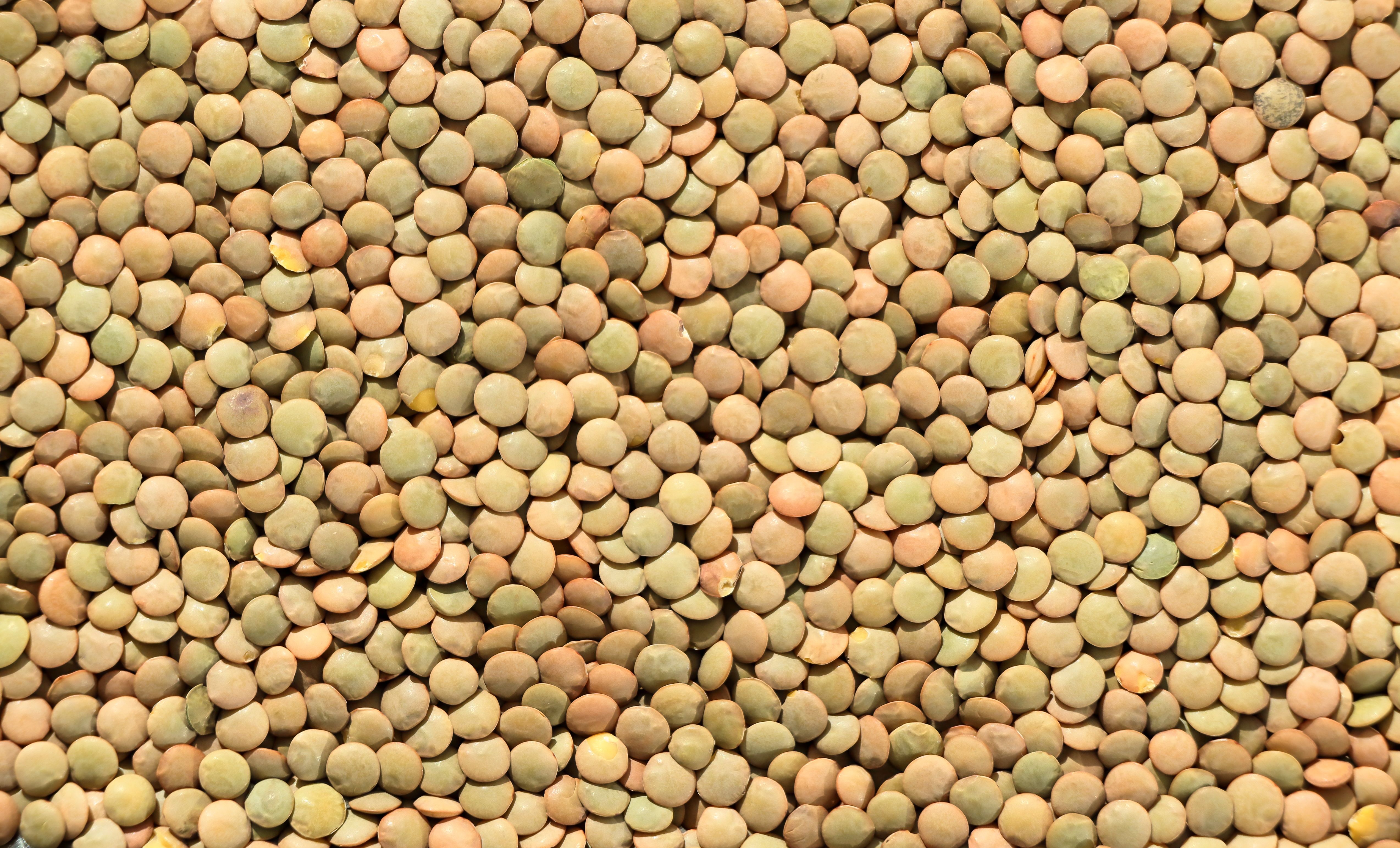
Lentil
The queen of pulses — GOS prebiotic, RS3 starch, and iron synergy.
In 1 minute
What does it provide? Galacto-oligosaccharides (GOS / RFO: raffinose, stachyose, verbascose — characteristic prebiotic sugars in legumes that ferment only in the colon), resistant starch (RS3 — retrograded after cook-cool, digestion-resistant starch, butyrate-positive fermentation), plant protein, iron, folate, and polyphenols.
How much? Weekly 3–5×, ¾–1 cup cooked lentils per serving (≈ 140–180 g). In an RCT, daily 140 g cooked green lentils over 12 weeks was well tolerated.
When to avoid? IBS elimination phase (high α-GOS), active diverticulitis, sprout allergy in sprouted form, acute diarrheal period.
Lentil's history begins in the dusty hills of the Fertile Crescent: archaeobotanical and genetic data indicate domestication began in the 8th–10th millennium BCE in the Levant-Mesopotamia region, and from there migrated across Eurasia. Early Neolithic sites — including Iraqi Jarmo and other northeastern Mesopotamian settlements — regularly yield carbonized lentil remains, suggesting clear staple-food status. The biblical story where Esau sells his birthright to Jacob for a bowl of red lentil pottage reflects the cultural-historical weight of this thick, nourishing dish: in Near Eastern kitchens it was already an everyday affair.
In the Roman Empire era, lentil lived on as the food of the poor, while shipments arrived from Egypt to Italy for centuries; Pliny writes that the seeds were even found in pharaohs' burial chambers. In medieval and early modern Europe, lentil became a reliable pillar of peasant diet — well-storable, protein- and fiber-rich pulse that filled meatless days of fasting periods. French Le Puy green lentil from the 17th century earned separate renown, and is still one of the first foods in Europe to receive an AOC designation. (PMC)
🔬 Scientific Background
Commercial lentils contain ~10–13 g/100 g "prebiotic carbohydrates" (RFOs + resistant starch), although variety and technology significantly influence this. The GOS fraction (raffinose family) passes through the small intestine undigested and ferments in the colon — selectively feeding Bifidobacterium and Faecalibacterium prausnitzii populations while producing SCFAs (acetate, propionate, butyrate).
The clinical evidence pyramid rests on three pillars. Cardiometabolic: 12-week RCT with daily ~140 g cooked green lentils showed fasting cholesterol reduction and more moderate postprandial glucose and inflammatory response. Microbiome: in human and preclinical work, cooked red lentil was associated with butyrate-associated bacteria strengthening and favorable colonic environment. Glycemia: lentil's low glycemic index (≈ 30) is reproducible in meta-analyses.
From a microbiome perspective, green lentil by variety often provides higher RS levels than red, and the husked, whole form is preferable to finely ground. The cook-cool technology (4 °C, 12–24 h) induces additional RS3 formation through amylose retrogradation — consumed the next day as salad or moderately reheated, the fiber substrate amount reaching the colon may increase by 20–30%.
- + Vitamin C source (pepper, lemon, tomato, parsley): raises plant (non-heme) iron absorption 2–4× — the classic "lentil stew + lemon" pairing is biochemically validated.
- + Live cultures (yogurt, kefir, brined sauerkraut): synbiotic synergy — GOS prebiotic + live Bifidobacterium yields a stronger SCFA response than either alone.
- + Whole grain (brown rice, buckwheat, millet): complementary amino acid profile (lentil's limiting methionine + grains' limiting lysine) → complete protein + broader fiber spectrum.
- + Olive oil, ghee, coconut oil: cooking with fat increases polyphenol bioavailability (such as catechins and proanthocyanidins).
- + Cumin, anise, savory: traditional "carminative" spices alleviate gas production from GOS fermentation.
- + Cook → cool → eat next day (RS3 strategy): the amount of resistant starch reaching the colon increases.
- Iron tablet / iron supplementation: lentil phytate content (about 0.4–1.1 g/100 g) has chelating effect — separate (≥ 2 hours) iron tablet timing.
- Tea, coffee during meal: tannin reduces iron absorption — wait 30–60 minutes for tea consumption.
- Levodopa (Parkinson's): high plant protein impairs absorption — time separation (≥ 30 min) recommended.
- Too finely ground lentil flour + high heat (≥ 30 min, 100 °C): dextrinization, RS loss — target the "al dente, then cool" pattern.
- Raw or insufficiently cooked lentil: lectins and trypsin inhibitors may cause GI irritation — minimum 15–20 min boiling.
- Large dose on empty stomach without gradual introduction: bloating, cramps — start with ¼ cup and increase weekly.
- IBS elimination phase (first 4–6 weeks of FODMAP protocol): high α-GOS — avoid. In reintroduction, small dose (¼ cup canned, rinsed) can be tested.
- Acute diverticulitis flare: temporarily low-fiber diet recommended — in stable period lentil is protective.
- Severe kidney disease (advanced CKD, dialysis): high potassium and protein content requires portion control under nephrology supervision.
- Gout, hyperuricemia in acute period: lentil is moderately purine-containing — restrict during flare, safe in stable phase.
- Sprouted lentil + immunosuppression: Salmonella/E. coli risk — avoid or thoroughly heat for immunocompromised patients.
- Infant (under 6 months): fibrous texture not appropriate; after 6 months pureed, gradually.
- Active inflammatory bowel disease (UC, Crohn's) flare: temporarily low-fiber diet, reintroducible in stable phase.
Daily/weekly serving
Weekly 3–5× with ¾–1 cup cooked lentils per serving (≈ 140–180 g). When introducing, start with ¼ cup and increase weekly per tolerance. In RCT 140 g/day was safe over 12 weeks.
Preparation pattern
- Sort lentils (check for stones), rinse in cold water.
- 1 part lentils + 2.5 parts water, after boiling 15 min (red lentils), 20–25 min (green/brown), 30–35 min (Le Puy).
- Salt only in the last 5 minutes of cooking (early salting keeps the skin tough).
- RS3 trick: cool cooked lentils in refrigerator 12–24 hours, eat next day cold as salad or moderately reheated.
Classic patterns
Indian dal: red lentils + turmeric + ginger + pepper + ghee + cumin — all ingredients synergistic microbiome effect.
Le Puy lentil salad: pre-cooked, cooled French green lentils + sherry vinegar + Dijon mustard + olive oil + parsley + diced carrot — classic RS3-maximizing pattern.
Mediterranean lentil stew: green lentils + tomato + celery + carrot + olive oil + bay leaf + lemon juice at serving (iron absorption boost).
Hungarian lentil stew: green lentils + smoked bacon (optional) + pepper + thickening by pureeing instead of roux — New Year's tradition.
Storage
Dry lentils: airtight, dark place 1–2 years. Cooked lentils: refrigerated 4 days, frozen 6 months. Sprouted: refrigerated max 3 days.
What not to do
Don't overcook (falls apart, RS loss). Don't salt at the start of cooking. Don't hull off the skin if you want full fiber yield. Don't eat raw.
References
[1] Faris MA-IE et al. Lentils: nutritional value, health benefits and gut microbiota modulation. Nutrients 2024.
[2] Mollard RC et al. The acute effects of a pulse-containing meal on glycaemic responses and measures of satiety. Br J Nutr 2014;112(7):1117–1126.
[3] Padhi EM, Ramdath DD. A review of the clinical evidence for cardiometabolic effects of pulses. Nutrients 2017;9(11):1241.
[4] Johnson CR et al. The acute and longer-term effects of lentils on glucose metabolism. Nutrients 2020;12(4):1110.
[5] Monk JM et al. Lentil consumption modulates gut microbiota composition in healthy adults. Crit Rev Food Sci Nutr 2024.
[6] Costa GT et al. The role of pulse-based diets in microbiome-mediated metabolic improvements in prediabetes: an RCT. Nature Communications 2025.
[7] Carbonero F et al. Resistant starch content of lentil varieties under different cooking and cooling regimens. Food Chemistry 2023.
[8] EFSA NDA Panel. Scientific opinion on dietary reference values for iron. EFSA Journal 2015.
[9] Monash University. High and Low FODMAP foods. Monash FODMAP database.
[10] Clemson Cooperative Extension. Soaking and sprouting legumes: effects on RFOs. 2022.