


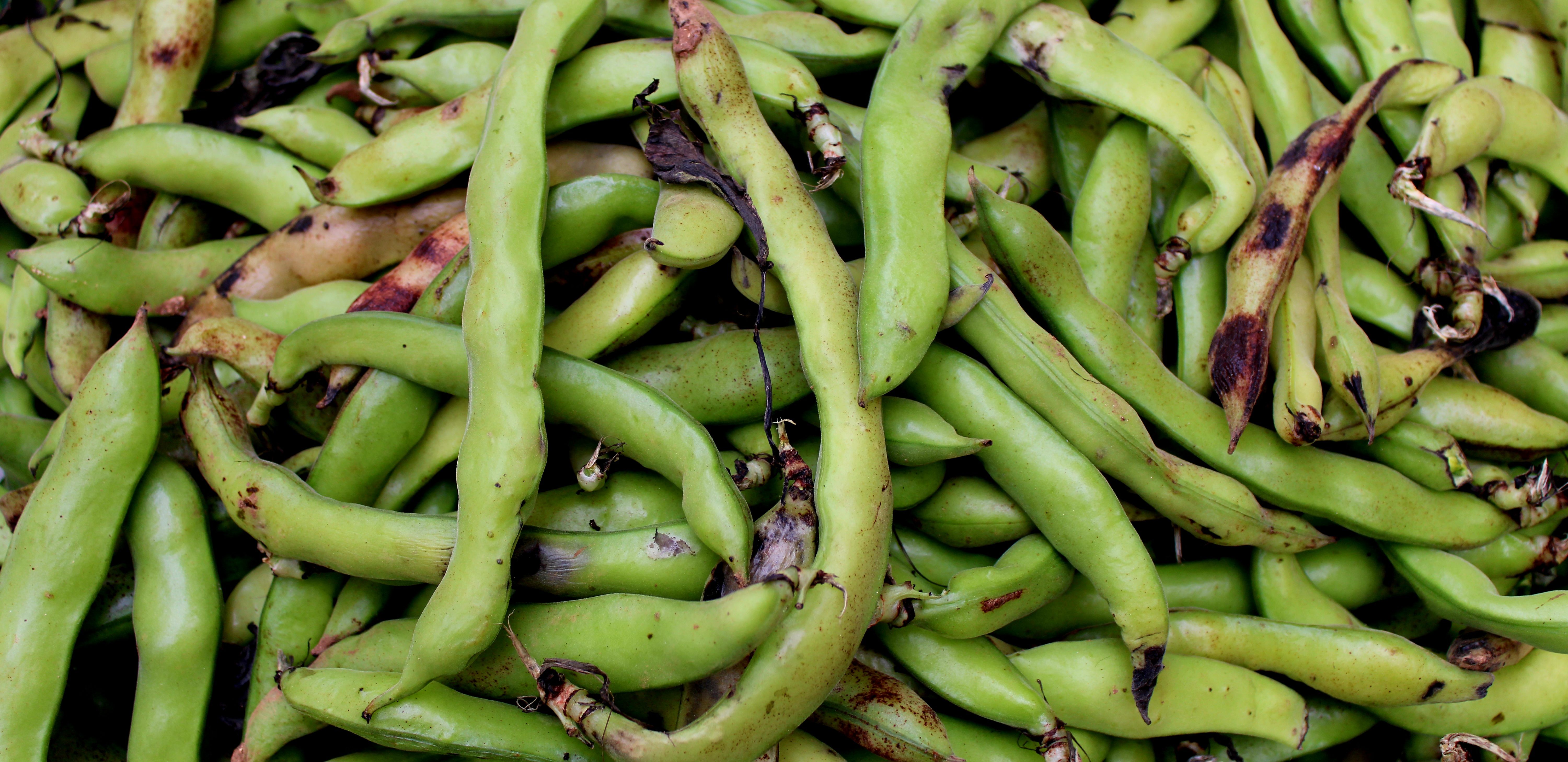
Bean
Heir of the "Three Sisters" — RS3 master, anthocyanin palette, and the cook-cool trick.
In 1 minute
What does it provide? Resistant starch (RS3 — retrograded after cook-cool, digestion-resistant starch, butyrate-positive), galacto-oligosaccharides (GOS / RFO: raffinose, stachyose, verbascose — legume prebiotics, colonic fermenters), anthocyanins in the dark seed coat, plant protein, iron, folate.
How much? In the BE GONE RCT, 1 cup/day of cooked beans (≈ 180 g) for 8–16 weeks raised microbiome diversity. 3–4×/week with ½–1 cup servings is a good start.
When to avoid? Raw or undercooked red kidney beans (PHA = phytohemagglutinin lectin causes acute poisoning — vomiting, diarrhea; 10 minutes of vigorous boiling inactivates it); IBS elimination phase; acute diverticulitis flare; sprout allergy in sprouted forms.
The common bean (Phaseolus vulgaris) has a history that begins on an entirely different continent — the Americas: genetic and archaeological data show that domestication took place in Mesoamerica and the Andes, with two separate large gene pools, each producing varietal richness. Archaeological sites — from Peru's Guitarrero Cave to Mexico's Tehuacán Valley — show that beans played an important role 7,000–8,000 years ago in the so-called milpa system of the "Three Sisters" (corn, squash, beans), which Aztec and Mayan farmers considered sacred. In the Aztec empire, several tons of beans were collected annually as tribute to Tenochtitlán, signaling its food-strategic importance. After 1492, Spanish conquistadors brought the seeds home, and as part of the Columbian Exchange, Phaseolus vulgaris was documented in Europe by the mid-16th century. (PMC)
The bean quickly replaced the previously cultivated "Old World" legumes in European kitchen gardens: it yielded better, had more flavor variety, and was rapidly adopted by both peasant and bourgeois tables. Catherine de' Medici reportedly brought beans with her dowry from Italy to the French court; after the 17th century, the Italian fagioli, the French haricot, and the traditional Hungarian Jókai bean soup are all heirs of this transatlantic journey. "Black bean" and "kidney bean" are different commercial and regional types of the same species: the black stands out for the dark anthocyanins in its seed coat, and the kidney bean is named for its kidney-shaped red seed. (ACS Publications)
🔬 Scientific Background
Among legumes, the bean is one of the best-documented microbiome substrates. Its three main matrix elements are: (1) RS content (≈ 25–35% in the dry seed, further increasing to RS3 after cook→cool), (2) GOS/RFO (raffinose, stachyose) — a prebiotic that reaches the colon intact and ferments there, (3) seed coat polyphenols — black bean anthocyanin content reaches 200–300 mg/100 g, with kidney bean's main polyphenols being catechins and proanthocyanidins.
The recent BE GONE RCT (obese patients at risk of colorectal neoplasia, 2024) studied the inclusion of 1 cup/day of canned dry beans. The result: significant microbiome diversification (alpha-diversity ↑), strengthening of butyrate-associated genera (Faecalibacterium, Eubacterium), and reduction of inflammatory plasma markers. A 2025 RCT in prediabetes showed that a legume-rich diet improved HOMA-IR and glucose tolerance via mediator microbiome changes.
When RS3 reaches the colon, it becomes the main SCFA source (especially butyrate) — butyrate is the primary energy source for colonocytes, anti-inflammatory and gut-barrier strengthening. The cook → cool → eat-next-day strategy amplifies this process by 30–50% compared with fresh, hot-served beans.
Black bean seed-coat anthocyanins (cyanidin-3-O-glucoside dominates) undergo microbial deglycosylation in the colon, and the bioactive aglycone forms further modulate microbiota composition — a bidirectional polyphenol-microbiome interaction.
- + Corn + squash ("Three Sisters"): the 7,000-year milpa combination delivers a complementary amino acid profile — bean methionine × corn lysine → complete protein.
- + Whole grain (brown rice, corn tortilla): classic "rice and beans" pattern, broader fiber and amino acid spectrum.
- + Vitamin C (tomato, lime, bell pepper, cilantro leaf): raises plant iron absorption 2–4×.
- + Cumin seed, caraway, ginger, hing (asafoetida): classic "wind-dispelling" spices — reduce gas symptoms of GOS fermentation.
- + Olive oil, avocado: fat increases polyphenol absorption.
- + Live culture (yogurt, kefir, lacto-fermented vegetables): synbiotic synergy.
- + Cook → cool → eat next day (RS3 strategy): butyrate substrate reaching the colon ↑.
- + Soak water change + long soaking (12–24 hours): reduces α-GOS for sensitive individuals.
- Raw or undercooked red kidney beans: PHA (phytohemagglutinin) lectin causes acute vomiting and diarrhea after as few as 5 beans. Slow-cooker "low" setting is NOT enough — minimum 10 minutes of vigorous boiling is required.
- Iron tablets / iron supplementation: phytate content is chelating — separate by ≥ 2 hours.
- Tea, coffee with meals: tannin-iron interaction — wait 30–60 minutes.
- Levodopa (Parkinson's): high plant protein impairs absorption — time separation (≥ 30 minutes).
- MAOI antidepressants + fermented beans (e.g., fermented black bean): tyramine content — hypertensive crisis risk.
- Alkaline cooking (baking soda, lye) at high heat: degrades protein quality and causes RS loss.
- Empty stomach large serving, without gradual introduction: severe bloating, cramping.
- IBS elimination phase (first 4–6 weeks of FODMAP protocol): high α-GOS. Reintroduction: ¼ cup canned, rinsed.
- Active diverticulitis flare: temporary low-fiber; protective in stable phases.
- Severe kidney disease (CKD, dialysis): high potassium, phosphorus — dose control with nephrologist.
- Acute gout flare: moderate-to-high purine — limit during flare.
- Active IBD (UC, Crohn's) flare: temporary low-fiber; can be reintroduced in remission.
- Favism (G6PD deficiency): strictly applies to fava bean (Vicia faba) — Phaseolus bean is safe, but in traditional "bean" terminology this is sometimes conflated.
- Infant (under 6 months): fibrous texture inappropriate; after 6 months, pureed.
- Raw consumption of red kidney bean: contraindicated — toxic PHA lectin.
- Legume allergy: rare, but cross-reactivity possible (peanut, soy, lupin).
Daily/weekly serving
3–4×/week of ½–1 cup cooked beans (≈ 90–180 g). BE GONE RCT dose: 1 cup/day for 8–16 weeks was tolerable. For IBS-sensitive individuals, start with ¼ cup canned, rinsed.
Preparation pattern (mandatory)
- Dry beans: overnight soak (12–24 hours) in plenty of water, changed several times.
- DISCARD soaking water, use fresh water for cooking.
- Vigorous boil for minimum 10 minutes (PHA inactivation critical for kidney beans), then gentle simmer 60–90 minutes covered (20–30 minutes in pressure cooker).
- Salt only in the last 5 minutes.
- RS3 trick: chill cooked beans 12–24 hours, eat the next day as salad cold or moderately reheated.
Classic patterns
Cuban moros y cristianos: black bean + brown rice + olive oil + cilantro + lime — complementary amino acids, RS3-maximized next day.
Brazilian feijoada: black bean + smoked meat + bay leaf + orange peel — traditional, anthocyanin-rich.
Mexican chili sin carne: red kidney bean + tomato + bell pepper + chili + ground cumin — iron- and vitamin-C-rich pairing.
Hungarian Jókai bean soup: small white bean or kidney bean + smoked pork shank + carrot + parsley — traditional, even better chilled and reheated the next day.
Cold bean salad: pre-cooked, chilled kidney bean + cucumber + tomato + parsley + olive oil + lemon juice — RS3-maximizing pattern.
Storage
Dry: airtight, in a dark place 1–2 years. Cooked: in fridge 4 days, frozen 6 months. Opened canned: in fridge 3–4 days (preferably transferred to another container).
What not to do
DO NOT consume red kidney beans raw or undercooked (PHA poisoning). Don't cook in slow-cooker on "low" unless you first boil for 10 minutes. Don't salt at the start of cooking. Don't overcook (falls apart, RS loss).
References
[1] Zhang X et al. BE GONE: bean-based feasibility randomized clinical trial in obese individuals at risk for colorectal neoplasia. eClinicalMedicine 2023.
[2] Hill EB et al. A legume-enriched diet improves metabolic health in prediabetes mediated through gut microbiome: a randomized controlled trial. Nat Commun 2025;16:56084.
[3] Bessada SMF et al. Pulses and food security: dietary protein, digestibility, bioactive and functional properties. Trends Food Sci Technol 2019.
[4] Ganesan K, Xu B. Polyphenol-rich dry common beans (Phaseolus vulgaris L.) and their health benefits. Int J Mol Sci 2017;18(11):2331.
[5] Tan SY et al. Beans and health: a review of clinical trials. Crit Rev Food Sci Nutr 2024.
[6] Birt DF et al. Resistant starch: promise for improving human health. Adv Nutr 2013;4(6):587–601.
[7] Bento APN et al. Resistant starch and gut microbiota interactions: a current review of pulses. Foods 2024;13(4):506.
[8] U.S. Food and Drug Administration. Bad Bug Book: Phytohaemagglutinin. FDA Foodborne Pathogenic Microorganisms 2nd Edition.
[9] Monash University. High and Low FODMAP foods: beans. Monash FODMAP database.
[10] Bitocchi E, Nanni L et al. Mesoamerican origin of the common bean (Phaseolus vulgaris L.) is revealed by sequence data. Proc Natl Acad Sci USA 2012;109(14):E788–E796.