


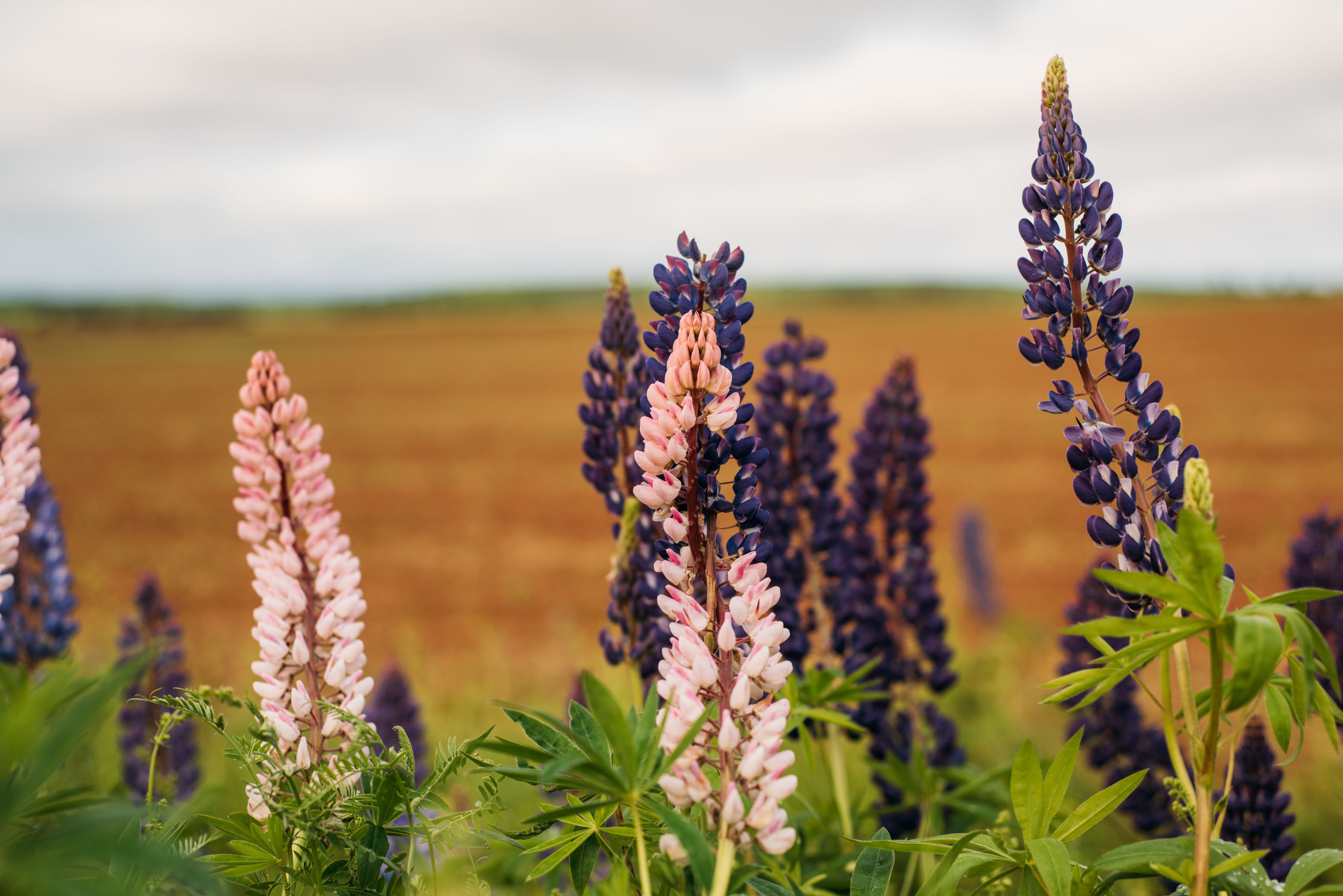
Lupin Seed and Lupin Fiber
Renaissance of the "wolf seed" — debittering history, invisible prebiotic fiber, bifidogenic SCFA pump.
In 1 minute
What does it provide? Lupin kernel fibre (LKF = the inner fiber fraction of hulled lupin seed, galactan/arabinan-rich pectin-like cell-wall fiber, ≈ 80–90% fiber), high protein (35–40%), α-GOS, a small amount of fat.
How much? In human RCTs, 17–30 g extra fiber/day as LKF-fortified baked goods/pasta for 4–16 weeks (Smith 2006: 17 g/day LKF, 28 days → Bifidobacterium ↑; Lee 2009: lupin bread 16 weeks → −3 mmHg systolic blood pressure). Traditional lupini bean: 100–150 g 2–3×/week.
When to avoid? Lupin allergy (EU top allergen), peanut allergy (cross-reactivity), IBS elimination phase, non-debittered ("bitter") seeds — alkaloid toxicity.
Lupin is an ancient Mediterranean and North African crop: seed remains dating as far back as the 22nd century BCE have been recovered from ancient Egypt — they were part of the economic backdrop of the pyramid era. In the Greco-Roman world it was used as both food and green manure: in the latter role Pliny specifically praises it, because lupin-cropped plots yield much better grain harvests the following year. Because of the bitter alkaloids (quinolizidine group: lupanine, sparteine), however, the traditional seed had to be "sweetened" by long soaking or brine treatment before it could be eaten — many Roman authors mention it as a nourishing staple for the poor. A particularly interesting etymological note is that the name lupinus comes from the Latin lupus ("wolf"): supposedly because the plant greedily sucks nutrients from the soil like a wolf.
In the 20th century, deliberate breeding produced the so-called "sweet lupin" (low-alkaloid) varieties — German Reinhold von Sengbusch's 1928 breakthrough in isolating "sweet lupin" revolutionized food-purpose cultivation. Australian agronomists made Australia the world leader in lupin cultivation in the second half of the 20th century (mainly L. angustifolius). In the Mediterranean region, brined lupini bean is still widespread (in Italy as tremoços, in Portugal as lupini, sold as a winter street snack), and in Latin America L. mutabilis ("Andean lupin") is part of Incan life and a major heritage crop to this day. In Europe and Australia, lupin is now also available as flour and as functional fiber (LKF), and is taking an increasing role in the gluten-free and functional-food market. (Wikipedia)
🔬 Scientific Background
Lupin kernel fibre (LKF) is unique among legumes: the main fiber fraction is a pectin-like, galactan/arabinan-rich cell-wall polymer that is well fermentable and has SCFA-forming potential. Industrial LKF can reach up to 80–90% dietary fiber content and can be added as "invisible fiber" (light color, neutral taste) to baked goods, pasta, and meat products.
Human evidence is among the best documented for legume fibers. Microbiome RCT (Smith et al., Eur J Nutr 2006): after 28 days of 17 g LKF/day, Bifidobacterium ↑ and several potentially unfavorable clostridial groups ↓ (FISH-based detection). Gut function RCT (Fechner et al., Br J Nutr 2006): a diet containing LKF increased stool mass, lowered luminal pH, raised fecal butyrate, and reduced β-glucuronidase activity — all colorectal-cancer-protective markers.
Metabolic RCT (Belski et al., J Nutr 2014): in hypercholesterolemic patients, 25 g/day LKF reduced LDL, total cholesterol, and triglycerides; the lipid reduction correlated positively with fecal propionate/acetate formation. Appetite RCT (Lee et al., AJCN 2006): lupin bread ↑ satiety and ↓ energy intake in acute studies. Blood-pressure RCT (Belski et al., AJCN 2009): −3 mmHg 24-hour systolic blood pressure reduction over 16 weeks.
According to systematic reviews, whole lupin and LKF-rich foods consistently have more favorable effects on satiety, glycemia, and blood pressure than isolated protein alone — the whole matrix (fiber + protein + bioactives) acts synergistically.
Alkaloid debittering (removal of bitter quinolizidine alkaloids) was historically a safety step regulated by the population. In modern "sweet" varieties the total alkaloid content is < 0.02% (meeting the EU standard); in traditional "bitter" types, soaking-brining is a 5–7 day process. Commercial lupini bean and LKF are safe.
- + Whole-grain (wheat, rye, buckwheat): LKF-fortified bread (≈ 15–25% LKF) — invisibly high fiber content, satiety boost.
- + Olive oil, seed-based dressing: fat increases polyphenol absorption.
- + Live culture (yogurt, kefir): synbiotic synergy — LKF + Bifidobacterium.
- + Other prebiotics (inulin/FOS, AXOS): broader SCFA profile, more stable fermentation.
- + Traditional brining (tremoços/lupini): matured in brine, with vinegar, garlic, lemon — Mediterranean snack classic.
- + Lupin flour + wheat flour 1:4 ratio: glycemic index drops, protein content rises.
- + Vegan protein shake: lupin protein + plant milk + fruit — complementary amino acid profile.
- Peanut allergy: documented cross-reactivity (about 30–40% lupin sensitivity in peanut-allergic individuals) — to be avoided without allergist consultation.
- Non-debittered ("bitter") lupin: quinolizidine alkaloid toxicity (vomiting, muscle weakness, respiratory depression) — never eat untreated wild lupin seed.
- Some warfarin users with large LKF doses: theoretical vitamin K interaction — caution in dosing.
- PHF/LKF supplement + fluid deficit: concentrated fiber — minimum 250 ml water per 5 g fiber.
- "Home" soaking under 3 days for bitter lupin: inadequate alkaloid removal.
- Tea, coffee with meals: tannin-iron interaction (lupin has moderate iron content).
- Lupin allergy: EU top-14 allergen — mandatory label declaration. Strict avoidance with anaphylaxis history.
- Peanut allergy (history): cross-reactivity risk — medical advice needed.
- Large serving during IBS elimination phase: α-GOS content portion-dependent. In LKF-fortified products the α-GOS content can be lower than in whole lupin seed.
- Acute diverticulitis flare: temporarily low-fiber diet.
- Severe kidney disease (CKD, dialysis): high protein and potassium content — dose control.
- Active IBD flare: temporarily low-fiber; can be reintroduced in remission.
- Infant (≤ 1 year): choking risk and high protein load.
- Pregnancy: sweet lupin is safe; bitter or traditionally home-debittered form to be avoided due to alkaloid risk.
- Planned introduction of LKF-RCT dose alongside anti-cholesterol medication: medical supervision due to combined effect.
Daily/weekly serving
Traditional lupini bean (sweet, brined): 100–150 g 2–3×/week as a snack.
Lupin flour: 20–30% substitution in wheat flour (bread, pancakes, pasta).
LKF supplement: 5–25 g fiber/day built into foods, with fluid.
RCT dose: 17–30 g extra fiber/day (≈ 1 slice LKF-fortified bread × 2–3 times).
Preparation pattern
Sweet lupini home brining:
1. Sweet (low-alkaloid) seeds soaked 24 hours.
2. Blanching 30 minutes, then another 2–3 days with daily water changes (residual alkaloid leaching).
3. Brine (5% salt + water + bay leaf + garlic) at least 24 hours.
4. Serve chilled as a cold snack.
Bitter lupin (wild, traditional) debittering:
1. NOT RECOMMENDED in a home environment — risky without alkaloid measurement.
2. If still attempted: 24-hour soak, then 7–10 days of daily fresh water, checked by taste.
LKF-fortified bread:
1. 80% wheat flour + 20% LKF + water + yeast + salt + 1 tsp oil.
2. Knead, proof, bake per standard bread protocol.
3. Result: per slice ≈ 8 g fiber (vs. 2 g in standard white bread).
Classic patterns
Italian tremoços: salted-brined sweet lupini bean + olive oil + vinegar + garlic — Mediterranean street snack.
Portuguese tremoços com cerveja: lupini snack + cold beer — typical bar bite.
Andean pataska: L. mutabilis lupini + corn + chili + lime — Incan heritage.
LKF protein shake: LKF 10 g + plant milk + banana + chia seed + cocoa — high fiber + protein breakfast.
Lupin-flour pasta: lupin flour 30% + wheat flour 70% + egg + water — low-GI pasta.
Storage
Dry sweet lupin: 12–18 months airtight. Brined lupini bean: in fridge 7–10 days. Lupin flour: 12 months in a cool, dark place. LKF supplement: 18–24 months airtight.
What not to do
DO NOT eat bitter (wild) lupin untreated — alkaloid toxicity. Don't combine with peanut allergy history without medical advice. Don't dose LKF supplement without fluid. Don't overheat lupin flour (≥ 200 °C sustained: protein degradation).
References
[1] Smith SC et al. The effect of lupin kernel fibre on faecal microbial activity and bowel function in healthy adults. Eur J Nutr 2006;45(4):205–212.
[2] Fechner A, Kiehntopf M, Jahreis G. The formation of short-chain fatty acids is positively associated with the blood lipid-lowering effect of lupin kernel fiber in moderately hypercholesterolemic adults. J Nutr 2014;144(2):134–140.
[3] Belski R et al. Effects of lupin-enriched foods on body composition and cardiovascular disease risk factors: an RCT. Int J Obes 2011.
[4] Lee YP et al. Effects of lupin kernel flour-enriched bread on blood pressure: a controlled trial. Am J Clin Nutr 2009;89(3):766–772.
[5] Hall RS et al. Lupin kernel fibre-enriched foods beneficially modify serum lipids: a randomized trial. Eur J Clin Nutr 2005;59(3):325–333.
[6] Lambert C et al. Lupin kernel fibre as functional food ingredient: nutritional and technological perspectives. Nutrients 2022;14(9):1873.
[7] EFSA NDA Panel. Scientific opinion on the safety of sweet lupin protein as a novel food. EFSA Journal 2014.
[8] Goggin DE et al. Quinolizidine alkaloid composition of Australian sweet and bitter lupin varieties. J Agric Food Chem 2013.
[9] AAAAI. Lupin allergy and peanut cross-reactivity. American Academy of Allergy, Asthma & Immunology 2023.
[10] Monash University. High and Low FODMAP foods: lupin. Monash FODMAP database.