
Pistachio
The "green gold" — uniquely lutein-rich nut with a polyphenol matrix that drives a strong butyrate response.
In 1 minute
What does it provide? Lutein and zeaxanthin (yellow carotenoids — protect the eye macula; ≈ 1.4 mg/100 g, unique among tree nuts), GOS (galacto-oligosaccharide prebiotic — feeds Bifidobacterium and butyrate-producing Roseburia, ≈ 2.5 g/100 g), proanthocyanidins (polyphenols concentrated in the red skin), and monounsaturated fat. Clinical effect: lowers LDL cholesterol and insulin resistance.
How much? 28–57 g/day (≈ 49–98 nuts) unsalted, in shell. Hernández-Alonso 2014 RCT (prediabetes, 4 months): 57 g/day → HOMA-IR and inflammation reduced. Shell-opening slows eating — automatic portion control.
When to avoid? Tree-nut allergy (cross-reaction with cashew common — Anacardiaceae); IBS flare and elimination phase (highest FODMAP among tree nuts — even 10 nuts can cause symptoms); aflatoxin sensitivity (liver patients, pregnant women — only EU-standard source); CKD stage 3+ (≈ 1000 mg/100 g potassium).
The pistachio's wild ancestors lurked in the mountains of Central Asia and Iran: the species' domestication took place along the edge of the Fertile Crescent and Central Asia, then spread east-west with Silk Road caravans. Pistachio is a dioecious species, meaning separate female and male trees exist; in plantations they already worked early with scion-rootstock grafting, from which the structural logic of today's modern pistachio orchards also derives. Classical sources — Theophrastus, Dioscorides, and Pliny — all mention the nut: according to Pliny, the prefect Lucius Vitellius brought it from Syria to Italy in the 1st century CE, where it quickly became part of the luxury of the Roman Empire's elite tables. A biblical reference notes that Joseph's brothers also brought pistachios as gifts to Egypt — signaling the seed's status in the ancient Near East.
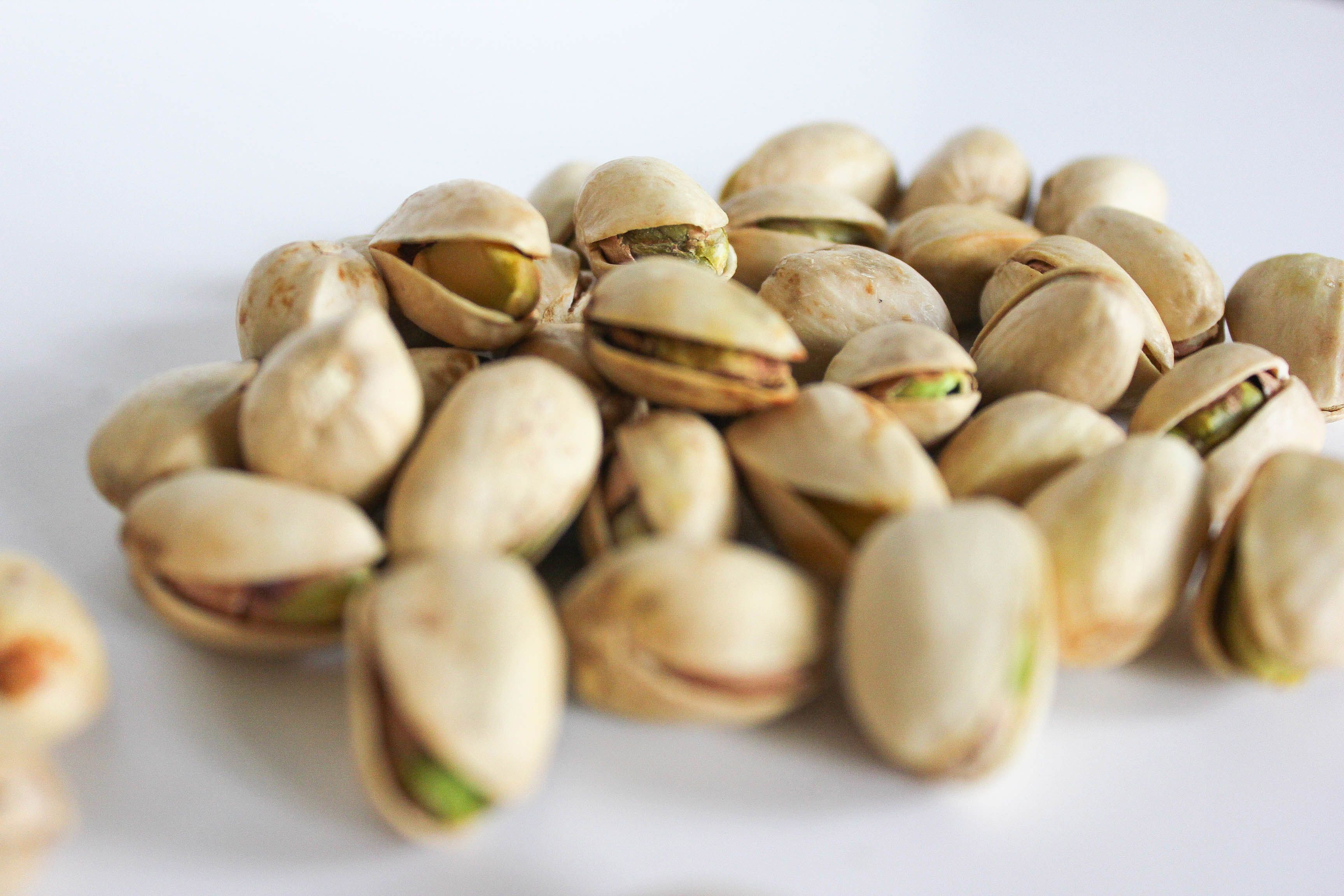
For centuries, Iranian pistachio was the world's leading growing region, until from the second half of the 20th century California took over this role — fresh crops today set off in container ships as today's heirs of the caravans. The classical Jewish and Armenian kitchens incorporated pistachio into pastries and baklava, and in today's Middle East the summer pistachio from the Bronte region of Sicily — referred to as "green gold" — is still world-famous, with prices reaching €50 per kilogram. The "laughing pistachio" ("la-pirste" in Persian) refers to the lofty shell-opening: the ripe seed's outer shell naturally cracks open as if smiling. **(PMC, Loeb Classics)
🔬 Scientific Background
Pistachio is unique among tree nuts in several respects. Carotenoids: ≈ 1.4 mg/100 g lutein + zeaxanthin — practically none in other tree nuts; this gives it a unique eye-macula-protective profile (AREDS-like). Polyphenol matrix: ≈ 50 different polyphenols, with the red skin and brown pellicle concentrating proanthocyanidins. GOS content: the highest among tree nuts (≈ 2.5 g/100 g) — this explains the markedly strong butyrate response AND the high FODMAP rating.
Clinical evidence stands on two strong pillars. Microbiome shift: Ukhanova 2014's crossover RCT (0, 1.5, 3 servings/day, 18 days) significantly modified the stool microbiota — the effect was stronger than for almond, and butyrate-producing groups (Roseburia, Lachnospiraceae, Faecalibacterium) were enriched. Hernández-Alonso 2017 in prediabetes with 4 months of 57 g/day pistachio showed diversity increase and Roseburia enrichment. Cardiometabolic: several RCTs and meta-analyses (Hernández-Alonso 2014) show that 50–60 g/day pistachio reduces insulin resistance (HOMA-IR), lowers LDL cholesterol, and reduces endothelial dysfunction.
The shell fraction itself also has prebiotic potential; technologically, the phenolic extract of shell by-product is being investigated as a bio-functional additive.
- + Retain pellicle (brown skin) + red outer skin: 80–90% of polyphenols are here. Whitened/blanched pistachio is pointless from a microbiome standpoint.
- + Yellow-colored vegetables (carrot, bell pepper, squash): lutein/zeaxanthin synergy — eye macula protection.
- + Yogurt/kefir: synbiotic synergy, GOS + live culture for a strong bifidogenic effect.
- + Olive fat (Mediterranean matrix): carotenoid absorption improvement (fat-soluble).
- + Evening snack between meals (prediabetes protocol): per Hernández-Alonso 2017 protocol, the evening dose is especially favorable for metabolic endpoints.
- + Dark chocolate (70%+): polyphenol matrix strengthening, Mediterranean dessert pattern.
- IBS elimination phase: pistachio has THE HIGHEST FODMAP load AMONG tree nuts (GOS + fructan). Even 10 nuts can cause gas/bloating symptoms in sensitive individuals.
- Fructose malabsorption: moderate fructan content → may cause symptoms.
- Salted pistachio + high blood pressure: commercial salted pistachio adds 300–500 mg sodium/28 g — cardiometabolic benefit disappears.
- Iron supplementation + large amount of pistachio: polyphenols + phytates chelate iron — ≥ 2-hour separation.
- High heat, long roasting: polyphenol loss, acrylamide formation.
- Rancid/moldy pistachio: aflatoxin risk (pistachio is one of the most aflatoxin-sensitive tree nuts).
- Tree-nut allergy: strict total avoidance. Cross-reaction with cashew common (both Anacardiaceae family).
- IBS elimination phase: to be avoided in the first 4–6 weeks. In reintroduction, start with 5 nuts, gradual increase.
- Aflatoxin-sensitive populations (liver patients, children, pregnant women): only from controlled, EU-standard-compliant sources; discard rancid/moldy nuts immediately.
- Active IBD flare: insoluble fiber + high GOS may worsen symptoms.
- Chronic kidney disease (stage 3+): high potassium (≈ 1000 mg/100 g) and phosphorus — dose control adjusted to renal diet.
- Kidney stones (calcium-oxalate stone tendency): moderately high oxalate; dose control.
- Infant, child under 4: whole nut is a choking hazard; can be given ground, in moderation.
- Some nickel-sensitive individuals: pistachio has moderate nickel content.
Daily serving
28–57 g (≈ 49–98 nuts) unsalted, in shell. RCT protocol: 57 g/day (Hernández-Alonso).
Preparation pattern
- Raw, unsalted, in shell: the gentlest form — shell-opening slows eating, improves satiety.
- Gentle roasting: 140–150 °C, 10–12 minutes — flavor enhancement, minimal polyphenol loss.
- Grind fresh: pesto, pasta, gelato base.
Classic patterns
Sicilian pesto: pistachio + basil + olive oil + Parmesan + lemon zest — on pasta, bruschetta.
Middle-Eastern baklava: filo pastry + melted butter + ground pistachio + honey syrup + a little cardamom (occasional treat).
Iranian rice (chelow ba-pesteh): basmati rice + roasted pistachio + carrot + dried barberry — protein + carotenoid matrix.
Pistachio gelato: cream + milk + egg + 100% pistachio paste + minimal sugar.
Evening snack (prediabetes): 30–40 g unsalted pistachio + 1 apple — per Hernández-Alonso 2017 protocol.
Storage
In an airtight jar, in a cool dark place — in-shell pistachio 6–9 months, shelled 3–4 months, frozen 1 year. Discard RANCID pistachio immediately (aflatoxin risk).
What not to do
Don't peel off the red or brown skin. Don't choose colored or whitened pistachio. Don't roast above 170 °C. Don't eat rancid/moldy nuts (aflatoxin).
References
[1] Ukhanova M et al. Effects of almond and pistachio consumption on gut microbiota composition in a randomised cross-over human feeding study. Br J Nutr 2014;111(12):2146–2152.
[2] Liu AG, Ford NA, Hu FB, Zelman KM, Mozaffarian D, Kris-Etherton PM. A healthy approach to dietary fats: understanding the science and taking action to reduce consumer confusion. Nutr J 2017;16(1):53.
[3] Hernández-Alonso P et al. Beneficial effect of pistachio consumption on glucose metabolism, insulin resistance, inflammation, and related metabolic risk markers: a randomized clinical trial. Diabetes Care 2014;37(11):3098–3105.
[4] Bulló M et al. Nutrition attributes and health effects of pistachio nuts. Br J Nutr 2015;113(S2):S79–S93.
[5] Mandalari G et al. Pistachios as a potential source of carotenoids: a review. Int J Food Sci Nutr 2020.
[6] Painter JE et al. The use of pistachio shells as a visual cue to reduce caloric intake. Appetite 2011;57(2):418–420.
[7] Sankaranarayanan R et al. Nuts and the gut microbiome: a systematic review of randomized controlled trials. Adv Nutr 2022.
[8] Monash University. High and Low FODMAP foods. Monash FODMAP database.