


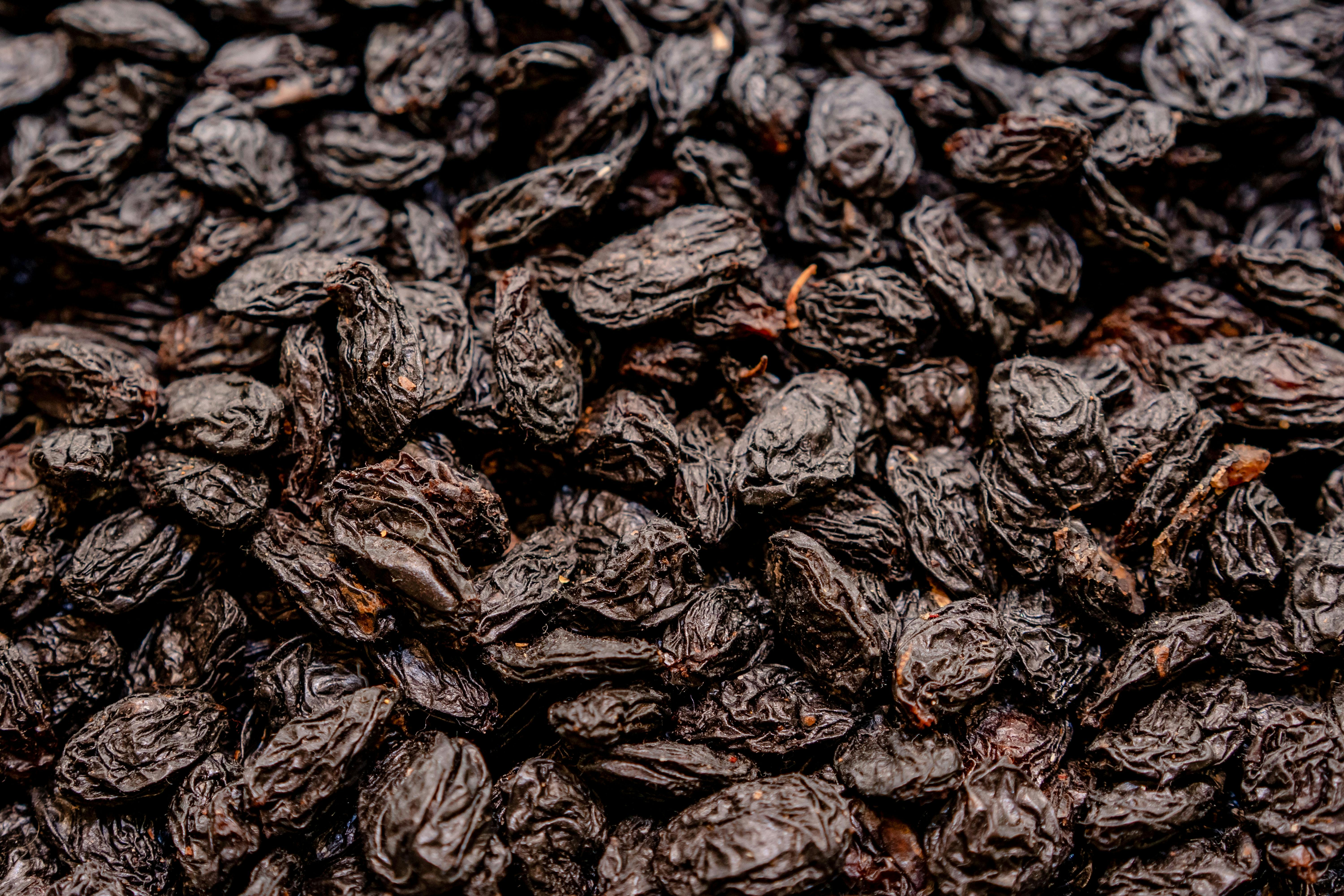
Prune
The southern French heritage of Ente plum drying — sorbitol, fiber, and bone-protective evidence.
In 1 minute
What does it provide? Dietary fiber (≈ 7 g/100 g), sorbitol (≈ 14–15 g/100 g — osmotic stool softener), (neo)chlorogenic acids and other polyphenols (≈ 184 mg/100 g), vitamin K, a little boron — a proven constipation reliever and bone supporter.
How much? Constipation: 80–120 g/day (EFSA: ≈ 100 g/day for "normal bowel function"). For bone preservation 50 g/day, for 12 months (Hooshmand 2022 RCT).
When to avoid? IBS with sorbitol sensitivity, acute diarrhea, hypoglycemia tendency (sugar concentration), dental sensitivity (sticky, cariogenic potential).
The garden plum (Prunus domestica) is an interspecific hybrid — likely arising from cross-pollination of cherry plum (P. cerasifera) and blackthorn (P. spinosa) in the western Eurasian region. Dried plum seeds have been found alike in Egyptian pyramids, Greek graves, and Roman wall paintings; Pliny's Naturalis Historia distinguishes four "prunum" varieties and singles out Damascus for praise — hence the word "Damson," the English name for Damascus plum.
The most significant turning point of the Middle Ages came with the Benedictine monks of Clairac monastery in 13th-century southern France: they crossed plum varieties brought from Syria by the Crusaders with local wild plum, giving rise to the Ente (or d'Ente, meaning "grafted") plum, which became the world's most famous drying variety. By the 16th–19th centuries the Agen dried plum industry took shape, and it remains a protected geographical indication (PGI) to this day. In 1856, French immigrant Louis Pellier took grafted cuttings to California — launching the American plum industry in the Santa Clara Valley. Interesting note: in the early 21st century, US dried plum producers officially switched from "prune" to "dried plum" because consumers associated "prune" too strongly with the elderly, and this marketing move boosted consumption.
🔬 Scientific Background
The effect of prune results from several parallel mechanisms: (1) sorbitol content (≈ 14–15 g/100 g) — osmotic water draw into the colon, softer stool; (2) fiber (≈ 7 g/100 g — soluble pectin and insoluble cellulose together) — increases stool mass; (3) (neo)chlorogenic acids and anthocyanins — microbial metabolites, inflammation reduction; (4) boron and vitamin K — bone metabolism support.
The most robust pillar of clinical human evidence: Attaluri 2011 RCT — in chronic constipation 100 g prune/day > psyllium 11 g/day (CSBM and stool consistency endpoints). Lever 2014 randomized trial in healthy adults 80–120 g prune/day for 4 weeks → increase in stool mass, defecation frequency, moderate Bifidobacterium elevation (small compositional signal).
The 2012 favorable EFSA scientific opinion ("dried plum contributes to normal bowel function," daily serving ~100 g) is an established health claim. For postmenopausal bone protection: Hooshmand 2022 (12-month Prune Study, n=183, AJCN) with 50 g/day prune for 12 months produced hip BMD preservation versus placebo — the longest and largest RCT on the topic. Damani 2022 RCT signaled a microbiome-mediated response (Oscillospiraceae, Lachnospiraceae abundance in responders).
In Trans-Resveratrol Index terms, prune is the best-studied "functional dried fruit" — simple, inexpensive, clinically documented.
- + Generous water intake: hydration is needed for the osmotic effect.
- + Yogurt, kefir: synbiotic synergy.
- + Oat β-glucan (breakfast): classic prebiotic + osmotic laxative combination.
- + Flaxseed (soaked in water): synergistic fiber matrix.
- + Whole-grain couscous, bulgur (AXOS): broader fermentation.
- + Calcium + vitamin D (yogurt, cheese): bone-protection combination.
- + Nuts (almond): classic snack pairing, glycemic peak moderation.
- Other high-FODMAP sorbitol sources (pear, apple, watermelon) simultaneously: additive sorbitol load.
- During acute diarrhea: osmotic effect counterproductive.
- Larger amounts on empty stomach: cramping bloating, diarrhea.
- Prolonged, high-heat cooking with sugar: caramel formation, polyphenol loss.
- Sugary prune syrup: concentrated sugar.
- Prune compote in oil: only refrigerated, spoils quickly.
- IBS elimination phase, sorbitol sensitivity: to be avoided (classic FODMAP trigger).
- Acute diarrhea, gastroenteritis flare: osmotic effect counterproductive.
- Diabetes, uncontrolled glycemia: concentrated sugar + sorbitol cause a glycemic peak — as part of a meal.
- Acute diverticulitis flare: seeds to be avoided.
- Dental sensitivity, high caries risk: sticky texture, cariogenic potential — at the end of a meal, not as a snack.
- Infant (under 6 months): only by medical recommendation, small portion, due to osmotic effect.
- Severe kidney failure, potassium restriction: moderate-to-high potassium (≈ 700 mg/100 g) — moderate the serving.
- Sulfite sensitivity: many prunes are sulfite-treated — worth choosing the sulfite-free version.
Daily serving
For constipation: 80–120 g/day. For bone preservation: 50 g/day (≈ 5–6 fruits). General daily: 30–50 g.
Preparation pattern
- Ready-dried prune: directly consumable, pitted or with pit.
- Soaked (in water overnight): softer, faster effect.
- Pureed: for side base, in smoothies.
- Prune juice: 150–200 ml — fast effect.
Classic patterns
Breakfast prune + oatmeal: classic constipation treatment.
Prune-almond snack: 5–6 prunes + 10 almonds — snack.
Saucy chicken with prunes: Moroccan "tagine" — moderate amount.
Stew with prunes: classic Hungarian cuisine, game-meat companion.
Chocolate-prune sauce: for roasted meat, game.
Smoothie: 3–4 prunes + yogurt + flaxseed + oats.
Storage
Prunes in sealed packaging at room temperature 6 months, refrigerated 12 months. Soaked, refrigerated 5 days. Pureed, frozen 6 months.
What not to do
Don't overdo it if IBS sorbitol-sensitive. Don't snack on it chronically (dental sensitivity). Don't choose sugared prunes. Don't drink the juice too quickly (cramps).
References
[1] EFSA Panel on Dietetic Products, Nutrition and Allergies. Scientific Opinion on the substantiation of a health claim related to dried plums (Prunus domestica L.) and contribution to normal bowel function. EFSA Journal 2012;10(6):2712.
[2] Attaluri A et al. Randomised clinical trial: dried plums (prunes) vs. psyllium for constipation. Aliment Pharmacol Ther 2011;33(7):822-828.
[3] Lever E et al. Systematic review: the effect of prunes on gastrointestinal function. Aliment Pharmacol Ther 2014;40(7):750-758.
[4] Hooshmand S et al. Prunes preserve hip bone mineral density in a 12-month randomized controlled trial in postmenopausal women. Am J Clin Nutr 2022;116(4):897-910.
[5] Damani JJ et al. Microbiome-mediated changes in prune (dried plum) consumption — a randomized trial. J Nutr 2022;152(9):2107-2116.
[6] Stacewicz-Sapuntzakis M. Dried plums and their products: composition and health effects. Crit Rev Food Sci Nutr 2013;53(12):1277-1302.
[7] California Prune Board. Health and nutrition research summary. 2023.
[8] Monash University. Prunes — high FODMAP sorbitol portion.
[9] USDA FoodData Central. Plums, dried (prunes), uncooked.