


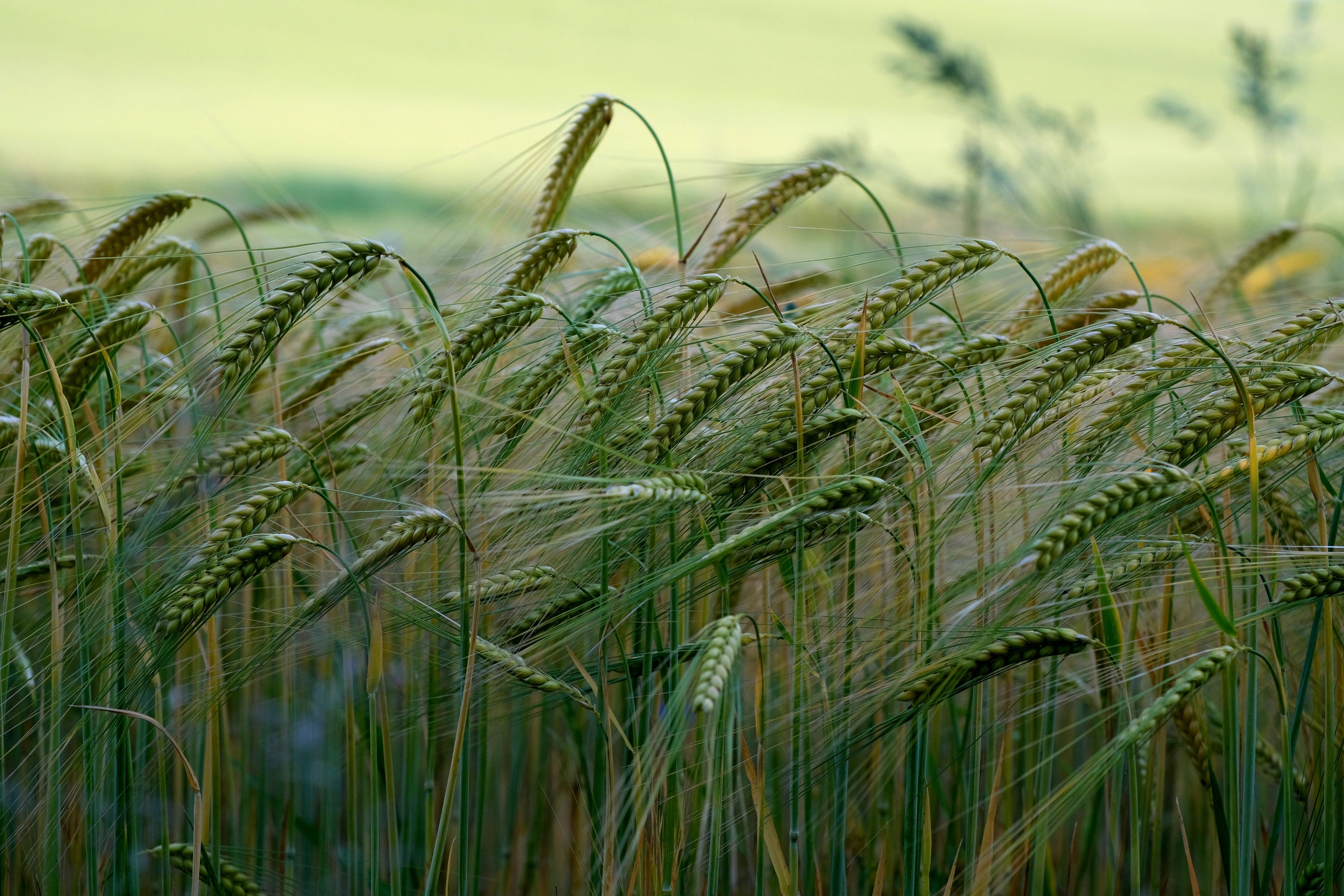
Barley
Humanity's oldest brewing grain — β-glucan, the Ninkasi hymn, and the high MW fraction.
In 1 minute
What does it provide? Soluble, viscous β-glucan (a gel-forming fiber in the endosperm cell walls, binds bile acids — hence the LDL reduction), arabinoxylan (prebiotic fiber, feeds Bifidobacterium), and polyphenols. High molecular weight (HMW) β-glucan is the more effective form. In an RCT (Wang 2016), 3 g/day HMW barley β-glucan produced significant LDL and postprandial glucose decreases — the basis for the health claim recognized by both EFSA and FDA.
How much? 30–50 g pearl barley or barley flakes daily (≈ 3 g β-glucan, the clinically effective threshold). Whole-grain (hulled barley) > pearl barley > refined barley flour in fiber content.
When to avoid? Celiac disease and wheat allergy (hordein — gluten-related prolamin, absolute contraindication); active IBS elimination phase (high fructan + GOS, forbidden on low-FODMAP); non-celiac gluten sensitivity (NCGS) symptoms; acute bowel obstruction or strict stricture; CKD 4–5 with potassium restriction; with iron supplement ≥ 2-hour separation (phytate).
Barley is one of humanity's oldest grains: it was domesticated in the Near East "Fertile Crescent" region as long as 8–10 thousand years ago, and according to genetic analyses, not one but several independent domestication centers existed — besides the Levant, also around the Zagros Mountains. For Neolithic farmers, it was insurance against scarcity: barley reliably yielded on poor soils, in saline ground, even in dry years. In ancient Egypt and Mesopotamia, it was one of the three pillars of life: bread, porridge, and beer. The Sumerian Hymn to Ninkasi — one of the world's oldest beer recipes, from around 1800 BCE — starts beer fermentation from barley bread and sprouted barley, and the pyramid-building workers received a daily ration of barley beer as payment.
Among classical authors, Pliny, Hippocrates, and Galen each devoted a separate chapter to barley: Greek athletes were "hordeari," meaning "barley eaters," because in Olympic preparation barley porridge was considered a strength-giving food. Roman gladiators were similarly noted to eat it for the same reason. In the Middle Ages, barley remained the bread grain of the poor across Europe — wheat was for the nobility, barley for the peasants' mouths and the monastery brewing workshops (Benedictine beers still come from there). From the early modern period, wheat gradually displaced it from everyday tables, but malting and Scottish whisky production continued to be built on barley — and today whole-grain barley is back in the spotlight because of its β-glucan content.
🔬 Scientific Background
Barley's main microbiome-active component is (1→3)(1→4)-β-D-glucan — a soluble, viscous fiber parallel to oat's. EFSA established a causal relationship between daily intake of ≥ 3 g (oat- or barley-derived) β-glucan and LDL cholesterol reduction; FDA also recognizes this health claim. Randomized trials show that high molecular weight (HMW) barley β-glucan is more effective in cholesterol reduction than the low MW fraction — viscosity-mediated bile acid binding is the central mechanism.
Difference from oats: in barley, most of the β-glucan is in the endosperm cell walls (not just in the bran), so moderately hulled/flaked forms (pearl barley) also contain meaningful β-glucan. Whole-grain barley flour and hulled barley maximize fiber intake.
Microbiome-level evidence: in a human RCT, HMW barley β-glucan in mildly hypercholesterolemic adults modulated the gut microbiota composition — increases in Bifidobacterium, Faecalibacterium prausnitzii, and other SCFA-producing taxa were documented. Even in elderly healthy volunteers, a bifidogenic response was described with barley-β-glucan-enriched foods at low daily intake.
The glycemic evidence is also EFSA-recognized: an appropriate β-glucan/30 g available carbohydrate ratio reduces postprandial blood-glucose peaks — the gel layer slows glucose absorption.
Barley's polyphenols (phenolic acids, flavonoids, alkylresorcinols) and arabinoxylans provide complementary prebiotic effects; alkylresorcinols serve as biomarkers of total whole-grain barley and wheat intake.
- + Legumes (beans, lentils, chickpeas): barley soup or ribollita-style — broader fiber spectrum + RS + slow carbs.
- + Yogurt/kefir: synbiotic synergy, Lactobacillus + β-glucan → stronger SCFA response.
- + Vegetable soup: classic Central European barley soup matrix.
- + Mushrooms (porcini, shiitake): β-glucan synergy (two β-glucan sources).
- + Olive oil: MUFA + β-glucan = Mediterranean LDL-lowering pattern.
- + "Cook-and-chill" protocol: barley salad cold the next day → RS3 increase alongside β-glucan.
- Over-refined barley flour + yeasted white bread: endosperm refining decreases β-glucan content → clinical effect is lost.
- Too long, high-temperature cooking (≥ 60 minutes hot): decreases β-glucan molecular weight.
- Strong acidic pickling (long vinegar soaking): partly depolymerizes the fiber.
- Iron supplementation at the same meal: phytate content limits Fe absorption — temporal separation (≥ 2 hours).
- Beer as a "β-glucan source": during brewing most of barley's β-glucan degrades or is filtered out → beer is not a prebiotic.
- Celiac disease, wheat allergy (cross-reaction): barley contains hordein (gluten-related prolamin) — strictly avoid.
- Active IBS elimination phase (Monash low FODMAP): barley is high in fructan and high in GOS — avoid in elimination phase.
- Severe kidney disease (CKD 4–5) with potassium restriction: whole barley is moderate potassium — dosing with dietitian.
- Active acute bowel obstruction or strict stricture: high fiber risky.
- Non-celiac gluten sensitivity (NCGS): individual tolerance — causes complaints in many.
- Diabetes with insulin pump treatment: barley is slow carb + viscous fiber — dosing algorithm needs adjustment.
Daily serving
30–50 g pearl barley/flakes daily = ≈ 3 g β-glucan.
Preparation pattern
- Classic pearl barley: 50 g pearl barley + 250 ml water/vegetable stock → 30–40 minutes on medium heat, to al dente texture.
- Soaking (shortens): overnight soaking 6–8 hours → cooking time reduced to 20–25 minutes.
- Orzotto (Italian risotto-style): slowly cooked pearl barley with vegetable stock, parmesan.
Classic patterns
Central European pearl barley soup: pearl barley + vegetables + smoked pork sausage (optional) — Central European winter classic.
Scottish Scotch broth: barley + lamb + vegetables + onion — traditional winter soup.
Italian orzotto: pearl barley + vegetable stock + parmesan + mushroom — risotto alternative.
Barley salad (cook-and-chill): cooked barley chilled + cherry tomatoes + cucumber + parsley + olive oil-lemon juice — with RS3 benefit.
Storage and avoidances
Storage: Dry barley in an airtight jar in a dark place 12 months. Cooked barley in the fridge 4 days, frozen 3 months.
What not to do: Don't boil for 60+ minutes hot — β-glucan degradation. Don't pour out the cooking water — soluble fiber leaches out. Don't substitute refined barley flour for whole barley for clinical effect.
References
[1] EFSA NDA Panel. Scientific Opinion on the substantiation of a health claim related to barley beta-glucan and lowering blood cholesterol. EFSA Journal 2011;9(12):2470.
[2] AbuMweis SS et al. β-glucan from barley and its lipid-lowering capacity: a meta-analysis of randomized controlled trials. Eur J Clin Nutr 2010;64(12):1472–1480.
[3] Wang Y et al. High-molecular-weight β-glucan decreases serum cholesterol differentially based on the CYP7A1 rs3808607 polymorphism in mildly hypercholesterolemic adults. J Nutr 2016;146(4):720–727.
[4] EFSA NDA Panel. Health claim related to barley β-glucans and reduction of post-prandial glycaemic responses. EFSA Journal 2011;9(6):2207.
[5] De Angelis M et al. Effect of whole-grain barley on the human fecal microbiota and metabolome. Appl Environ Microbiol 2015;81(22):7945–7956.
[6] Aoe S et al. Effect of cooked white rice with high β-glucan barley on appetite and energy intake in healthy Japanese subjects: a randomized controlled trial. Plant Foods Hum Nutr 2017;72(2):198–203.
[7] Bays HE et al. Reduced viscosity barley β-glucan vs placebo: a randomized controlled trial. Nutr J 2011.
[8] Newman RK, Newman CW. Barley for Food and Health. Wiley-Blackwell, 2008.