


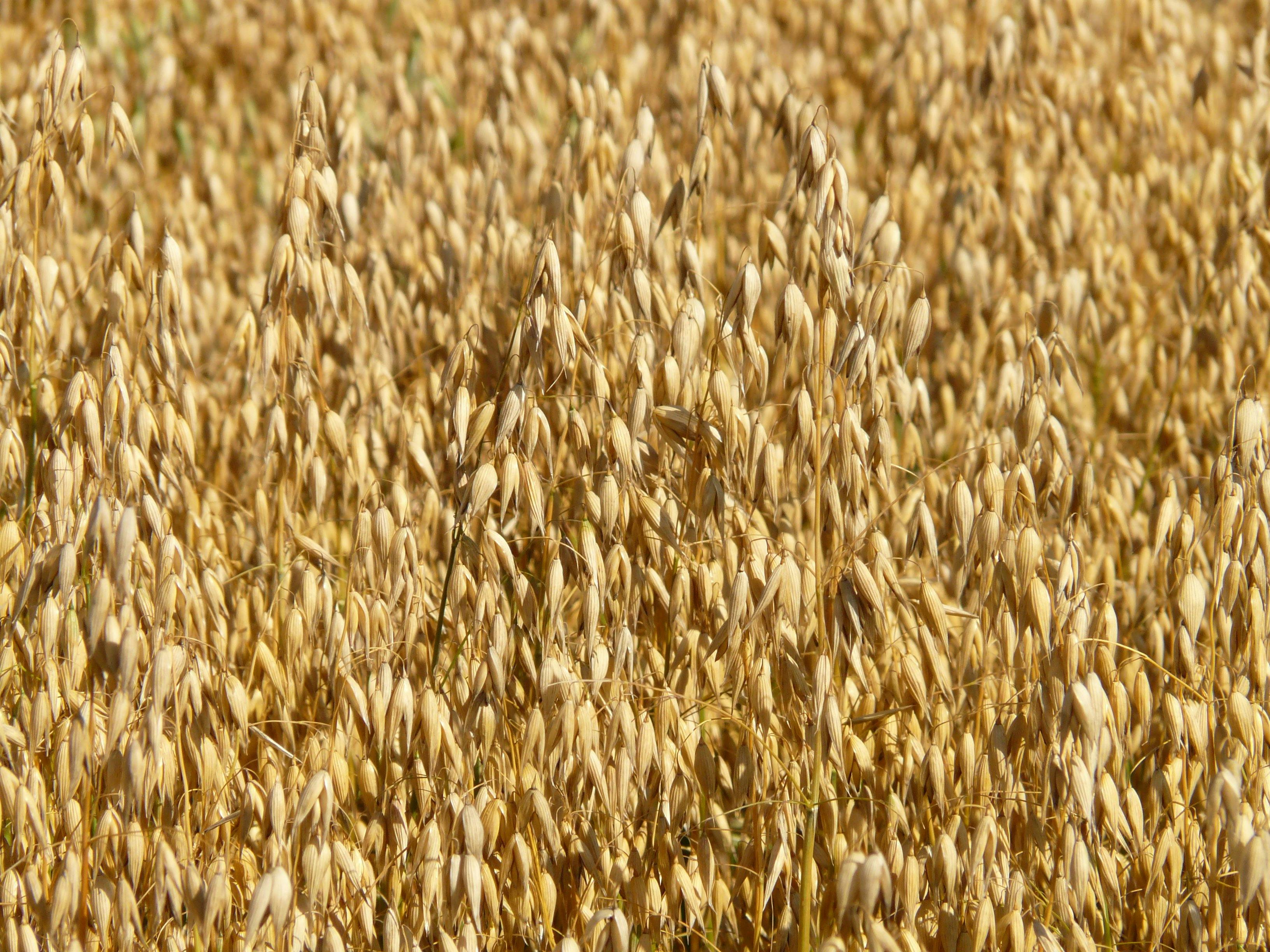
Oats
The science of Scottish porridge — β-glucan, FDA claim, and colonic fermentation.
In 1 minute
What does it provide? High molecular weight (HMW) β-glucan (soluble, viscous fiber), arabinoxylan, avenanthramides (oat-specific polyphenols), and high-quality protein.
How much? 40–60 g rolled oats or 30 g oat bran daily, which provides the EFSA/FDA-supported ≥ 3 g β-glucan intake.
When to avoid? Confirmed oat allergy (rare), in severe celiac disease only certified "pure oats," IBS elimination phase, significant swallowing disorder.
Oats took an unusual path among grains: compared to wheat and barley, they were domesticated several thousand years later, about 3,000 years ago — and not in the ancient lands of the Fertile Crescent, but probably in Europe. Even more unusual is the starting point: archaeological finds suggest wild oats originally appeared as "weed companions" among wheat and barley fields, and were only cultivated independently when, in the cooler, wetter northern areas, they proved more reliable than the warmth-loving southern grains. The Romans still looked down on them, and Pliny typically considered them feed for barbarians and horses — the Greeks said only the Germanic tribes were willing to eat them.
From the Middle Ages onward, oats grew into the national grain of Scotland and the British Isles: in the cool, foggy Highland climate they yielded more reliably than wheat, and porridge — thick oat porridge — became an icon of the Scottish breakfast. In his famous 18th-century dictionary, Samuel Johnson mockingly wrote that oats are "in England food for horses, in Scotland food for people" — to which a Scot allegedly replied: "that is why England has such good horses and Scotland such good men." In the 17th–19th centuries, oats spread on both sides of the Atlantic, first as feed, then with the advent of roller mills and flaking technologies, as well as the Quaker Oats-type factory brands, as everyday human food. In 1997, the US FDA recognized the first official "health claim" linking oat β-glucan to cardiovascular risk reduction — this was the FDA's first food-specific health claim.
🔬 Scientific Background
The main active ingredient of oats is β-glucan — a soluble, viscous (1→3)(1→4)-β-D-glucan fiber found in both the bran and endosperm of the oat grain. EFSA recognized in 2010, with an official health claim, that daily intake of ≥ 3 g oat β-glucan lowers LDL cholesterol, and in 2011 accepted the claim for moderating postprandial glycemia. The FDA's 1997 regulation states that daily 3 g soluble oat β-glucan "may reduce the risk of heart disease" — this was the agency's first food-specific health claim.
The mechanism is dual: (1) viscous β-glucan forms a gel layer in the small intestine, binds bile acids → the liver mobilizes cholesterol for replacement → LDL ↓; (2) the fraction reaching the colon is a substrate for Bifidobacterium, Faecalibacterium prausnitzii, and other SCFA-producing groups — acetate, propionate, butyrate are produced. The strength of the clinical effect depends on the β-glucan molecular weight (MW) and viscosity: high MW (> 1,000,000 g/mol) gives significant LDL and glycemic benefit; low MW (coarse milling, long enzymatic hydrolysis) has weaker effect.
The avenanthramides of oats (Avn-A, Avn-B, Avn-C) are oat-specific alkaloid polyphenols with anti-inflammatory and antioxidant effects. According to human data, the ATSPP (Avenanthramide-Standardized Polar Phenolic) fraction reduces inflammatory markers (CRP, IL-6). At the microbiome level, colon bacteria metabolize avenanthramides into biologically active smaller phenolic acids.
The gluten question: oats natively contain no gluten, but avenin prolamin, which > 90% of celiac patients tolerate. The practical problem is processing cross-contamination — therefore in celiac disease only "pure oats" / "gluten-free oats" certified products can be consumed.
- + Berries (blueberry, raspberry): anthocyanin + β-glucan synergy, polyphenolic antioxidant co-effect.
- + Yogurt/kefir (live cultures): synbiotic matrix — β-glucan + Lactobacillus/Bifidobacterium → stronger SCFA response.
- + Flax/chia seeds: + soluble fiber + ALA omega-3 → broader prebiotic profile + heart health.
- + Walnut, almond: + plant sterols and MUFA → multiplicative LDL-lowering effect (Portfolio Diet principle).
- + Cinnamon: + cinnamaldehyde → glycemic control reinforcement alongside β-glucan.
- + Soaking or overnight oats: cold, long hydration preserves the β-glucan structure and increases viscosity.
- Too long, high-temperature cooking (≥ 30 minutes hot): decreases β-glucan molecular weight and viscosity → clinical effect weakens.
- Strong acidic medium (plentiful lemon juice, long vinegar soaking): partially depolymerizes β-glucan.
- Simultaneous high-dose statins and blood-LDL clinical trial: the two are additive, inform the treating physician.
- Pasteurized, over-processed "instant" oats with sugar: the glycemic benefit is lost, fast digestion, high blood-glucose peak.
- Iron supplementation at the same meal: oat phytate limits Fe absorption — temporal separation recommended.
- Celiac disease: only certified "pure oats" / "gluten-free oats" product, and continuous tolerance monitoring in the first 6 months (5–10% of patients may react to avenin too).
- Severe IBS elimination phase (Monash low FODMAP first 4–6 weeks): larger oat bran portions are high FODMAP — small doses (¼ cup cooked oatmeal) for reintroduction.
- Swallowing disorder (dysphagia): thick oat porridge is an aspiration risk — request texture-modified version from a speech therapist.
- Acute bowel obstruction, severe stricture: high soluble fiber is risky.
- Confirmed oat allergy: rare, but exists (IgE-mediated) — avoid.
- Severe kidney disease (CKD 4–5) with phosphorus restriction: whole oats are moderate-high in phosphorus; dosing under dietitian supervision.
Daily serving
40–60 g rolled oats or 30 g oat bran = ≈ 3 g β-glucan (the clinically effective minimum).
Preparation pattern
- Overnight oats: 50 g rolled oats + 150 ml milk/plant milk + 1 tbsp chia/flax + berries → 8–12 hours in the fridge. Cold hydration preserves β-glucan MW.
- Classic porridge: 50 g rolled oats + 250 ml water/milk → heat to a boil, then stir on low heat for 5–10 minutes. Do NOT boil for 30+ minutes.
- Steel-cut oats: 1:3 oats-to-water ratio, 25–30 minutes on medium heat — al dente texture, low GI.
Classic patterns
Scottish porridge: steel-cut oats + water + pinch of salt, 25 minutes slow cooking — minimalist, low-GI base.
Bircher muesli (Swiss): soaked rolled oats + grated apple + walnut + yogurt + lemon juice — Maximilian Bircher-Benner's 1900 recipe.
Anglo-American oatmeal: porridge + cinnamon + blueberry + walnut — anti-inflammatory breakfast.
Oat-bran topping: 1–2 tbsp raw oat bran on yogurt or in soup → targeted β-glucan boost.
Storage and avoidances
Storage: Dry oats in an airtight jar in a dark place 6–12 months; after opening 3 months. Cooked oat porridge in the fridge 3 days. Overnight oats 48 hours.
What not to do: Don't heat for 30+ minutes above 100 °C — β-glucan degradation. Don't pour out the cooking water — water-soluble β-glucan leaches out. Don't add large amounts of lemon juice — acidic medium partially hydrolyzes the fiber.
References
[1] EFSA NDA Panel. Scientific Opinion on the substantiation of a health claim related to oat beta-glucan and lowering blood cholesterol. EFSA Journal 2010;8(12):1885.
[2] U.S. FDA. Food labeling: health claims; oats and coronary heart disease (21 CFR 101.81). 1997.
[3] Whitehead A et al. Cholesterol-lowering effects of oat β-glucan: a meta-analysis of randomized controlled trials. Am J Clin Nutr 2014;100(6):1413–1421.
[4] Wolever TMS et al. Physicochemical properties of oat β-glucan influence its ability to reduce serum LDL cholesterol. Am J Clin Nutr 2010;92(4):723–732.
[5] Meydani M. Potential health benefits of avenanthramides of oats. Nutr Rev 2009;67(12):731–735.
[6] Connolly ML et al. Hypocholesterolemic and prebiotic effects of beta-glucan-enriched oat-based products in humans. J Funct Foods 2016.
[7] Pulido OM et al. Safety of pure oats in coeliac disease: a systematic review. Aliment Pharmacol Ther 2008.
[8] Monash University. High and Low FODMAP foods — oats and oat bran. Monash FODMAP database.