


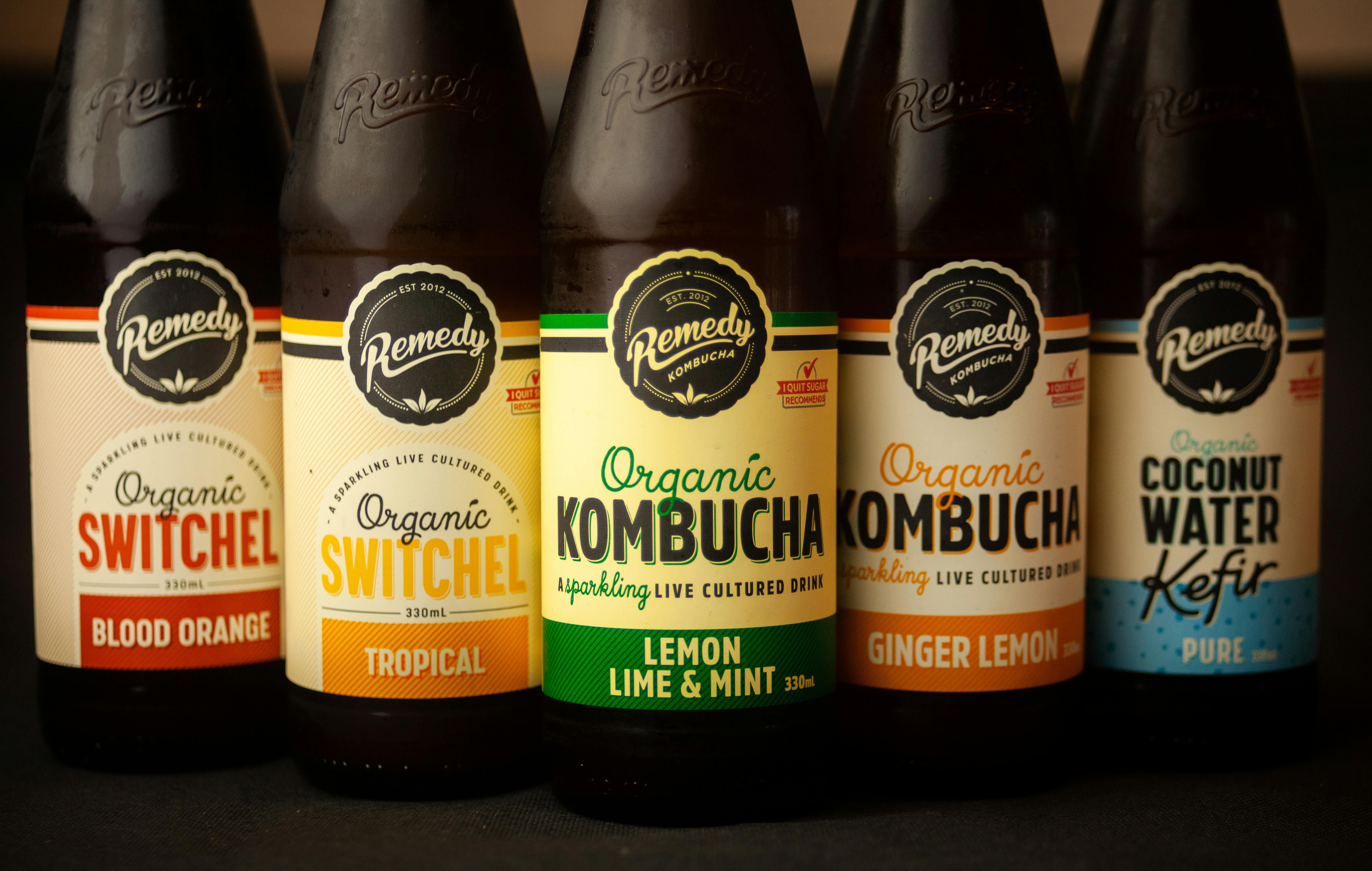
Kefir
The Caucasian grain colossus — a live LAB + yeast consortium in a kefiran matrix, more complex than yogurt.
In 1 minute
What does it provide? A complex bacterium-yeast community (30–50 species — Lactobacillus kefiri, Lb. kefiranofaciens, Saccharomyces, Kluyveromyces marxianus: together often a stronger microbiota effect than yogurt's), kefiran (the exopolysaccharide of the grain — an immunomodulatory prebiotic), bioactive peptides, and easily digestible protein. Lactose content is 30–50% lower than that of milk. Wastyk 2021 Stanford RCT: 10 weeks of fermented food (including kefir) increased microbiome diversity and reduced 19 inflammatory signaling proteins.
How much? 150–250 ml per day, refrigerated, NOT heat-treated, ideally unsweetened plain kefir. Bellikci-Koyu 2019 RCT (metabolic syndrome): 12 weeks of 180 ml kefir/day improved lipid and HbA1c profiles. With breakfast, in a smoothie, or in cold soups (okroshka, tarator) — never hot.
When to avoid? Cow's milk protein allergy (strict avoidance — choose water kefir); galactosemia; severe immunosuppression (chemotherapy, transplant — risk of live microbes); confirmed histamine intolerance (biogenic amines); due to small ethanol content (0.5–2%): alcohol abstinence, disulfiram (Antabuse), active alcoholic pancreatitis; while taking levothyroxine (calcium interaction — maintain 4-hour separation); infant < 6 months.
Kefir's traditional origin is tied to the Caucasus mountains: the herding peoples there — mainly the Karachay and the Balkar — called the "kefir grains" a gift from Allah, and according to legend traced them to the Prophet Muhammad. They stored the grains in leather pouches during horseback migrations and passed them down from generation to generation: tradition forbade giving the grains to outsiders, and so kefir remained a Caucasian secret for centuries. In 1908, Russian dairy entrepreneurs obtained the first official kefir grains in a story that reads almost like piracy: a young woman named Irina Sakharova was sent to a Karachay tribal chief, who became so taken with her that he had her abducted, and as the price of resolving the scandal the prince finally handed over kefir grains — this became the basis of Moscow's industrial production.
By the early 20th century, kefir became a mass product in the Soviet Union, and the "folk healing food" gradually turned into a scientifically researched functional food. It was an archaeological-analytical sensation when the residues of cheese found on 3,500–4,000-year-old mummies at the Xiaohe site in Xinjiang were shown to contain traces of kefir fermentation (2014), and in 2024 Cell confirmed the "kefir cheese" character at the cell and microbial DNA level — proving that kefir-like fermentation was used in Central Asia well before the written Caucasian tradition. The main polysaccharide of the grains, kefiran, and the complex bacterium-yeast consortium have been described in detail since the turn of the 20th–21st century.
🔬 Scientific Background
Kefir is unique among fermented dairy products: it is produced not by one or two strains, but by a complex bacterium-yeast consortium living in symbiosis in the kefir grain — in the kefiran exopolysaccharide matrix. A typical kefir grain contains 30–50 microbial species:
Bacteria: Lactobacillus kefiri, Lb. kefiranofaciens (which produces kefiran!), Lb. parakefiri, Lactococcus, Leuconostoc, Streptococcus, Acetobacter (acetic acid bacterium).
Yeasts: Kluyveromyces marxianus, Saccharomyces cerevisiae, Candida, Pichia.
The complex community means that kefir is more than yogurt: acetic acid, a small amount of ethanol (≈ 0.5–2%), CO₂, exopolysaccharide, peptides, and bioactive lipids — all together in a postbiotic matrix. This kefiran matrix shows antitumor, immunomodulatory, and barrier-strengthening effects in in vitro and preclinical models.
Clinical human evidence: - Microbiota: the 2021 Wastyk Stanford study (with kefir in the fermented-food portfolio) → microbiome diversity↑, 19 inflammatory signaling proteins↓. - Microbiota modulation: 2024 studies in healthy young adults and an athlete cohort described consistent taxonomic and functional (SCFA) shifts. - Metabolic syndrome: Small-to-medium RCTs showed improvement in metabolic markers (lipid, HbA1c). - Lactose digestion: Kefir's lactose content is ≈ 30–50% lower than milk's, and the β-galactosidase activity of the yeast-bacterium community further helps — many lactose-intolerant individuals tolerate it.
Limitation: There are significant strain differences between artisanal and industrial kefir — this explains the heterogeneity of clinical results. Industrial kefir often contains only 5–10 standardized strains; artisanal grain-fermented kefir contains 30+ species.
Water kefir: the plant-based alternative to dairy kefir, with sweetened water — a different community, weaker evidence base, but a similar pattern.
- + Oat β-glucan, inulin/FOS, resistant starch: synbiotic synergy, broader SCFA profile.
- + Berries: polyphenol + LAB synergy.
- + Whole-grain müesli: fiber + live microbe.
- + Smoothie base: flaxseed + chia + banana + kefir.
- + Cold soup base (okroshka, tarator): classic Russian/Bulgarian pattern.
- + Honey, cinnamon in small amounts: prebiotic oligosaccharides.
- Added sugar / flavored kefir: worsens metabolic profile.
- Antibiotic course taken at the same time: separate by ≥ 2 hours.
- Levothyroxine (T4): calcium interferes — separate by ≥ 4 hours.
- Iron supplements: separate by ≥ 2 hours.
- Heating to high temperatures (≥ 80 °C): live microbes die.
- Disulfiram (Antabuse): kefir's small ethanol content — theoretical interaction.
- Cow's milk protein allergy: strictly avoid (choose water kefir or soy kefir).
- Severe lactose intolerance: test with a small portion — often tolerable.
- Severe immunosuppression (chemotherapy, transplant): avoid live microbes.
- Galactosemia: strictly avoid.
- Chronic alcoholism or alcohol-dependence rehab: kefir contains 0.5–2% ethanol — not recommended.
- Infant < 6 months: infant feeding guidelines.
- Histamine intolerance: biogenic amines may be present — test with a small portion.
- Chronic (alcoholic) pancreatitis: kefir's alcohol is minimal, but exercise caution.
- Driving/work (ethanol): 250 ml/day of kefir < 0.3 g alcohol — safe.
Daily serving
150–250 ml daily — alongside breakfast or in a smoothie.
Preparation pattern — homemade kefir with grains
- 1 liter whole or 2.8% milk (pasteurized, NOT UHT).
- 30–40 g (≈ 2 tbsp) kefir grains → into a jar.
- Cover loosely with ventilation (paper towel + rubber band).
- Room temperature (20–24 °C), 18–24 hours.
- Strain (plastic sieve), reserve grains for the next batch.
- Refrigerate the kefir.
Classic patterns
Breakfast smoothie: kefir + banana + rolled oats + walnut + berries.
Okroshka: Russian cold soup — kefir + boiled potato + cucumber + egg + radish + fresh herbs.
Tarator (Bulgarian): kefir + cucumber + walnut + dill + olive — cold soup.
Salad dressing: kefir + Dijon + lemon + olive.
Pancakes: kefir pancakes — light texture.
Storage
Refrigerated 7–14 days. Surface whey separation is normal — stir back in.
What not to do
Don't boil. Don't make from UHT milk (the grain weakens). Don't use a metal sieve (yeasts and bacteria are sensitive). Don't leave above 30 °C.
References
[1] Marsh AJ et al. Sequencing-based analysis of the microbial composition of water kefir from multiple sources. FEMS Microbiol Lett 2013.
[2] Wastyk HC et al. Gut-microbiota-targeted diets modulate human immune status. Cell 2021;184(16):4137–4153.
[3] Bourrie BC et al. The microbiota and health-promoting characteristics of the fermented beverage kefir. Front Microbiol 2016;7:647.
[4] Bellikci-Koyu E et al. Effects of regular kefir consumption on gut microbiota in metabolic syndrome — RCT. Nutrients 2019.
[5] Yang J et al. 3,500-year-old kefir cheese from Xinjiang. Cell 2024.
[6] Rosa DD et al. Milk kefir: nutritional, microbiological and health benefits. Nutr Res Rev 2017.
[7] Pogačić T et al. Microbiota of kefir grains. Mljekarstvo 2013.
[8] ISAPP. Fermented foods consensus 2021. Nat Rev Gastroenterol Hepatol.