


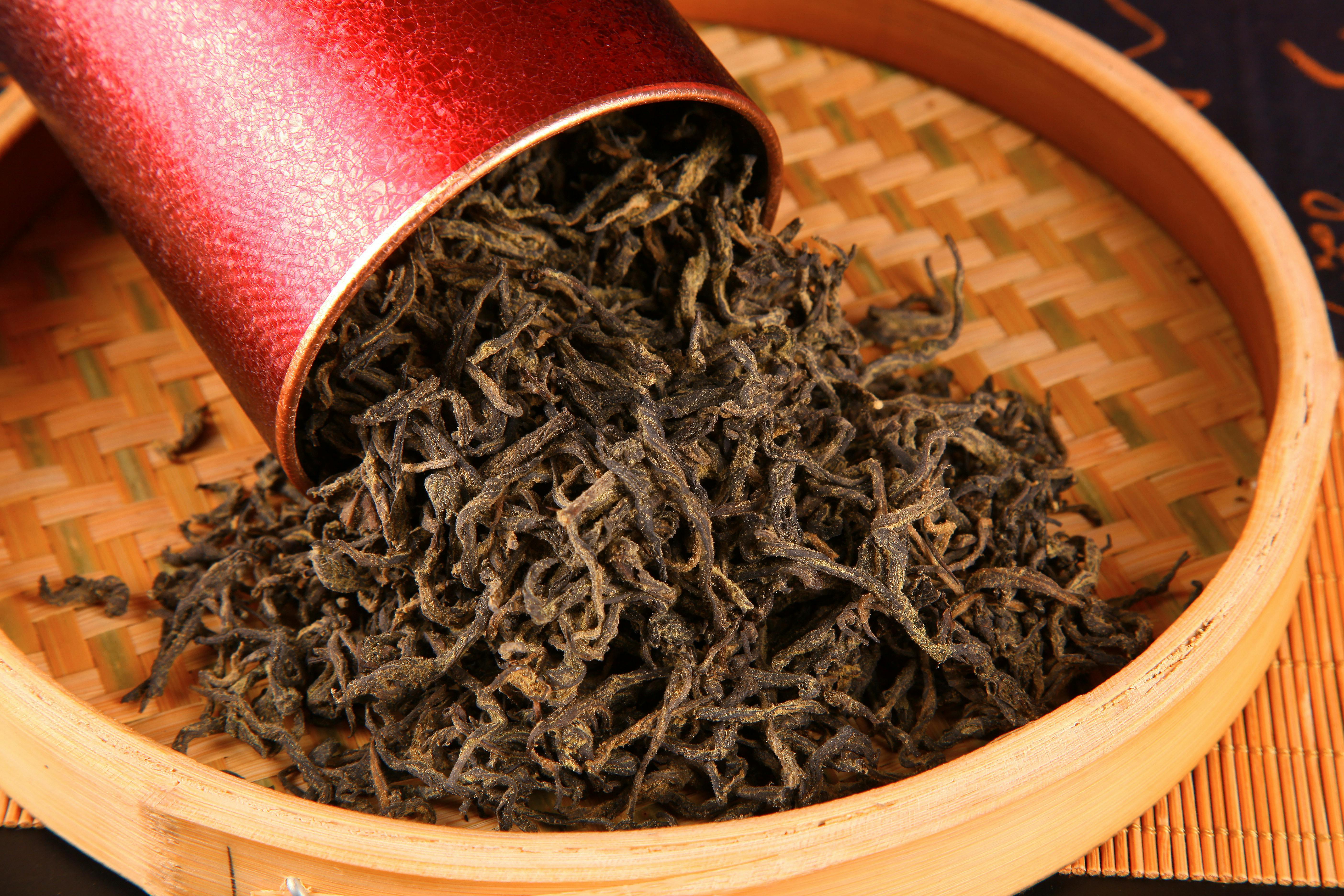
Pu-erh tea (fermented)
The fermented tea diamond — lovastatin-like monacolins, Aspergillus-ripened microbiome, and Yunnan tradition.
In 1 minute
What does it provide? Microbially fermented tea polyphenols (Aspergillus niger and lactic acid bacteria transform catechins into theaflavins and thearubigins — smaller, more gut-accessible antioxidants), gallic acid, and natural caffeine (≈ 30–70 mg/cup). It produces Bifidobacterium and Akkermansia enrichment in the colon. Note: During Shou fermentation, monacolins (statin precursors) may form in trace amounts, but they fall far short of the clinical statin threshold — DO NOT expect clinically significant LDL reduction from tea consumption alone.
How much? 2–4 cups daily (1 cup ≈ 3–5 g dried tea, 200 ml water, 95 °C, 3–5 min). Huang 2014 RCT (n=86 hyperlipidemic): 3 × 333 mg pu-erh extract daily produced −12% total cholesterol and −17% LDL over 4 weeks. The "Shou" ripened form is more intense; "Sheng" (raw) is fresher.
When to avoid? Pregnancy (200 mg/day caffeine limit, higher miscarriage/preterm-birth risk), lactation (caffeine passes into breast milk), severe iron-deficiency anemia (tannin chelates non-heme iron, ≥ 2 hours separation), warfarin/DOAC (INR monitoring required), active gastric ulcer or severe GERD (tannin + caffeine irritate), hyperthyroidism, cardiac arrhythmia, panic disorder, glaucoma (caffeine), lithium therapy (lowers serum levels), child < 12 years.
Pu-erh tea was born in the misty mountain forests of Yunnan province in southwest China — the indigenous Bulang, Dai, and Hani peoples have cultivated the large-leaf varieties of wild Camellia sinensis assamica for centuries. The tea takes its name from the town of Pu'er, which was one of the main collection points of the Tea-Horse Road (Cha Ma Gu Dao); from here, caravans loaded with tea cakes set out toward Tibet, Myanmar, and Southeast Asia. During the long transport, spontaneous fermentation began in the compressed cakes in the warm, humid air — according to Tibetan traders, this is what gave the tea its "round flavor." Until the mid-20th century, all pu-erh was the "sheng" type: raw pressing, then years to decades of slow ripening. (puerh.fr, JFCA)
The modern "shou" (ripened/cooked) pu-erh is the result of a 1973 production breakthrough in Kunming: the Menghai Tea Factory imitated natural aging in 45–60 days through deliberate pile fermentation (wo dui). Scientific interest exploded in the 21st century: in 2014, Huang et al. documented in a randomized clinical trial that 3 g/day pu-erh extract significantly reduced total cholesterol and LDL in hyperlipidemic patients over 8 weeks. Even more exciting was the 2006 Japanese discovery: during Shou pu-erh fermentation, lovastatin (HMG-CoA reductase inhibitor, the active ingredient of Mevacor) forms in trace amounts. This may explain part of the lipid-lowering effect — although the concentration remains far below the clinical dose. (PubMed, J Agric Food Chem)
🔬 Scientific Background
Pu-erh fermentation differs fundamentally from other teas. "Normal" black tea (oxidized) is the result of enzymatic browning — the tea leaves' own polyphenol oxidases turn catechins into theaflavins. Pu-erh, on the other hand, is microbial fermentation: Aspergillus niger, Penicillium, Eurotium, and lactic acid bacteria (Lactobacillus, Pediococcus) break down and restructure the polyphenol matrix. During ripening, catechin content drops dramatically (–60–80%), while gallic acid, theabrownins, and small-molecule phenolic acids accumulate. This results in a new biological profile: less EGCG, more gut-accessible oligomeric polyphenols. (Food Chem 2017, JFCA 2019)
Human evidence is strongest in lipid metabolism. Huang 2014 (RCT, n = 86): 3 × 333 mg/day pu-erh extract produced −12% total cholesterol and −17% LDL vs. placebo over 4 weeks. Several Chinese meta-analyses (Wang 2020, Hou 2022) confirm a moderate LDL-lowering effect, but the effect size is smaller than statins'. For weight and BMI, evidence is weaker, and the Chinese meta-analyses are open to Western criticism (publication bias). In NAFLD (fatty liver), small human studies document ALT reduction. (PubMed PMC)
At the microbiome level, pu-erh increases the proportion of Bifidobacterium and Akkermansia in the colon and modifies the Bacteroidetes/Firmicutes ratio (rodents and small human cohorts). The fermentation-derived theabrownins and gallic acid are the main modulators — interestingly, pu-erh is itself a "pre-digested" polyphenol matrix, so the effect already begins in the small intestine. (mSystems 2021)
- + Fiber-rich breakfast (oatmeal, legumes): pu-erh polyphenols together with fiber substrate enhance SCFA production.
- + Lemon (vitamin C): polyphenol stabilization, flavor complexity (chen pi — dried mandarin peel — is the classic Chinese combination).
- + After a fatty meal (Chinese dim sum, spiced food): traditional "yum cha" — pu-erh aids digestion, and the lipid-lowering effect comes into play during digestion.
- + Ginger: gentle on the stomach, warming effect.
- + Dried fruit (date, blueberry): further polyphenol synergy.
- + Evening ritual from Shou pu-erh (ripened version with lower caffeine): moderately stimulating yet digestion-supporting.
- Iron supplementation: tea's tannin content chelates non-heme iron, reducing absorption by ≈ 60%. At least 2 hours between iron supplementation and pu-erh.
- Low-iron, plant-based diet with several cups per day: iron-deficiency risk — drink between main meals, not during.
- Warfarin, DOAC: the vitamin K content of fermented tea is variable; caffeine and gallic acid can slightly affect metabolism. INR monitoring is needed if you drink it regularly.
- MAO inhibitors, SSRIs at high doses + high caffeine intake: risk of hypertensive crisis (rare but real).
- Aspirin/NSAID high-dose + lots of tea: weak additive risk of GI bleeding.
- Other catechin-rich supplements (green tea extract, EGCG capsule): cumulative caffeine and tannin load.
- Hot, fast sips: drink that is too hot (> 65 °C) is an independent esophageal cancer risk factor (IARC 2A) — let cool 5 minutes.
- Pregnancy: caffeine limit 200 mg/day (≈ 2 cups pu-erh). High doses are associated with increased risk of miscarriage and preterm birth.
- Lactation: caffeine passes into breast milk — risk of infant sleep disturbance.
- Active gastric ulcer, severe GERD: tannin and caffeine can be irritating.
- Severe iron-deficiency anemia: minimize during treatment, time between meals.
- Hyperthyroidism, cardiac arrhythmia: caffeine can aggravate symptoms.
- Glaucoma (closed-angle): caffeine can cause a transient rise in intraocular pressure.
- Panic disorder, severe anxiety: caffeine and theophylline content can trigger symptoms.
- Childhood (< 12 years): not recommended as a daily ritual due to caffeine.
- Lithium therapy: caffeine can lower lithium levels.
- Mycotoxin sensitivity (rare): poor-quality, improperly stored pu-erh can carry an aflatoxin risk — only from reliable sources.
Serving: 3–5 g dried tea / 200 ml water, 95 °C, 3–5 min. In traditional "gongfu" style from a small pot (gaiwan) with multiple (5–10×) short infusions (10–30 sec).
Preparation: Sheng pu-erh: the first infusion is a "wash" (5 sec, discarded), then start at 15 sec, gradually lengthening. Shou pu-erh: a first wash is mandatory (removes wo dui ripening debris), then 20–40 sec infusions.
Classic patterns:
- Yum cha (pu-erh alongside dim sum): digestion-supporting sipping next to fatty, spicy foods
- Chen pi pu-erh: with dried mandarin peel — a classic Cantonese combination, cooling-warming balance
- Shou pu-erh in the morning + Sheng pu-erh in the afternoon: traditional Chinese daily rhythm
- Cold-brewed Sheng pu-erh (summer): 5–6 g tea / 1 liter cold water / refrigerated 6–12 hours — refreshing, low-caffeine
Storage: in an air-permeable but dust-protected bag/box, 20–25 °C, 60–70% relative humidity, protected from light. Sheng pu-erh "lives" — it continues to mature over years (worth tracking). Shou pu-erh is more stable. Keep away from strong-smelling foods (it takes on odors).
What not to do: don't brew above 95 °C any longer (bitter, over-extracted). Don't drink hot (> 65 °C — esophageal cancer risk). Don't store in a bag in the refrigerator (condensation → mold). Don't buy "found-in-storage 50-year-old" pu-erh from unknown sources (aflatoxin risk).