
White tea
The least processed Camellia — high EGCG, phytoflavin finesse, and antioxidant concentrate.
In 1 minute
What does it provide? The most minimally processed variant of teas — minimal heat treatment, hardly any oxidation. High catechin content (particularly EGCG — epigallocatechin gallate, the strongest antioxidant flavonoid, a Bifidobacterium and Akkermansia prebiotic) and L-theanine (the amino acid characteristic of tea, "calm focus" feeling), with quercetin and kaempferol flavonols (anti-inflammatory antioxidants). A pronounced antioxidant and colon-microbiota-modulating profile.
How much? 2–4 cups daily (1 cup ≈ 2–3 g dried leaf/bud, 200 ml water, 75–85 °C, 2–4 min — importantly, NOT boiling). Bai Hao Yin Zhen ("Silver Needle"): only buds, gentler; Bai Mu Dan ("White Peony"): bud + 1–2 leaves, more intense. Microbiome RCT on Camellia catechins (analogous evidence, green tea matcha 2024): ~60–80 mg EGCG/day for 4 weeks → Coprococcus↑.
When to avoid? Caffeine sensitivity, evening, pregnancy in high doses (caffeine < 200 mg/day limit), iron-deficiency anemia, concurrent use of a high-dose EGCG supplement (hepatotoxic cluster), warfarin/anticoagulant.
White tea is a specialty of the Fuding and Zhenghe counties in Fujian province, China: the name "Bai Hao Yin Zhen" (Silver Needle White Hair) was first recorded under the reign of Emperor Jiaqing in 1796, when imperial tea experts decided that the buds of the Camellia sinensis var. Fuding Da Bai ("Big White") shrub should only be dried, not withered, not roasted, not oxidized. The name of white tea comes from the silvery hairs (bai hao, "white hair") covering the buds — these preserve the L-theanine and catechin content of the young shoot. At the end of the Qing dynasty, European colonial tea merchants began exporting it under the name "white tea" to London, where it never achieved the popularity of black tea or Earl Grey. (Tea in China: Hinsch 2016)
The 21st century brought the renaissance of white tea: in 2000, a Pace University in vitro study showed that white tea's catechin content is often higher than green tea's, because the minimal processing preserves the polyphenols. After this, the antioxidant marketing narrative exploded — in the wellness industry, white tea became "the purest antioxidant." Clinical RCT evidence, however, is sparser than for green tea, because scientific attention turned to it 30 years later. In Hungary, it came into fashion with the 2010s wellness wave, mainly in the premium segment. (J Agric Food Chem 2000, 2009)
🔬 Scientific Background
White tea processing is deliberately minimalist: freshly picked buds and young leaves are only dried (in the sun or in gentle warm air), without oxidation or roasting. This preserves the catechins — particularly epigallocatechin gallate (EGCG), the "workhorse" antioxidant molecule of most in vitro models. In the fresh bud, catechin content can reach 30–42% of dry matter, higher than green tea's usual 25–35%. (PMC 2009)
Human evidence is sparser. Small studies document reduction of oxidative stress markers (TBARS, MDA) after 4–8 weeks of regular consumption. Skin-protection studies (UV-induced erythema, collagen degradation) show promising results, particularly in topical application. The "antiproliferative" effect is mostly documented at the cell-culture level (human colon cancer cell line, melanoma) — human oncology endpoint evidence is lacking. (BMC Complement Altern Med 2011)
At the microbiome level, EGCG and its metabolites increase the proportion of Bifidobacterium, Akkermansia muciniphila, and Lactobacillus species (human data in small cohorts, dominantly rodents). Catechin degradation products (e.g., valerolactones) themselves have a gut-barrier-strengthening effect. White tea's polyphenol profile is the most gently processed within the Camellia family, so it is in vitro "purest" — in human evidence, however, it currently lags behind green and pu-erh tea. (Nutrients 2020)
- + Vitamin C (lemon juice, citrus): stabilizes EGCG in the stomach, increases absorption (3–5×).
- + Bromelain (pineapple): increases catechin bioavailability.
- + Moderate fat (almond milk, coconut fat): supports lipophilic partial absorption of catechins.
- + Morning L-theanine-caffeine dual focus ritual: white tea's L-theanine/caffeine ratio is favorable — "calm alertness."
- + Honey (cooled below 45 °C): flavonoid synergy, flavor modulation.
- + Afternoon ritual (3–5 pm): gentle caffeine, does not disturb sleep.
- Iron supplementation, iron-rich meals: EGCG and tannin significantly reduce non-heme iron absorption. 2 hours between iron supplementation and tea.
- High-dose EGCG supplement: the 2018 EFSA opinion documented a hepatotoxic cluster above 800 mg/day EGCG — tea + supplement together is dangerous.
- Warfarin, DOAC: variable vitamin K content, weak antiplatelet catechin effect. INR monitoring.
- Atorvastatin, simvastatin: weak drug-level elevation possible via partial CYP3A4 modulation with high tea consumption.
- Bortezomib (in multiple myeloma treatment): EGCG demonstrably inhibits bortezomib's effect — to be avoided.
- Aspirin/NSAID high-dose + 5+ cups/day: weak additive GI bleeding risk.
- Hot, > 65 °C: independent esophageal cancer risk (IARC 2A).
- Stimulant (ephedrine, high caffeine) combination: cardiovascular overload.
- Pregnancy: caffeine limit 200 mg/day (≈ 3–4 cups white tea). High doses are associated with risk of miscarriage and preterm birth.
- Lactation: caffeine enters breast milk — infant sleep disturbance.
- Multiple myeloma with bortezomib: EGCG contraindication.
- Severe iron-deficiency anemia: minimize during treatment.
- Active liver disease, unexplained elevated ALT/AST: high tea + supplement to be avoided due to EGCG hepatotoxicity cluster.
- Hyperthyroidism, severe cardiac arrhythmia: caffeine to be avoided.
- Glaucoma (closed-angle): caffeine, transient IOP elevation.
- Panic disorder, severe anxiety: caffeine can trigger.
- Childhood (< 12 years): not a daily ritual.
- Active gastric ulcer, severe GERD: irritating on an empty stomach.
- Lithium therapy: caffeine lowers lithium level.
Serving: 2–3 g dried bud/leaf / 200 ml water, 75–85 °C (NOT boiling — too high a temperature makes it bitter and degrades catechins), 2–4 min.
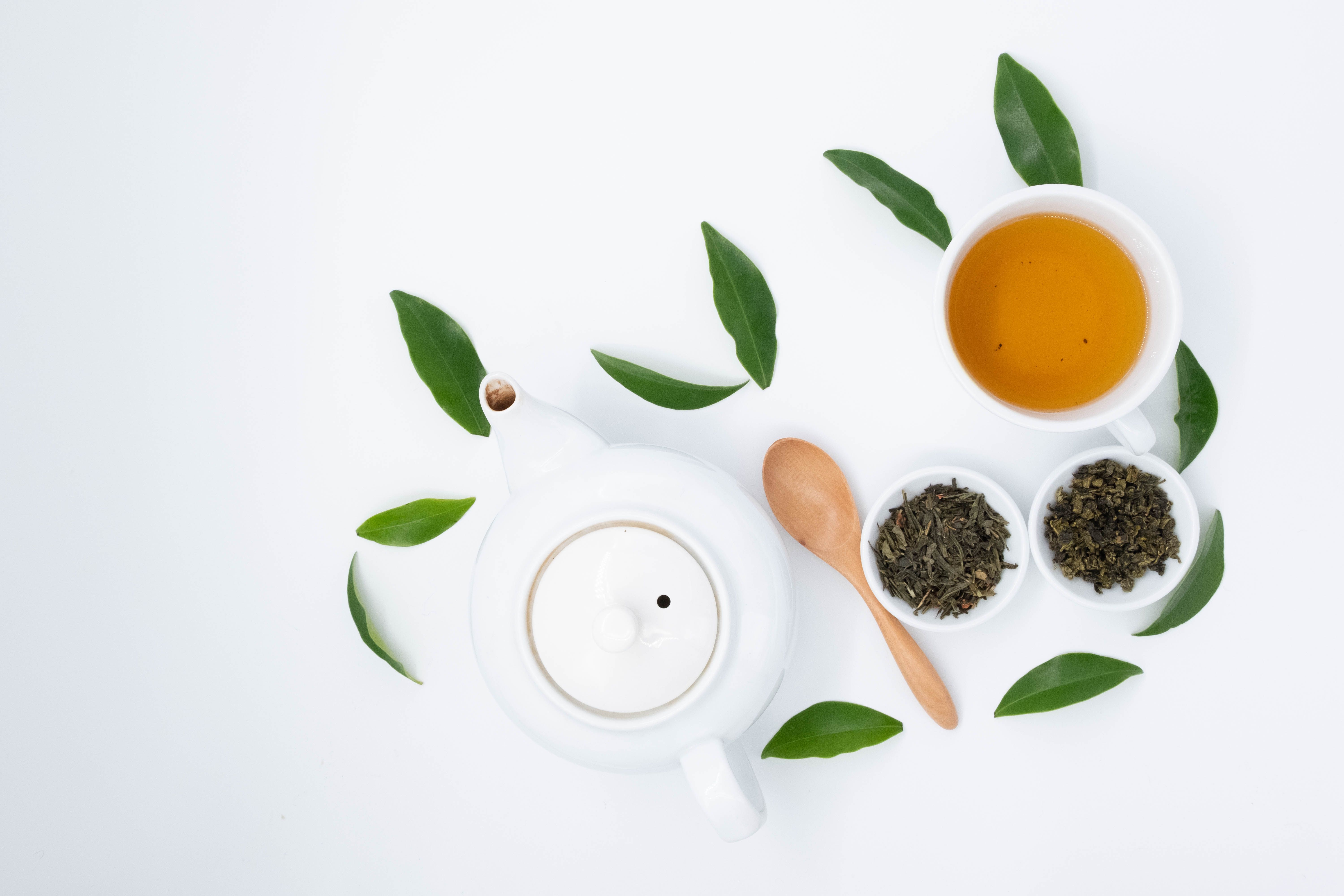
Preparation: boil water to 100 °C, then cool in an open vessel for 2–3 min to reach 80 °C. Place the leaves in a glass gaiwan (transparent Chinese lidded cup), pour over the water, cover for 3 min. Bai Hao Yin Zhen is especially beautiful in a glass — the buds rise and sink in the water ("dance"). Can be infused multiple times (2–4 infusions).
Classic patterns:
- Morning ritual: gentle wake-up, because of gentler caffeine content than black tea
- Afternoon "4 o'clock": L-theanine-caffeine "calm alertness" — focus-work support
- Bai Hao Yin Zhen + dried fruit: delicate, refined combination — apricot, fig peel
- Cold-brewed summer white tea: 5 g / 1 liter cold water / refrigerated 4–8 hours — finer catechin extraction, less tannin
Storage: in an airtight, light- and odor-protected container, in a cool, dry place. White tea can age over years (especially Shou Mei and Gong Mei) — a well-stored 5–10-year white tea has more character. Keep away from strong-smelling foods (the tea takes on odors).
What not to do: don't pour 100 °C water on it (bitter, catastrophically over-extracts the catechins). Don't brew longer than 5 minutes (tannin overload). Don't drink hot (> 65 °C — esophageal cancer risk). Don't combine with high-dose EGCG supplement (hepatotoxicity).