


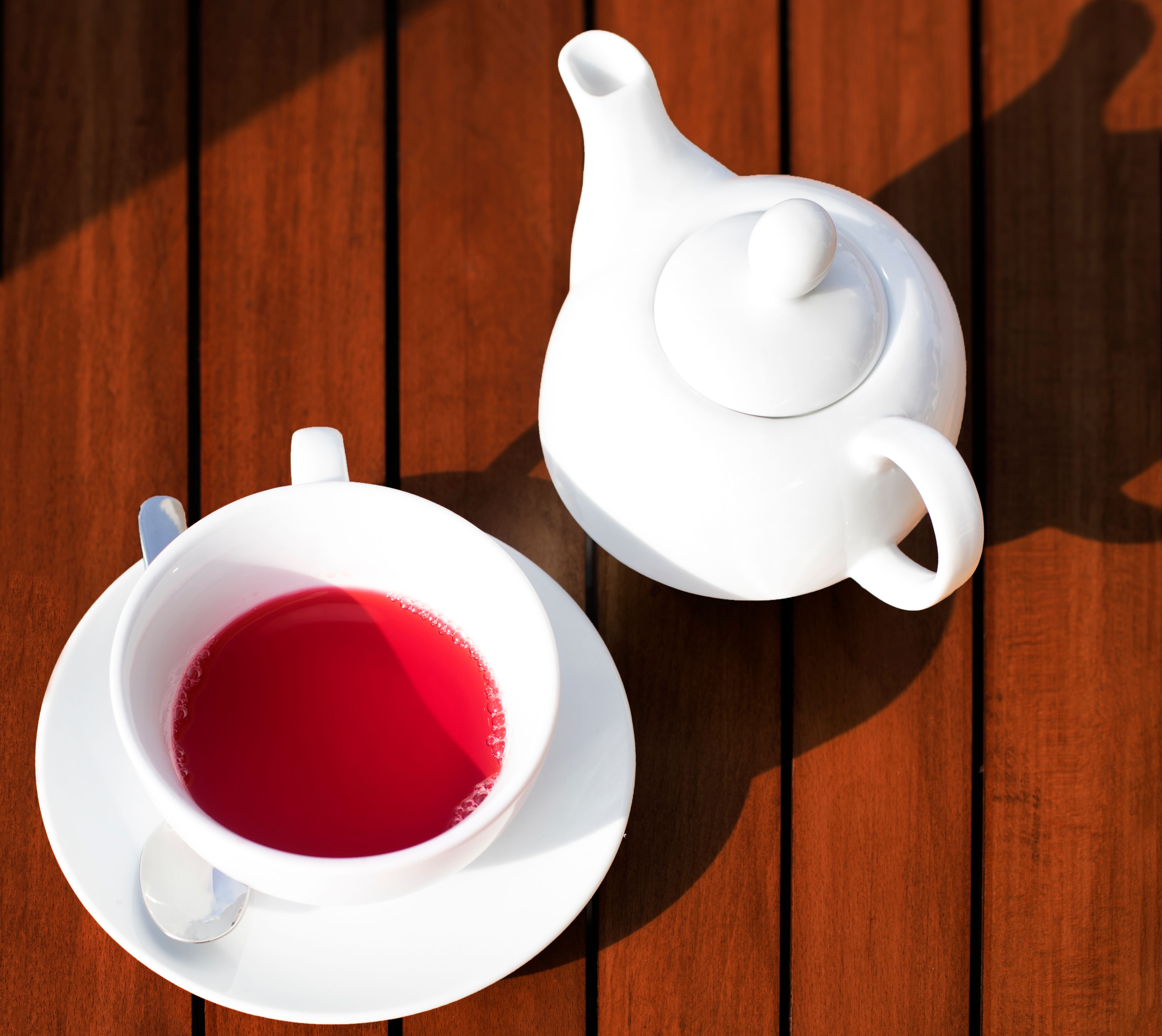
Hibiscus tea (roselle)
The African blood-pressure capsule — anthocyanin alliance, RCT-grade BP reduction, and the karkadeh tradition.
In 1 minute
What does it provide? An anthocyanin-rich, distinctly acidic (pH ≈ 2.5–3.5) herbal tea, documented in RCTs to reduce systolic blood pressure by 6–13 mmHg in mild-to-moderate hypertension. Antioxidant, moderately diuretic, and lipid-lowering.
How much? 2–3 cups daily (1 cup ≈ 1.5–2.5 g dried calyx, 250 ml water, 90–100 °C, 5–10 min). In cold consumption (agua de jamaica), higher doses with less tannin bitterness.
When to avoid? Low blood pressure (hypotension), pregnancy (uterotonic effect in animal experiments), chloroquine/hydroxychloroquine, large doses of paracetamol (interaction!), caution alongside chlorthalidone and other diuretics.
Hibiscus tea is one of the few drinks sacred to three continents at once: Egyptian "karkadeh" has been the country's national drink from pharaonic times to the 21st century — remains of hibiscus calyces have been found in mummy finds. Sudan, Ethiopia, and Eritrea serve "karkade" as a cold or warm festive drink, often with clove and ginger. In West African Senegal, "bissap" is a red wedding drink; in Mexico, "agua de jamaica" reigns as queen of the street aguafrescas stands — a tomato-and-orange-red lemonade in icy glasses. (Encyclopedia of Food and Beverages 2003)
Modern clinical interest exploded with Mozaffari-Khosravi's 2009 Iranian RCT: in hypertensive T2DM patients, 2 cups of hibiscus tea/day produced −22 mmHg systolic and −10 mmHg diastolic reduction over 1 month, while in the black-tea control group blood pressure rose. McKay 2010 (Tufts University, prehypertensive adults) confirmed a −7.2 mmHg average systolic reduction. The Cochrane literature and several meta-analyses (Serban 2015, Wahabi 2010) all confirm a clinically relevant antihypertensive effect. There are two main proposed mechanisms: ACE inhibition (hibiscic acid and anthocyanins) and NO-synthesis enhancement (endothelium). (J Hum Hypertens 2009, J Nutr 2010)
🔬 Scientific Background
The dried calyces of Hibiscus sabdariffa (NOT the petals) contain 15–30% organic acids (citric, malic, hibiscic) and 2–4% anthocyanins. The anthocyanin profile is dominated by two main pigments: delphinidin-3-sambubioside and cyanidin-3-sambubioside — these give the intense ruby-red color. The water-soluble polyphenol matrix is highly bioavailable: plasma anthocyanin and metabolite levels rise measurably within 30 minutes of consumption. (Food Chem 2014)
The blood-pressure-lowering effect operates through at least three mechanisms. (1) Hibiscic acid and anthocyanins show ACE-inhibitor-like activity in vitro (IC50 ≈ 0.1–1 mg/mL in extract). (2) Endothelial NO synthesis is increased through polyphenol-mediated eNOS activation. (3) Moderate diuretic effect with K-sparing characteristic — fluid volume reduction. According to RCT evidence, the effect stabilizes after 4–6 weeks of regular consumption, and the systolic reduction averages 6–13 mmHg — a magnitude comparable to standard first-line drug therapy (ACE inhibitor, ARB) in mild hypertension. For more severe (above 160/100 mmHg) hypertension treatment, it does not replace drugs. (Cochrane 2010)
At the microbiome level, the acidic pH supports selective proliferation of Lactobacillus species and Bifidobacterium in vitro and in small human cohorts. Non-absorbed anthocyanins produce Akkermansia-like mucin-degrading modulation in the colon. Phenolic-acid degradation products of chlorogenic acid are additional SCFA substrates. (Mol Nutr Food Res 2019)
- + Ginger: flavor complexity, anti-inflammatory synergy — a classic Sudanese "karkade" recipe.
- + Clove, cinnamon: Christmas-warming karkade — antioxidant synergy.
- + A little honey or date syrup: balances acidity, does NOT spoil the polyphenol profile.
- + Cold consumption (agua de jamaica): low tannin extraction, higher anthocyanin retention, easy 1+ liter/day consumption (summery).
- + DASH diet (fruit-vegetable-whole grain): synergistic antihypertensive effect.
- + Magnesium, potassium-rich diet: cumulative blood-pressure reduction.
- Paracetamol (acetaminophen): hibiscus tea demonstrably reduces paracetamol plasma AUC (≈ 18%) — analgesic effect weakens. Time separation 3–4 hours (Kolawole 2007).
- Chloroquine, hydroxychloroquine: hibiscus tea reduces chloroquine absorption (≈ 35–47%, Mahmoud 1994) — important in malaria prevention and rheumatic treatment.
- Diuretics (furosemide, hydrochlorothiazide): additive diuresis and hypotension risk.
- Antihypertensive drugs (ACE inhibitors, ARBs, calcium channel blockers) in high doses: excessive blood pressure reduction — medical monitoring.
- Lithium: diuretic effect can raise lithium levels.
- Iron supplementation: tannin content can chelate iron — 2 hours separation.
- Diabetes medications (gliclazide, metformin): moderate glucose-lowering may be additive — monitoring.
- Cytochrome-sensitive drugs (CYP2C9, CYP3A4): in vitro modulation signals — caution with diclofenac, simvastatin.
- Pregnancy: uterotonic effect in animal experiments, traditional abortifacient use in some African cultures — to be avoided. Sudanese and Nigerian ethnobotanical literature documents "menstruation-inducing" use.
- Lactation: little data, caution.
- Hypotension, orthostatic hypotension: the blood-pressure-lowering effect is dangerous.
- Pre-surgery period (2 weeks before surgery): hypotension and bleeding risk — stop.
- Diabetes with hypoglycemia tendency: moderate glucose reduction — monitoring.
- Active gastric ulcer, severe GERD, reflux disease: high acidity can irritate.
- Kidney stone predisposition (oxalate): moderate oxalate content; high-dose consumption not advised.
- History of hormonal cancer (breast, endometrial): in vitro estrogen-like effect, clinically uncertain — high doses to be avoided.
- Penicillin allergy (cross-reactivity rare but described): Malvaceae family allergic tendency.
- Severe kidney failure: moderate potassium content — medical consultation.
Serving: 1.5–2.5 g dried calyx / 250 ml water, 90–100 °C, 5–10 min. For cold infusion (agua de jamaica) 30–40 g / 1 liter water, refrigerated 4–8 hours.
Preparation: pour hot water over the dried calyces, cover. Classic warm: 5 min shorter, finer, more floral; 10 min more intense, with tannin bitterness rising. A drop of lemon juice brings back the ruby-red color.
Classic patterns:
- Egyptian karkadeh: dried flower + water + sugar — hot or iced
- Mexican agua de jamaica: cold infusion + lime + a finger of ginger + honey — summer hydrator
- Sudanese karkade: clove + ginger + sugar + iced — festive wedding drink
- Senegalese bissap: mint leaf + sugar + water — refreshing summer
- Blood-pressure therapeutic ritual: 2 cups/day, 4–6 weeks continuously — RCT-protocol dose
Storage: in an airtight jar, in a dark, cool place. Dried calyx is polyphenol-stable for 1–2 years. Steeped tea should be consumed within 48 hours, refrigerated.
What not to do: don't brew longer than 15 min (bitter tannin overload). Don't drink on an empty stomach in case of ulcer/reflux. Don't combine in time with paracetamol. Don't drink "instead of blood-pressure medication" in severe hypertension. Don't mix it up with marshmallow (Althaea) tea — different plant.