


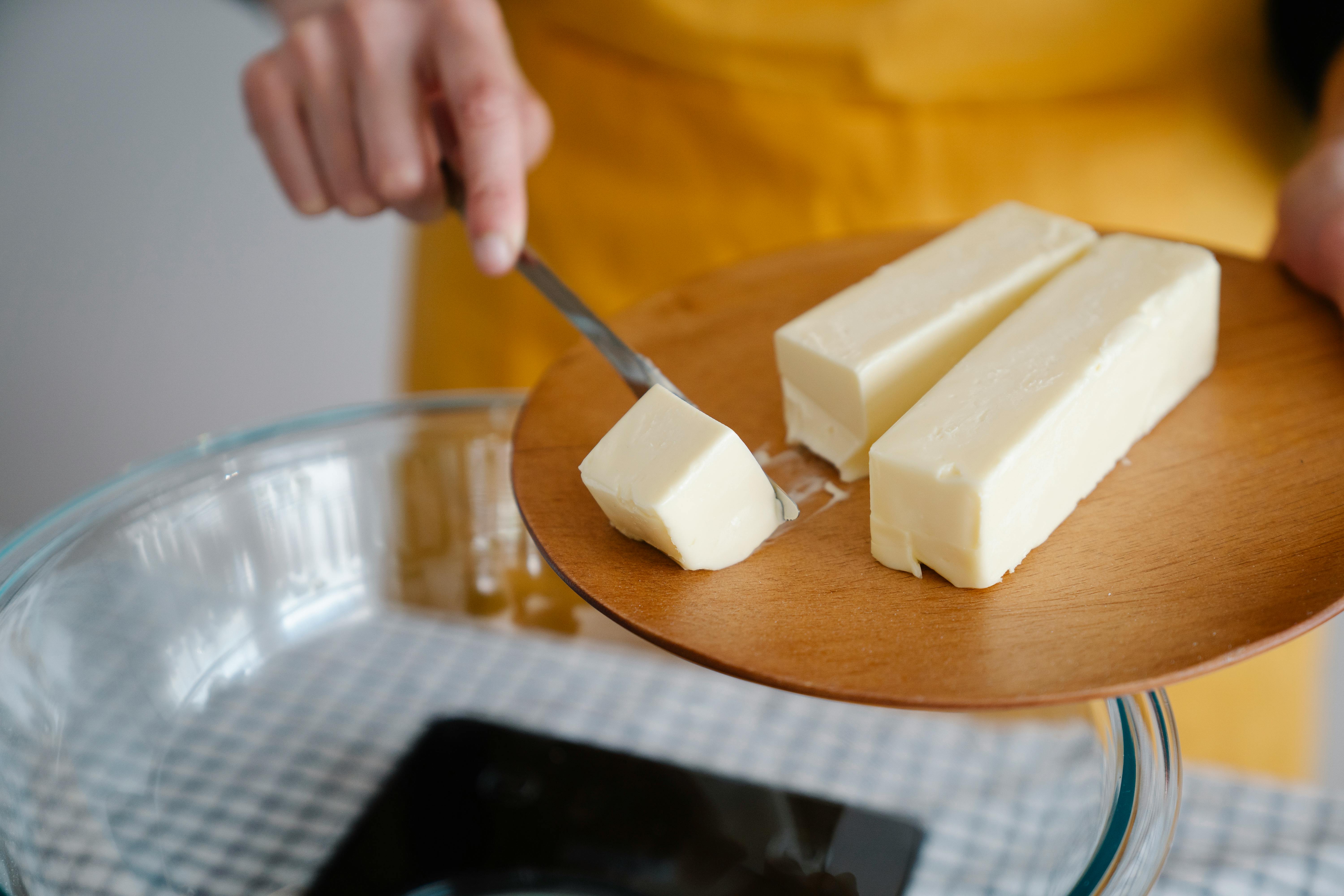
Butter
The rehabilitated fat — CLA, butyric-acid origin, and the metabolic paradox of full-fat dairy.
In 1 minute
What does it provide? A complex milk-fat matrix: - Fat-soluble vitamins: A (retinol — vision, immunity), D (bones, immunity — higher in pasture-fed butter), K2 (menaquinone, directs calcium to bones/vessels — notably higher in pasture butter), E (tocopherol). - Butyric acid (butyrate, C4 SFA, 3–4%): the main fuel of colonocytes; the amount from butter is small and absorbed in the small intestine (does NOT feed the colon) — the clinical source is rather fiber fermentation by the microbiome. - CLA (conjugated linoleic acid): a natural ruminant-derived isomer with anti-inflammatory and body-composition modulating potential; ~3–5× more in pasture butter. - MFGM (Milk Fat Globule Membrane, phospholipids + glycoproteins): immunomodulatory and prebiotic matrix (Timby 2014 infant RCT — lower infection rate).
How much? 10–20 g/day (1–2 tablespoons) is acceptable in a balanced diet. In Hungarian peasant-butter tradition: on bread, on cooked vegetables, in cakes.
When to avoid? Severe hypercholesterolemia (familial form), confirmed milk-protein allergy (casein), certain biliary disease flares. With lactose intolerance it is generally tolerated (very low lactose content).
Butter-making is nearly as old as cattle domestication itself: the earliest archaeological butter remains were found in Irish peat bogs as "bog butter" sealed in wooden vessels, dating back roughly 4,000 years. In ancient Mesopotamia it served as a sacred sacrificial substance, in Egypt as a cosmetic, in Scandinavia as a means of paying taxes. In the Central European shepherd cultures, "peasant butter" made with churn and wooden butter pot was the fat source of long winter months, with a mildly tangy, ripened flavor due to unrefrigerated storage — this flavor echoes today in European PDO butters (e.g., Beurre d'Isigny).
The mid-20th century brought a radical turn: Ancel Keys's 1953 "Seven Countries Study" and the subsequent American dietary guidelines named saturated fat as the chief culprit behind cardiovascular disease. Margarine appeared as the "healthy" alternative — later it turned out that partially hydrogenated margarine containing trans-fatty acids was substantially more harmful to cardiovascular risk than butter itself (FDA 2015 trans-fat ban). In the 21st century, the de Souza (BMJ 2015) and Dehghan (PURE Lancet 2017) meta-analyses found no clear link between SFA intake and CVD mortality — the question became more nuanced, and butter regained its culinary legitimacy within the "matrix hypothesis" (Astrup et al.).
🔬 Scientific Background
Butter's fatty-acid profile: roughly 50–65% saturated fatty acids (palmitic, myristic, stearic, smaller proportions of butyric C4 and caprylic-capric C8–C10), 25–30% monounsaturated (oleic), and only 2–5% polyunsaturated. It also contains natural trans-fatty acids (vaccenic acid, CLA) formed in the ruminant rumen — these are metabolically more favorable than industrial trans fats.
The earlier linear "SFA → LDL → CVD" chain has been substantially revised: intervention RCTs still show LDL-raising effects from butter consumption (Brassard 2017, roughly +0.16 mmol/L for butter vs. olive oil), but the population-level CVD outcome association is weak (de Souza BMJ 2015, Dehghan PURE Lancet 2017). According to the "matrix hypothesis" (Astrup et al. Am J Clin Nutr 2020), the dairy-fat matrix (MFGM phospholipids, calcium, protein context) modulates the biological effect of SFA — this explains why butter and cheese do not show the same CVD risk.
At the microbiome level, butter contains a small amount of butyrate (short-chain C4) — but this is absorbed in the small intestine and does NOT reach the colon, where microbiome-derived butyrate acts. The argument "I eat butter to feed butyrate to my microbiome" is therefore physiologically incorrect. MFGM phospholipids, however, have prebiotic and immunomodulatory potential — a documented effect in infant-feeding RCTs (Timby 2014).
- + Whole-grain bread, legumes: the fat-soluble vitamins (A, D, K2) of butter need a fat matrix for absorption; complex fiber-carbohydrate stabilizes the glycemic response.
- + Carrot, winter squash, leafy greens: carotenoid (β-carotene) and vitamin K1 absorption multiplies in the presence of fat — butter-cooked carrots aren't tradition fetish, they're biochemistry.
- + Eggs: shared source of fat-soluble vitamins (A, D, K2), classic scrambled-egg combination.
- + Citrus, peppers (vitamin C): antioxidant protection for butter's vitamin A and β-carotene content.
- + Fermented dairy (kefir, yogurt): synergistic dairy matrix, live-culture nutrients give complementary gut-flora effects.
- + Spices (turmeric, garlic, fresh herbs): helps the release of fat-soluble polyphenols and essential oils — the Indian ghee "tarka" tempering principle applies to butter too.
- High-temperature cooking (≥ 175 °C, prolonged): the milk-protein residues (casein traces) of butter burn and form acrylamide and oxidized fatty-acid products. For frying, use ghee or a high-smoke-point oil (avocado, refined canola).
- Severe hypercholesterolemia diet: if the LDL target cannot be reached with statins and diet, reducing butter (toward unsaturated alternatives) is clinically justified.
- Calcium-channel blockers (nifedipine, amlodipine) and grapefruit sensitivity: no direct butter interaction, but a high-fat breakfast can modify the absorption of certain drugs (e.g., fenofibrate, posaconazole) — consult a physician.
- Margarine-butter blends ("light butter"): many commercial products contain partially hydrogenated vegetable oil and emulsifying additives — trans-fat content is a risk. Read labels.
- Milk-protein allergy (casein): butter contains small casein traces — in strict IgE-mediated allergy this can still trigger a reaction. Ghee (see next chapter) is a safer choice.
- Active biliary disease flare, cholesterol gallstone attack: a high-fat meal can provoke gallbladder emptying — temporarily reduce.
- Familial (heterozygous) hypercholesterolemia, confirmed ASCVD: clinical guidelines (ESC 2019, AHA 2021) require saturated fat to stay at 6–7% of energy — that's about 13–16 g SFA/day, into which a butter portion (10 g butter ≈ 5 g SFA) fits only in a limited way.
- IgE-mediated milk-protein allergy (casein): avoid — even butter's small protein content can trigger a reaction.
- Active cholesterol gallstone attack, cholecystitis: temporary fat restriction is warranted.
- Severe NAFLD/NASH: SFA reduction is part of treatment, small amounts of butter still fit but should not be emphasized.
- Acute phase of severe pancreatitis: strict fat-restricted diet required.
- Chronic steatorrhea (cystic fibrosis, pancreatic insufficiency): without fat-digesting enzyme replacement (pancreatin), fat is not absorbed.
- ApoE ε4/ε4 genotype: higher dietary SFA sensitivity — individual LDL monitoring required.
- Lactose intolerance: generally tolerated (< 0.1 g lactose/100 g butter); in severe cases ghee is recommended.
Daily serving: 10–20 g (1–2 tablespoons) — on bread, on cooked vegetables, on steamed fish.
Preparation pattern:
1. Soften butter taken from the fridge at room temperature for 30 minutes (spreadability).
2. For cooking: max 150 °C — beyond browning, acrylamide and oxidized products form.
3. Combined use: start in oil (high smoke point) → butter at the end for flavor ("beurre noisette" technique).
Classic patterns:
- Rustic buttered toast: rustic bread + butter + radish + scallion — healthy, fiber-rich matrix
- Butter-cooked carrots: carotenoids in a fat matrix → multiplied absorption
- Beurre blanc sauce: butter + white wine + shallot — French classic, accompaniment to fish
- Golden butter mashed potatoes: potato + butter + milk + nutmeg — emotional comfort and nutrient density
Storage: in the fridge in an airtight container (it absorbs odors), max 4 weeks. Frozen 6 months. Always cut butter with a clean knife (to avoid microbial contamination).
What not to do: don't heat at high temperatures for long (burnt casein residues), don't store in plastic packaging on the fridge door, don't substitute "light butter" (margarine blend) into traditional recipes.