


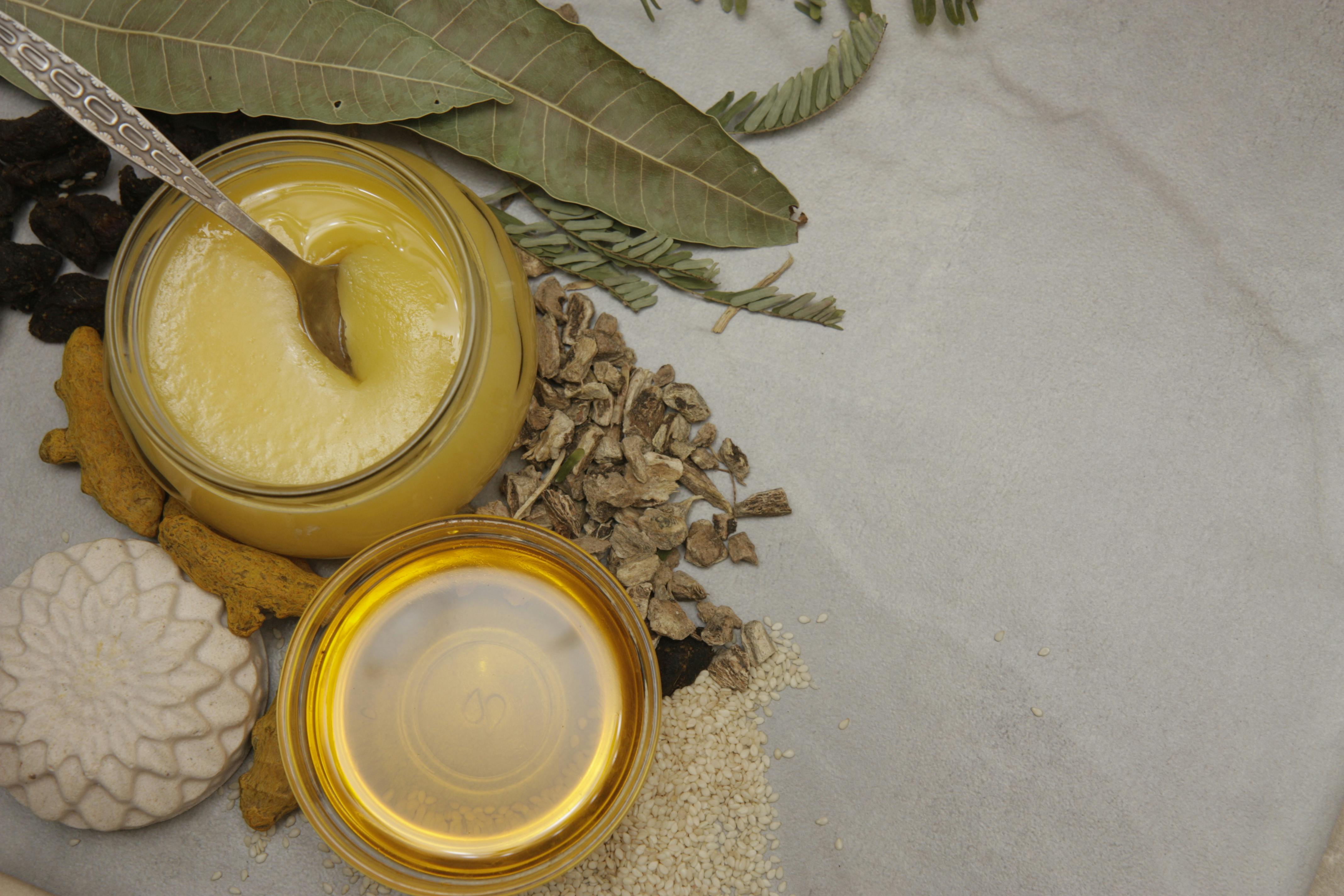
Ghee (clarified butter)
The "casein/lactose-free" clarified butter — butyrate concentrate and the Ayurvedic golden-oil tradition.
In 1 minute
What does it provide? Concentrated milk fat — with lactose and milk protein (casein) entirely removed. Its high smoke point (≈ 250 °C) makes it ideal for frying and searing; it is the traditional fat of Indian cuisine.
How much? 1–2 teaspoons (5–10 g) per day — for tempering spices ("tarka"), sautéing vegetables, Indian-style dishes. As with all SFA-rich fats, in moderation.
When to avoid? Severe hypercholesterolemia, familial CVD risk. With milk-protein allergy it is generally tolerated (≈ 0.02 g protein/100 g), but caution is needed in strict IgE-mediated allergy.
Ghee (Sanskrit: ghṛta, "the clarified") appears in the Vedic scriptures (ca. 1500 BCE) as a sacred sacrificial substance: an indispensable component of the ancient fire sacrifice (yajna), the feeder of the flame and the divine mediator. Ayurveda (Charaka Samhita, 2nd century BCE) regards it as a medicinal base material — in a "rasayana" (rejuvenating) role, and as a "carrier vehicle" (anupāna) for spice essential oils. Long-aged, sometimes decades-old "purana ghṛta" is a separate Ayurvedic category with neuropsychiatric indications — modern evidence is lacking, but cultural prestige is enormous.
The preparation method (slow cooking of butter until water evaporates, milk proteins precipitate and brown golden) was a practical necessity in the hot, refrigeration-free climate of the Indian subcontinent: dehydrated fat keeps for months at room temperature without going rancid. The modern era casts ghee in a double light: on one hand, the global Ayurvedic and "wellness" movement celebrates it as a "superfat" (often with unfounded claims); on the other hand, population dietary research (e.g., Indo-Mediterranean Diet Heart Study, Singh 2002) has associated high ghee intake in the Indian population with a healthy cardiovascular profile — likely thanks to the overall dietary context.
🔬 Scientific Background
Ghee's fatty acid profile is similar to butter, but removal of water and protein components concentrates all macro- and micronutrients (about 99.5% fat vs. butter's 80–82%). Its SFA content is therefore higher in absolute terms — 100 g ghee contains about 60 g SFA, vs. 50 g in butter. This makes the "ghee is healthier than butter" argument harder to defend metabolically.
The main practical advantage is complete removal of casein and lactose — making it a safe fat source for milk-protein allergic and severely lactose-intolerant patients. The high smoke point (≈ 250 °C) comes from the absence of milk-protein residues (which burn butter at around 150 °C) — pure milk fat is much more stable.
At the microbiome level, direct evidence is minimal, but the "anupāna" principle (fat-soluble polyphenol carrier vehicle) is supported by modern pharmacokinetic research: curcuminoids, ginger gingerols, and fenugreek sapogenins have higher bioavailability in a ghee matrix than in aqueous medium (Shoba 1998 analogy for curcumin). There is no RCT evidence for the neuropsychiatric indications of "purana ghṛta" (aged ghee).
An interesting small RCT (Sharma 2010, small n) associated ghee intake with overall improved HDL cholesterol and a lower LDL/HDL ratio — in the context of a traditional Indian diet. The result cannot be extrapolated to a Western diet.
- + Fat-soluble polyphenol spices (turmeric, ginger, cumin, coriander, fennel, garlic): classic "tarka" technique — spices tempered in hot ghee for 20–30 seconds release their essential oils and polyphenols, turning the whole dish into a flavor bomb.
- + Legumes (lentils, chickpeas, mung beans): Indian "dal" tradition — legume fiber is a butyrate precursor in the colon, the ghee matrix delivers fat-soluble nutrients.
- + Vegetables (carrot, winter squash, leafy greens, eggplant): a fat matrix is needed for carotenoid and vitamin K absorption.
- + Whole-grain basmati rice: ghee + basmati is the basis of classic Ayurvedic "kichadi" — a balanced meal.
- + Sweet spices (cardamom, cinnamon, clove): Indian sweets (halwa, ladoo) use ghee as a base — its flavor profile is irreplaceable.
- + Hot milk (evening ghee-milk, "kshira-ghṛta"): Ayurvedic restorative drink — modern data are limited.
- Intensive fat replacement with high LDL: the "ghee is healthy, I can eat as much as I want" approach can worsen dyslipidemia. Due to its SFA concentration, quantitative control is needed.
- Ghee heated to burning (≥ 250 °C, prolonged): acrolein and oxidized fatty-acid products can form — even the high smoke point is not unlimited. When frying, don't push the ghee pan to extreme heat.
- Sugar-rich Indian sweets in traditional quantities: the halwa, ladoo, jalebi style combination of ghee + sugar + refined grain is one of the dietary factors in India's diabetes epidemic — avoid regularly.
- As a margarine substitute, "light" ghee, hydrogenated vegetable ghee ("vanaspati"): the partially hydrogenated vegetable "ghee substitute" sold in the Indian market is high in trans-fat and especially harmful cardiometabolically. Label reading is mandatory.
- Acute pancreatitis, severe steatorrhea: fat restriction is needed; ghee's high fat content is contraindicated.
- Strongly acidic, egg-yolk-based sauces (hollandaise, béarnaise): because ghee lacks casein, it doesn't emulsify like butter — keep butter for these techniques.
- Familial hypercholesterolemia, confirmed ASCVD: SFA restriction is part of guidelines (ESC 2019) — ghee's absolute SFA content is higher than butter's; use sparingly.
- NAFLD/NASH: SFA reduction is part of treatment; small amounts acceptable, not a featured fat.
- Acute cholesterol gallstone attack: fat restriction is mandatory.
- Acute pancreatitis: fat restriction is mandatory.
- Cystic fibrosis, exocrine pancreatic insufficiency: without pancreatin replacement, ghee fat is not properly absorbed.
- ApoE ε4/ε4 genotype: higher dietary SFA sensitivity — individual LDL monitoring.
- Severe IgE-mediated milk-protein allergy: ghee's casein content is extremely low (< 0.02 g/100 g), but in strict anaphylactic history, caution — first intake under medical supervision.
- Acute hepatitis, unexplained liver-enzyme elevation: SFA loading should be avoided.
Daily serving: 1–2 teaspoons (5–10 g) — for tempering spices, frying, Indian-style dishes.
Preparation pattern:
1. Home preparation: 250 g of good-quality butter on low heat (about 30 minutes), water evaporates, milk protein precipitates and browns golden at the bottom, aroma is nutty-caramel.
2. Strain through clean cheesecloth into a clean glass jar.
3. Storage: room temperature, dark place, airtight, up to 6–12 months. Rock-hard in the refrigerator — take out an hour before use.
Classic patterns:
- Tarka (spice tempering): 1 tsp ghee + ½ tsp cumin + a pinch of asafoetida + dried chili + freshly cracked black pepper — temper for 30 seconds, then pour onto dal/vegetables
- Kichadi: basmati rice + mung beans + ghee + turmeric + ginger — classic restorative meal
- Sautéed leafy greens (saag): spinach/chard + ghee + garlic + ginger — quick, nutrient-dense
- Sweet pattern: halwa: semolina + ghee + sugar + water — occasional Indian sweet (not for regular consumption)
Storage: in an airtight jar in a dark, cool place (no refrigeration needed if handled with clean utensils), 6–12 months. Spoon always dry and clean — water trace = rancidity.
What not to do: don't heat above 250 °C for long, don't store open in sunlight, don't substitute "vanaspati" (hydrogenated substitute) into traditional recipes.