


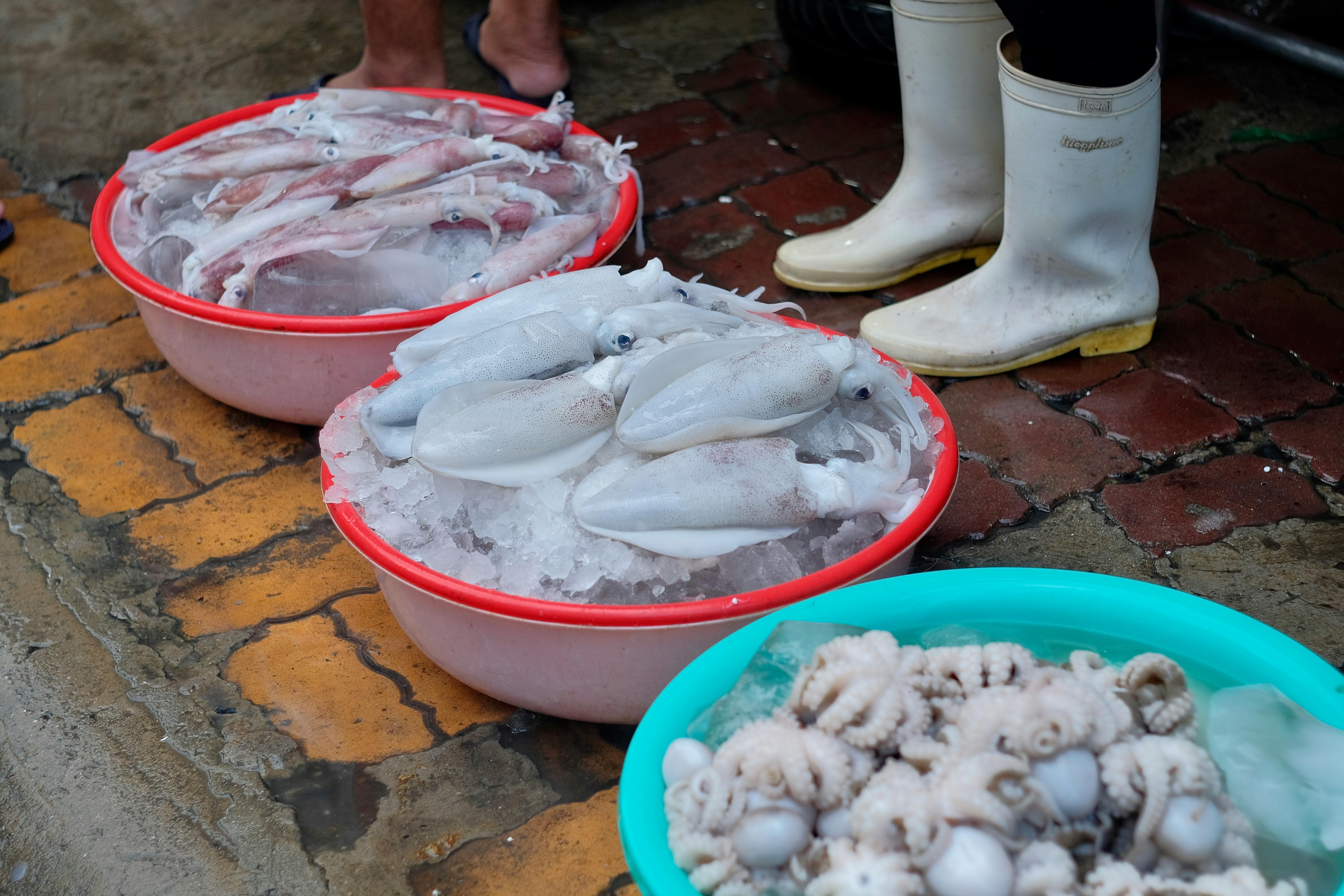
Squid / calamari / octopus
The cholesterol-containing super-protein — taurine bomb, low fat, and a high-mercury context.
In 1 minute
What does it provide? High-quality protein (16–20%), low fat (≤ 2%), outstanding taurine (octopus is one of nature's most concentrated sources), B12, copper, selenium, and iodine. Mercury content is low — safer choice during pregnancy and childhood than large predator fish.
How much? 1–2 servings per week (100–150 g). Cephalopods diversify seafood alongside fish but do not substitute for the omega-3 content of fatty fish.
When to avoid? Shellfish allergy (tropomyosin cross-reactivity), active gout (high purine), severe hypercholesterolemia in hyperresponder phenotype. Ethical consideration: octopus consumption — due to growing evidence of Cephalopoda sentience, many reduce intake.
The history of cephalopod consumption goes back thousands of years: in Cretan Minoan frescoes, Hellenic ceramics, and Roman Pompeian cookbooks, octopus and squid often appear. Apicius's 1st-century cookbook De re coquinaria describes numerous octopus and squid recipes, often with garum and spicy seasoning. In Japanese sushi and sashimi culture, ika (squid) and tako (octopus) are millennial traditions — documented since the Edo period (1603–1868). Spanish pulpo a la gallega (Galician octopus with paprika oil and potato) grew out of 18th-century Castilian tradition, and Italian calamari fritti is the pinnacle of Venetian and Neapolitan fishing tradition.
Modern nutrition science regards cephalopods as a "functional food": the high taurine content (1000–4000 mg/100 g) supports the heart, liver, and gut barrier, while the high-protein + low-fat profile is especially valuable in calorie-controlled diets (Mediterranean, Japanese, Korean). The 2015 full sequencing of the octopus genome (Albertin et al., Nature) showed that octopuses genetically belong among the most intelligent creatures with the most complex nervous systems in the animal kingdom — this also generates ethical debate: in 2024 Washington State became the first to pass legislation banning octopus farming on welfare grounds. The microbiome aspect is less studied, but taurine has been shown to support bile-acid conjugation and Akkermansia muciniphila growth. (Nature, Wikipedia, Birch et al. 2021)
🔬 Scientific Background
The amino-acid spectrum of cephalopods is complete; the biological value of the protein is high — an excellent low-fat source to supplement athletes, aging sarcopenia, and oncological catabolic states. 100 g of fresh octopus contains 1000–4000 mg of taurine, orders of magnitude beyond meats and most fish. Taurine is a non-essential amino-acid derivative for humans, but becomes semi-essential in sepsis, prematurity, and long parenteral feeding. Per human RCTs, taurine supplementation (3–6 g/day, 4–12 weeks) improves cardiovascular parameters (blood pressure, left ventricular function) and has antioxidant effects (Waldron et al., Adv Exp Med Biol 2018).
B12 content covers 70–100% of the daily reference per 100 g; copper is a cofactor for heme synthesis and collagen cross-linking. Dietary cholesterol content is moderately high (200–300 mg/100 g), but the 2015 USDA Dietary Guidelines removed the 300 mg/day dietary cholesterol upper limit — per Framingham and NHANES cohort data, moderate consumption (1–2 servings/week) doesn't meaningfully worsen LDL in healthy adults. Due to individual variability (hyperresponders), individualized advice is warranted.
From a mercury perspective, cephalopods have short lifespans (squid 1–2 years, octopus 2–5 years) and a low food-chain level, so their methylmercury content is generally < 0.1 mg/kg — well below the EU 0.5 mg/kg limit. This makes them a safe choice during pregnancy and childhood, unlike large predator fish (king mackerel, marlin, shark). In shellfish allergy they are to be avoided due to tropomyosin cross-reactivity (shared allergen with shrimp and bivalves).
At the microbiome level, in pre-clinical models taurine intake increases the Bacteroidetes/Firmicutes ratio and lowers colonic LPS levels; human intervention data are limited, but taurine's bile-acid conjugation role (taurocholic, tauro-CDCA) is key to small-intestinal and bile-acid-mediated microbiome regulation. Sustainability: squid and octopus stocks are regionally overfished (Mediterranean, Atlantic); MSC- or ASC-certified, jigging-method-caught squid is preferred. Ethically, the LSE Animal Sentience review (Birch et al., 2021) found strong evidence for Cephalopoda pain perception — several countries (UK, EU) regulate scientific and food-industry handling.
- + Extra-virgin olive oil: lipid matrix, polyphenols — basis of Mediterranean octopus stew and Spanish pulpo a la gallega.
- + Lemon juice: vitamin C → enhances iron absorption, plus softens squid texture with mild acid marination.
- + Garlic + parsley: organosulfide + apigenin/myristicin — classic Mediterranean anti-inflammatory matrix.
- + Tomato (lycopene + vitamin C): tomato octopus stew — polyphenol-lycopene supports Cu/Fe bioavailability.
- + Fiber-rich side (vegetables, legumes, whole grains): combined taurine + fiber yields a favorable SCFA + bile-acid profile.
- + Bamboo, ginger, soy (Japanese ika-takenoko, tako-su): fermented soy + squid is a classic Japanese matrix.
- + Roasted peppers, chili: capsaicin + taurine synergistic cardiovascular effect.
- Breaded + deep-fried form (fritto misto, "squid rings"): high-heat oil frying causes acrylamide, oxidized fat, and trans-fat loading — significantly worsens the healthy profile.
- Salted dried squid (surume, jerky): Na content is to be avoided in hypertension (can reach 3000–5000 mg/100 g).
- High-Na seasoning + concentrated soy + miso (combined Japanese forms): cumulative Na overload. Reduced-sodium soy or diluted dashi recommended.
- Regular consumption during a gout attack: the high purine content causes uric acid elevation.
- High-cholesterol diet in a hyperresponder: the 200–300 mg/100 g cholesterol can cause individual serum LDL elevation — check the lipid panel response.
- Heavy alcohol intake: acute pancreatitis and the combined fat + alcohol Mediterranean-restaurant "tapas surge" cause digestive stress.
- Shellfish allergy (tropomyosin): absolute ban — shrimp, bivalve, and cephalopod allergy cross-reactivity is complete.
- Active gout attack, severe hyperuricemia: cephalopods are moderately high in purines — 1 serving/week in remission is acceptable, avoid during attack.
- Severe hypercholesterolemia in hyperresponder phenotype: in moderation and with lipid panel monitoring.
- Hypertension, heart failure, chronic kidney disease: salted dried or soy-marinated forms to be avoided (Na load).
- Pregnancy: cooked form acceptable (low mercury), but raw/semi-raw sushi-squid carries Listeria and parasite risk — to be avoided.
- Ethical consideration (octopus): octopus cognitive abilities are taken seriously; the LSE Animal Sentience review (2021) showed strong evidence — many reduce or stop octopus consumption based on growing evidence.
- Infant and early childhood: cooked is acceptable; raw/semi-raw not recommended.
- Anisakiasis risk (parasite): freezing (-20 °C, 24 hours) inactivates Anisakis larvae — mandatory for sushi-grade raw consumption.
Serving: 1–2 servings per week (100–150 g fresh or frozen).
Preparation pattern — grilled squid (calamari alla griglia):
1. Cleaned, opened squid + 1 tbsp olive oil + lemon zest + garlic for 30 minutes marinade.
2. Hot grill/pan (200–220 °C), 60 sec/side — total 2 minutes.
3. Freshly cracked pepper, coarse sea salt, parsley, lemon.
Preparation pattern — pulpo a la gallega:
1. Octopus (frozen-thawed or mechanically tenderized), in 4–5 dL water for 40–60 minutes of slow simmer (80–90 °C).
2. Sliced on a potato bed, coarse sea salt, paprika oil (pimentón dulce + olive).
3. Mediterranean classic, no saffron or lemon.
Classic patterns:
- Calamari alla griglia (Italy): brief + high heat.
- Pulpo a la gallega (Spain): slow + pimentón.
- Tako-su (Japan): raw octopus + rice vinegar + mirin + cucumber.
- Arroz negro (Catalonia, Valencia): cuttlefish + ink + rice.
- Ika no shiokara (Japan): fermented squid — high Na, flavorful.
Storage: Fresh squid/octopus refrigerated 1–2 days. Frozen 6 months (freezing tenderizes). Canned in olive oil 2–3 years, after opening 2 days. Cooked refrigerated 2 days.
What not to do: Don't cook in the middle range (5–25 minutes) — it becomes rubbery. Don't dismiss frozen as "second-rate" — freezing tenderizes. Don't process raw from an Anisakis-risk source without freezing.