
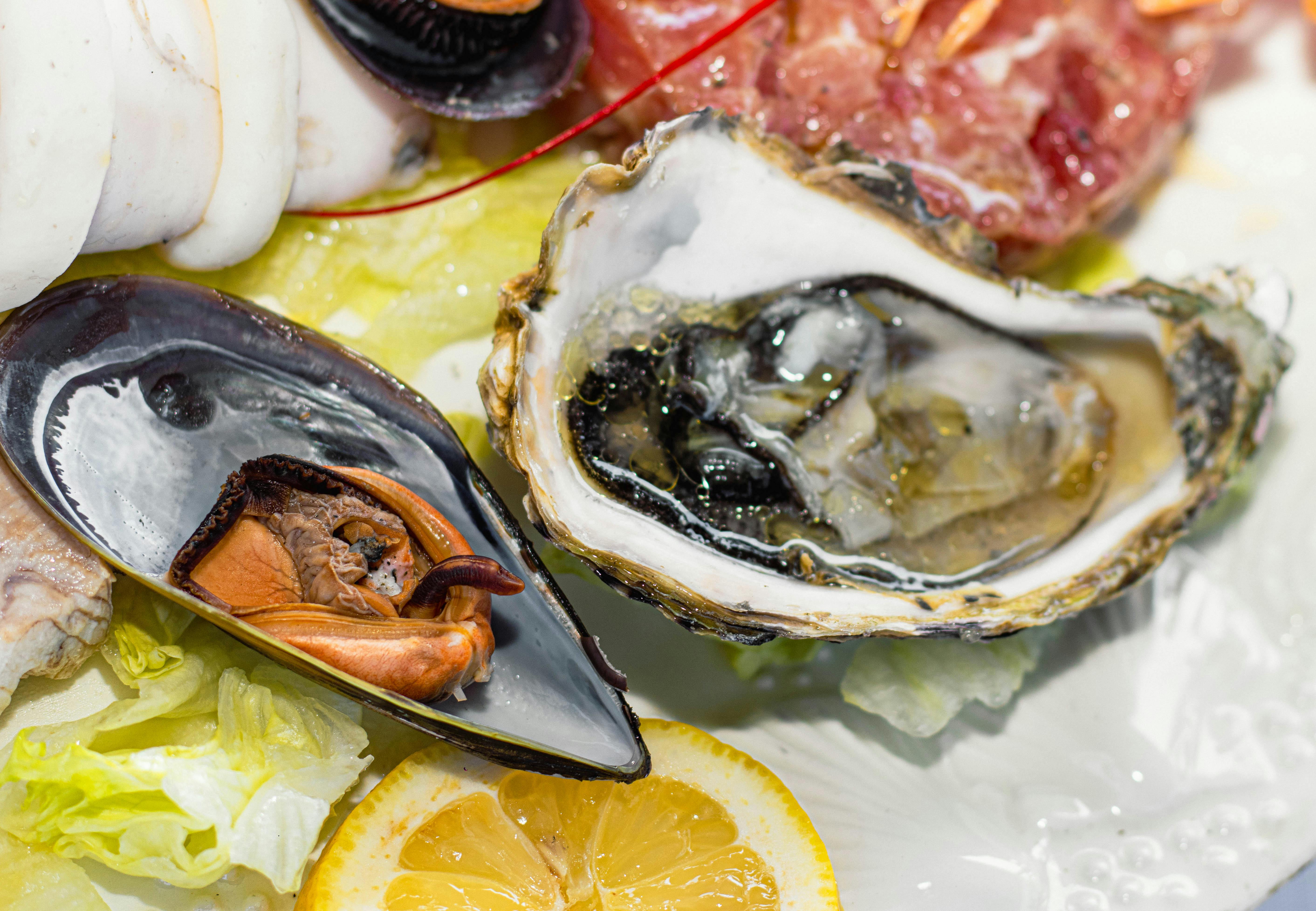
Mussel / oyster
The "essence of the sea" — a zinc bomb, B12 concentrate, and the Vibrio warning.
In 1 minute
What does it provide? Bivalves (oyster, blue mussel, scallop) provide a concentrated micronutrient package: 100 g of oyster contains up to 30–90 mg of zinc, 200–800% of B12 needs, plus heme iron, selenium, iodine, taurine, and low-fat, high-quality protein.
How much? 1–2 servings per week (100–200 g mussel meat or 6–12 oysters). With regular oyster consumption, don't exceed the EFSA 25 mg/day upper safety limit for Zn.
When to avoid? Chronic liver disease (cirrhosis, hemochromatosis), immunosuppression, neutropenia (chemotherapy, transplant), pregnancy and early childhood — avoid raw oysters (Vibrio + norovirus). Shellfish allergy is a complete ban. Moderate in gout (high purine).
The oyster has been famed since antiquity as a luxury food and aphrodisiac: the Roman aristocracy regularly ate oysters from Brindisi and Kent, and Pliny called it "the first gift of the sea." In the 18th–19th-century working-class kitchens of London and Paris, however, the oyster was still a cheap street food — Charles Dickens famously wrote that "poverty and oysters always go together." Due to overfishing, river pollution, and the Bonamia ostreae pathogen, the European native oyster (Ostrea edulis) has drastically declined, and today most of the market is supplied by the Pacific Crassostrea gigas, farmed in Europe since the 1960s.
Casanova's legendary breakfasts of 50 raw oysters reinforced the aphrodisiac myth around male sexual performance; the zinc + arginine/citrulline + taurine combination appears as a rational explanation in contemporary nutritional science, although the aphrodisiac effect has not been confirmed in human RCTs. The microbiome aspect is a newer development: the B12, Zn, and selenium content of bivalves are proven cofactors of gut-barrier function, the immune response (Th17/Treg balance), and SCFA production by fermentation. At the same time, bivalve consumption is not only a gastronomic but also a public health question in the modern era: Vibrio vulnificus, norovirus, and paralytic shellfish toxin (PST) risk make freshness, origin, and the storage chain critical. (Wikipedia, EFSA, CDC)
🔬 Scientific Background
Bivalves are concentrated micronutrient sources (Zn, B12, Fe, Se, iodine) and provide excellent, low-fat protein — and they belong to sustainable (low trophic level) seafood. The oyster's Zn content is unmatched among natural foods: a single 6-piece serving more than covers the EFSA daily reference and can easily approach or exceed the 25 mg/day upper safety limit. Sustained overintake can cause Cu deficiency and sideroblastic anemia — for oyster enthusiasts, monitoring the Zn/Cu balance is warranted. (USDA FoodData Central, EFSA)
Human evidence: the Cochrane meta-analysis (Singh & Das, 2013, 2017 update) confirms that adequate Zn status shortens the duration of upper respiratory infections; bivalves' B12 content covers 200–800% of the daily reference per 100 g — critical for elderly with atrophic gastritis and for vegetarian-diet supplementers (EFSA). Heme iron content is documented effective in iron-deficiency anemia.
The public health risk of raw bivalve consumption is significant: Vibrio vulnificus in chronic liver disease (cirrhosis, hemochromatosis) can cause sepsis with high mortality — explicit CDC and EFSA warning. Norovirus-derived outbreaks cause thousands of illnesses each year in Europe; heat treatment (≥ 90 °C, ≥ 90 sec) inactivates the virus. Paralytic shellfish toxin (PST, saxitoxin) after algal blooms can be life-threatening — in the EU, the purification protocol for B-class zone depuration farms is mandatory. (EFSA, CDC)
At the microbiome level, Zn supplementation has been shown to reduce gut-barrier permeability and support Akkermansia muciniphila colonization; B12 and Se are cofactors of Th17/Treg balance and SCFA production by fermentation. Regular bivalve consumers show higher microbiome diversity in observational data (Nature Communications). From a sustainability standpoint, mussel and oyster farming is the lowest-environmental-footprint animal protein source: carbon sequestration, water-quality improvement, and blue-mussel reef habitat reconstruction are positive externalities (FAO 2020, ASC, MSC).
- + Lemon juice and parsley: classic pairing — vitamin C helps iron absorption, while not hindering Zn absorption.
- + Extra-virgin olive oil: lipid matrix and polyphenols alongside omega-3 + Zn — Mediterranean anti-inflammatory pattern.
- + Green leafy vegetables (spinach, arugula): folate and K1 alongside mussel B12 + Fe yield a complete hematopoietic profile.
- + Garlic and pepper: organosulfides and piperine, the seafood-Mediterranean/Southern European classic flavor matrix.
- + Sourdough whole-grain bread: the fiber + mussel omega-3 + Zn combination is the most effective SCFA + gut-barrier support.
- + Fiber-rich matrix (vegetables, legumes — time-separated): consumed 2–3 hours before/after the mussels, it doesn't interfere with Zn absorption but is synergistic at the microbiome level.
- + Moderate white wine for cooking (moules marinière): acid helps flavor complexity; without alcohol, lemon juice/apple-cider vinegar can substitute.
- High-phytate diet at the same time (raw grains, unsprouted legumes in large quantities): phytate chelates Zn and reduces absorption — eat 2–3 hours apart.
- Copper supplementation in sync (with regular oyster consumption): high Zn intake can induce Cu deficiency. Time separation or combined trace-element monitoring required.
- Iron supplement capsule at the same time: Zn and Fe compete for the same transporters — recommended ≥ 2 hours apart.
- High-Na accompaniments (salted cheese, bacon, flavored chips): mussels and depuration seawater already contain Na, cumulative intake to be avoided in hypertension.
- Alcohol in larger amounts: worsens Zn absorption and hepatic Zn metabolism, plus exacerbates Vibrio infection risk in liver disease.
- Raw consumption with antacid/PPI: reduced gastric acid lowers natural defense against Vibrio — raw oyster to be avoided.
- Chronic liver disease (cirrhosis, hemochromatosis, chronic hepatitis): raw oyster Vibrio vulnificus sepsis can carry up to 50% mortality. CDC and EFSA contraindication — only well-cooked.
- Immunosuppression, neutropenia (chemotherapy, bone marrow or organ transplant, HIV low CD4): raw or undercooked bivalves to be avoided (Vibrio, Listeria, norovirus).
- Pregnancy: raw oyster to be avoided (Vibrio, norovirus, Listeria); cooked mussel 1–2 servings/week acceptable if freshness confirmed.
- Infant and early childhood (< 5 years): raw bivalves not recommended. Cooked form after introduction, gradually.
- Shellfish allergy (tropomyosin): absolute ban — cross-reactivity with shrimp, crab, and other bivalves is complete.
- Gout, hyperuricemia: in moderation — bivalves are moderately high in purines (1 serving/week acceptable, avoid during attack).
- Hypertension: Na intake to be monitored due to salty seawater and salted preparations.
- Wilson's disease (Cu metabolism disorder): Zn overintake worth medical supervision for treatment.
- Before planned surgery: high EPA + DHA can cause moderate bleeding tendency — surgical discussion.
- During algal bloom alerts (PST, ASP, DSP toxin): avoid local wild catches — saxitoxin is life-threatening.
Daily/weekly serving: 1–2 servings per week (100–200 g mussel meat or 6–12 oysters). For regular oyster consumers, don't exceed the Zn 25 mg/day EFSA upper limit.
Preparation pattern — moules marinière (blue mussel):
1. Thoroughly wash 500 g of closed-shell blue mussels, remove the beard.
2. In a pot: 1 tbsp olive oil, 2 cloves of garlic, 1 shallot, 50 mL dry white wine (or lemon juice).
3. Mussels into the pot, lid on, 4–5 minutes high heat — until the shells open.
4. Parsley, lemon zest, freshly cracked pepper. Discard any unopened specimens.
Preparation pattern — pan-seared scallop:
1. Hot pan, 1 tbsp butter/olive oil, 30 seconds.
2. Scallop 60–90 seconds / side — center should remain slightly translucent.
3. Lemon, coarse sea salt. Do NOT overcook: texture becomes rubbery.
Classic patterns:
- Moules marinière (Belgium, Northern France): blue mussel + white wine + garlic + parsley — the seafood Mediterranean-Atlantic classic.
- Paella valenciana: blue mussel + saffron + rice + vegetables — together a polyphenol + Zn + B12 matrix.
- Oysters "natural" (without Rockefeller style): 6 oysters + lemon + freshly cracked pepper + mignonette (red-wine vinegar + shallot) — classic French service.
- Canned blue mussel on sourdough: oil-packed mussel can + lemon juice + parsley + rye bread — quick, cheap, high Zn + omega-3.
Storage: Live mussels in the refrigerator (at 4 °C, covered with a damp cloth, NOT in airtight packaging) max 24 hours. Fresh oysters: flat side up, on an ice bed, max 1–2 days. Frozen meat-packed form 3 months. Canned: room temperature 2–3 years, after opening refrigerated 2 days.
What not to do: Don't overcook (mussel meat becomes rubbery and dry above 6–8 minutes). Don't eat raw from an unknown source. Don't discard mussels that fail to open — they weren't alive before cooking. Don't store live mussels in airtight plastic — they suffocate.