


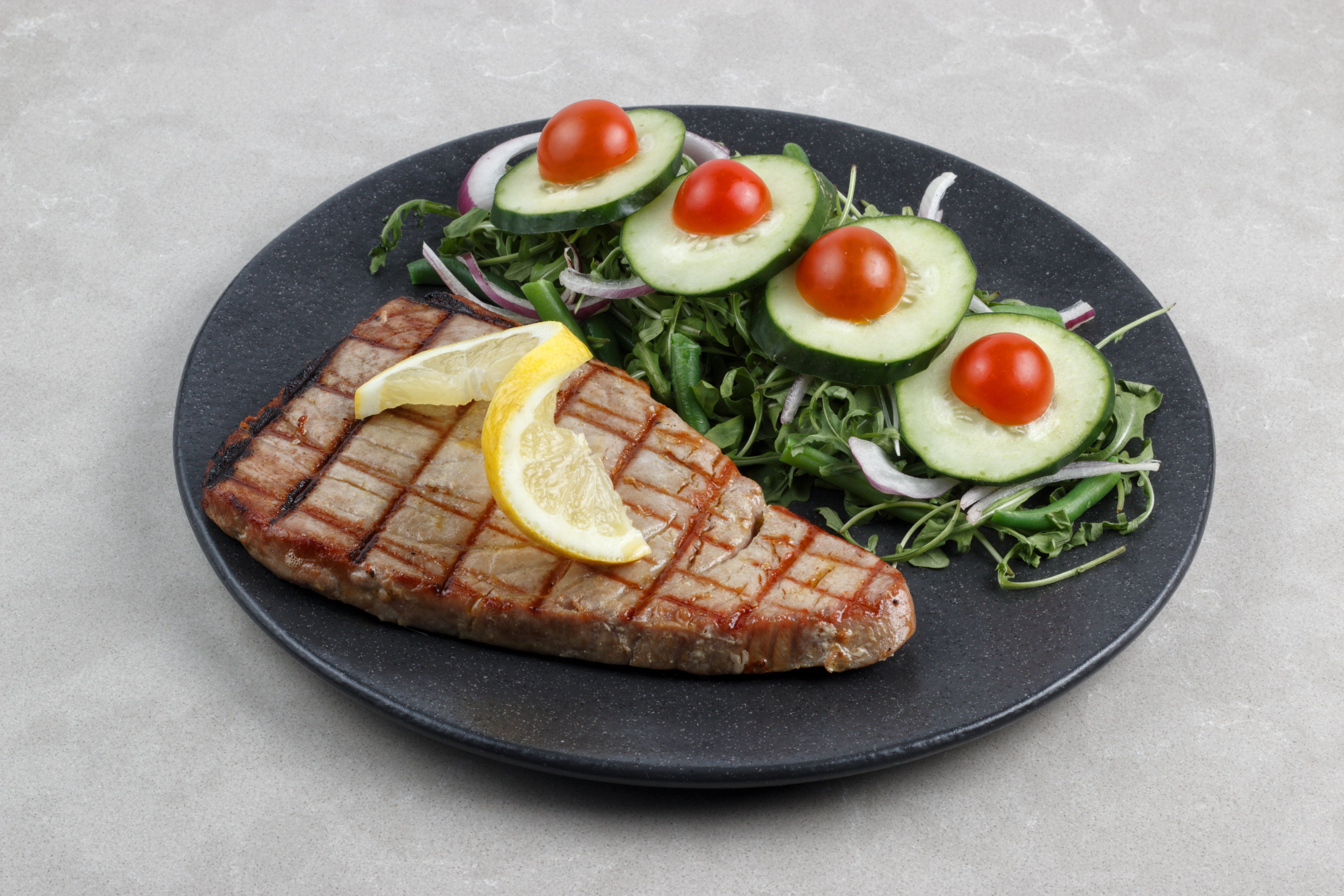
Tuna
The "beef of the sea" — high protein, mercury sensitivity, and the sustainability paradox.
In 1 minute
What does it provide? High biological-value protein (25–30 g/100 g, more than beef), size-dependent omega-3 EPA + DHA (skipjack ≈ 0.3–0.5 g, bluefin ≈ 1.2 g, ōtoro ≈ 2.5–3 g/100 g), B12, selenium (60–100 µg/100 g — partly neutralizes methylmercury, Ralston "SeHBV"), niacin, vitamin D, and coenzyme Q10 (compensation for statin-treated patients).
How much? Skipjack ("light tuna") can 2–3×/week, albacore ("white tuna") max 1×/week (≈ 100 g). Fresh bluefin/bigeye is a 1–2× monthly luxury for adults, preferably with MSC/pole-and-line certification. Always continuous refrigeration to avoid scombroid (histamine poisoning). Serve with vitamin C (lemon).
When to avoid? Pregnancy and breastfeeding (bluefin, bigeye, swordfish, marlin, king mackerel COMPLETELY; albacore max 1×/week), child under 6 (brain development), MAO-inhibitor therapy and histamine intolerance (non-fresh tuna → tyramine/histamine crisis), CKD 3+ (protein-phosphorus-Na), gout flare (purine 100–200 mg/100 g), chemotherapy/immunodeficiency in raw form (Listeria, Vibrio, Anisakis), fish allergy, untreated Graves' disease (iodine).
Tuna is one of the sacred fish of Mediterranean civilization — the Phoenicians (around 1500 BCE) built the first industrial "almadraba" net (tuna trap) in Cádiz and Cartagena, which still operates in summer on the Spanish Atlantic coast. In the Greco-Roman era, salted "tonnina" was a luxury throughout Europe; Pliny and Strabo describe the tuna fishing tradition in detail.
The Japanese "maguro" tuna cult emerged at the end of the 19th century — interestingly, bluefin tuna was long considered a worthless fish called "neko-matagi" (even the cat steps over it), becoming the star of sushi only in the 1960s with refrigeration technology. Today a large bluefin in Tokyo (Toyosu auction) reaches USD 3 million (2019 record: 3.1 million). "Ōtoro" (fatty belly part) is gastronomic super-luxury.
From the mid-20th century, canned tuna (skipjack and albacore) became a mass food — the "tuna salad sandwich" is an American icon. In the 21st century, the mercury issue (Minamata disaster, 1956; FDA warning to pregnant women, 2004), overfishing (bluefin "Atlantic red tuna" critically endangered, IUCN status from 2011), and ethical concerns (dolphin by-catch, "dolphin-safe" certification from 1990) have significantly reshaped tuna-consumption culture. Today MSC, ASC, and "pole-and-line caught" certifications are the keys to responsible choice.
🔬 Scientific Background
Tuna is the richest fish-protein source (25–30 g/100 g — more than chicken or beef), with high B12 (≈ 9 µg/100 g), selenium (60–100 µg/100 g, > daily need), niacin, and vitamin D content. Coenzyme Q10 (≈ 2 mg/100 g) compensates for statin-treated patients.
Omega-3 EPA + DHA content varies: skipjack ≈ 0.3–0.5 g/100 g; albacore ≈ 0.7–1 g; bluefin (average) ≈ 1.2 g; bluefin-belly (ōtoro) ≈ 2.5–3 g. Smaller than salmon or herring, but significant — especially in fattier species.
The CRITICAL question is mercury. Methylmercury accumulates upward in the food chain (biomagnification) — large, long-lived predators (bluefin tuna 30+ years, bigeye 15 years) carry significant burden. FDA data (2024):
| Species | Mercury (mg/kg) | FDA category | |---|---|---| | Skipjack ("light tuna") | 0.12 | "good choice" | | Yellowfin (fresh) | 0.35 | "good choice" | | Albacore ("white tuna" canned) | 0.35 | "good choice" — 1 serving/week | | Bigeye | 0.69 | "choices to avoid" | | Bluefin | 0.89–1.5 | "choices to avoid" |
Mercury is neurotoxic — especially critical for fetal and small-child brain development (Minamata syndrome analogs). Based on the WHO 1.6 µg/kg/week body-weight tolerable intake recommendation, a 60 kg adult can tolerate ≈ 90 µg of mercury per week — which is 1 albacore can ≈ 35–50 µg. For pregnant women, the WHO/FDA recommendation is stricter: bluefin/bigeye COMPLETELY AVOID, albacore max 1 per week.
Scombroid-type — with improper refrigeration, histidine → histamine (classic "mackerel / tuna poisoning"). Contraindicated with MAO inhibitor.
- + Lemon + olive oil + parsley: classic Mediterranean matrix — polyphenol-omega-3 stabilization.
- + Avocado + sesame seed (poke / sushi style): healthy fat + magnesium synergy.
- + Green leafy salad (arugula, spinach): folate + magnesium + B-vitamin matrix.
- + Quinoa, bulgur, roasted potato: stable blood sugar + satiety.
- + Tomato + olive oil (in Mediterranean salad): lycopene + omega-3 cardio synergy.
- + Green tea (before or after the meal, 1–2 hour spacing): EGCG can aid mercury excretion (animal evidence — human RCTs ongoing).
- + Selenium content itself: protective against mercury (selenium → methylmercury detoxification) — tuna selenium partly compensates for mercury toxicity (Ralston 2018 "selenium health benefit value").
- MAO-inhibitor antidepressant + non-fresh tuna (old can serving, or 12+ hours warm-held sashimi): severe hypertensive crisis danger! Tyramine / histamine accumulation.
- Antihistamine insufficiency (DAO deficiency) + non-fresh tuna: scombroid poisoning (flushing, headache, low blood pressure, vomiting).
- Anticoagulant (warfarin, DOAC) + multiple weekly servings of fresh fatty tuna + fish-oil supplement: additive bleeding risk.
- High-Na canned tuna + hypertension: "no salt added" version recommended.
- Raw tuna ("tuna tartare," sashimi) in pregnancy, immunocompromised, liver disease: Listeria, Salmonella, Anisakis risk.
- Warm-held sushi / poke counter ("all-you-can-eat" buffets): high histamine risk.
- High-dose selenium supplement + daily tuna consumption: selenium overdose (nail brittleness, fatigue, garlic-like breath).
- Pregnancy and breastfeeding: bluefin, bigeye, swordfish, marlin, shark, king mackerel COMPLETELY AVOID. Albacore can max 1/week (≈ 100 g). Skipjack ("light tuna") can 2–3/week acceptable.
- Small children (< 6 years): same rules as for pregnancy. Brain development is sensitive to mercury.
- Chronic mercury exposure (amalgam dental filling opening, industrial): reduce tuna consumption.
- Histamine sensitivity, mastocytosis, MAO inhibitor treatment: only fresh, well-cooled; canned cautiously.
- Gout / hyperuricemia: purine content 100–200 mg/100 g (moderate) — moderate during flare.
- Chronic kidney disease (CKD 3+): high protein + phosphorus + Na — portion restriction.
- Fish allergy: to be avoided.
- Chemotherapy, immunodeficiency: raw tuna to be avoided (Listeria, Vibrio, Anisakis).
- High blood pressure, heart failure: salted cans to be avoided.
- Hyperthyroidism: large portions cautiously due to iodine content in untreated Graves' disease.
Daily/weekly serving: skipjack ("light tuna") can 2–3×/week; albacore ("white") 1×/week max; fresh bluefin / bigeye 1–2× MONTHLY max for adults, none for pregnant women.
Preparation pattern — Mediterranean "tuna salata":
1. 1 can of water- or olive-oil-packed skipjack.
2. Cherry tomato, red onion, black olive, ½ cucumber, capers.
3. Olive oil, lemon juice, freshly cracked pepper, oregano.
4. Serve with whole-grain bread or a quinoa nest.
Classic patterns:
- Seared tuna steak (rare, raw center): only from sushi-grade fresh tuna, 1 minute/side on high heat, sesame seed + soy sauce.
- Tuna tataki (Japanese): seared outside, raw inside + ponzu sauce — from sushi-grade fish.
- Niçoise salad: canned tuna + egg + green bean + potato + olive + tomato.
- Italian "tonno e fagioli": canned tuna + white bean + red onion + parsley + olive oil.
- Poke bowl (Hawaiian): only sushi-grade tuna + avocado + cucumber + rice + sesame.
Storage: fresh tuna refrigerated max 24 hours, frozen 3 months. Canned tuna unopened 3–5 years; after opening refrigerated 1–2 days. Don't leave opened canned tuna in the can (metal migration).
What not to do: don't consume raw bluefin irresponsibly. Don't leave fresh tuna unrefrigerated (scombroid poisoning). Don't fall into the "every dolphin-safe can is healthy" myth.