


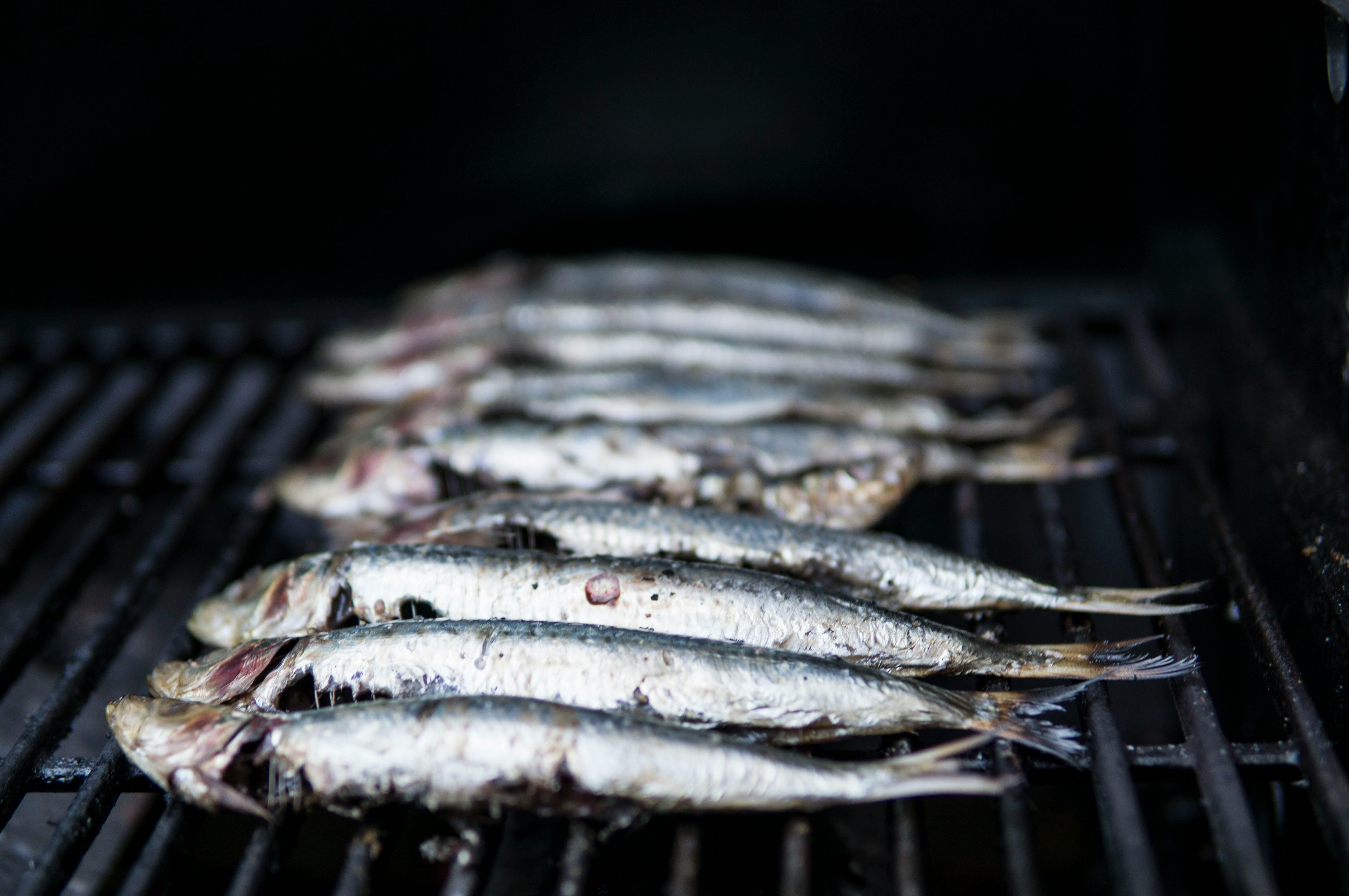
Sardine
Calcium with the bones — EPA/DHA + Ca + D together, low mercury, the Mediterranean staple.
In 1 minute
What does it provide? Sardine is "the best superfood by price-value ratio" — cheap, available everywhere, and outstanding nutritionally. Eaten with the bones, it provides 380 mg of calcium per 100 g (a glass of milk has only 300 mg), plus 1.5–2 g of omega-3, B12, vitamin D, and coenzyme Q10. Its mercury level is the lowest among fish (short life cycle, low food-chain position).
How much? 1 can (≈ 90–120 g) or 100–150 g fresh / grilled sardine 2–4 times per week. On the FDA "best choices" list; safe for pregnant women and small children.
When to avoid? Gout, high uric acid (purine!). Fish allergy. Avoid salty cans with high blood pressure — choose "no salt added" version. Histamine sensitivity.
The name sardine comes from the island of Sardinia — the Romans were the first to fish and salt it in industrial quantities, as early as around 200 BCE. Pliny in "Historia Naturalis" (77 CE) describes the "sarda" salting process. Genoese and Portuguese fishing culture developed it further from the 14th century, and at the end of the 18th century French chef Nicolas Appert invented canning — the sardine became one of the first successful canned-industry products. Napoleon's army used canned sardines as strategic food.
In the 19th–20th centuries, Portuguese (Lisbon, Setúbal) and Galician (Vigo) sardine canneries became global suppliers — "lata de sardinhas" (canned sardines) is a cultural icon in Lisbon, and every June 13 (St. Anthony's Day) grilled sardines ("sardinhas assadas") fill the streets.
Modern nutrition science rediscovered the sardine from the 2000s: Walter Willett (Harvard) and Dan Buettner ("Blue Zones") both highlighted the sardine as a key to Mediterranean longevity. The residents of Buettner's Sardinian "Blue Zone" (Ogliastra) eat sardines multiple times a week, and their average lifespan is 90+ years. In 2024, environmentalists also discovered it: the sardine's carbon footprint is the smallest among animal proteins, and MSC-certified sardine fisheries are sustainable.
🔬 Scientific Background
The sardine's nutrient profile is unique. Omega-3 EPA + DHA content is 1.5–2.0 g/100 g — at the level of herring and salmon. Meta-analyses show consistent heart-health benefit (Mozaffarian 2011, Rimm 2018) — 2 servings per week reduces ischemic heart disease mortality by ≈ 36%.
Calcium content is the key: canned sardines are eaten with their thin, already softened bones, providing 380 mg of calcium per 100 g — more than in a glass of milk (300 mg). Bone calcium is well absorbed (≈ 30–35%, similar to milk). A can of sardines + sunshine (vitamin D) + resistance training = the best osteoporosis prevention combination.
Vitamin D (4–8 µg/100 g) and magnesium complement the calcium — canned sardines are a "three-in-one" bone-health package. A 2019 Spanish RCT (Soares 2019) showed that 4 sardine servings per week reduced osteoporosis risk by 50% in postmenopausal women.
Mercury accumulation is extremely low (0.01–0.02 mg/kg) — sardine is a small plankton-feeder (8–25 cm), short life cycle (3–5 years), so it doesn't accumulate toxic metals. At the top of the FDA "best choices" list.
Coenzyme Q10 content (≈ 2.5 mg/100 g) is outstanding — compensates CoQ10 levels in statin-treated patients and supports mitochondrial energy production (Mortensen 2014).
Purine content is high (300–500 mg/100 g) — careful in gout!
- + Whole-grain bread + olive oil + tomato: the iconic "pa amb tomàquet con sardinas" (Catalan) — fiber + lycopene + omega-3 + calcium super-combination.
- + Lemon + parsley + garlic: Mediterranean polyphenol matrix protects omega-3.
- + Green leafy salad (arugula, spinach): folate + magnesium + vitamin K for bone health.
- + Avocado + sesame seed: healthy fat + calcium supplementation.
- + Quinoa, buckwheat, bulgur: low glycemic index + magnesium + fiber.
- + Red wine (moderate, 1 dL): polyphenol-omega-3 cardio-synergy, Mediterranean tradition.
- + Roasted sweet peppers ("pimientos asados"): carotenoid + vitamin C + omega-3 combination.
- High-Na sardine can + hypertension: choose a "no salt added" version, or rinse salt off in a strainer.
- Deep-fried sardine in lots of oil + refined oil: trans fat + omega-3 oxidation — exactly the opposite of what sardines deliver.
- MAO inhibitor antidepressant + salted / pickled / non-fresh sardine: hypertensive crisis risk (tyramine / histamine).
- Anticoagulant + 5+ servings of sardine per week + fish-oil supplement: additive bleeding risk.
- Tetracycline / fluoroquinolone antibiotic + high-calcium sardine meal: absorption decreases; 2-hour gap recommended.
- During gout flare + sardine: purine accumulation, increased pain.
- Gout, hyperuricemia, recurrent gout attacks: sardine is high in purines (300–500 mg/100 g) — completely avoid during flare, max once/week in maintenance phase.
- Fish allergy (parvalbumin): to be avoided.
- Histamine sensitivity, mastocytosis: sardine is scombroid-type (histidine → histamine with improper refrigeration) — only fresh, well-cooled.
- MAO inhibitor antidepressant: salted, cured, non-fresh sardine contraindicated.
- Chronic kidney disease (CKD 3+): high protein + phosphorus + Na — portion restriction.
- High blood pressure, heart failure, edema: salty cans to be avoided, "no salt added" form to be chosen.
- Pregnancy: specifically RECOMMENDED (low mercury, high omega-3, calcium, vitamin D). Canned forms are safe, fresh thoroughly cooked. NOT raw.
- High calcium intake + hyperparathyroidism / kidney stones: moderate consumption.
- Tetracycline sensitivity: don't consume concurrently.
- Hyperthyroidism: avoid large portions due to iodine content in untreated Graves' disease.
Daily/weekly serving: 2–4× per week 1 can (≈ 90–120 g) or 100–150 g fresh.
Preparation pattern — Portuguese "sardinhas assadas" (fresh sardine grilled over coals):
1. Fresh sardine (15–20 cm), gutted, head on.
2. Coarse sea salt.
3. Over charcoal / coals 3–4 minutes / side — crispy skin, flaky inside.
4. With lemon, new potatoes, "pimientos asados" (roasted peppers), tomato salad.
Classic patterns:
- "Sardine on toast" (British breakfast): rye bread + oily sardine + lemon + freshly cracked pepper.
- Spanish "tapas" sardine with roasted peppers: roasted pepper + sardine + olive oil.
- Mediterranean sardine pâté: sardine + cream cheese + lemon + parsley — as sandwich filling.
- Pasta con le sarde (Sicilian): sardine + pine nut + raisin + saffron + spaghetti.
- Sardine grilled over coals (Central European): new potatoes, salad, onion garnish.
Storage: fresh sardine refrigerated 24 hours max. Frozen 3–6 months. Canned sardine unopened 3–5 years; after opening refrigerated 2 days.
What not to do: don't leave fresh sardine unrefrigerated (histamine forms quickly!). Don't pour out the can oil — there is omega-3 in it too (use in salads). Don't eat raw from unverified sources (Anisakis).