


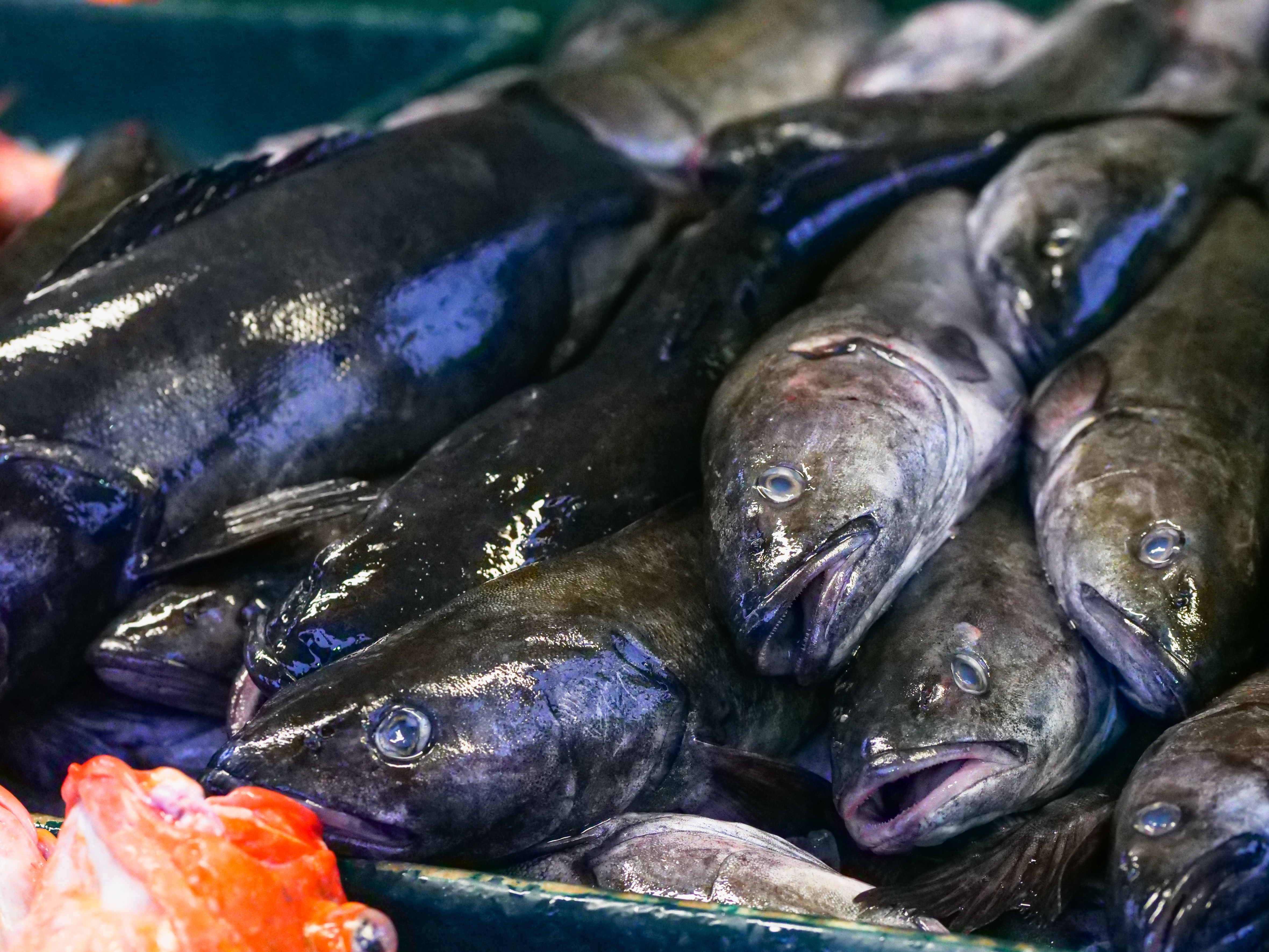
Cod
The "intermediate" lean fish — high protein, low fat, and the Icelandic-Norwegian gastronomic tradition.
In 1 minute
What does it provide? A lean, high-protein (18 g/100 g), low-fat (≤ 1 g) fish — an outstanding iodine source (75–100% of the daily reference in 100 g). Particularly valuable in regions with endemic iodine deficiency. Cod liver oil is a separate category: 1 teaspoon ≈ 10 µg vitamin D, 12 µg vitamin A, 1 g EPA + DHA.
How much? 1–2 servings per week (150–200 g fresh/frozen) — lean protein supplementation, a good complement to fatty fish (salmon, mackerel, sardine). Cod liver oil: 1 teaspoon (5 mL) / day.
When to avoid? In pregnancy, moderate cod liver oil (vitamin A teratogenic > 3000 µg/day). Fish allergy (parvalbumin) forbidden. Salted dried bacalao moderate in hypertension.
Cod is one of the most essential fish in European economic history: from the 14th century, salted and dried cod (bacalao in Spanish, baccalà in Italian, klipfisk in Scandinavian) was the basic protein source for Catholic fasting days and long sea voyages. Basque fishermen secretly fished off the coast of Newfoundland already in pre-Columbian times, and the Newfoundland Grand Banks cod fishery was the most important fishery of the 15th–20th centuries — until the 1992 Canadian moratorium when the stock collapsed from overfishing. The classic Portuguese bacalhau (salted cod — "1001 recipes" principle) remains a national dish.
Cod liver oil history deserves separate literature: in the 1820–1840s, Manchester and Scandinavian physicians (especially Samuel-Jean Pozzi and English contemporaries) began recommending it for rickets and rheumatic complaints; in the 1920s, with vitamin D discovery by Edward Mellanby (London) and Elmer McCollum (Wisconsin), it became official for rickets prevention. The British school system of the 1940s–1960s mandatorily gave children daily cod liver oil — many generations hated the smell and taste, but vitamin D deficiency practically disappeared. Today cod liver oil is one of the highest natural D + omega-3 + vitamin A sources, but due to high vitamin A doses, it must be given with caution during pregnancy. From the microbiome perspective, cod's lean protein, high iodine, and selenium content are cofactors of the immune response and gut-barrier function. (Wikipedia, PubMed, Greer 2008, Holmlund & Hammer 1999)
🔬 Scientific Background
Cod's lean protein + high protein content is a valuable choice in calorie-controlled, cardiometabolic diets (Mediterranean, DASH, pesco-vegetarian). Muscle's low fat content (< 1 g/100 g) and high biological-value protein (18 g/100 g) is ideal for lean protein supplementation. Per human intervention studies, lean fish protein supports favorable nitrogen balance and gut-barrier stabilization (PMC).
Iodine supplementation: 100 g of cod covers 75–100% of the daily iodine reference — iodine deficiency is moderate-severe in many regions (despite salt iodization, adult median iodine excretion ranges 50–100 µg/L), so cod is a particularly valuable thyroid-supporting food (EFSA iodine reference 150 µg/day for adults).
Cod liver oil and vitamin D: the first safe, effective tool for rickets prevention in the late 19th – early 20th centuries. 1 teaspoon (5 mL) ≈ 10 µg vitamin D (EFSA daily reference 15 µg), 12 µg vitamin A (RDA 800 µg), 1 g EPA + DHA. In Central European winter conditions, daily 1 tsp cod liver oil is a simple, classic vitamin-D solution (Greer FR, Pediatrics 2008).
Vitamin A overdose: cod liver oil's retinol content carries hypervitaminosis risk in pregnancy — > 3000 µg/day is teratogenic (EFSA). Therefore moderate in pregnancy (max 1 teaspoon), or alternative D source recommended. Similarly: if eel is eaten and liver dishes are too, cumulative vitamin A is to be monitored.
Mercury: cod's mercury content is low (< 0.1 mg/kg), FDA "Best Choices" — safe in pregnancy (FDA). Overfishing: the 1992 collapse of the Canadian Grand Banks (Newfoundland) is a classic fisheries-history example; the stock is slowly recovering. MSC-certified Icelandic and Barents Sea cod is the sustainable choice (ICES, MSC).
Microbiome aspect: lean cod protein, iodine, selenium, and low fat load are elements of the Mediterranean pesco anti-inflammatory pattern. In a fiber matrix (vegetables, legumes, whole grains) it offers optimal SCFA + gut-barrier support.
- + Lemon juice: vitamin C → iron absorption, white fish meat tasty classic.
- + Tomato + olive: lycopene + polyphenols — basis of Mediterranean "bacalao a la vizcaína."
- + Garlic + parsley: organosulfide + apigenin anti-inflammatory matrix.
- + Green leafy vegetables (spinach, chard): folate + K1 alongside B12 + iodine.
- + Extra-virgin olive oil: lipid matrix, polyphenols — "complement" to the lean fish meat.
- + Whole-grain cereals, legumes (lentils, chickpeas): fiber + plant protein + fish protein complete profile.
- + Cod liver oil + fatty food (avocado, olive): fat matrix increases bioavailability of D, A, EPA + DHA.
- Breaded, deep-fried form (fish and chips): significantly worsens the healthy lean-fish profile (acrylamide, oxidized fat, trans fat).
- Salted dried bacalao daily consumption: cumulative Na overload. Long soaking (24 hours, multiple water changes) is mandatory.
- Cod liver oil + high-retinol vitamin A food (liver, liver pâté) at the same time: cumulative retinol > 3000 µg/day teratogenic risk — to be monitored in pregnancy.
- Cod liver oil + synthetic vitamin A capsule: redundant retinol, hypervitaminosis risk.
- High-Na seasoning + salted dried fish at the same time: to be avoided in hypertension.
- Anticoagulant (warfarin, DOAC) + high-dose cod liver oil: EPA + DHA + occasional D-K interaction can cause bleeding tendency — medical consultation.
- Pregnancy: fresh/frozen cod is excellent (low mercury, safe). Cod liver oil max 1 tsp/day due to teratogenic vitamin A risk (> 3000 µg/day), or alternative D3 supplement. Cold-smoked cod to be avoided (Listeria).
- Fish allergy (parvalbumin): absolute ban — the Gadidae family is a typical parvalbumin allergen.
- Hyperthyroidism, Graves' disease active phase: high iodine content can aggravate — medical consultation. Caution also in early phase of Hashimoto thyroiditis.
- Hypertension, chronic kidney disease: salted bacalao to be avoided. Fresh/frozen acceptable.
- Cod liver oil + liver disease, hepatitis: high vitamin A is liver-loading — medical consultation.
- Vitamin A hyperdose (chronic supplement spin, > 3000 µg/day): bone and liver damage. A single cod liver oil source is safe, cumulative supplementation to be avoided.
- Infant and small-child age: cooked acceptable. Cod liver oil at medical recommendation, in small doses.
- Before planned surgery: high-dose cod liver oil to be discontinued 1–2 weeks before (EPA + DHA bleeding tendency).
- Gout: moderate purine content — 1 serving/week in remission acceptable.
Serving: 1–2 servings per week (150–200 g fresh/frozen). Cod liver oil: 1 teaspoon (5 mL) / day.
Preparation pattern — oven-baked cod:
1. Fresh/thawed cod fillet salted, peppered.
2. On aluminum foil: olive oil, lemon slice, garlic, dill.
3. Fish in the middle of the foil, spices inside and on top.
4. 180 °C, 10–12 minutes — until the flesh flakes.
Preparation pattern — bacalao a la vizcaína (simplified):
1. Salted bacalao soaked 24 hours in the refrigerator (water changed multiple times).
2. Cleaned, cubed.
3. In tomato-pepper-olive sauce 20–25 minutes.
4. With roasted potato or crusty bread.
Classic patterns:
- Fish and chips (British): in moderation — the breaded form worsens the healthy profile.
- Bacalhau à brás (Portuguese): salted cod with egg, onion, potato.
- Brandade de morue (French): salted cod cream with potato, oil.
- Cod fish cakes (Central European): fillet + breadcrumbs + egg — in the oven.
- Norwegian lutefisk (lye-cured dried cod): Christmas tradition.
Storage: Fresh/frozen cod refrigerated 1–2 days; frozen 6 months. Salted dried bacalao at room temperature 1 year, in a cool, dry place. Cod liver oil in the refrigerator, in dark glass, after opening 3 months (oxidation risk — light and air degrade EPA + DHA).
What not to do: Don't deep-fry breaded. Don't consume salted bacalao without soaking. Don't add cod liver oil alongside individual vitamin A supplementation without medical supervision. Don't keep cod liver oil in the light — it oxidizes.