


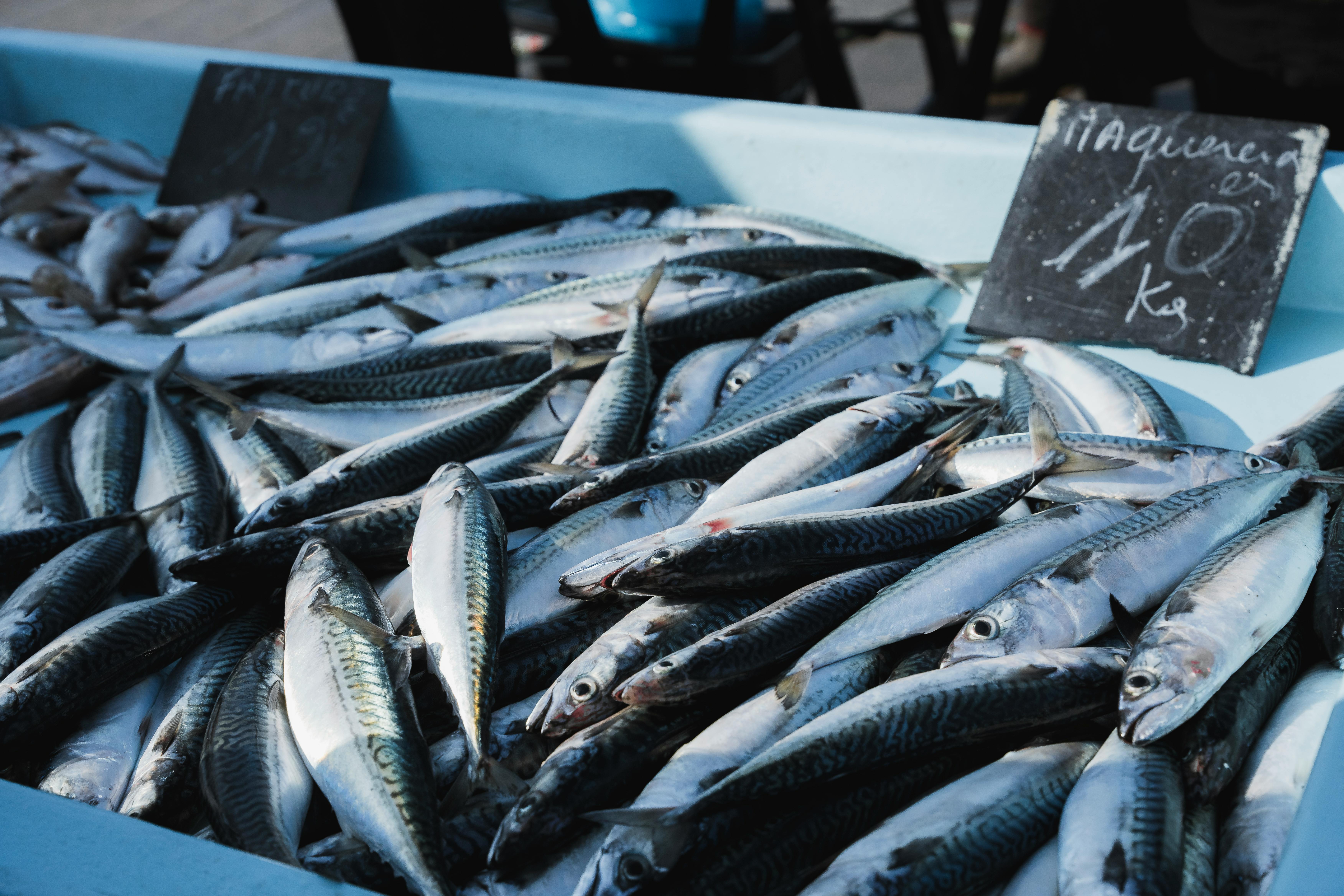
Mackerel
The Atlantic HRC bomb — EPA/DHA concentrate, low mercury, and the Bang–Dyerberg story.
In 1 minute
What does it provide? Atlantic mackerel is one of the most concentrated EPA + DHA omega-3 sources (2.5–3 g/100 g), with outstanding vitamin D (16 µg), B12 (9 µg), selenium, and CoQ10 — a high-energy-density, affordable fatty fish. The top of the "best-buy" fatty fish category.
How much? 1–2 servings per week (100–150 g fresh or 1 can) is an excellent realization of the AHA, EFSA, and WHO "fatty fish" recommendation.
When to avoid? King mackerel (Scomberomorus cavalla, USA) absolutely avoid during pregnancy and childhood (high mercury). Salted, cured, smoked mackerel is forbidden with MAO-inhibitor treatment (tyramine hypertensive crisis). Cold-smoked mackerel carries Listeria risk during pregnancy. Scombroid poisoning: fresh, cold-chain-secure storage is mandatory.
Mackerel was a basic ingredient of Roman garum (fermented fish sauce) — Pliny and Apicius mention it. Iberian and Portuguese seafarers from the 16th century developed salting techniques ("pesca-salgada") that made it a durable, long-haul food. In Central European (Czech, Polish, Hungarian) cuisine, smoked mackerel spread from the late 19th century — with the railway network and the appearance of refrigerated cars. A Central European classic: smoked mackerel with potato salad, sauerkraut, and sourdough bread.
In the mid-20th century, Bang and Dyerberg's Danish research on Greenland Inuit (1971, Acta Med Scand) — which identified the EPA + DHA content of small-bodied fatty fish like mackerel as the basis of cardiovascular protection — placed mackerel at the forefront of the global "omega-3 revolution." Today smoked mackerel is popular in Central European cuisine because of its high EPA + DHA content, affordability, and convenience. Two caution points stand out: 1) high tyramine content (especially cured, salted forms) is dangerous with irreversible MAO inhibitor treatment; 2) on the US Atlantic coast, "king mackerel" (Scomberomorus cavalla) — despite its name, NOT the same species as the European Atlantic mackerel — is high in mercury and avoided during pregnancy (FDA "Choices to Avoid"). European Atlantic Scomber scombrus, on the other hand, is one of the safest, highest-omega-3 fish. (Wikipedia, FDA, PubMed, Bang & Dyerberg 1971)
🔬 Scientific Background
Atlantic mackerel (Scomber scombrus) is an outstanding representative of the 2 servings per week "fatty fish" AHA/EFSA/WHO recommendation — high EPA + DHA + vitamin D together. The classic Bang and Dyerberg Inuit study (1971) identified mackerel-like small-bodied fatty fish as a key source of low CV mortality; the AHA Scientific Statement (Rimm et al., Circulation 2018) recommends 2 servings of fatty fish per week for coronary prevention. EPA + DHA are precursors of resolvin and protectin anti-inflammatory mediators and cause a 10–15% CV mortality reduction in meta-analyses.
Fresh Atlantic mackerel is one of the richest vitamin D sources (≈ 16 µg/100 g) — especially valuable in Central Europe for alleviating endemic vitamin D deficiency (in winter months > 50% of the adult population has 25(OH)D < 50 nmol/L; EFSA reference is 15 µg/day). B12 content per 100 g covers 350% of the daily reference.
Mercury — species-specific: Atlantic mackerel (Scomber scombrus) mercury content is < 0.1 mg/kg = safe, FDA "Best Choices" list. King mackerel (Scomberomorus cavalla, US Gulf of Mexico), by contrast, is a high (≈ 0.7 mg/kg) predator species — FDA "Choices to Avoid," absolutely to be avoided during pregnancy and childhood. The two species are linguistically easy to confuse, but biologically and risk-profile-wise completely different.
Tyramine and MAOI interaction: salted, smoked, cured mackerel is high in tyramine — with irreversible MAO inhibitor treatment (phenelzine, tranylcypromine, isocarboxazid) it can cause hypertensive crisis. Also at risk with linezolid and high-dose isoniazid (EMA). Histamine: non-fresh or improperly stored mackerel is the classic source of scombroid poisoning — characteristic of Scombridae family members, the histidine → histamine bacterial decarboxylation starts once the cold chain is broken. Fresh, cold-chain-secure storage is mandatory; symptoms: facial flushing, headache, itching, cardiac arrhythmia.
Microbiome aspect: the EPA + DHA matrix induces a favorable SCFA profile and Bifidobacterium shift in human intervention studies (Watson 2018, Gut); resolvin/protectin anti-inflammatory mediators dampen both colitic and metabolic inflammation locally and systemically. Sustainability: MSC-certified Atlantic mackerel fisheries (Cornwall, Scotland, Norway) are well-managed stocks — although in 2019 the ICCAT dispute renegotiated the North-East Atlantic quota.
- + Lemon juice + parsley: vitamin C → iron absorption, fresh green antioxidants.
- + Sauerkraut: probiotic (Lactobacillus) + vitamin C + fiber — Central European classic.
- + Whole-grain rye bread, sourdough bread: the fiber matrix alongside EPA + DHA offers optimal SCFA + gut-barrier support.
- + Extra-virgin olive oil: polyphenols, lipid matrix — Mediterranean anti-inflammatory synergy.
- + Green leafy vegetables (spinach, arugula): folate + K1 yields a complete hematopoietic profile alongside B12 + omega-3.
- + Roasted pepper + tomato: lycopene + vitamin C + capsaicin antioxidant matrix.
- + Smoked mackerel pâté (English classic): dense, nutritious, high-omega-3 bomb — with cream cheese and sourdough bread.
- Irreversible MAO-inhibitor antidepressant (phenelzine, tranylcypromine, isocarboxazid): high tyramine of salted/cured/smoked mackerel can cause hypertensive crisis — absolute contraindication. Lower risk with fresh mackerel and RIMA (moclobemide).
- Linezolid antibiotic, high-dose isoniazid (TB), procarbazine (chemotherapy): salted/smoked mackerel to be avoided due to MAO-inhibitor side effects.
- Breaded + deep-fried forms: acrylamide, oxidized fat, trans fat — worsen the healthy omega-3 profile.
- Over-salted preparations (aged cheese + bacon + smoked mackerel in the same meal): cumulative Na overload in hypertension.
- High-cholesterol, hyperresponder phenotype daily large serving: 14–15 g fat/100 g is significant — individual lipid panel monitoring.
- Alcohol in larger amounts + smoked mackerel: metabolic stress and Na overload add up.
- Pregnancy: Atlantic mackerel safe (1–2 servings/week), but king mackerel (Scomberomorus cavalla, USA) absolutely avoided (high mercury). Cold-smoked mackerel avoided due to Listeria risk — only hot-smoked or reheated.
- Infant and small-child age: Atlantic mackerel after 1 year, boneless, small serving. King mackerel forbidden.
- MAO inhibitor treatment (depression, Parkinson's): salted, cured, smoked mackerel absolutely forbidden. Fresh can be eaten or in moderation — medical consultation.
- Histamine intolerance, mastocytosis: mackerel is the typical scombroid source of the Scombridae family — only fresh, cold-chain-secure, and with symptom control.
- Hypertension, chronic kidney disease, heart failure: salted/smoked forms to be avoided; fresh or canned in oil in moderation.
- Chronic pancreatitis: moderate due to high fat content.
- Gout: moderate purine content — 1 serving/week acceptable in remission, avoid during flare.
- Fish allergy (parvalbumin): absolute ban.
- Before planned surgery: high EPA + DHA can cause moderate bleeding tendency — surgical discussion for high-dose fish oil supplementation.
Serving: 1–2 servings per week (100–150 g fresh or 1 can [≈ 125 g]).
Preparation pattern — oven-baked mackerel:
1. Fresh Atlantic mackerel gutted, washed.
2. On aluminum foil: olive oil, lemon slice, dill, garlic.
3. Fish in the middle of the foil, spices inside and on top.
4. 180 °C, 12–15 minutes — until the flesh flakes.
Preparation pattern — canned mackerel on sourdough:
1. Olive-oil Atlantic mackerel can drained.
2. Sourdough rye bread + extra-virgin olive oil.
3. Mackerel on top, lemon juice, red onion, freshly cracked pepper.
4. Parsley or dill.
Classic patterns:
- Smoked mackerel with potato salad + sauerkraut (Central European): Central European classic.
- Smoked mackerel pâté (English): smoked mackerel + cream cheese + lemon zest + pepper — on sourdough bread.
- Maquereau au vin blanc (French canned): mackerel in white wine.
- Saba shioyaki (Japanese): salted mackerel grilled, with fresh daikon grated.
Storage: Fresh mackerel refrigerated ≤ 4 °C, consumption within 24 hours (scombroid risk!). Frozen at -18 °C, 3 months. Canned at room temperature 2–3 years; after opening in a jar refrigerated 2 days. Smoked mackerel after opening 3–5 days. Don't store reheated and re-chilled.
What not to do: Don't deep-fry breaded — the scientific value is lost. Don't consume in non-fresh form (scombroid risk). Don't combine salted/smoked form with MAO inhibitor. Don't confuse Atlantic mackerel with king mackerel.