


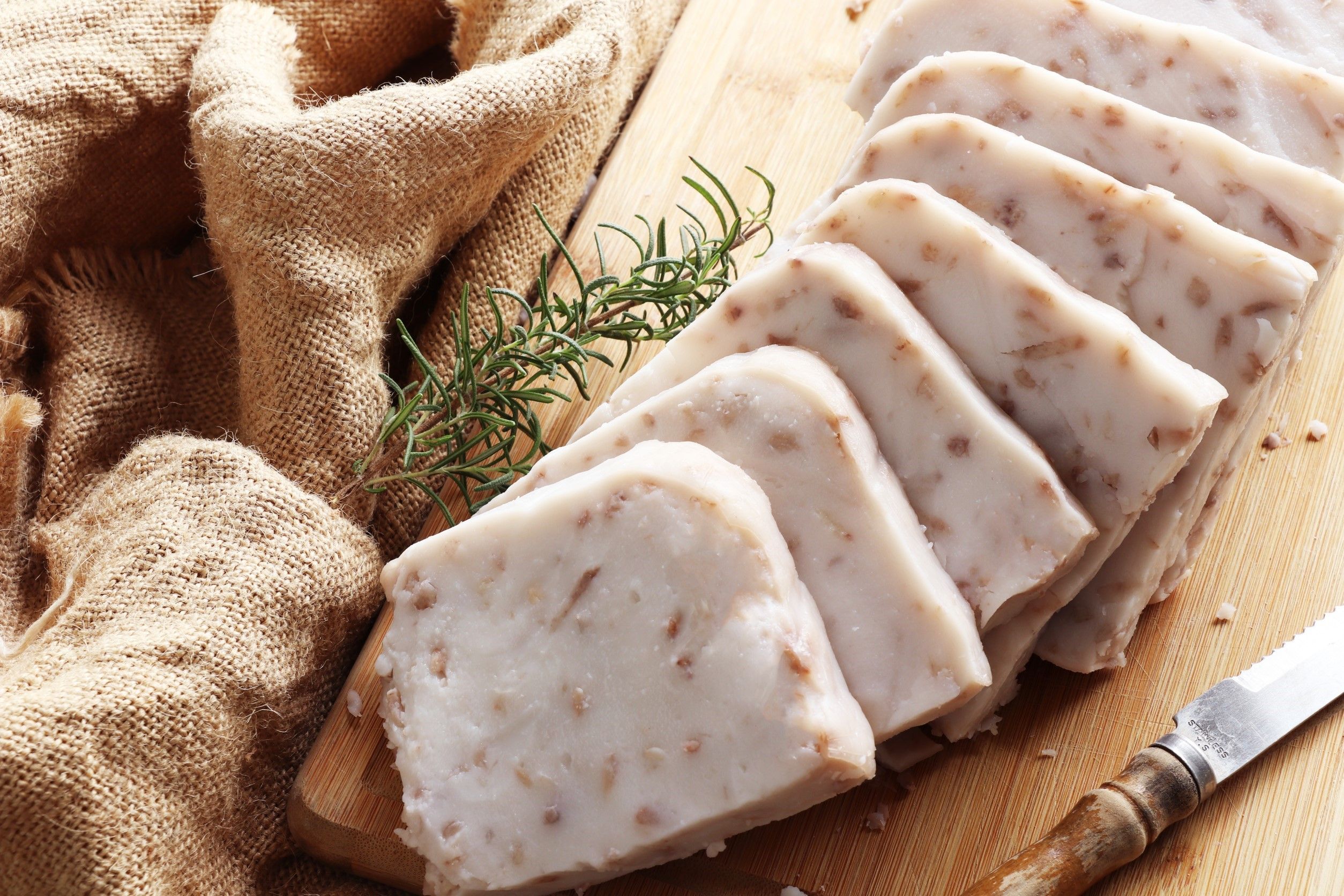
Konjac (glucomannan)
Extra-viscous soluble fiber — EFSA-confirmed LDL reduction and weight support. Warning: mini-jellies pose a choking hazard!
In 1 minute
What does it provide? Glucomannan — a linear β-(1→4) D-mannose/D-glucose polysaccharide, with extraordinary water-binding capacity (50–200× its own weight). Ferments to SCFAs in the colon.
How much? 3 × 1 g (≈ 3 g) daily, before meals, with 1–2 glasses of water. Per EFSA protocol.
When to avoid? Warning: mini konjac jellies (cup-format) pose CHOKING HAZARD — with FDA recall alerts. Esophageal stricture, dysphagia, small children, frail elderly.
Konjac's story begins with a surprising tuber: the fleshy, spherical underground storage organ of Amorphophallus konjac has served as food and traditional medicine for millennia in East Asia. From Chinese sources, the plant relatively early reached Japan — Japanese chronicles place the arrival around the 6th century, when Buddhist monks brought it with them from the continent. There, the elastic, translucent gel made from the tuber gained new life: under the names konnyaku and shirataki, it became a culinary staple, beloved not for its taste but for its unparalleled texture. By the Edo period (1603–1868), konnyaku was already part of typical Japanese everyday life — from village markets to the imperial diet.
The Industrial Revolution brought the next turning point: drying and milling the tuber into flour and the use of limewater (Ca(OH)₂ solution) standardized the gelation process, and konnyaku technology in the modern sense was born. At the end of the 20th century, shirataki — the stringy, virtually calorie-free konjac noodle — embarked on a Western conquest and became a favorite ingredient of low-carb movements. Modern regulatory safety assessments, including EFSA re-evaluations, explicitly take into account this thousand-year-old, high-exposure Japanese consumption tradition — here history literally serves as evidence in approval dossiers.
🔬 Scientific Background
Glucomannan is a linear, β-(1→4)-linked mannose-glucose polysaccharide (≈ 1.6 : 1 ratio) extracted from the konjac tuber (Amorphophallus konjac). Its unique property is extra-high viscosity and water-binding capacity: it binds 50–200× its weight in water, forming a gel. This property explains a large part of its clinical effects.
EFSA-approved claims (CFR 432/2012/EU):
1. "Maintenance of normal blood cholesterol levels": Glucomannan contributes when daily intake is 4 g. 2. "Weight reduction within an energy-restricted diet": 3 g/day (3 × 1 g) before meals with 1–2 glasses of water, alongside an energy-restricted diet.
Clinical human evidence (meta-analyses):
- LDL reduction (Ho 2017, Musazadeh 2024 meta-analyses): Glucomannan significantly reduces LDL, non-HDL, and apoB levels (LDL shift −8% to −15%). - Constipation (Chen 2008 RCT): ~ 30% increase in bowel movements + favorable shifts in colonic ecology. - Glycemia (Mirzababaei 2022 meta-analysis): Reduced fasting glucose, mixed postprandial effect. - Body weight: RCTs show additional weight loss with energy-restricted diet + 3 g/day glucomannan (1–3 kg over 8 weeks). - Microbiota/SCFA: In vitro and small human interventions indicate SCFA elevation (acetate, propionate, butyrate) and favorable taxonomic shift (Bifidobacterium↑).
Mechanism: The glucomannan gel slows gastric emptying and increases the viscosity of mixed food → moderate PPG (postprandial glucose), moderate appetite, lower LDL (bile acid binding and re-formation). In the colon it is fermented to SCFAs.
Warning — SAFETY ALERT — mini konjac jellies (cup-format):
According to FDA Import Alert 33-15 (2017+) and recall notices (2023), konjac jellies packaged in small plastic cups (typically Asian children's treats) have caused several fatal choking incidents in infants, small children, and elderly people. The gel becomes lodged in the throat and is difficult to dislodge. These products are banned in several countries. TO BE AVOIDED.
Powder- and capsule-form glucomannan supplements with ample water (1–2 glasses) are safe. In dry mouth, esophageal stricture, dysphagia, all of these forms are to be avoided.
- + 1–2 glasses of water with the capsule: mandatory — otherwise it gets stuck.
- + 15–30 minutes before a meal: peak satiety effect.
- + Fiber-rich diet (vegetables, legumes): complementary microbiota substrate.
- + Energy-restricted diet: per EFSA protocol for weight support.
- + Shirataki noodle as a calorie-free base: enriched with thick sauce.
- + Tofu, cheese sauce, fresh herbs: flavor-rich konnyaku/shirataki pattern.
- Medications at the same time (oral): the gel can reduce absorption — take medications 1 hour BEFORE or 4 hours AFTER.
- Antidiabetics (insulin, metformin, sulfonylureas): combined PPG reduction → hypoglycemia risk. Medical monitoring mandatory.
- Iron supplement: separation ≥ 2 hours.
- Levothyroxine: separation ≥ 4 hours (absorption reduction).
- Vaccine (oral): separation.
- With insufficient water: PROHIBITED — choking risk.
- Warning — CHOKING HAZARD: mini konjac jellies (cup-format) — STRICTLY TO BE AVOIDED. Small children, elderly, dysphagia patients.
- Esophageal stricture, achalasia, dysphagia: glucomannan to be avoided.
- Active gastric/bowel obstruction: to be avoided.
- Severe GERD: moderation in case of GI irritation.
- Antidiabetic therapy: medical supervision (hypoglycemia).
- Pregnancy, breastfeeding: limited safety data on high doses — dietary amounts (shirataki noodle) OK.
- Infants, small children < 5 years: to be avoided (choking).
- After bowel surgery: with medical clearance.
- IBS flare: start with small doses.
- Frail elderly: only capsule with ample water, NOT jelly.
Daily serving
Supplement: 3 × 1 g (capsule or powder), 15–30 minutes before meals, with 1–2 glasses of water.
Food format: shirataki noodle or konnyaku cube, to taste.
Capsule/powder intake
- 1 capsule with 1 large glass of water.
- 15–30 minutes before the meal.
- Never with little water!
Classic patterns
Shirataki noodle: pre-boiled (1 minute rinse in boiling water → deodorization) + any sauce (tomato, creamy, Asian).
Konnyaku cube: pre-boiled + sesame oil + soy sauce + sesame seeds.
Sukiyaki: wagyu + vegetables + shirataki + soy-based sauce.
Miso soup with shirataki: classic Japanese breakfast.
Calorie-reduced pasta substitute: shirataki spaghetti + tomato sauce.
Storage
Capsule/powder: dry, airtight, 2 years. Shirataki: refrigerated, packaged, 1–2 weeks consumption limit.
What not to do
Don't swallow capsules with little water. Don't give mini konjac jelly to children. Don't take it at the same time as medications.
References
[1] EFSA Panel. Glucomannan and reduction of body weight / maintenance of normal blood cholesterol. EFSA Journal 2009, 2010.
[2] Commission Regulation (EU) No 432/2012 — Annex.
[3] Ho HV et al. Effect of glucomannan supplementation on plasma LDL — meta-analysis. Am J Clin Nutr 2017;105(5):1239–1247.
[4] Musazadeh V et al. Glucomannan supplementation and serum lipids: updated meta-analysis. BMC Cardiovasc Disord 2024.
[5] Chen HL et al. Konjac-glucomannan and constipation. Am J Gastroenterol 2008.
[6] Mirzababaei A et al. Glucomannan and glycemic control — meta-analysis. Front Nutr 2022.
[7] FDA Import Alert 33-15 — mini konjac gels choking hazard. 2017+.
[8] FDA Recall Notice — konjac mini cups choking deaths. 2023.