


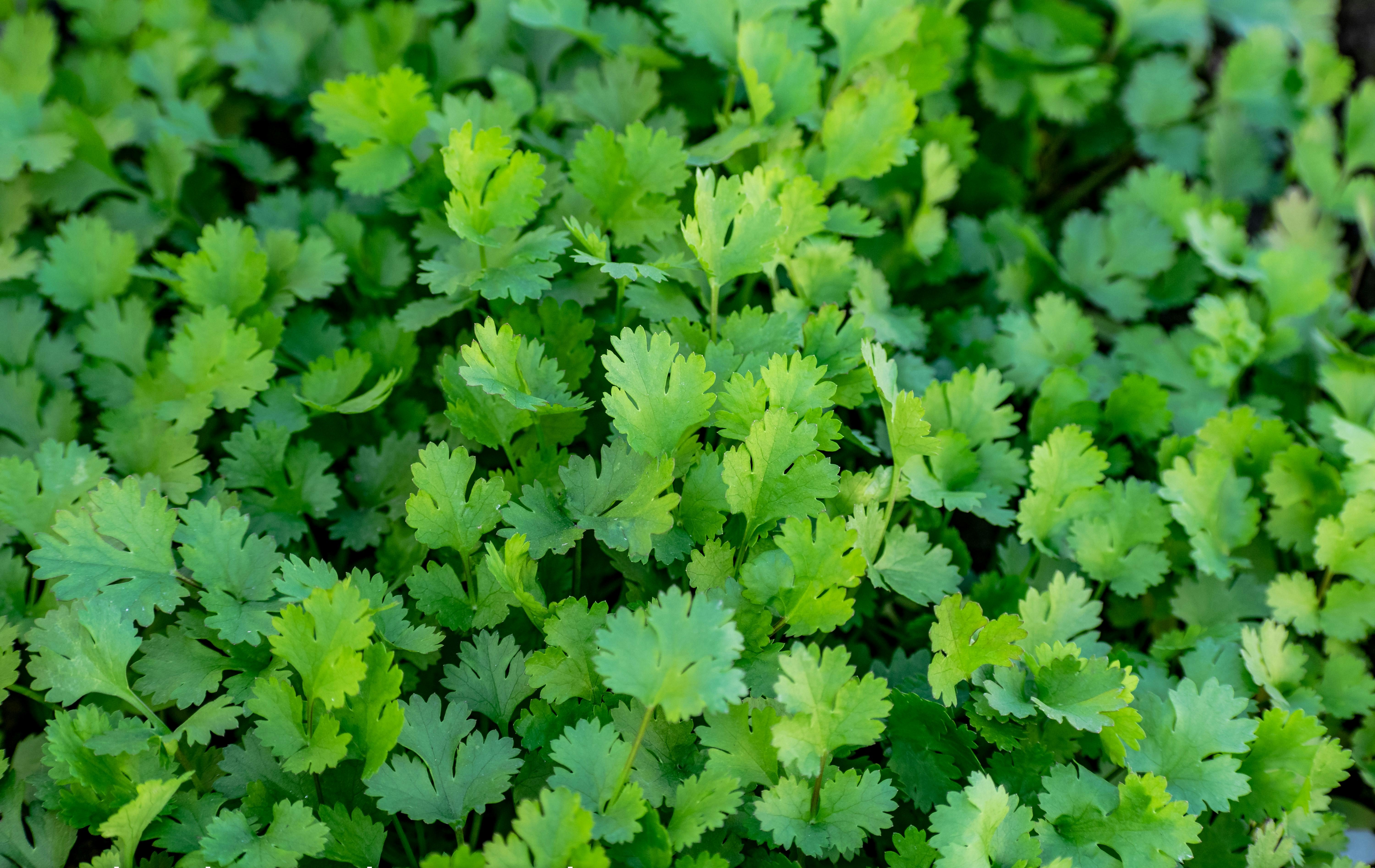
Coriander (cilantro)
The "soapy taste" gene — linalool, OR6A2, and the dual coriander world.
In 1 minute
What does it provide? The fresh leaf is rich in linalool, geraniol; the seed (coriander seed) has a linalool-, α-pinene-, γ-terpinene-dominant essential oil. Digestion-supporting, antioxidant, mild glycemic and lipid modulator.
How much? In the kitchen, fresh leaves 5–30 g/day, seeds ½–1 tsp/day. Traditional digestion-supporting tea (seed) 2–3 g/day (EMA).
When to avoid? Apiaceae allergy, high-dose essential oil in pregnancy, OR6A2 "soapy-taste" sensitivity (flavor flaw, not a health issue).
Coriander is one of the world's oldest cultivated spices — coriander seeds have been recovered from Tutankhamun's tomb (1325 BCE), and it appears in the Bible (likened to the taste of manna, Exodus 16:31). Hippocrates and Pliny also documented it — Pliny described digestive and anti-epileptic effects for it. In classical Chinese medicine under the name "yan-cai" ("hate-resistant green"), it was among the immortality spices during the Tang dynasty.
Coriander is the dual plant: its leaf and seed have completely different tastes and uses. The leaf (cilantro, sedge flower) is fresh, citrusy-green — a main character of Mexican, Indian, Thai, and Vietnamese cuisines. The seed (coriander seed, ground coriander) is sweetish-citrusy and is the foundation of classic European pastries and curry blends. The 21st century brought the genetic explanation: due to a polymorphism in the OR6A2 olfactory receptor gene, ~10–14% of people perceive the leaf's aromatic aldehydes as "soapy." This is not an allergy, but a taste-perception competence — the Mendelian Randomization 2012 23andMe study (Eriksson 2012, Flavour Journal) confirmed the genetic basis. From the early 21st century, Iranian, Indian, and Taiwanese RCTs found moderate blood glucose, lipid, and blood-pressure-lowering effects with coriander seed extract in T2D. **(Eriksson 2012, J Diet Suppl 2018)
🔬 Scientific Background
The phytochemistry of coriander's two products differs: the leaf's main bioactives are E,E-2-decenal and other unsaturated aldehydes (these are the OR6A2 "soapy taste" triggers), as well as chlorophyll and vitamin C. The seed's essential oil is 60–70% linalool-dominant, supplemented with α-pinene, γ-terpinene, and camphor.
Clinical evidence is moderate, mainly at metabolic endpoints: T2D RCTs (Eidi 2009 animal study, then small human pilots) show that coriander-seed extract (10–20 g/day powder or equivalent extract) moderately reduces blood glucose and LDL cholesterol. The effect is small but present.
Digestion-supporting tradition: according to the EMA/HMPC monograph, coriander-seed tea is adjunctive for functional dyspepsia, bloating, and loss of appetite. The effect is attributable to the carminative (gas-removing) essential oil fraction.
Antimicrobial spectrum (in vitro): linalool and other monoterpenes are effective against several food pathogens (E. coli, Salmonella, Listeria) — explaining the traditional "meat preservation" use.
OR6A2 genetics: a single point mutation in the olfactory receptor gene on chromosome 12 dramatically changes aldehyde sensitivity. Those affected perceive the aroma of fresh coriander leaves as "soap," "insect," or "metallic dish detergent" — this is a flavor flaw, not a health problem.
At the microbiome level, small pilot studies showed Bifidobacterium enrichment by coriander-seed fiber and polyphenol fractions; large RCT does not exist.
- + Lime, lemon (acidic medium): classic Mexican and Thai synergy.
- + Chili pepper: classic salsa, guacamole, Thai green curry foundation.
- + Cumin, turmeric, ginger: Indian curry spice synergy.
- + Avocado, coconut milk: fat matrix increases bioavailability of fat-soluble aromas.
- + Meat marinade, fish marinade: seed ground, leaf freshly chopped.
- + Yogurt, raita: Indian main-dish accompaniment — digestion-supporting + flavor harmony.
- Diabetic medications + high-dose extract: additive hypoglycemia, monitoring.
- Anticoagulants + high-dose extract: theoretical additive bleeding risk.
- Long simmer (30+ min): leaf loses its essential oil and color — add at the end of cooking.
- Coriander-fresh-sensitive participant: OR6A2 → switch to another herb (parsley, basil).
- Apiaceae allergy sufferers: cross-reaction possible.
- In high-temperature oil for long frying: the leaf becomes bitter.
- Apiaceae allergy (dill, parsley, celery, carrot): cross-reaction.
- Pregnancy high-dose essential oil: uterine-stimulating potential in animal experiments; culinary dose safe.
- Diabetic with severe hypoglycemia tendency: monitoring.
- Active gastric ulcer: concentrated essential oil irritates.
- Severe liver disease: high-dose supplement to be avoided.
- Anticoagulant therapy + high-dose supplement: medical supervision.
- "Cilantro-soapy-taste" sensitive: just a flavor flaw — no health issue.
- Infant with a large amount of fresh coriander: flavor change; allergy trigger rare.
Daily serving
Fresh leaf 5–30 g (1–2 tbsp chopped), seed ½–1 tsp ground; in herbal-tea form 2–3 g/day (EMA).
Preparation pattern
- Fresh leaf: washed-dried, chopped just before serving — high heat ruins it.
- Seed: dry-pan toasted for 30–60 sec, then crushed in a mortar or ground in a mill — aromatic when freshly ground.
- Seed tea: 2 g crushed seed + 200 ml hot water, 10 min steep.
- Marinade: ground seed + lime + olive oil + garlic + chili.
Classic patterns
Guacamole: avocado + lime + chopped cilantro + chili + tomato + salt.
Indian garam masala: coriander seed (the largest ratio) + cumin + pepper + cardamom + clove + cinnamon.
Thai green curry: green curry paste + coconut milk + vegetables + fish + cilantro upon serving.
Mexican pico de gallo: tomato + onion + chili + cilantro + lime.
Storage and what to avoid
Storage: fresh leaf in the fridge wrapped in paper towel for 5–7 days; seed in whole form 2 years airtight, in a dark place; ground seed shows significant aroma loss after 6 weeks.
What not to do: don't cook the leaf for 5+ minutes, don't give essential oil internally to infants, don't arbitrarily combine clinical-dose extracts with sulfonylureas.
References
[1] EMA/HMPC. European Union herbal monograph on Coriandrum sativum L., fructus. 2014.
[2] Eriksson N et al. A genetic variant near olfactory receptor genes influences cilantro preference. Flavour 2012;1:22.
[3] Eidi M et al. Effect of coriander seed (Coriandrum sativum L.) ethanol extract on insulin release from pancreatic beta cells in streptozotocin-induced diabetic rats. Phytother Res 2009;23(3):404–406.
[4] Aissaoui A et al. Hypoglycemic and hypolipidemic effects of Coriandrum sativum L. in Meriones shawi rats. J Ethnopharmacol 2011;137(1):652–661.
[5] Mahleyuddin NN et al. Coriandrum sativum L.: a review on ethnopharmacology, phytochemistry, and cardiovascular benefits. Molecules 2022;27(1):209.
[6] Sahib NG et al. Coriander (Coriandrum sativum L.): a potential source of high-value components for functional foods and nutraceuticals. Phytother Res 2013;27(10):1439–1456.
[7] Wei JN et al. Coriander essential oil — antimicrobial and antifungal activity. Food Control 2018.