


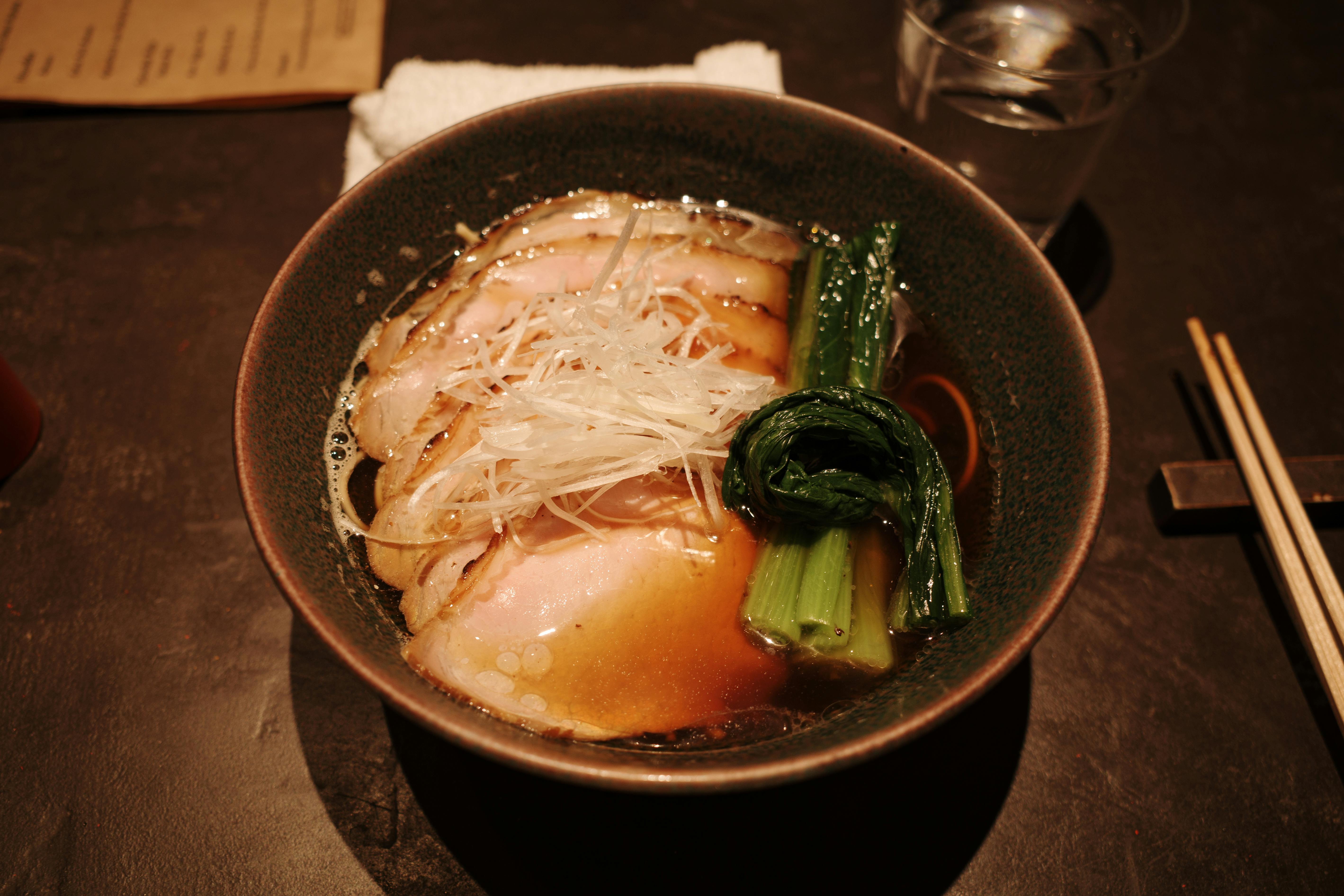
Tamari / shoyu
Japanese soy sauce — a kōji + Lactobacillus + yeast triple ferment, glutamate-dominant umami bomb with an isoflavone matrix.
- Latin név
- Glycine max (soy) + Triticum (wheat, in shoyu) + Aspergillus oryzae/sojae (kōji) + Lactobacillus + Zygosaccharomyces rouxii
- FODMAP
- 🟢 low (1 tbsp)
- Evidence
- ★ ★ (human pilots — glutamate + isoflavone)
- Microbiota
- Postbiotic matrix (Lactobacillus + yeast), isoflavone prebiotic
- What does it provide?
- Natural glutamate (8–12 g/L — the flavor base of long-fermented soy sauce, "umami" sensation), isoflavones (genistein, daidzein — phytoestrogens; soy fermentation gives better bioavailability), melanoidins (Maillard products from long aging, antioxidants), lactic acid (Lactobacillus activity, postbiotic), and small residual ethanol (Zygosaccharomyces product). Classic shoyu also contains wheat (gluten-containing); tamari is pure soy (gluten-free, traditional Japanese by-product of miso).
- How much?
- 1 tbsp (15 ml) ≈ 900–1000 mg Na. For hypertension, kidney disease: max 1 tsp/meal. Healthy, normotensive, active adult: 1–2 tbsp/day in salad dressing, sauces, as seasoning.
- When to avoid?
- Severe hypertension, heart failure, kidney failure (high Na); soy allergy (strictly avoid); celiac disease (shoyu contains gluten — tamari is safe, but check the label); MAO inhibitors (tyramine content); migraine with tyramine trigger; histamine intolerance; child < 1 year (infant feeding).
Soy sauce is a 2000+ year-old cornerstone of Chinese cuisine. In early Han-dynasty texts (around 200 BCE), "jiang" (醬, fermented paste seasoning) appears, from which evolved "yu" (油, liquid sauce) and modern "jiangyou" (Chinese soy sauce). Buddhist monks brought it to Japan in the 7th century, where it gradually transformed into today's shoyu: Chinese jiang is mostly soy and wheat, Japanese shoyu developed a more balanced soy-wheat ratio (Kikkoman pattern 1:1).
The origin of "tamari" is unique: in 14th-century Wakayama prefecture, during fermentation of miso paste, liquid collecting on top of the paste — "tamari" ("collected") — was gathered, becoming a pure-soy by-product. Modern "tamari" largely follows this tradition: pure soy, gluten-free, deeper flavor. Classic "Kikkoman shoyu" has been produced in Noda since 1661; "tamari sojo" is the tradition of Wakayama and Mie prefecture. Both are long-aged (3–24 months), with live cultures — fermentation creates a complex microbiome matrix. 21st-century microbiome research highlights the isoflavone-bioavailability-increasing effect of soy ferments (Setchell 2008).
🔬 Scientific Background
Soy sauce is the sequential fermentation of three microbes: 1. Kōji phase (Aspergillus oryzae or A. sojae): kōji enzymatically hydrolyzes (protease, amylase) the protein and starch of the cooked soy-wheat mix — producing free amino acids (especially glutamate) + sugars. 2. Salty moromi phase (Lactobacillus delbrueckii, L. plantarum + Tetragenococcus halophilus): salt-tolerant LAB produce lactic acid, pH drops. 3. Yeast phase (Zygosaccharomyces rouxii): salt- and acid-tolerant yeast, produces small amounts of ethanol and aroma compounds.
During the 3–24 month aging, Maillard reaction occurs (amino acids + sugars = melanoidins, dark color, antioxidant effect).
Glutamate content is 8–12 g/L — natural glutamate, NOT added MSG. The basis of "umami" sensation, the key to flavor complexity in sushi and East Asian cuisine.
The isoflavone matrix (genistein, daidzein, glycitein — phytoestrogens) derives from soy, and fermentation increases bioavailability: glycoside forms (genistin, daidzin) are hydrolyzed to aglycones (genistein, daidzein) by kōji β-glucosidase. According to Setchell (2008), the aglycone ratio of fermented soy products is 60–80%, vs. 5–10% in unfermented soy.
Isoflavones are estrogen receptor modulators (SERM-like): studied for menopausal symptoms (hot flashes), bone health, and breast cancer prevention. A 2020 meta-analysis (Chen) showed that fermented soy consumption provides greater anti-lung-tumor effect than unfermented.
At the microbiome level, the live LAB content of tamari/shoyu is low in commercial pasteurized product (heat-treated last step), but the postbiotic matrix — lactic acid, peptides, melanoidins — is active. Tamang et al. (2016 Front Microbiol) comprehensive Asian fermented-food review discusses soy sauce in the postbiotic + isoflavone category.
The high Na content (≈ 6000 mg Na/100 ml, i.e. 60 g/L) is the balance of food preservation and flavor — but modern health-wise is a challenge. "Reduced-sodium" versions (40–50% less Na) are available.
- + Sushi rice + nori + fish/tofu: classic Japanese umami triangle.
- + Fresh ginger + scallion + sesame oil: ponzu-like sauce for meat, fish.
- + Wasabi + tamari + sushi: classic Japanese pairing.
- + Rice vinegar + sesame oil (Asian dressing): for salad, quick-steamed vegetables.
- + Miso soup + tofu + wakame: classic morning soup base.
- + Roasted or grilled vegetables (eggplant, mushroom): umami deepening.
- High-Na diet: avoid with cheese, sausage, salty foods (Na overload).
- Hypertension + DASH diet: strict Na control allows max 1 tsp/meal, or "reduced-sodium" version.
- MAO inhibitor therapy: tyramine content may cause hypertensive crisis.
- Migraine with tyramine trigger: avoid.
- Anticoagulant (warfarin): theoretically negligible ferment K vitamin, but monitor with large amounts.
- Shoyu in celiac disease (wheat content): only tamari (gluten-free) is suitable.
- Histamine intolerance: aged products contain biogenic amines.
- Severe hypertension, heart failure (NYHA III–IV), Na restriction: max 1 tsp/day, or "reduced-sodium" version.
- Chronic kidney disease (CKD stage 3–5): Na + K monitoring; moderate consumption.
- Celiac disease, severe NCGS: avoid shoyu, only tamari ("gluten-free" cert.).
- Severe soy allergy: strictly avoid both shoyu and tamari.
- Hypothyroidism, iodine sensitivity: soy isoflavones theoretically may interfere with iodine uptake; moderate consumption with levothyroxine separation (≥ 4 hours).
- History of hormone-sensitive tumor (breast, endometrium): dietary amounts are safe per meta-analyses; avoid high-dose isoflavone supplements.
- Migraine: tyramine trigger, avoid.
- Histamine intolerance: moderate consumption, aged versions avoided.
- Infant < 1 year: avoid (infant feeding Na limit).
- MAO inhibitor therapy: avoid.
"Tamari and shoyu are the same." Myth. Shoyu is soy + wheat (about 50:50), tamari is pure soy (no wheat or only traces). Critical gluten difference: shoyu is not recommended for celiac patients, tamari is OK (but verify "gluten-free" certification, as some tamari may contain trace wheat).
"Soy sauce is just salt." Myth. Salt is indeed high (15–18%), but kōji fermentation produces 8–12 g/L natural glutamate, isoflavone matrix (genistein, daidzein), melanoidin antioxidants, and lactic acid. NOT just flavored brine.
"'Added-MSG-free' soy sauce is healthier." Partly a myth. The natural glutamate of long-fermented soy sauce is chemically identical to added MSG — the "freedom" is a marketing claim. The difference: fermented sauce has a more complex flavor matrix (peptides, aroma compounds), not just glutamate.
"Soy sauce isoflavones are an estrogen bomb — they cause breast cancer." Myth. Modern meta-analyses (Messina 2014, Chen 2020) show that fermented soy consumption REDUCES breast tumor risk, and is safe in dietary amounts for people with hormone-sensitive history. High-dose supplementation is questionable; dietary intake is not.
"'Chinese soy sauce' and 'Japanese shoyu' are the same." Partly a myth. Chinese soy sauce is mostly shorter ferment (1–3 months) + caramel-darkened; Japanese shoyu is long (6–24 months), kōji-aged, milder flavor matrix. Chinese "light" soy sauce is saltier, "dark" is sweeter (caramel).
"'Tartar' / 'gluten-free' tamari is safe for everyone." Partly a myth. Gluten-free OK, but Na content is high. For a celiac but hypertensive patient it is not an automatic choice.
"Unpasteurized, live soy sauce is much better." Overstated. Classic soy sauce is pasteurized — industry standard. "Non-pasteurized" versions do contain live LAB, but the clinical effect is dominantly the isoflavone matrix + glutamate + postbiotic — preserved in pasteurized too.
🍳 Kitchen Protocol
Daily serving: 1–2 tbsp (15–30 ml) for healthy, normotensive adults. Hypertension, kidney, heart: max 1 tsp.
Preparation patterns: 1. Classic sushi sauce: 2 tbsp tamari + ½ tsp wasabi paste. 2. Ponzu (citrus-soy sauce): 3 tbsp tamari + 2 tbsp rice vinegar + 1 tbsp mirin + citrus zest. 3. Teriyaki: 4 tbsp tamari + 2 tbsp mirin + 1 tbsp sake + 1 tsp sugar/honey. For meat, fish, tofu. 4. Miso soup: 1 tbsp miso paste + 1 tsp tamari + dashi broth + tofu + wakame + scallion. 5. Roasted eggplant sauce (nasu dengaku): miso + tamari + mirin + sugar — for roasted eggplant. 6. Quick stir-fry sauce: 1 tbsp tamari + 1 tsp sesame oil + grated ginger + crushed garlic.
Storage: refrigerate after opening (flavor retention, protection against oxidation). Unopened: at room temperature 1–2 years.
What not to do: don't boil long (umami aroma is lost — add at the end). Don't store at high heat (Maillard degradation). Don't pour undiluted on teeth (acid-Na combination erodes).
📚 References (selected)
1. Tamang JP et al. Functional properties of microorganisms in fermented foods. Front Microbiol 2016;7:578. 2. Setchell KDR et al. Bioavailability of pure isoflavones in healthy humans and analysis of commercial soy isoflavone supplements. J Nutr 2008;138(5):951S–955S. 3. Messina M. Soy and breast cancer: a comprehensive review. Womens Health 2014;10(3):265–292. 4. Chen M et al. Association between soy isoflavone intake and breast cancer risk: a meta-analysis of epidemiological studies. PLoS One 2020. 5. Marco ML et al. Health benefits of fermented foods: microbiota and beyond. Curr Opin Biotechnol 2017;44:94–102. 6. Yokoyama K et al. Soy sauce — composition, fermentation, and health benefits. Int J Food Sci Nutr 2010. 7. Sanlier N et al. Health benefits of fermented foods. Crit Rev Food Sci Nutr 2019;59(3):506–527. 8. Yoshikawa S et al. Soy sauce and aroma compounds in fermented foods. J Biosci Bioeng 2015.