


Rice vinegar
A milder, less acidic Japanese vinegar — gentle acetate-SCFA with gluconic acid and amino-acid matrix, the foundation
Rice vinegar in 1 minute
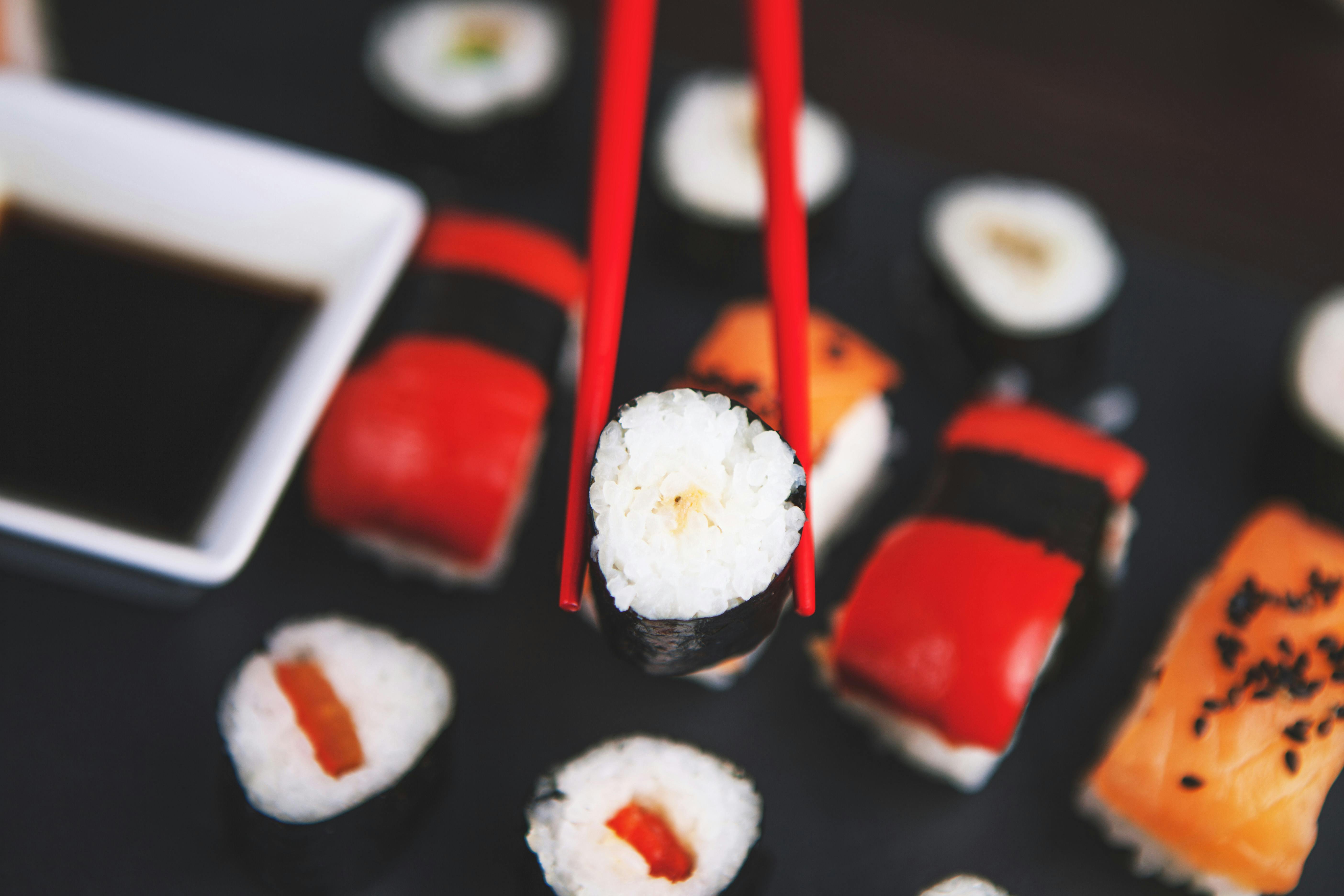
What does it provide? Acetic acid (4–5%, considerably milder than the 6–7% of wine vinegar), gluconic acid (specific to kōji-driven fermentation — milder, less sharp flavor), free amino acids (from partial rice-protein hydrolysis — glutamate-dominant “umami” base), acetate (direct SCFA), and melanoidins (in long-aged black rice vinegar, antioxidant Maillard products). The milder flavor allows larger doses to be tolerated, and in the classic Japanese “mirin–shoyu–rice vinegar” triad it is the foundation of sushi rice and many sauces.
How much? 1–2 tablespoons (≈ 15–30 ml) per meal — in salad dressings, sauces, for seasoning sushi rice. Glycemic target: 5–10 minutes before a meal, 1 tbsp diluted in water.
When to avoid? Active GERD flare, erosive esophagitis (acid irritation, although milder); severe rice allergy (extremely rare); MAO inhibitor therapy (tyramine in aged versions); undiluted causes tooth-enamel erosion; ≥ 2 hours separation from iron supplements.
Rice vinegar has been a cornerstone of East Asian cuisine for over two thousand years. Early Han-dynasty Chinese texts (around 200 BCE) already mention rice vinegar known as “cu” (醋), and during the Tang dynasty (618–907) it reached Japan via Buddhist monks and traders. The Japanese “kome-zu” (米酢, “rice vinegar”) has been documented since the 4th century, and by the 7th century it had become a staple of the imperial kitchen.
A decisive moment in rice vinegar’s history came in the Edo period (1603–1868), when in 1804 Hanzaemon Nakano developed “akasu” (red vinegar) from sake lees — this made possible the modern sushi-style “nigirizushi” in Tokyo. Vinegar was used to preserve and season the warm cooked rice — the rice vinegar accompanying fish became a pH-stabilizing and antimicrobial matrix. In China, “Zhenjiang” vinegar (rice + stone-pellet aging in clay vessels, 3–8 years) and “Chinkiang black vinegar” (Aspergillus + rice + caramel-Maillard) are DOP-level geographically protected gastronomic specialties. Modern clinical research began with Sugiyama’s 2003 Japanese RCT, which investigated the rice-vinegar glycemic index.
Scientific Background
Rice vinegar is the result of two-step fermentation, but unlike wine vinegar a third actor — kōji (Aspergillus oryzae fungus) — plays a decisive role. Kōji enzymatically (amylase) breaks down the starch of cooked rice into sugars, Saccharomyces cerevisiae converts these into alcohol through alcoholic fermentation, then Acetobacter oxidizes the alcohol into acetic acid. The sequential action of the three microbes produces a milder, less sharp flavor and a higher by-product matrix.
Gluconic acid is one of the unique compounds of rice vinegar — produced by the kōji glucose oxidase enzyme. Gently acidic flavor, mild matrix; positive effect on gut flora (slow-absorbing substrate, prebiotic-like effect). Based on in vitro and small human studies summarized in fermented-food reviews, gluconic acid can act as a non-digestible carbon source supporting Bifidobacterium and other saccharolytic gut species (general prebiotic mechanism; see Marco 2017 review).
The free amino acid matrix (glutamate, alanine, valine, leucine) derives from the proteolytic activity of kōji — partial hydrolysis of rice protein. This contributes an “umami” sensation in flavor, and at the microbiome level provides a mild N substrate.
The acetic acid function (see VIII.10 apple cider vinegar, VIII.11 wine vinegar) — postprandial glucose reduction, gastric emptying slowing, AMPK activation — works here as well. Sugiyama 2003 evaluated sushi rice glycemic index in Japanese volunteers; the vinegar component contributes to acetate-mediated GI lowering shown in subsequent acetate studies (e.g., Petsiou 2014 review, Shishehbor 2017 meta-analysis).
Black rice vinegar (Zhenjiang, Chinkiang) with long aging (3–8 years) produces a high melanoidin content — these are Maillard reaction products, with antioxidant activity (ORAC value similar to wine vinegar). Marco et al. (2017 Curr Opin Biotechnol) fermented-food-microbiome review cites rice vinegar as a classic example of the East Asian postbiotic matrix.
At the microbiome level, the acetate + gluconic acid combination provides a dual prebiotic effect: acetate for butyrate-producing bacteria (cross-feeding), gluconic acid for Bifidobacterium.
- + Sushi rice (classic): 4 cups cooked rice + 4–6 tbsp rice vinegar + 2 tbsp sugar + 1 tsp salt — Japanese tradition, glycemic-index reduction.
- + Sushi-gari (pickled ginger): rice vinegar + sugar + salt + sliced ginger — digestion aid.
- + Sesame oil-vinegar sauce (ponzu): rice vinegar + soy sauce + sesame oil + citrus zest — salad, fish, tofu.
- + Sunomono (Japanese cucumber salad): cucumber + rice vinegar + sugar + sesame — classic, low FODMAP.
- + High-carbohydrate meal: glycemic control, 1 tbsp in water before the meal.
- + Cold cooked vegetables (broccoli, green beans) + rice vinegar + sesame: light Japanese side.
- Undiluted, directly on teeth: tooth enamel erosion (milder than wine vinegar, but chronic use still causes erosion).
- Large dose on an empty stomach: esophageal irritation, nausea.
- Iron supplements at the same meal: acetic acid reduces non-heme iron absorption.
- High-dose aspirin / NSAID + empty stomach: gastric irritation is superimposed.
- Insulin / sulfonylurea therapy: glycemic monitoring (additive glucose lowering).
- MAO inhibitors (aged versions with tyramine): avoid.
- Active GERD flare, erosive esophagitis: milder than wine vinegar, but acid irritation is possible.
- Eosinophilic esophagitis, esophageal stricture: avoid.
- Gastroparesis: gastric emptying further slowed.
- Severe rice allergy (extremely rare): avoid, traces may be present.
- Thin tooth enamel, erosive caries: with a straw, rinse afterward.
- Sweetened or salted “seasoned” rice vinegar (sushi-su): label check for hypertension, diabetes (sugar 5–8 g/100 ml, salt 1–2 g/100 ml).
- Severe hypokalemia: chronic extreme dose is a theoretical risk.
- Infant, young child < 4 years: minimal amounts in food OK.
Daily serving: 1–2 tbsp (15–30 ml) per meal. For sushi rice: 15–20 ml/cup cooked rice.
Preparation patterns:
- Classic sushi rice: 4 cups cooked rice + 4 tbsp rice vinegar + 2 tbsp sugar + 1 tsp salt. Stirred hot with a wooden paddle.
- Sunomono (cucumber salad): 1 thinly sliced cucumber + 2 tbsp rice vinegar + 1 tsp sugar + ½ tsp salt + sesame. Low FODMAP.
- Ponzu sauce: 3 tbsp rice vinegar + 3 tbsp soy sauce + 1 tbsp mirin + citrus zest + sesame oil. Fish, tofu, steamed vegetables.
- Sushi-gari (pickled ginger): thinly sliced ginger + rice vinegar + sugar + salt, 1 week of aging.
- Aji-jiro (Japanese salad dressing): rice vinegar + sesame oil + miso + honey + grated ginger.
- Goma-ae (sesame green beans): steamed green beans + sesame paste + rice vinegar + soy sauce.
Storage: dark, cool. Years after opening. Glass or ceramic, NOT metal.
What not to do: don’t store in metal (acidic). Don’t cook too hot for too long (mild aromas are lost). Don’t add to hot rice above 60 °C if a live matrix is the goal (commercial product is pasteurized, but traditional aged versions retain live microbes).
References
[1] Sugiyama M et al. Glycemic index of single and mixed meal foods among common Japanese foods with white rice as a reference food. Eur J Clin Nutr 2003;57(6):743–752. Link
[2] Marco ML et al. Health benefits of fermented foods: microbiota and beyond. Curr Opin Biotechnol 2017;44:94–102. Link
[3] Ho CW et al. Varieties, production, composition and health benefits of vinegars: a review. Food Chem 2017;221:1621–1630. Link
[4] Petsiou EI et al. Effect and mechanisms of action of vinegar on glucose metabolism, lipid profile, and body weight. Nutr Rev 2014;72(10):651–661. Link
[5] Shishehbor F, Mansoori A, Shirani F. Vinegar consumption can attenuate postprandial glucose and insulin responses; a systematic review and meta-analysis of clinical trials. Diabetes Res Clin Pract 2017;127:1–9. Link
[6] Liu Q, Tang GY, Zhao CN, Gan RY, Li HB. Antioxidant activities, phenolic profiles, and organic acid contents of fruit vinegars. Antioxidants 2019;8(4):78. Link
[7] Nishidai S et al. Kurosu, a traditional vinegar produced from unpolished rice, suppresses lipid peroxidation in vitro and in mouse skin. Biosci Biotechnol Biochem 2000;64(9):1909–1914. Link