


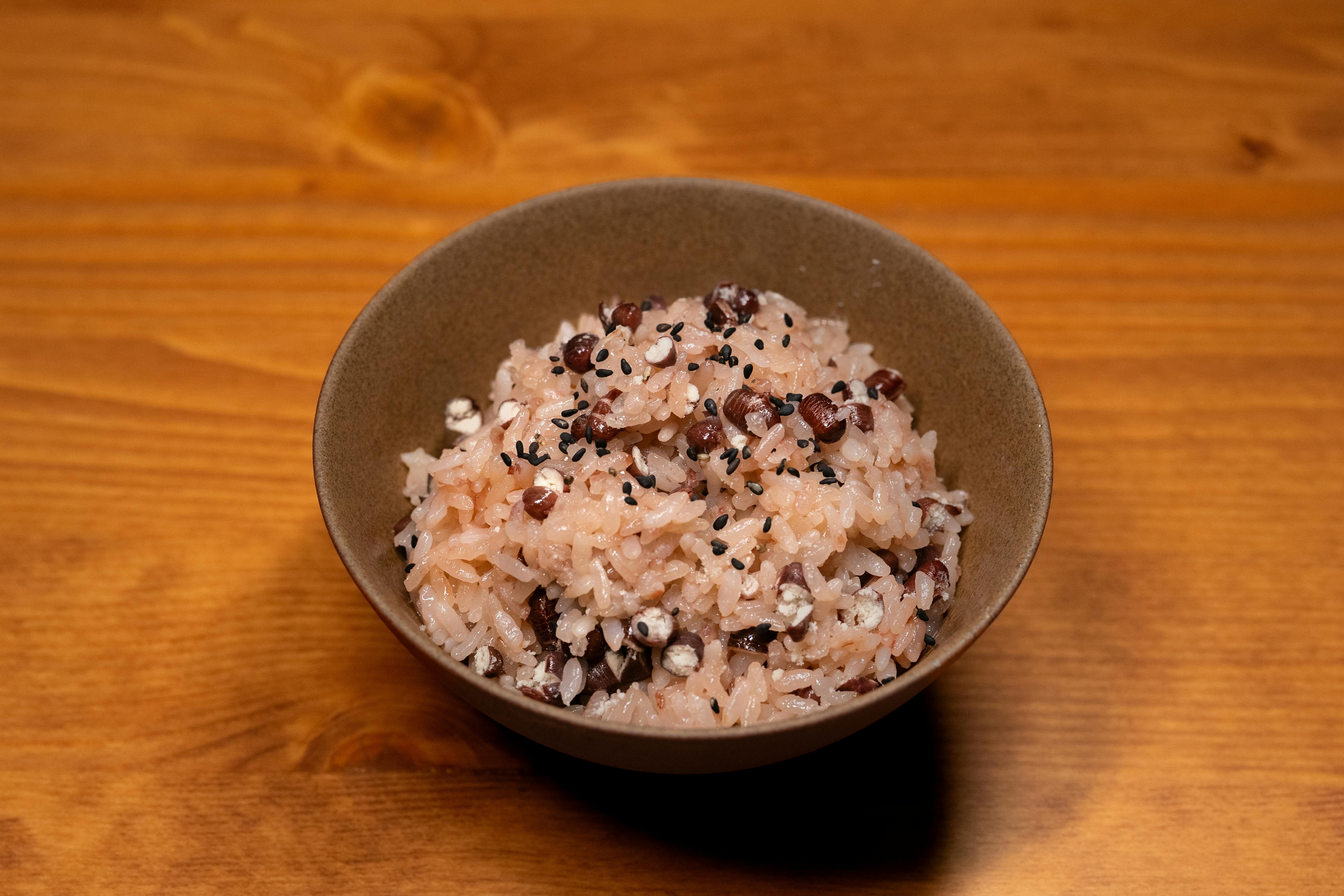
Red rice
From Bhutan to Camargue — anthocyanin-pigmented bran rice with procyanidins and γ-oryzanol: the polyphenol-rich alternative
Red rice in 1 minute
What does it provide? Red rice (Himalayan Bhutanese red rice, French riz rouge de Camargue, Thai khao deng) has an anthocyanin-pigmented bran (proanthocyanidin / condensed tannin and small amounts of cyanidin glycoside), with high procyanidin and phenolic-acid content, γ-oryzanol (ferulic-acid steryl-ester complex), small amounts of lutein, and high insoluble fiber. Glycemic index is lower (≈ 55) than white rice (≈ 73), and polyphenol content is 2–4× higher (Min 2014, Massaretto 2011). In observational and small human studies, whole-grain red rice's polyphenol spectrum has shown a favorable effect on LDL cholesterol and inflammatory markers; γ-oryzanol-containing rice bran oil supplementation in hyperlipidemic subjects significantly improved the lipid profile (Bumrungpert 2019).
How much? Cooked red rice 80–150 g/serving (≈ 35–60 g dry), 1–2 servings/day. Soaking 4–8 hours improves digestibility and reduces phytate. Red rice requires longer cooking time (35–45 min) than white.
When to avoid? Acute bowel obstruction, severe stricture (high fiber), infants (under 1 year — whole grain choking), severe kidney disease with phosphorus and potassium restriction, arsenic sensitivity or pregnancy (all whole-grain rice colors can be moderate-to-high in inorganic arsenic — varied cooking and varied grain consumption recommended).
Red rice is not its own botanical species, but a group of Oryza sativa cultivars in which the bran layer contains anthocyanin pigment and procyanidin. In the Himalayas — especially in Bhutan — red rice is the staple of the traditional diet: red Bhutanese rice is a medium-grain cultivar grown at 2,400 m altitude, whose pale reddish-brown color comes from the bran layer's anthocyanin. In Buddhist monasteries, red rice is both a festive and daily food. In India — in Kerala and Tamil Nadu — matta or rosematta rice has similar bran pigmentation and is the staple of traditional Kerala cuisine's houseboat hotels.
In the Camargue region of France — in the Rhône delta — riz rouge de Camargue is an IGP-protected red-bran cultivar brought back into mainstream cultivation by the 1980s heritage movement; today it is a favorite ingredient of French organic and slow-food gastronomy. In Thailand, khao deng (red rice) is an ancient variety, partly replacing white jasmine rice for its higher nutritional value. Modern nutrition positions red rice as the polyphenol-rich alternative to white rice: the bran layer's anthocyanin and procyanidin content provides significant antioxidant and anti-inflammatory activity, and the γ-oryzanol content modulates lipid metabolism. Note: Chinese-Japanese red yeast rice (Monascus purpureus-fermented rice) is a different product — a monacolin K-containing supplement with lipid-lowering effects, but its drug interactions and lovastatin-like risks require separate consideration.
Scientific Background
Red rice (Oryza sativa, red-bran cultivars) bran pigment is primarily proanthocyanidin (condensed tannin) and to a lesser extent cyanidin-3-glucoside anthocyanin (Min 2014, Massaretto 2011) — in contrast to black rice, where cyanidin anthocyanin dominates. Total polyphenol content is 100–400 mg GAE/100 g — 2–4× higher than white rice (30–80 mg/100 g). In the colon, procyanidins depolymerize and are converted to small phenolic acids (4-hydroxyphenyl-acetic acid, 3,4-dihydroxyphenyl-propionic acid) by colonic bacteria (Bifidobacterium, Lactobacillus, Eggerthella) (Monagas 2010).
γ-Oryzanol is a complex of ferulic-acid steryl esters (cycloartenol, 24-methylene-cycloartanol, and campesterol ferulic-acid esters) — concentrated mainly in the rice bran fraction. In clinical studies, γ-oryzanol-containing rice bran oil reduced LDL cholesterol and CRP in hyperlipidemic subjects (Bumrungpert 2019 human RCT). Red rice γ-oryzanol content is 30–80 mg/100 g — higher than white rice (10–25 mg/100 g).
Lutein and other carotenoids are present in small amounts but make a significant contribution to eye health in whole-grain form. Insoluble fiber content is 2.3–3.5 g/100 g (versus white rice 0.4–0.8 g/100 g), and significantly shortens colonic transit time. Red rice glycemic index is ≈ 55 (medium), while white rice GI is ≈ 73 (high) — the fiber and polyphenols in the bran slow starch digestion.
The arsenic question: rice (especially whole-grain) is genetically capable of accumulating higher inorganic arsenic from soil. The bran of red, black, and brown rice can have higher arsenic concentrations than white — therefore EFSA and WHO recommend varied grain consumption and abundant-water cooking (1:6 rice-to-water ratio, draining cooking water reduces arsenic by 40–60% — Gray 2016).
- + Legumes (chickpea, black bean, lentil): complementary amino-acid profile + AX × legume-fiber.
- + Olive oil, walnut: fat aids γ-oryzanol and carotenoid absorption.
- + Roasted-steamed vegetables (squash, pumpkin, green bean): carotenoid × anthocyanin synergy.
- + Fermented vegetables (kimchi, sauerkraut): carbohydrate × live culture → SCFA synergy.
- + Green tea (with meal): catechin × procyanidin co-effect.
- + 4–8 hours soaking: phytate reduction, better absorption.
- Mixed with white rice long-term: polyphenol benefit decreases; if combining, use whole-grain base.
- Iron supplementation in the same meal: phytate and tannin chelate Fe — temporal separation.
- High-dose fast carbs (sugar, white bread): glycemic spike, polyphenol benefit disappears.
- Prolonged high-heat cooking in dried form: partial anthocyanin breakdown — the red color fades somewhat.
- Red yeast rice with statins: monacolin K + statin → muscle-toxic addition. Note: dietary red rice is not the same as fermented red yeast rice.
- Sustained rice-only diet: varied grain consumption reduces arsenic exposure.
- Pregnancy, lactation, infant feeding: varied grain consumption recommended to reduce arsenic exposure — 2–3 servings/week of whole-grain rice, alternating with oats, buckwheat, millet.
- Acute bowel obstruction, severe stricture: high fiber — risky.
- Severe kidney disease (CKD 4–5): potassium and phosphorus restriction — moderate the serving.
- IBS elimination phase: low FODMAP, generally well tolerated.
- Infant (under 1 year): mashed, small portion — whole-grain choking risk.
- Celiac disease: safe — rice is gluten-free (but check labels for cross-contamination).
- Sustained uncontrolled diabetes: red rice has lower GI than white, but carbohydrate content is similar — portion control.
- Anticoagulant therapy + large vitamin K intake together: red rice K content is low, low risk.
References
[1] Min B et al. Phytochemicals and antioxidant capacities in rice brans of different color. J Food Sci 2014;79(7):C1255–C1264. Link
[2] Massaretto IL et al. Phenolic compounds in raw and cooked rice (Oryza sativa L.) and their inhibitory effect on the activity of angiotensin I-converting enzyme. J Cereal Sci 2011;54(2):236–240. Link
[3] Bumrungpert A et al. Rice bran oil containing gamma-oryzanol improves lipid profiles and antioxidant status in hyperlipidemic subjects: a randomized double-blind controlled trial. J Altern Complement Med 2019;25(3):353–358. Link
[4] Saenkod C et al. Anti-oxidative biochemical properties of extracts from some Chinese and Thai rice varieties. African J Food Sci 2013;7:300–305.
[5] Monagas M et al. Insights into the metabolism and microbial biotransformation of dietary flavan-3-ols and the bioactivity of their metabolites. Food Funct 2010;1(3):233–253. Link
[6] Gray PJ et al. Inorganic arsenic in rice and rice products on the United States market. J Agric Food Chem 2016;64(15):3025–3029.
[7] EFSA. Inorganic arsenic in food: dietary exposure assessment. EFSA Journal 2014;12(3):3597. Link
[8] Sumczynski D et al. Phenolic acids, anthocyanins, and antioxidant activity in pigmented rice. Plant Foods Hum Nutr 2016;71(2):117–123. Link
[9] Monash University. High and Low FODMAP foods — rice. Monash FODMAP database. Link