


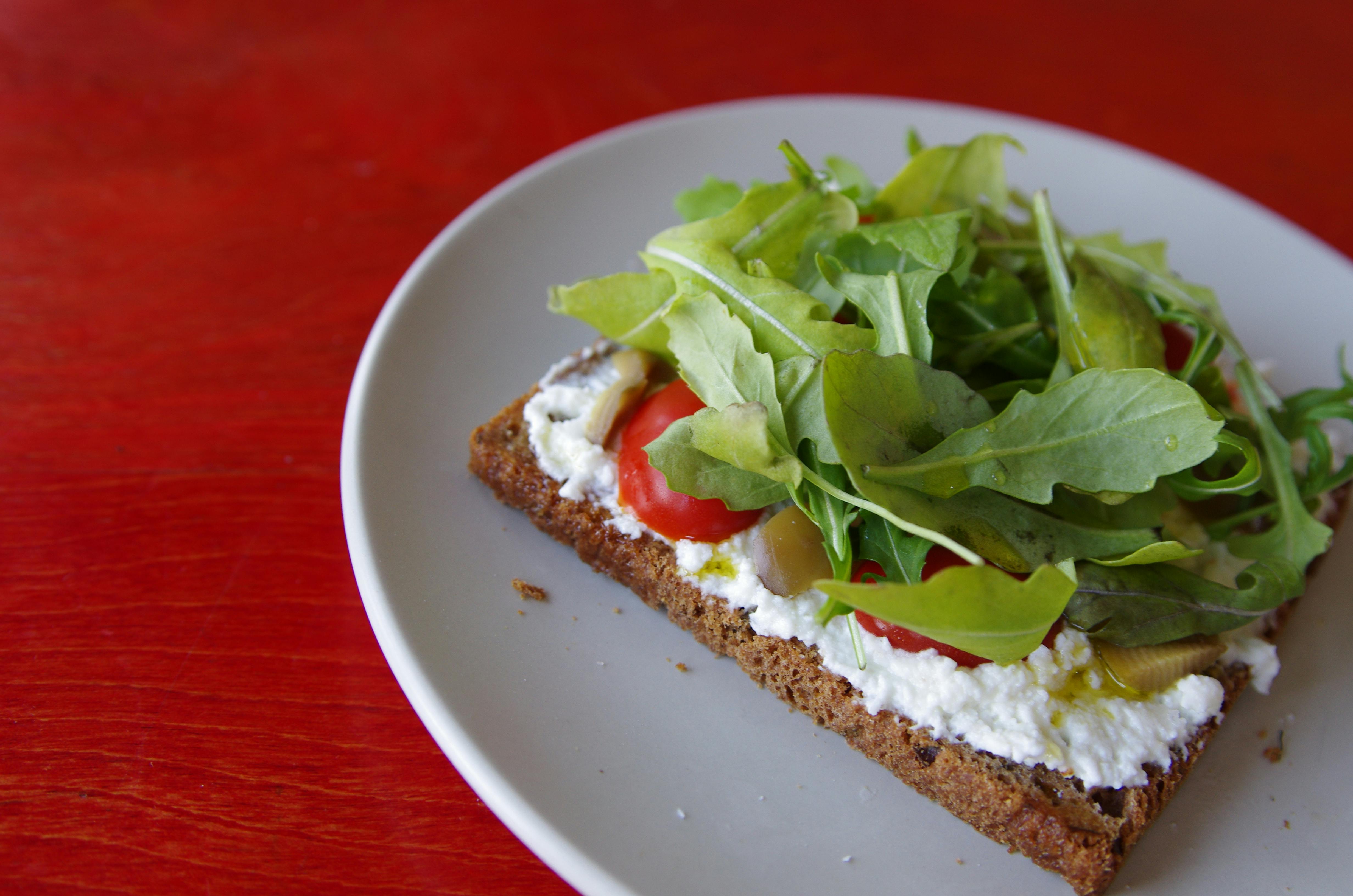
Arugula
The Mediterranean leafy green — a high nitrate-NO axis and a Brassica-glucosinolate matrix in a single leaf.
Arugula in 1 minute
What does it provide? High nitrate content (250—500 mg/100 g — a range similar to beetroot), Brassica-family glucosinolate (glucoerucin, glucoraphanin), quercetin and kaempferol, vitamin K, folate, magnesium.
How much? 50—75 g fresh leaves/day (a small bowl) — Bondonno 2016 J Nutr nitrate-rich vegetable RCTs used this dose.
When to avoid? Warfarin (high vitamin K, constant intake required). Hashimoto / Graves' disease with high-dose raw consumption (glucosinolate goitrogenic potential). Infants under 6 months: nitrate-methemoglobinemia risk.
Arugula was the Mediterranean salad green of the ancient Roman Empire — in Historia Naturalis Pliny attributed aphrodisiac properties to it, and Roman monasteries banned its cultivation through the Middle Ages (due to its overly "spicy" character). At the end of the 20th century, the Italian "cucina povera" (peasant cuisine) brought it back to the table, and the Mediterranean trend of the 1990s made it popular worldwide.
Scientific Background
Arugula's nitrate content is outstanding within the Brassica family — 250—500 mg/100 g fresh weight. Bondonno 2016 J Nutr studied "nitrate-rich vegetables" (including arugula, spinach, beetroot, watercress) in a comprehensive portfolio in human RCTs: daily 80—100 mg nitrate intake produced significant flow-mediated dilation (FMD) improvement and blood pressure reduction. The mechanism is the oral microbiota — Veillonella, Rothia — nitrate reduction → nitrite → systemic NO pathway.
The Brassica-glucosinolate matrix (glucoerucin being the main component) hydrolyzes to erucin-sulforaphane during chewing (myrosinase enzyme) — Akkermansia-supporting and NRF2-activating secondary effects, but the concentration in arugula is moderate compared to broccoli.
At the microbiome level, alongside the classic oral-NO pathway, the Brassica-sulforaphane-mediated Akkermansia muciniphila support is indirect. The quercetin and kaempferol fraction provides a polyphenol matrix.
- + Extra-virgin olive oil + lemon: classic Mediterranean salad — fat enhances vitamin K absorption.
- + Beetroot + walnut: dual nitrate matrix + omega-3 — a sport-microbiota protocol.
- + Grated Parmesan: classic Italian "rucola pesto" — calcium-fat matrix.
- + Trout or salmon: fatty fish + nitrate-NO synergy.
- + Peanut sauce (or hazelnut): an Italian "pesto di rucola" alternative.
- Tannin-rich beverages (black tea, red wine) in high doses: impaired iron absorption.
- Thyroid hormone (L-thyroxine) at the same time: separate by ≥ 2 hours.
- Heat treatment > 5 min of boiling: partial loss of nitrate + vitamin K; raw preferred.
- In large amounts on an empty stomach in acid-sensitive individuals: GI irritation.
- Warfarin therapy: high vitamin K (≈ 110 µg/100 g) — CONSTANT intake required, not abrupt change.
- Active Hashimoto / Graves' disease + high raw dose (≥ 200 g/day): glucosinolate goitrogenic potential.
- Infant under 6 months: methemoglobinemia (nitrate) risk.
- Hyperoxaluric kidney stones + high oxalate intake: moderate oxalate content (manage).
- Pregnancy (dietary amount is safe): wash thoroughly before fresh salad consumption (Listeria, Toxoplasma risk).
- Bondonno CP et al. Vegetable-derived bioactive nitrate and cardiovascular health. J Nutr 2016;146(8):1485S—1492S.
- Hord NG et al. Food sources of nitrates and nitrites: the physiologic context for potential health benefits. Am J Clin Nutr 2009;90(1):1—10. https://pubmed.ncbi.nlm.nih.gov/19439460/
- Bell L et al. The nutritional value of Eruca sativa and Diplotaxis tenuifolia — review. Plants 2020;9(4):483.
- Velmurugan S et al. Dietary nitrate improves vascular function in patients with hypercholesterolemia: a randomized, double-blind, placebo-controlled trial. Am J Clin Nutr 2016;103(1):25—38. https://pubmed.ncbi.nlm.nih.gov/26607938/
- USDA FoodData Central — Rocket, raw (NDB #11959). https://fdc.nal.usda.gov/
- Monash University. Rocket (arugula) — Low FODMAP serving guidelines (75 g green). https://www.monashfodmap.com/about-fodmap-and-ibs/high-and-low-fodmap-foods/
- EFSA. Scientific opinion on nitrate in vegetables. EFSA Journal 2008. https://doi.org/10.2903/j.efsa.2008.689