
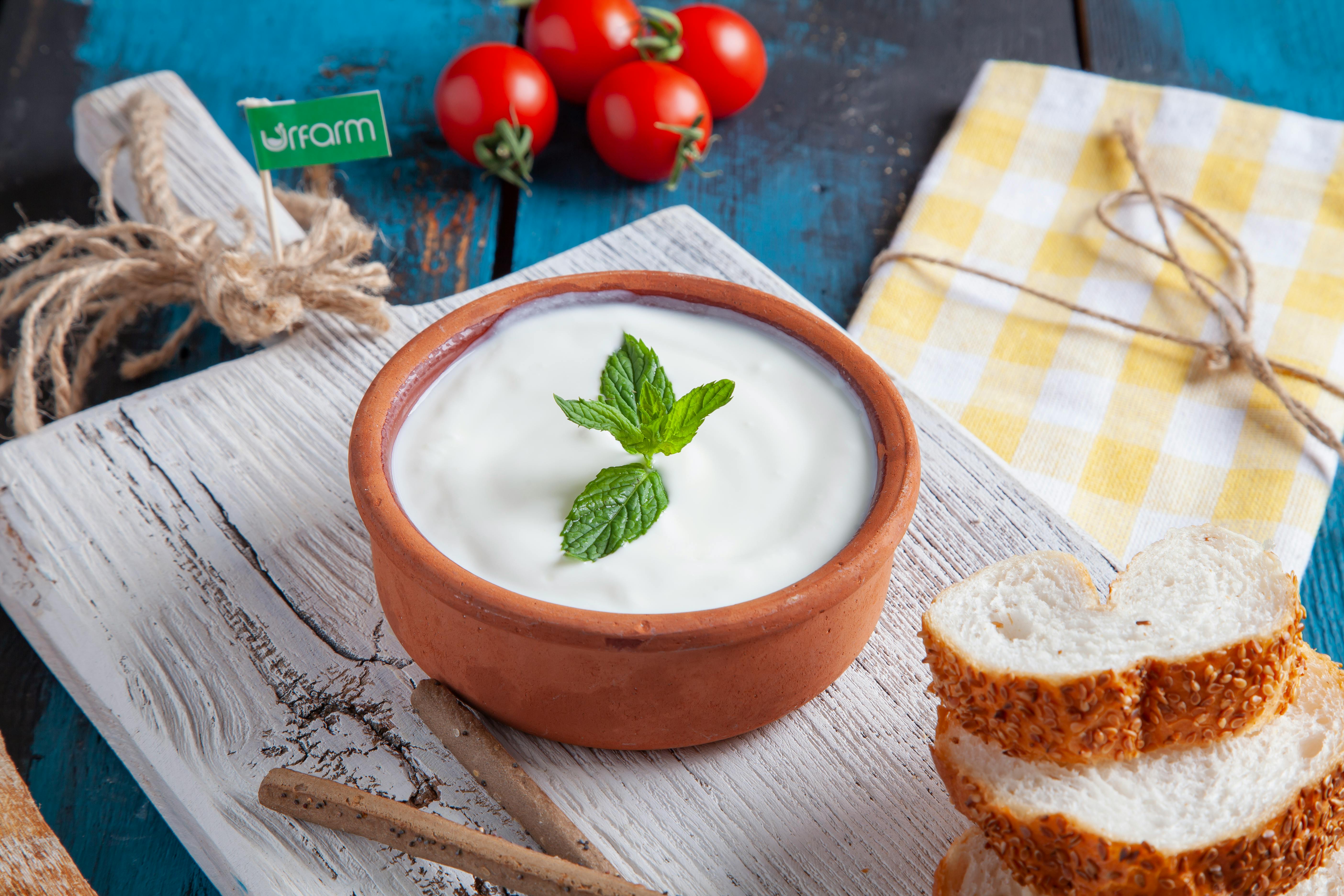
Quark
The fresh-cheese class — mesophilic LAB ferment, high casein protein, cornerstone of classic Central European cuisines.
Quark in 1 minute
What does it provide? The fresh-cheese class — milk fermented with mesophilic lactic acid bacteria (Lactococcus lactis subsp. lactis and cremoris), with the whey strained to concentrate protein. High casein protein (8–14 g/100 g depending on version), high calcium (≈ 90–150 mg/100 g), high phosphorus, high B12 (stable during fermentation), high live LAB (10⁶–10⁸ CFU/g in fresh traditional versions). Lower lactose (≈ 3–4 g/100 g) means many lactose-sensitive people tolerate it.
How much? 100–200 g/day plain, unsalted quark.
When to avoid? Cow's milk protein allergy (strictly); galactosemia (absolute); severe lactose intolerance (low, but sensitive individuals may still react); industrial pasteurized "quark-like" products (low LAB); ≥ 2 hours separation from levothyroxine, iron supplements; severe kidney disease (high protein + phosphorus); infant < 6 months.
Quark (Hungarian "túró", Slavic "tvarog/творог") is a cornerstone of Eastern European and German-Slavic cuisine for over two thousand years. In ancient Germanic and Slavic peoples' diets, fresh cheese forms ("quark," "tvarog," "túró") were made from cow, goat, and sheep milk with cool storage and gravity whey straining. In Hungarian cuisine, "túró" has been documented since the Hungarian Conquest (9th–10th century) — a product of the steppe shepherd tradition. In classic Hungarian peasant farms, the "túró-whey-butter" triad provided seasonal protein and fat intake.
The German "Quark" ("curd," "fresh cheese") derives from Old High German ("twarc") and appears in every Central European cuisine (Polish "twaróg," Czech "tvaroh," Russian "творог," Hungarian "túró"). The chocolate-coated Hungarian "Túró Rudi" emerged in the late 1960s on the Mirelite product line (the precise developer attribution — often associated with Lajos Vándor — is not entirely uniformly documented in public sources). Many cheesecake variations (New York, German, Hungarian) are also quark/túró-based. Modern clinical research (Sanlier 2019, Wallace 2018) studies fresh cheeses as a matrix of high calcium + protein + live LAB.
Scientific Background
Quark belongs to the fresh cheese category (Codex Alimentarius: "fresh cheese," "acid-curd cheese"). Production process:
- Starter: mesophilic LAB mix (Lactococcus lactis subsp. lactis, L. lactis subsp. cremoris, sometimes L. lactis subsp. diacetylactis for aroma).
- Fermentation (12–24 hours at room temperature): pH around 4.4 — casein coagulates (isoelectric point). Small amount of rennet optional to speed up.
- Whey straining: gravitational or mechanical on cheesecloth. Depending on the extent of whey straining, protein content is 8–14 g/100 g.
- Packaging: fresh, refrigerated.
LAB content: classic small-batch fresh, non-pasteurized quark contains 10⁶–10⁸ CFU/g live LAB — EFSA claim valid (lactose digestion, as for yogurt). Industrial, longer-shelf-life products are pasteurized — low LAB, only postbiotic.
Nutrient matrix: casein is a slow-absorbing protein (vs. whey is fast) — overnight muscle protection, satiety. Casein-derived peptides (β-casomorphin, ACE-inhibitor peptides) have blood-pressure-reducing effects — Beltrán-Barrientos et al. (2016 J Dairy Sci 99:4099–4110), "Invited review: Fermented milk as antihypertensive functional food," details this mechanism.
Clinical studies: in the fresh cheese category (skyr, Greek yogurt, túró, quark), the high protein + calcium combination is favorable for bone health (Wallace 2018, Beltrán-Barrientos 2016) and metabolic profile. Hungarian population: traditional túró consumption partly compensates for lower vitamin D levels for bone health (calcium matrix).
Microbiome effect: Lactococcus lactis-dominant ferments provide a complex postbiotic matrix (bacteriocins, exopolysaccharides, peptides) — Bifidobacterium-elevating, anti-inflammatory. Marco et al. (2017) place fresh cheeses in the "Central European postbiotic + live LAB" category of fermented foods.
Quark vs. Túró: per European standards, "quark" tends to be lower-fat (often 0–10% fat), while Hungarian "túró" can be fattier (≈ 4–8% fat). Protein contents are similar. (Note: Codex Alimentarius CXS 273-1968 specifically covers cottage cheese; quark and túró fresh cheeses fall under the broader CXS 221-2001 "Group standard for unripened cheese including fresh cheese.")
- + Berries (strawberry, blueberry): polyphenol + LAB classic.
- + Honey or plum jam (small amount): classic Hungarian breakfast.
- + Flaxseed, walnut, almond: fiber + omega-3 + LAB.
- + Fresh greens (scallion, radish, tomato): classic Hungarian "túró + scallion."
- + Caraway + paprika: classic Hungarian "körözött" (túró + paprika + onion + caraway).
- + Buckwheat, millet flakes: fiber + LAB combination.
- Added sugar / flavored quark (Túró Rudi series daily): high sugar, worsens metabolic profile.
- Levothyroxine (T4): calcium chelation — separate by ≥ 4 hours.
- Tetracycline, ciprofloxacin: calcium interference — separate by ≥ 2 hours.
- Iron supplements: separate by ≥ 2 hours.
- Heating to high temperatures (≥ 70 °C): LAB loss.
- Antibiotic course (simultaneously): ≥ 2 hour separation.
- Cow's milk protein allergy: strictly avoid.
- Galactosemia: absolute.
- Severe lactose intolerance: choose lactose-free version (lower lactose, but still possibly reactive).
- Severe kidney disease (CKD 4–5): high phosphorus + protein — moderate or avoid.
- Chronic hypercalcemia: avoid.
- Severe immunosuppression: live LAB avoided.
- Infant < 6 months: avoid (infant feeding).
- Histamine intolerance: moderate (aged versions).
- Hashimoto + iodine sensitivity: dietary amounts OK, levothyroxine separation.
- Kidney stones (calcium-oxalate): combine with oxalate-reducing foods.
Daily serving: 100–200 g plain, unsalted quark.
Preparation pattern — homemade quark:
- 2 liters whole milk left at room temperature 24–36 hours (natural mesophilic LAB fermentation), or 2 tbsp live kefir + at 38 °C for 18–24 hours.
- Drain on cheesecloth for 6–12 hours (in refrigerator).
- Refrigerate.
Classic patterns:
Körözött (Hungarian classic): quark + paprika powder + onion + caraway + sour cream + salt → on bread.
Quark pasta (Hungarian "túrós tészta"): wide noodles + quark + sour cream + bacon + salt.
Quark Danish ("túrós táska"): filo dough + quark + egg + sugar + raisin — pastry.
Cheesecake (New York, German): quark/túró + sugar + eggs + vanilla — baked.
Breakfast bowl: quark + rolled oats + blueberries + flaxseed.
Smoothie base: quark + banana + spinach + flax milk → high protein.
Storage: refrigerated airtight for 7–10 days. Surface whey is normal.
What not to do: don't boil (LAB loss). Don't leave at room temperature. Don't choose sweetened flavored version.
References
[1] EFSA NDA Panel. Scientific opinion on live yoghurt cultures and improved lactose digestion. EFSA Journal 2010;8(10):1763. Link
[2] Wallace TC. Health effects of fermented dairy. J Food Sci 2018.
[3] Sanlier N et al. Health benefits of fermented foods. Crit Rev Food Sci Nutr 2019;59(3):506–527. Link
[4] Beltrán-Barrientos LM, Hernández-Mendoza A, Torres-Llanez MJ, González-Córdova AF, Vallejo-Córdoba B. Invited review: Fermented milk as antihypertensive functional food. J Dairy Sci 2016;99(6):4099–4110. Link
[5] Marco ML et al. Health benefits of fermented foods: microbiota and beyond. Curr Opin Biotechnol 2017;44:94–102. Link
[6] Codex Alimentarius. Group standard for unripened cheese including fresh cheese (CXS 221-2001). Link
[7] Hill C et al. ISAPP consensus on the term "probiotic". Nat Rev Gastroenterol Hepatol 2014;11(8):506–514. Link
[8] Lordan R et al. Dairy fats and cardiovascular disease: do we really need to be concerned?. Foods 2018;7(3):29. Link