
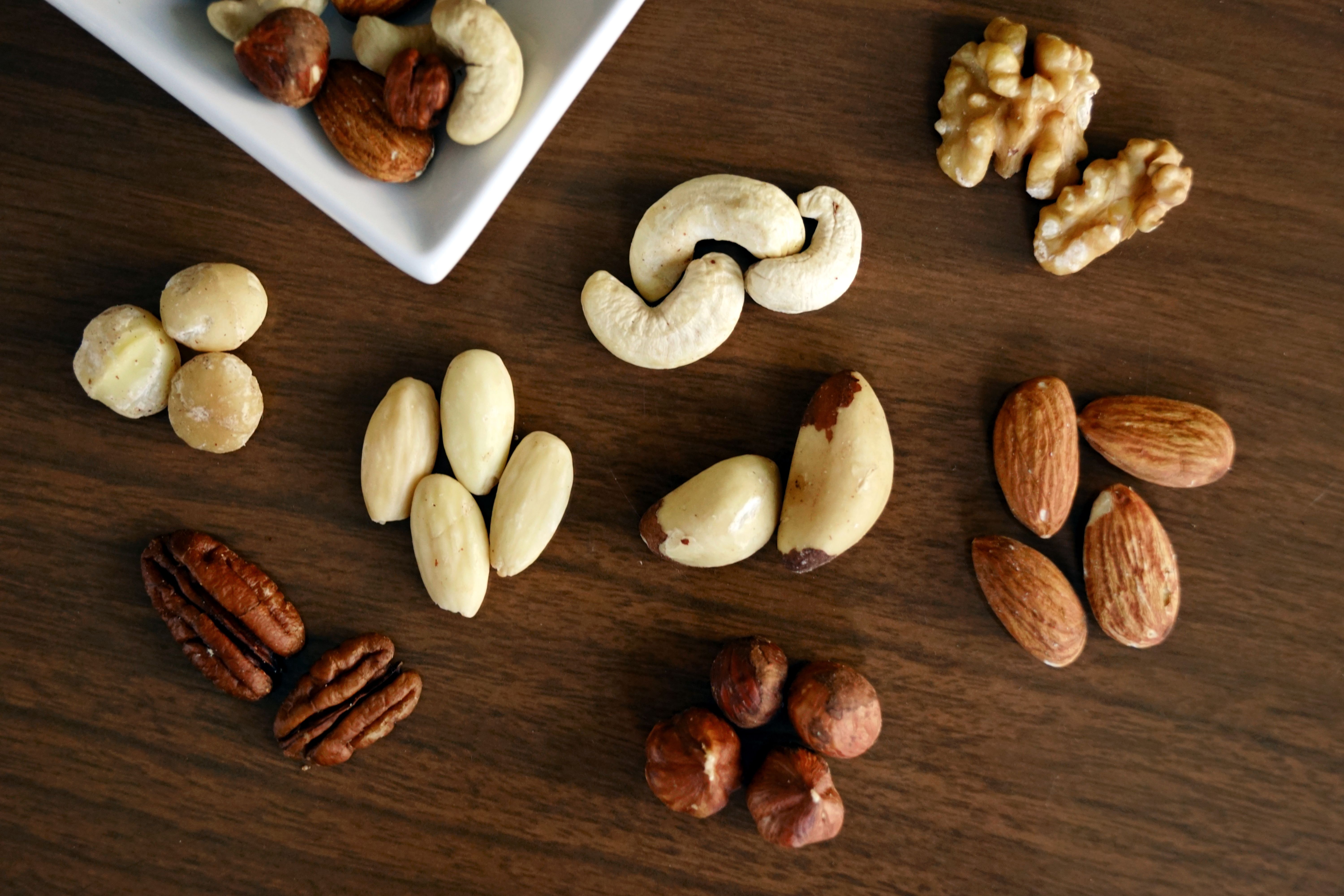
Brazil Nut
The selenium bomb — 1–2 nuts cover the entire daily requirement; the superstar of the thyroid and the antioxidant system.
In 1 minute
What does it provide? Earth's most concentrated natural selenium source: 1 average nut delivers ≈ 70–90 μg selenium in the form of L-selenomethionine (the best-absorbed, sustainably stored selenium form). Selenium is a component of glutathione peroxidase (the cells' main antioxidant enzyme) and deiodinase (the T4 → T3 thyroid-hormone converter). Plus monounsaturated fatty acid, magnesium, vitamin E.
How much? 1–2 nuts/day (≈ 5–10 g). Thomson 2008 RCT: 2 nuts/day raised serum selenium by 64% in 12 weeks — more effective than a 100 μg tablet. 3+ nuts/day chronically = toxicity risk (upper limit: 400 μg/day).
When to avoid? Confirmed high serum selenium (> 150 μg/L); concurrent selenium tablet use (additive); type 2 diabetes risk (Stranges 2007: high selenium status may raise it); severe kidney failure (excretion impairment); infant, small child (1 nut is many times the child RDA); levothyroxine use (keep > 4 hours apart — high fat delays); Brazil-nut allergy.
Brazil nut is botanically not a nut but a seed: the giant Bertholletia excelsa tree (45–60 m tall), native to the Amazon basin, bears 1–2 kg coconut-like capsules containing 12–24 triangular cross-section seeds. South American indigenous peoples (especially the Yanomami, Kayapó, and Bororo communities) have gathered it for millennia — important: it is almost exclusively a WILD-harvested product, because the tree's pollination is done by a specific orchid bee (Eulaema), and the fruit's distribution requires the agouti (a large rodent). The tree thus needs an intact rainforest ecosystem, so Brazil nut production is at once an Amazon forest protection indicator.
Sixteenth-century Spanish and Portuguese conquerors brought it to Europe as "castañas de Pará," and by the 19th century it became part of global trade, mainly from Brazil's Pará state (hence the English "Pará nut" name). The recognition of selenium content can be dated to the 1960s (Kerdel-Vegas 1966 described selenium poisoning in the Venezuelan Amazon region from overconsumption — this was the world's first documented alimentary selenotoxicosis). 21st-century randomized studies (Thomson 2008, Stockler-Pinto 2014) confirmed that 1–2 Brazil nuts/day dramatically and sustainably raises serum selenium level and glutathione peroxidase activity — often more effectively than synthetic selenium supplements. (PubMed, AJCN)
🔬 Scientific Background
Selenium is essential in the active center of glutathione peroxidase (GPx), thioredoxin reductase, and iodothyronine deiodinase enzymes. GPx is one of the body's main enzymatic antioxidant systems, and deiodinases are responsible for T4 → T3 thyroid-hormone conversion. In selenium-deficient regions (some European areas, including Hungary moderately), autoimmune thyroid disease (Hashimoto's) is more common, and selenium supplementation lowers TPO antibody levels (Toulis 2010 meta-analysis).
Thomson and colleagues (2008) in a New Zealand RCT demonstrated: consuming 2 Brazil nuts daily raised plasma selenium by an average of 64.2% and GPx activity by 8.3% after 12 weeks — significantly more than a 100 μg L-selenomethionine tablet. This is the "food matrix effect" — selenium from food utilizes better than the purified form.
Selenium content, however, is EXTREMELY variable depending on soil selenium content: Brazil nuts from Pará state ≈ 19 μg/g, from elsewhere as low as 0.2–1.2 μg/g. An average nut contains 70–90 μg, but the spread can be 5–500 μg. This is the key to clinical significance: what is a safe RDA for 2 nuts from one source can already be a toxic dose from another. (Chang 1995, Silva Junior 2017)
Symptoms of selenotoxicity (selenosis): nail damage (lateral striping, brittleness), hair loss, tooth enamel discoloration, garlic-like breath (dimethyl selenide excretion), peripheral neuropathy, liver damage. Clinical cases have been documented with 5+ nuts/day or selenium-overdosed supplements (Hadrup 2020).
At the microbiome level, selenium is the substrate of microbial selenoprotein synthesis: the selenocysteine synthesis of gut bacteria contributes to the body's total selenium balance. Oleic acid and ellagic acid have prebiotic-like effects, and Brazil nut consumption in human studies raised the share of Faecalibacterium prausnitzii and Roseburia. (Stockler-Pinto 2018)
- + Thyroid-targeted iodine source (sea fish, algae in moderation): the selenium-dependent deiodinase can only carry out T4 → T3 conversion with adequate iodine status. Selenium AND iodine together are needed; one without the other is not optimal.
- + Vitamins C and E (bell pepper, almond, olive oil): synergistic antioxidant triangle — in the GPx-Vit C-Vit E cycle, all three regenerate together.
- + Healthy fat (the nut itself, or olive oil): selenomethionine is optimally absorbed with fat. Brazil nut's 66% fat content is itself a good matrix.
- + High-quality protein (egg, fish, chicken): methionine + selenomethionine together build glutathione peroxidase.
- + Fermented dairy or yogurt: ellagic acid metabolism (to urolithin) depends on the gut microbiome.
- + Chocolate/cacao in moderation: classic South American pair, magnesium-flavonoid-selenium combination.
- Separate selenium-containing supplement (200 μg+ capsule): total selenium intake easily exceeds the 400 μg/day upper safety limit → selenotoxicity. EITHER Brazil nut OR supplement — never both routinely.
- Other selenium-rich foods in large amounts on the same day (tuna, salmon, beef liver, Chinese mushroom) + 3+ Brazil nuts: can easily add up to 500+ μg.
- Cisplatin and other platinum-based chemotherapy: theoretical interaction due to selenium redox activity, to be avoided without oncologist coordination.
- Levothyroxine (Euthyrox) direct co-administration: high fat content can delay hormone absorption. Keep > 4 hours apart.
- Statins + very high-dose selenium: contradictory data on HDL reduction — therapeutic-dose supplement to be avoided.
- Anticoagulant + large dose of nuts (generally): vitamin E + magnesium additive bleeding risk at extreme doses (clinically not relevant at culinary serving).
- Confirmed high serum selenium (> 150 μg/L): to be avoided or 1×/week max. Annual selenium-level measurement worthwhile for regular consumers.
- Type 2 diabetes risk: NHANES and SELECT studies (Stranges 2007) suggest high selenium status may carry moderate T2DM risk increase. Moderate consumption (1 nut/day) is safe, overconsumption is not.
- During thyroid cancer treatment: selenium status may modulate chemo-radio therapy effectiveness — oncological consultation needed.
- During thyroid hormone treatment initiation: acute selenium supplementation can change T4 → T3 conversion, hormone dose readjustment needed.
- Severe renal failure: selenium excretion is kidney-dependent — accumulation risk.
- Infant, small child (< 6 years): the selenium content of 1 Brazil nut is many times the child's RDA (15–30 μg/day). NOT recommended as standalone serving, only under adult supervision, broken, occasionally.
- Pregnancy and breastfeeding: 1 nut/day is safe, 2+ is already borderline (combined mother and fetus RDA ≈ 65 μg).
- Brazil-nut allergy (rare, but IgE-mediated anaphylaxis described): absolute contraindication. Cross-reactivity with other tree nuts possible.
- Aflatoxin-contaminated batch: with poor storage (warm, moist), Brazil nut can become aflatoxin-contaminated — moldy-smelling or off-tasting nuts to be discarded immediately.
Daily serving: 1–2 nuts (≈ 5–10 g), at breakfast or as a snack. Should NOT be a routine 3+ nuts/day.
Preparation patterns:
1. Raw, breakfast muesli: 1–2 Brazil nuts + rolled oats + berries + yogurt/plant milk. The simplest, most bioavailable pattern.
2. Chopped on salad: green salad + 1 chopped Brazil nut + olive oil + lemon + Parmesan. The oily matrix aids selenomethionine absorption.
3. "Selenium chocolate": 1 Brazil nut + 1 square of 85% dark chocolate. Classic South American pair, magnesium-flavonoid combination.
4. Smoothie: 1 Brazil nut + ½ banana + 1 tbsp almond butter + plant milk + cinnamon. The blender chops the nut, optimizing absorption.
5. Thyroid-support bowl: 1 Brazil nut + 50 g salmon + sea algae (small serving) + boiled egg + spinach. Selenium + iodine + B12 + folate together.
Storage: in shell, in a cool, dark, dry place for 6–9 months. Shelled, in an airtight jar, in the fridge 2 months, in the freezer 6 months. Due to high fat content, prone to going rancid — smell each batch before use.
Aflatoxin note: discard moldy, faded, "musty"-smelling nuts. EU standard limits at import, but household storage can degrade. Cool, dry storage is critical.
What not to do: don't make 3+ per day routine (selenotoxicity). Don't give as standalone item to an infant/small child. Don't store in a warm, humid place (aflatoxin risk).