
Cashew
The Amazon's magical "apple" — high magnesium, MUFA-dominant fat profile, and creamy texture for plant pastes.
Cashew in 1 minute
What does it provide? High monounsaturated fat (MUFA — oleic acid, ≈ 24 g/100 g, about 60% of total fat), magnesium (≈ 292 mg/100 g — one of the highest sources), zinc (≈ 5.8 mg/100 g), iron (≈ 6.7 mg/100 g), and plant sterols (β-sitosterol, campesterol — cholesterol absorption reduction). It also contains small amounts of anacardic acid (concentrated in the shell — commercial "raw" cashew is all heat-treated, since the raw shell is allergenic and irritating).
How much? A handful per day (≈ 28 g, about 15–18 pieces) — in RCTs, 28–64 g cashew/day over 4–12 weeks reduced LDL cholesterol and improved HDL/LDL ratio (Mah 2017 Am J Clin Nutr; Mohan 2018 J Nutr).
When to avoid? Tree nut allergy (anaphylaxis, cross-reaction with pistachio — Anacardiaceae family), IBS flare (high fructan FODMAP), active gallstones (fat content can provoke bile colic), aflatoxin contamination (in poor storage), kidney stones (moderate oxalate ≈ 260 mg/100 g — high), severe calorie restriction, child < 4 years (choking hazard + allergy risk), home-prepared raw cashew (shell anacardic acid irritation).
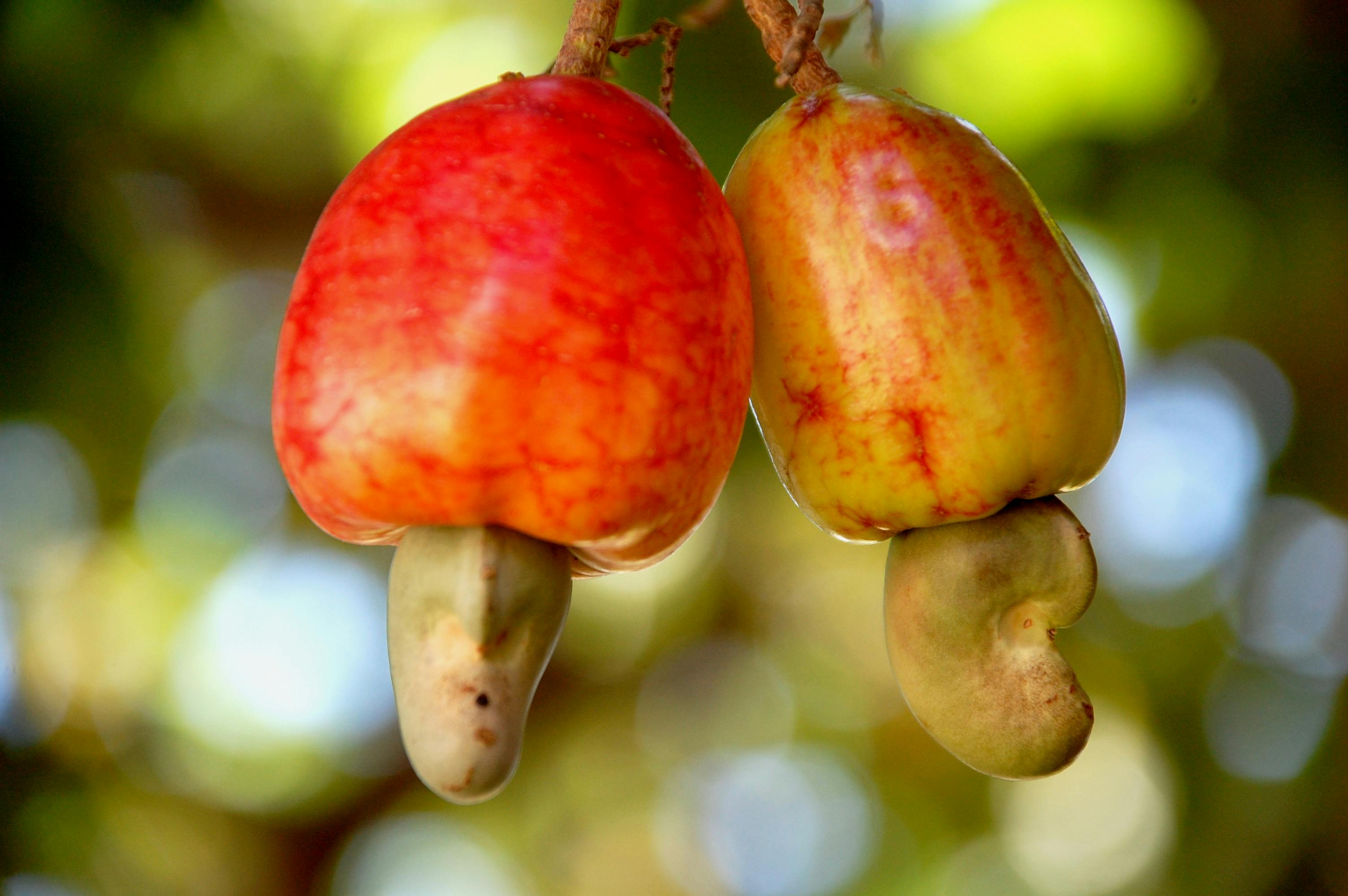
Cashew originates from the Amazon-Brazil homeland, where the indigenous Tupi people consumed the "acaju" (from which the English cashew) seed and its attached sweet-sour "cashew apple" for centuries. In the mid-16th century, Portuguese traders and colonists transported it to India (Goa) and Mozambique — both colonies adopted it perfectly. India became the world's largest cashew processor by the late 19th century, since the shell removal — which contains the corrosive anacardic acid — must be done by hand, in a labor-intensive process. By the mid-20th century, Vietnam and Côte d'Ivoire took the leading role. Cashew is botanically NOT a nut: the seed itself hangs from the "apple," and its shell is chemically related to poison ivy/oak — which is why "raw" commercial cashew is always lightly heat-treated, to inactivate the anacardic acid residue. (Britannica)
Scientific Background
Cashew's bioactive profile is primarily lipid-oriented. (1) MUFA-dominant fat profile: of the ≈ 44 g/100 g total fat, about 60% is oleic acid (the key MUFA of the Mediterranean diet), ≈ 18% PUFA (mainly linoleic acid, omega-6), and ≈ 20% SFA. Clinically, cashew intervention RCTs (Mah 2017 Am J Clin Nutr — randomized, crossover, controlled-feeding trial, NOT a meta-analysis; Mohan 2018 J Nutr — Indian type 2 diabetes RCT) showed moderate LDL reduction (≈ −3 to −6%), HDL increase, and blood pressure reduction; the effect is moderate, but comparable to other tree nuts.
(2) Magnesium and zinc: cashew is an outstanding magnesium source (≈ 292 mg/100 g) and zinc source (≈ 5.8 mg/100 g) — magnesium is critical for glucose metabolism, blood pressure regulation, muscle function, and bone mineralization. A 30 g serving covers ≈ 22% of daily Mg need.
(3) Plant sterols and polyphenols: β-sitosterol and campesterol have cholesterol-absorption-competing effect. Cashew's polyphenol content is lower than walnut's or almond's (Bolling 2011 Nutr Res Rev), so tannin- and ellagitannin-mediated microbiome effects are smaller.
(4) Anacardic acid (in shell): the phenolic lipid concentrated in the raw shell, which is irritant and antimicrobial. Commercial cashew is always heat-treated or steamed, anacardic acid residue is negligible (Trox 2010 J Agric Food Chem).
From a microbiome perspective, cashew's fiber content (≈ 3.3 g/100 g, mainly insoluble + small amount of fructan) provides moderate SCFA support; in preclinical models (Mandalari 2018 Br J Nutr — in vitro prebiotic studies on almond skin) the tree-nut polyphenol matrix has shown positive microbiome diversity increase. However, high fructan triggers symptoms in IBS-sensitive individuals.
- + Cashew cream (soaked + blended cashew): creamy, vegan sauce and dessert base; soaking reduces phytate.
- + Mediterranean salad: oleic acid + olive oil + leafy greens + tomato.
- + Vitamin C (lemon juice, tomato): increases iron (non-heme) absorption.
- + Gentle toasting (150 °C, 10–12 min): flavor deepening without MUFA oxidation.
- + Legume + whole grain dinner: cashew in spicy curries (Indian korma pattern) — classic matrix.
- + Soaking 4–8 hours (cream cashew paste): smoother texture + phytate reduction.
- High heat, long roasting (≥ 180 °C, 20+ minutes): MUFA oxidation.
- Salted, flavored cashew + antihypertensive drug: sodium load.
- Iron supplement in the same time window: phytate chelation — separate by ≥ 2 hours.
- Tree nut allergy: strict avoidance. Cross-reactivity with pistachio (shared Anacardiaceae family) — particular danger.
- IBS flare: high fructan FODMAP — avoid, small portion (≤ 10 g) tolerable in reintroduction.
- Active gallstones, bile duct obstruction: fat content can provoke bile colic.
- Kidney stones (calcium oxalate): moderate-high oxalate content — 30 g/day safe, more is risky.
- Aflatoxin-sensitive populations: discard rancid/moldy cashews — airtight packaging, refrigerated storage.
- Child < 4 years: whole cashew choking hazard + high allergy risk.
- Severe calorie restriction: 30 g cashew ≈ 165 kcal.
- Mah E et al. Cashew consumption reduces total and LDL cholesterol: a randomized, crossover, controlled-feeding trial. Am J Clin Nutr 2017;105(5):1070–1078. https://pubmed.ncbi.nlm.nih.gov/28356271/
- Mohan V et al. Cashew nut consumption increases HDL cholesterol and reduces SBP in Asian Indians with type 2 diabetes. J Nutr 2018;148(1):63–69. https://academic.oup.com/jn/article-abstract/148/1/63/4823695
- Mandalari G et al. In vitro evaluation of the prebiotic properties of almonds and almond skin. Br J Nutr 2018.
- Trox J et al. Bioactive compounds in cashew nut (Anacardium occidentale L.) kernels: effect of different shelling methods. J Agric Food Chem 2010;58(9):5341–5346.
- Bolling BW et al. Tree nut phytochemicals: composition, antioxidant capacity, bioactivity, impact factors. Nutr Res Rev 2011;24(2):244–275. https://pubmed.ncbi.nlm.nih.gov/22153059/
- USDA FoodData Central — Nuts, cashew nuts, raw. https://fdc.nal.usda.gov/
- Monash University. Cashew — FODMAP serving guidance. https://www.monashfodmap.com/about-fodmap-and-ibs/high-and-low-fodmap-foods/