
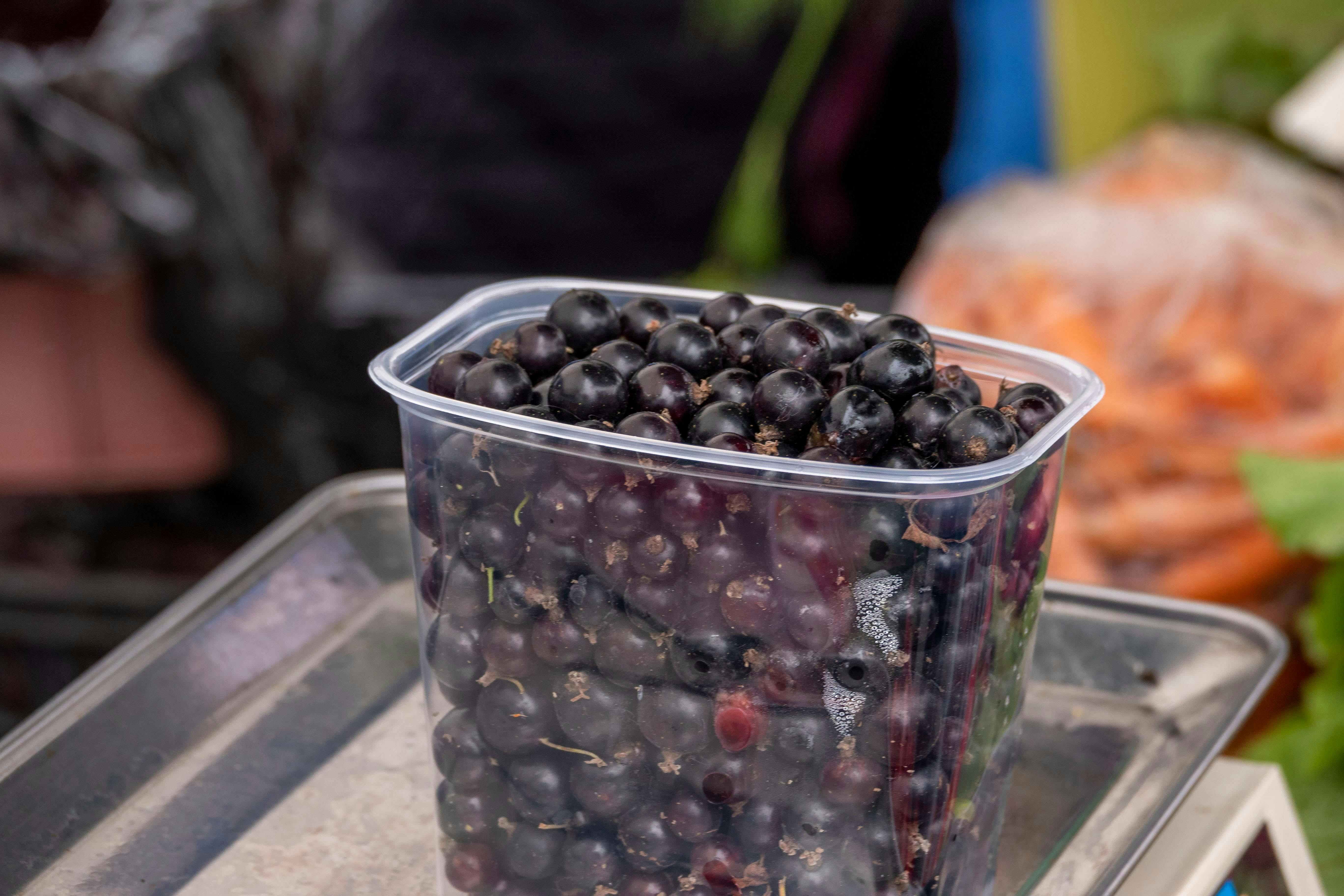
Blackcurrant
The British "Ribena generation" vitamin C supplement — delphinidin anthocyanin and cognitive RCT evidence.
In 1 minute
What does it provide? High anthocyanin content (delphinidin-3-rutinoside, cyanidin-3-rutinoside), outstanding vitamin C (≈ 180 mg/100 g, 3.5× that of lemon), pectin and pomace fiber (pressing residue — skin, seed, flesh combination, fiber- and polyphenol-rich); the seed oil — NOT the fruit flesh — also contains γ-linolenic acid (GLA) — microbiome-modulating and cognitive-supporting.
How much? Daily 50–100 g fresh or frozen, or 150–200 ml 100% juice. In clinical RCTs ≈ 151 mg anthocyanin/day.
When to avoid? Sorbitol intolerance (blackcurrant is well known for high sorbitol), large doses alongside chronic warfarin (moderate vitamin K), nickel allergy.
Blackcurrant is native to the forested regions of Northern Europe and Northern Asia, where it was gathered from the wild as early as prehistory. Archaeologists have found blackcurrant seeds at Viking-age settlements as well; its first written mention appears in 11th-century Russian monastery gardens, where Benedictine and Orthodox monks cultivated it as a medicinal herb. In Europe it became a widely cultivated crop from the 17th century onward: French Burgundian "cassis" monks launched the famous liqueur Crème de Cassis in the 18th century — still a classic ingredient of the Kir cocktail. Decoctions of the leaves have been used as a gout remedy for joint complaints since Hildegard.
The dramatic chapter of blackcurrant's modern history is World War II: in Britain, due to the shortage of citrus, the British government from 1942 encouraged blackcurrant cultivation as a vitamin C source, and blackcurrant syrup was distributed free of charge to children under 2 years old — an entire British generation thus grew up on the flavor of Ribena (the era's famous blackcurrant syrup). New Zealand is today one of the world's largest producers, and the 21st-century harvest processing follows an entirely modern industrial chain. Interesting note: blackcurrant cultivation was long prohibited in the USA because in the early 20th century it was discovered that the rust fungus damaging the white pine (Cronartium ribicola) used blackcurrant as an intermediate host — the prohibition only began to be lifted around 2003.
🔬 Scientific Background
The anthocyanin profile of blackcurrant is unusual among berries: delphinidin-3-rutinoside and cyanidin-3-rutinoside dominate (in contrast to strawberry, where pelargonidin dominates, or raspberry, where cyanidin sophoroside dominates). Delphinidin is among the darker anthocyanins and has strong antioxidant activity. Anthocyanin content is ≈ 200–400 mg/100 g — among the richest dietary sources.
The best pillars of clinical human evidence: (1) Watson 2015 acute human study (J Funct Foods) — a single blackcurrant extract dose significantly inhibited MAO-B activity and modified cognitive performance in healthy young adults. (2) Cook 2024 human parallel RCT — 4 weeks of blackcurrant extract ± PHGG (partially hydrolyzed guar gum) → significant Bifidobacterium increase, particularly in participants with dysbiotic baseline profile. (3) Earlier human studies (Molan 2014) showed that blackcurrant reduced microbial β-glucuronidase enzyme activity (a toxic enzyme; lower values indicate better colonic health).
The pomace (skin + seed byproduct) is a fermentable substrate due to its high fiber + polyphenol content. The seed oil is a γ-linolenic acid (GLA, ω-6) source — interesting from a cognitive and anti-inflammatory perspective. Vitamin C content is outstanding (≈ 180 mg/100 g) — a single handful covers the daily requirement.
- + PHGG or inulin/FOS: Bifidobacterium synergy documented in human RCT.
- + Yogurt, kefir: synbiotic synergy.
- + Lactic acid fermentation (Lactobacillus-fermented beverage): stability + synbiotic.
- + Oat β-glucan: dual fiber matrix.
- + Spinach, kale: vitamin C + non-heme iron — combined absorption boost.
- + Chlorogenic acid sources (coffee, apple): anthocyanin-stabilizing copigmentation.
- Sweetened Ribena-style syrup as fiber source: concentrated sugar, little fiber.
- High-heat, prolonged cooking: anthocyanin loss.
- Alkaline pH (lots of baking powder): anthocyanin color and stability loss.
- Massive doses alongside chronic warfarin: moderate vitamin K, INR monitoring.
- Iron supplementation simultaneously: ≥ 2-hour separation (though vitamin C also improves iron absorption).
- Large amount at once for sorbitol-sensitive individuals: osmotic diarrhea.
- Sorbitol intolerance (classic FODMAP condition): well-known high sorbitol content — small-portion test.
- IBS elimination phase: start with small portions.
- Warfarin therapy: moderate vitamin K — INR monitoring if consumption is sustained.
- Kidney stones, calcium-oxalate tendency: moderate oxalate.
- Nickel allergy (systemic): moderate Ni content.
- Aspirin sensitivity: moderate salicylate.
- Infant under 6 months: allergen sensitivity; introduce cautiously.
- Active aphthous stomatitis: acid may sting.
Daily serving
50–100 g fresh or frozen blackcurrant. Or 150–200 ml 100% juice (unsweetened).
Preparation pattern
- Wash gently, remove stems.
- Raw: on salad, on yogurt, in muesli (acidic flavor balanced by a little honey).
- Pureed, in compote: brief heat (10–15 minutes).
- Frozen: in smoothies, on yogurt.
- 100% fiber-rich juice: daily serving.
Classic patterns
Classic "cassis" sauce: currant + red wine + sugar + spice → with game meat.
Scandinavian "kissel": currant + water + starch → a liquid dessert.
Breakfast yogurt bowl: plain yogurt + currant + oats + walnut.
Smoothie: currant + spinach + apple + a little honey.
Creamy dessert: brief-heat currant compote + skyr/Greek yogurt + walnut.
Seed oil: small spoonful in salad dressing (used cold).
Storage
Fresh refrigerated 3–5 days. Frozen 8–12 months (preserves anthocyanin well). Dried (rare without sugar). 100% juice refrigerated 7 days, frozen 6 months.
What not to do
Don't cook for a long time at high heat. Don't choose sweetened Ribena syrup over fresh. Don't overdo it if sorbitol-sensitive. Don't discard the pomace (good fiber + polyphenol source).
References
[1] Strathearn KE et al. Neuroprotective effects of anthocyanin- and proanthocyanidin-rich extracts in cellular models of Parkinson's disease (mechanism, NOT a human RCT). Brain Res 2014;1555:60-77.
[2] Cook MD et al. Blackcurrant extract and partially hydrolysed guar gum: a randomized controlled trial on gut microbiota in healthy adults. Nutrients 2024;16(8):1198.
[3] Molan AL et al. Effects of blackcurrant-based functional beverage on colonic microbiota in healthy humans. J Food Nutr Res 2014;53(2):157-167.
[4] Rodríguez-Daza MC et al. Berry-derived polyphenol bioactives: from microbiota modulation to clinical impact. Front Nutr 2021;8:689456.
[5] Slimestad R, Solheim H. Anthocyanins from black currants (Ribes nigrum L.). J Agric Food Chem 2002;50(11):3228-3231.
[6] Cyboran-Mikołajczyk S et al. The phenolic compounds and protective effects of blackcurrant pomace. Molecules 2017;22(10):1647.
[7] Watson AW et al. Acute supplementation with blackcurrant extracts modulates cognitive functioning and inhibits monoamine oxidase-B in healthy young adults. J Funct Foods 2015;17:524-539.
[8] Monash University. Blackcurrant — sorbitol-rich, low FODMAP small portion.
[9] EU Commission. Health claim — vitamin C and immune function. Regulation (EC) No 1924/2006.