


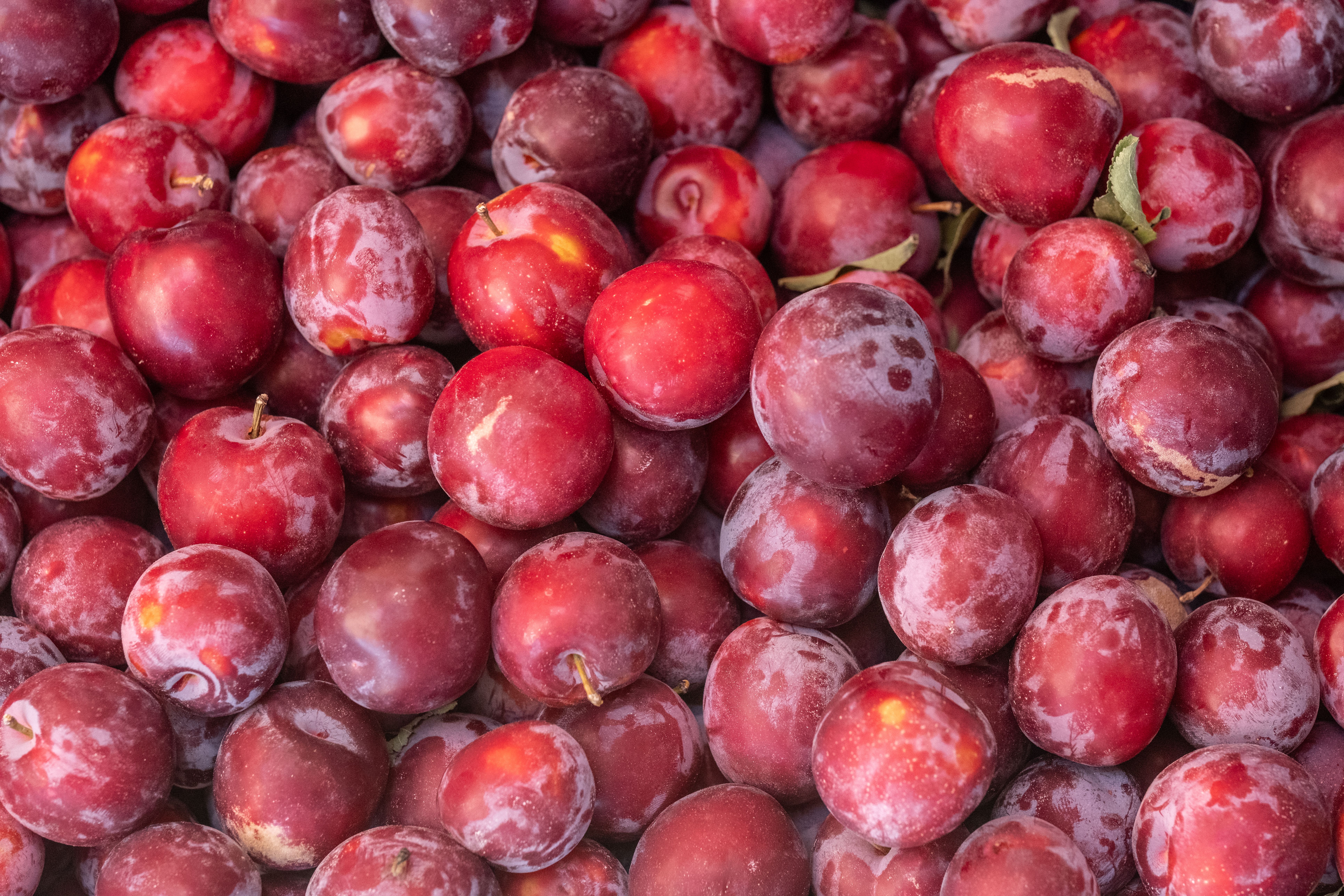
Fresh plum
The gentle prebiotic — neochlorogenic acid, polyphenol substrate for butyrate producers, and a mild gut transit regulator.
In 1 minute
What does it provide? A low-glycemic-index (GI ≤ 40) fruit with chlorogenic acid and neochlorogenic acid (polyphenols — inhibit glucose absorption in the small intestine, ferment into SCFA precursors in the colon), anthocyanins (cyanidin-3-glucoside in the skin — antioxidant) and sorbitol (a mild bowel motility-regulating sugar alcohol). In vitro fermentation shows Lactobacillus and Bifidobacterium growth (Yang 2015).
How much? Daily 2–3 medium fruits (≈ 100–150 g), ripe, preferably with skin. Gallaher 2009 small human crossover RCT: 6 fruits/day for 4 weeks → favorable serum cholesterol in prehypertensive adults. Eat cold or at room temperature — chlorogenic acid degrades above 70 °C.
When to avoid? Active IBS-D or confirmed sorbitol malabsorption (osmotic diarrhea — already 4–5 fruits can provoke); fructose malabsorption; active IBD flare (skin and pit area can irritate); uric acid kidney stone tendency (sorbitol and fructose can raise urinary uric acid excretion); concurrent consumption of sugar-free sorbitol chewing gum (additive load).
The origin of Prunus domestica is linked to the Caucasus and Caspian Sea region; archaeological remains have been found from the 5th millennium BCE. It spread across Europe during the Crusades — the French "pruneau d'Agen" and the Hungarian Beszterce plum (Prunus domestica subsp. insititia) are the result of several centuries of breeding. The central fruit of Hungarian pálinka culture, the noble plum of the Szatmár-Bereg region, received an EU protected geographical indication in 2009.
Modern nutrition science began to study fresh plum relatively late — the bone density work on dried plum (Hooshmand, Arjmandi 2011) cast a shadow on it. Stacewicz-Sapuntzakis (2013) first review distinguished the polyphenol profile and physiological role of the fresh and dried variants (PMC).
🔬 Scientific Background
Fresh plum has a different profile from the dried version: the culinary process of drying creates Maillard products and concentrates sorbitol, so the bone density and digestion-accelerating effects are predominantly tied to the dried version. The main role of fresh plum is on the chlorogenic acid–blood glucose axis: in vitro and animal experiments, chlorogenic acid inhibits glucose-6-phosphatase and slows glucose absorption in the small intestine, reflected in the ≤40 low glycemic index.
The polyphenol–microbiome axis: colonic microbial metabolism of chlorogenic acid produces caffeic acid and dihydrocaffeic acid, which act as SCFA precursors. Yang et al. (2015) measured Lactobacillus and Bifidobacterium increases under fresh plum polyphenol extract in an in vitro fermentation model.
The cardiovascular axis: Gallaher et al. (2009) documented in apoE-deficient mouse models that dried plum powder (4.75–9.5%) significantly reduced aortic atherosclerosis lesion area — the mechanism is the pectin + polyphenol matrix. Human RCTs on the fresh variant are rare; Hooshmand 2011 (Br J Nutr) on dried plum demonstrated bone density-protective effect in postmenopausal women. Evidence level: human cohort (★★) on glycemic endpoints, preclinical (★) on microbiome endpoints. The number of clinical RCTs for the fresh variant is substantially smaller than for blueberry or sour cherry.
- + High-protein breakfast (egg, cottage cheese): the protein-fat-plum combination slows glucose absorption and reduces the postprandial peak.
- + Almond or walnut: polyphenol-fat composition increases anthocyanin bioavailability.
- + Cold or room-temperature use: chlorogenic acid partially degrades above 70 °C.
- + Sugar-free plum compote + plain yogurt: prebiotic polyphenol + probiotic lactic acid bacteria synergy.
- High-dose sorbitol-containing "sugar-free" products (chewing gum): cumulative sorbitol intake causes osmotic diarrhea.
- Strong black tea in the same meal: tannin–polyphenol competition.
- Iron tablet: at least 1-hour separation.
- High-fat stuffed pastry (dumplings): the combination makes glycemic control harder in diabetes — an occasional treat, not daily routine.
Daily serving: 2–3 medium fruits (~100–150 g) ripe, fresh.
Preparation pattern: Stand-alone, in salads, in yogurt; brief steaming without sugar as compote; low-heat baking to minimize polyphenol loss.
Classic patterns: Hungarian plum dumplings (occasional, not daily due to high glycemic composition); German Zwetschgenkuchen; Serbian pekmez (concentrate cooked without sugar).
Storage: At room temperature 2–3 days for after-ripening; in refrigerator 5–7 days; pitted and frozen 10–12 months.