
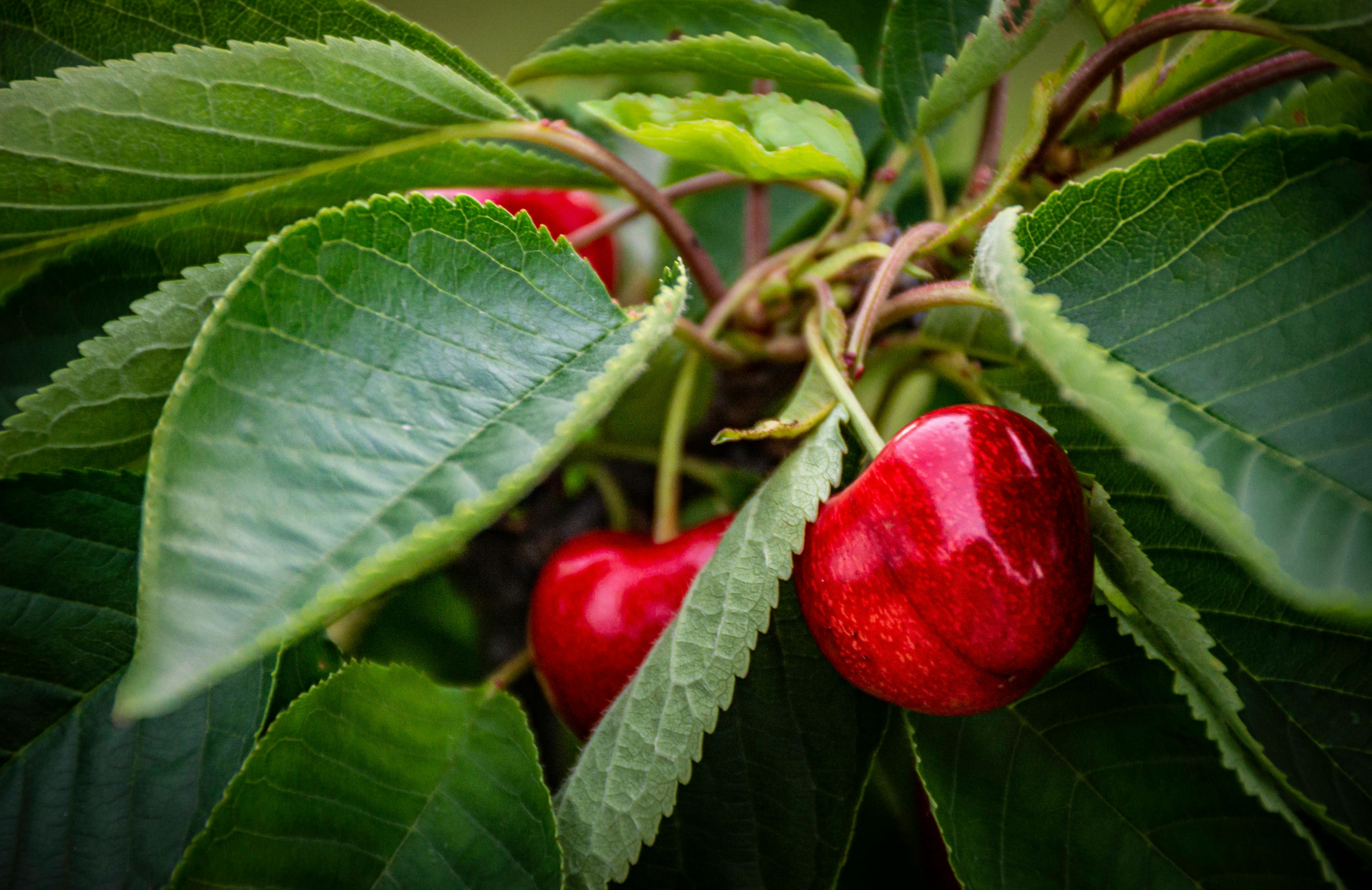
Cherry / sour cherry
The "tart cherry effect" — anthocyanin, natural melatonin for sleep, and proven urate-lowering in gout.
In 1 minute
What does it provide? Anthocyanin (cyanidin-3-glucoside — an anti-inflammatory polyphenol that inhibits xanthine oxidase, thereby reducing the uric acid that triggers gout attacks) and natural melatonin (sleep hormone, mainly in Montmorency sour cherry, 5–10× more than in sweet cherry). Zhang 2012 RCT: 10–12 cherries reduced gout flare-up by 35–45% within 48 hours; Pigeon 2010 RCT: 240 ml sour cherry juice twice a day improved sleep efficiency in older adults with insomnia.
How much? 100–150 g fresh cherry/sour cherry (≈ 1 handful) daily in season, OR 240 ml undiluted Montmorency sour cherry juice morning and evening. For sports recovery: 480 ml/day around training.
When to avoid? IBS-D or fructose malabsorption (moderate sorbitol content — bloating); warfarin/coumarin therapy at high dose (flavonoid–CYP interaction, INR shift); deliberately chewing the seeds (amygdalin → cyanide); sugary, added-syrup sour cherry juice in diabetes; alcohol at the same time (cancels out the melatonin effect).
Cherry spread from the Pontus region (today's Black Sea coast of Turkey); Pliny the Elder in Historia Naturalis attributes its European introduction around 70 BCE to the Roman general Lucullus. In Hungary, the Érd "nagyérdei" cherry has been bred since the late 19th century — the work of Sándor Brózik and Pál Maliga made the "Érdi bőtermő" and "Érdi jubileum" cultivars internationally known.
Montmorency sour cherry emerged in the Île-de-France region in the 1600s and arrived in Michigan with French emigrants in the 1850s, where it is today the center of American sour cherry cultivation. "Tart cherry" became known as a functional food in the early 2000s, when RCTs at the Texas Health Science Center and Northumbria University (Howatson, Pigeon) described its sleep- and inflammation-reducing effects (Wikipedia, PMC).
🔬 Scientific Background
Cherry and sour cherry act through three mechanisms. On the urate–xanthine oxidase axis, Zhang et al. (Arthritis & Rheumatism 2012) studied flare-up risk in 633 gout patients: consumption of 10–12 cherries within 48 hours reduced attack incidence by 35–45%, and by 75% alongside allopurinol. The mechanism is partly xanthine oxidase inhibition by cyanidin glycosides, partly stimulation of renal uric acid excretion.
On the melatonin–sleep axis, Pigeon et al. (Journal of Medicinal Food 2010) in 15 older insomniac subjects with 240 ml tart cherry juice twice daily for 2 weeks measurably improved sleep efficiency and reduced the insomnia index score. Howatson et al. (2012) measured blood melatonin AUC elevation after tart cherry concentrate.
Musculoskeletal recovery: in marathon runners and resistance-trained athletes, sour cherry juice reduces muscle soreness index and CRP (Bell et al. 2014, 2015). Microbiome evidence is in an early phase — a small human study (Mayta-Apaza et al. 2018) suggests Bacteroidetes/Firmicutes ratio shift and Bifidobacterium↑. Evidence level: human RCT (★★★) on urate, sleep, and sports recovery endpoints.
- + Magnesium-rich source (flaxseed, almond): magnesium GABA modulation is synergistic with cherry melatonin in improving sleep architecture.
- + Greek yogurt after dinner: the tryptophan + cherry melatonin combination gives a stronger serum melatonin AUC than either alone.
- + Tart cherry juice + post-workout protein: reduces delayed onset muscle soreness (DOMS) markers — several sports RCTs prove this.
- + Turmeric + cherry for flare prevention: curcumin's xanthine oxidase inhibition complements the cyanidin effect in gout patients (with individual medical consultation).
- Alcohol before bed: tart cherry's melatonin-raising effect is canceled by alcohol's REM-suppressing effect — contraindicated for sleep purposes.
- High-dose vitamin C supplement: the theoretical uric acid-raising effect can partially neutralize cherry's urate reduction.
- Iron solution / iron tablet immediately: polyphenols can reduce non-heme iron absorption by 40–60% — 1-hour spacing recommended.
- IBS-D (fructose/sorbitol-sensitive): both fruits have moderate sorbitol content; can cause flare-like abdominal discomfort.
- Insulin-sensitive severe diabetes: moderate glycemic load, but high portions (>200 g) can cause a glucose peak.
- Warfarin / coumarin therapy: flavonoid–CYP interaction can cause theoretical INR shift at high dose.
- Accidental chewing of pits: Prunus pits contain amygdalin (cyanogenic glycoside) — an accidentally swallowed pit is not dangerous, but deliberate consumption should be avoided.
Daily serving: 100–150 g fresh cherry / sour cherry, or 240 ml undiluted tart cherry juice.
Preparation pattern: Fresh, pitted, served cold; sour cherry soup as a cold dish; bedtime snack with Greek yogurt.
Classic patterns: Hungarian cold sour cherry soup (with cream in moderation), Transylvanian sour cherry pastry, French clafoutis (the original recipe bakes them with pits — to be avoided despite the respected tradition).
Storage: Fresh cherry uncovered in the refrigerator 4–7 days; pitted and frozen stable for 12 months; sour cherry concentrate refrigerated after opening 4 weeks.