


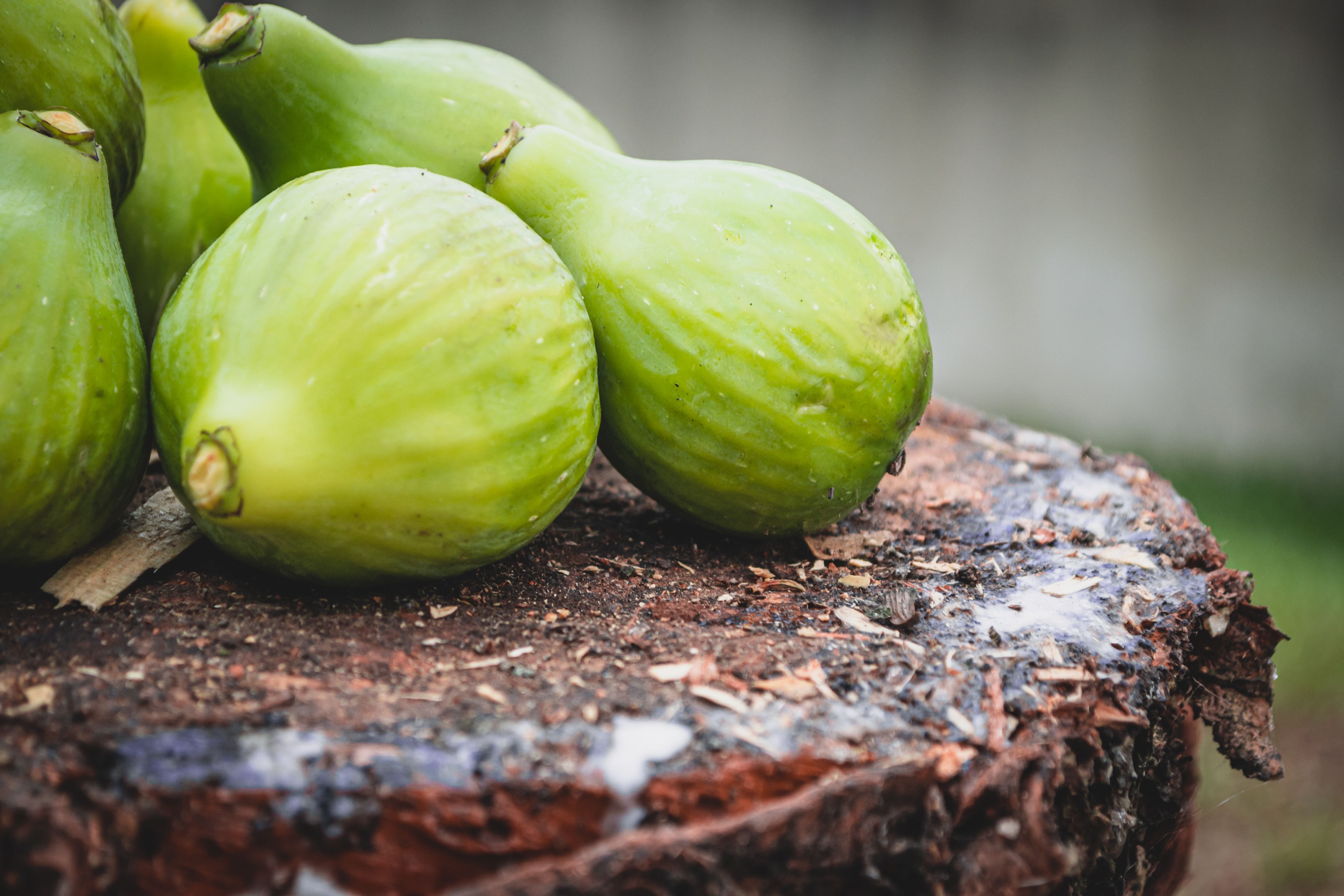
Fresh fig
The "Mediterranean stone-fruit" — calcium bomb, ficin protease, and the evolutionarily unique pollinator-wasp symbiosis.
In 1 minute
What does it provide? Outstanding calcium for a plant source (35–50 mg/100 g fresh, with low oxalate content — well-utilized), oligo-fructan prebiotic (short-chain fructan, Bifidobacterium's favorite substrate), and ficin (cysteine protease in the white latex — an enzyme supporting protein digestion, similar to papain/bromelain). The purple skin's anthocyanins (cyanidin-3-rutinoside) provide antioxidant capacity.
How much? Daily 2–3 medium ripe fruits (≈ 80–120 g), with skin. In dried form, portion moderation: max. 2–3 pieces (concentrated sugar and calcium source, 160–180 mg Ca/100 g).
When to avoid? Latex-fruit syndrome (the fresh latex contains cross-reactive allergens — anaphylaxis described, Hemmer 2004), active IBS-D or SIBO (Monash: high FODMAP — even ½ fruit can provoke), chronic warfarin therapy (high vitamin K — INR monitoring), uncontrolled T2D in dried form (concentrated sugar), simultaneous iron supplementation (polyphenols chelate non-heme iron — 1-hour separation).
Fig is one of humanity's longest-cultivated fruits — excavations in the Jordan Valley (Kislev, Hartmann, Bar-Yosef 2006, Science) identified 11,400-year-old cultivated fig remains, predating the domestication of wheat and barley. The Bible, the Quran, and the Vedas alike mention it as a sacred fruit; symbol of knowledge — in the Garden of Eden, Adam and Eve clothe themselves in fig leaves (Genesis 3:7).
Hungarian cultivation goes back to Roman times in Pannonia; in medieval monastery gardens (Pannonhalma), the Italian "Brogiotto Bianco" and "Dottato" cultivars spread. The central figure of modern fig research is Solomon et al. (Israel) 2006 work, which first measured the difference in antioxidant capacity between fresh and dried fig — surprisingly, the dried version is a polyphenol concentrate, but the fresh contains active ficin (Wikipedia, PMC).
🔬 Scientific Background
Fresh fig acts through three mechanisms. On the calcium axis it is almost unique: 100 g of fresh fig contains ~35–50 mg, dried fig 160–180 mg of calcium — outstanding for a plant source. Bioavailability is aided by the relatively low oxalate and phytate content, so in a non-dairy diet it can provide a measurable contribution to calcium intake.
The ficin–protease axis: the white latex of fresh fig contains a cysteine protease called ficin, which, like bromelain and papain, cleaves denatured proteins. Traditionally used for meat tenderizing; modern in vitro data suggest it may have a digestion-supporting role (Devaraj et al. 2011).
The prebiotic–microbiome axis: fresh fig is rich in oligo-fructan (short-chain fructan), the favorite substrate of Bifidobacteria. Hence it is simultaneously prebiotic (Bifido↑) and problematic for FODMAP-sensitive individuals. Solomon et al. (2006) report that the skin's anthocyanins (cyanidin-3-rutinoside) provide significant antioxidant capacity — concentrated in dark purple figs. Evidence level: in vitro and preclinical (★) for the main mechanisms, early human data (★★) on digestive and calcium endpoints.
- + High-protein meal (cheese, chicken): ficin enzyme supports protein digestion — hence the classic "fig and prosciutto" pairing.
- + Greek yogurt + walnut: calcium axis reinforcement + fat aids bioavailability of skin anthocyanins.
- + Mediterranean salad (arugula, goat-milk feta): calcium + polyphenol synergy, low-glycemic composition.
- + Vitamin D sources (fatty fish, egg): essential for calcium absorption — a fig-containing diet is not optimal in D-deficiency.
- High-phytate and oxalate foods (raw spinach, poppy seed filling) at the same time: can reduce absorption of fig's calcium.
- Iron tablet: polyphenols moderate non-heme iron absorption — 1-hour separation.
- MAO inhibitor medication (rare): fig's low tyramine content can become moderate when ripe — to be considered in strict MAOI diet.
- Latex-fruit syndrome: the white latex of fresh fig contains cross-reactive allergens; anaphylactic reactions have occurred in latex-allergic patients (Hemmer 2010).
- IBS-D or SIBO: high oligo-fructan content can cause bloating, abdominal discomfort, diarrhea — to be avoided in low-FODMAP phase.
- Phototoxic dermatitis in those working with fig trees: the plant latex's furocoumarins cause skin burns under UV light — fresh fruit consumption is safe, but hand protection is advised during gathering.
- Warfarin therapy: in moderation due to high vitamin K content.
Daily serving: 2–3 medium fruits (~80–120 g) ripe, fresh, with skin.
Preparation pattern: Fresh, halved, in Mediterranean salad; with cheese-prosciutto; spooned into yogurt. Worth eating with skin due to anthocyanins in the skin.
Classic patterns: Italian fichi e prosciutto; Lebanese fig-bulgur salad; Hungarian seedy raised pastry with fig.
Storage: Refrigerated 2–3 days (delicate, perishable); freezing is to be avoided (structure breaks down); dried 6–12 months.