
Pineapple
The bromelain workshop — digestion-aiding protease, anti-inflammatory evidence, and the Hawaiian renaissance.
In 1 minute
What does it provide? Bromelain (cysteine protease enzyme, anti-inflammatory aiding protein digestion and reducing postoperative edema), vitamin C (47 mg/100 g, collagen synthesis), manganese (1 mg/100 g ≈ 45% daily requirement — Mn-SOD antioxidant enzyme and bone metabolism). Moderate prebiotic fiber (1.4 g/100 g) and polyphenols (ferulic acid, caffeic acid).
How much? 1 cup of fresh cubes daily (≈ 140 g). Brazilian human crossover (de Oliveira 2017): 200 g/day of fresh pineapple over 9 days increased lactic acid levels by 14%. Clinical bromelain capsule RCTs use 80–500 mg/day (GDU standard) standardized extract for postoperative edema.
When to avoid? Active gastritis, peptic ulcer, reflux disease flare (acid content pH 3.2–3.7), bromelain allergy (mouth tingling is normal, anaphylaxis is rare), high-dose capsule alongside amoxicillin therapy (serum level increase), warfarin / DOAC / aspirin + capsule (additive bleeding), capsule within 2 weeks of planned surgery, high-dose supplement during pregnancy (theoretical uterotonic effect — fresh fruit is safe).
Pineapple originates from South America — it is native to the area of the Paraná and Paraguay rivers, and the Tupí-Guaraní peoples cultivated it under the name "naná" (= "excellent fruit"). Christopher Columbus encountered it for the first time on his 1493 voyage to Guadeloupe on the New World expeditions and brought it to Europe as "piña de las Indias," where for centuries it remained a greenhouse luxury fruit of royal and aristocratic gardens — the price of a 17th-century fresh pineapple corresponded to tens of thousands of euros in today's money. At the end of the 19th century, James Dole's Hawaiian plantations industrialized production, and the canned pineapple ring became an icon of mid-20th-century American cuisine.
The discovery of bromelain is associated with Venezuelan chemist Vincente Marcano (1891), who was the first to isolate the proteolytic enzyme from the pineapple stem. From the mid-20th century, German and Japanese research groups (Heinicke, Taussig) studied its clinical applications — postoperative edema, acute sinusitis, deep vein thrombosis, inflammatory joint diseases. German regulation (BfArM) still permits the use of bromelain tablets as an adjunct treatment for postoperative edema, one of the oldest modern phytotherapy indications. (Wikipedia, PMC)
🔬 Scientific Background
Bromelain is actually an enzyme complex — containing several cysteine proteases (ananain, comosain), phosphatase, glucosidase, and peroxidase. Clinical effect is determined by proteolytic activity (GDU = gelatin digestion unit). The enzyme is absorbed in active form from the small intestine (≈ 40% bioavailability in rat model, small human data) and exerts systemic fibrinolytic, anti-edema, and immune-modulating effects. The 2016 narrative review by Rathnavelu et al. (Biomed Rep) confirmed postoperative edema reduction and analgesic effect based on multiple human studies — effect size is moderate but consistent. (PubMed, PMC)
The manganese content of fresh pineapple is outstanding (1.0–1.3 mg / 100 g = ≈ 45% DRV), and this nutrient is essential for the Mn-SOD antioxidant enzyme, the glucosamine synthesis of bones, and collagen cross-linking. One cup of pineapple covers ≈ 75% of the daily manganese requirement — few other fruits provide it in such concentration. (PMC)
At the microbiome level, pineapple's moderate fiber content (1.4 g / 100 g) and polyphenol matrix (ferulic acid, caffeic acid, gallic acid) make it a weak-to-moderate prebiotic. According to a 2017 Brazilian human crossover (de Oliveira et al.), 200 g/day of pineapple over 9 days increased lactic acid levels by 14% and reduced markers of small intestinal permeability (zonulin). (PMC)
- + Protein-containing meal (chicken, beef, fish, cottage cheese): bromelain improves protein digestion, reduces fermentation in the colon.
- + Yogurt / kefir: milk protein + lactic acid bacteria synergy, gentle dessert.
- + Fresh ginger: classic Thai combination, additive anti-inflammatory.
- + Mint leaf, cilantro: flavor pairing, essential oil matrix effect.
- + Coconut milk / cream: tropical matrix, slows fructose absorption, improves carotenoid bioavailability from other fruits.
- + Salmon, shrimp on the grill: pineapple grill meat-tenderizing effect (bromelain).
- Amoxicillin (and other beta-lactam antibiotics) + high-dose bromelain supplement: bromelain increases the serum and tissue levels of amoxicillin — sometimes clinically favorable (better effect), but in children or in liver disease, dose adjustment is needed.
- Warfarin, DOAC, aspirin + high-dose bromelain supplement: bromelain is fibrinolytic and antiplatelet — additive bleeding risk. Fresh pineapple (1 cup / day) is safe, concentrated tablet should be avoided.
- Milk + high-dose raw pineapple in dessert: bromelain breaks down the casein matrix, dessert may "collapse" (gelatin doesn't bind either) — cooked pineapple causes no problem (60 °C+ denatures the enzyme).
- Gelatin-based dessert + fresh pineapple: classic kitchen lesson — bromelain breaks down the gelatin, panna cotta does not set. Canned (cooked) pineapple can be used.
- Iron supplementation: small interaction expected (polyphenol chelation), time separation ≥ 2 hours.
- High-dose NSAID + high-dose bromelain: GI irritation and bleeding risk are additive.
- Active gastritis, peptic ulcer, reflux disease flare: acid content (pH 3.2–3.7) and bromelain irritate the mucosa. Especially unripe pineapple.
- Bromelain allergy (rare): oral mucosa tingling, lip swelling. More severe anaphylaxis is rarely documented.
- Thrombocytopenia, coagulopathy, newly started anticoagulant: high-dose supplement to be avoided.
- Pregnancy: fresh pineapple in daily moderation is safe. "Large amounts of pineapple induce uterine contractions" is primarily folk belief — but high-dose bromelain supplement is not recommended. Active labor induction unproven.
- 2 weeks before planned surgery: stop high-dose bromelain supplement.
- Diabetes: fresh pineapple glycemic index is 59 — moderate-to-high. Portion-size limitation (½–1 cup) recommended, combined with protein/fat.
- Severe kidney function impairment: potassium content (109 mg / 100 g) is moderate, but watch larger daily portions.
- Manganese overdose (chronic parenteral nutrition, liver disease): rarely relevant.
Daily serving: 1 cup of fresh pineapple cubes (≈ 140 g) from a ripe fruit.
Preparation:
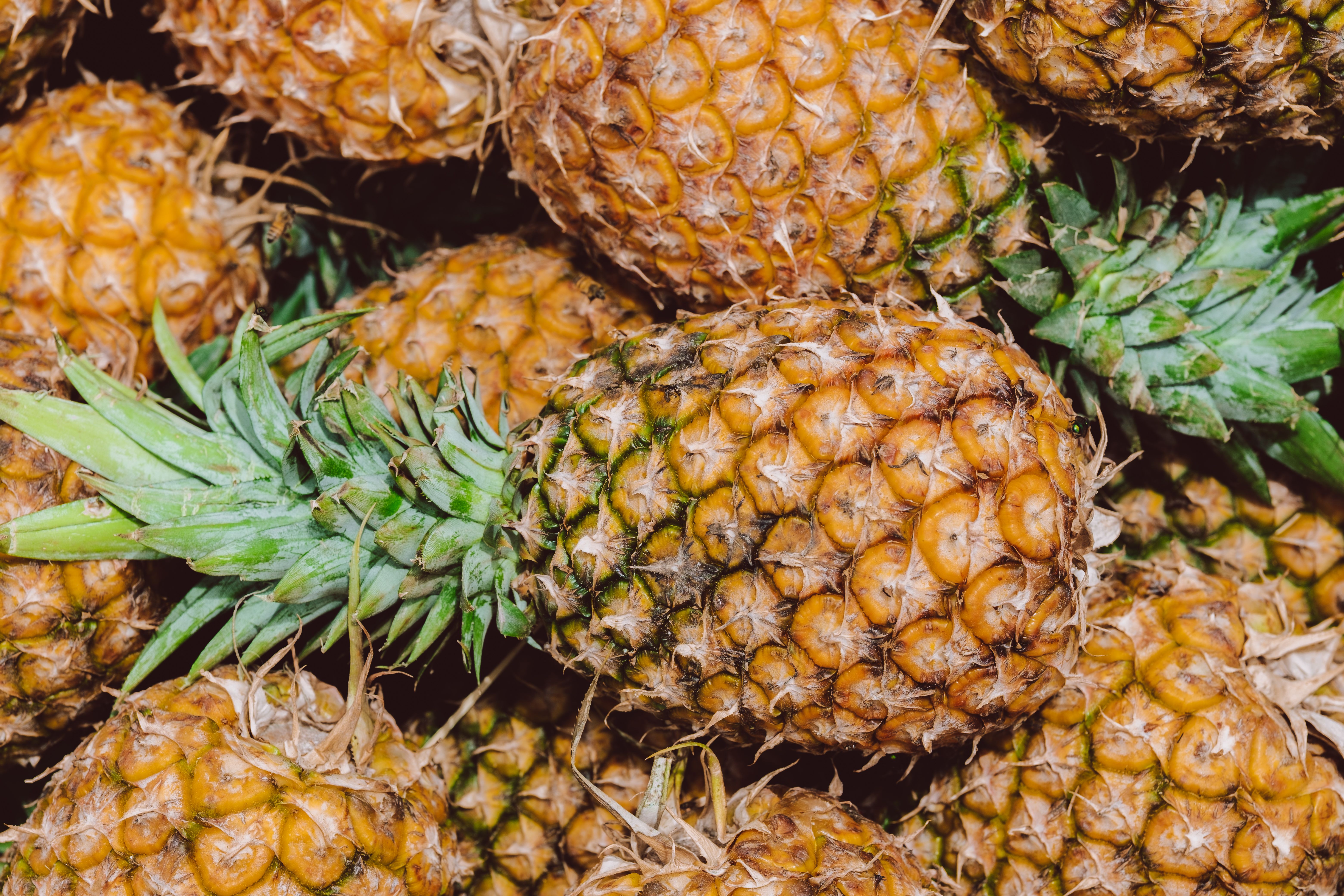
1. Ripe pineapple: golden yellow skin, fragrant stem, leaf easy to pull out. Don't accept green, hard, or sour-smelling specimens.
2. Halve lengthwise, then quarter; cut out the central hard core (lots of fiber, but can be a source of dental complaints).
3. For fresh consumption right after cutting — bromelain loses activity on the cut surface within 24 hours at room temperature.
Classic patterns:
- Breakfast: plain yogurt + 1 cup pineapple cubes + 1 tbsp coconut shreds + 1 tbsp pumpkin seed.
- Smoothie: pineapple + spinach + coconut milk + ½ banana + fresh ginger.
- Side/salad: Thai "som tam" — pineapple + green papaya + lime + chili + peanut.
- Side dish with meat: pineapple salsa (pineapple + red onion + lime + cilantro + chili) alongside grilled salmon or chicken.
Storage: whole ripe pineapple at room temperature max. 2 days, refrigerated 4–5 days. Cut pieces refrigerated in airtight container 3–4 days. Frozen (cubed) at –18 °C for 6 months (perfect for smoothies). Canned / syrupy: per label.
What not to do: Don't consume large amounts of raw pineapple with gelatin desserts at the same time. Don't add concentrated bromelain alongside amoxicillin therapy without medical knowledge. Don't store halved under plastic wrap for 2+ days.