


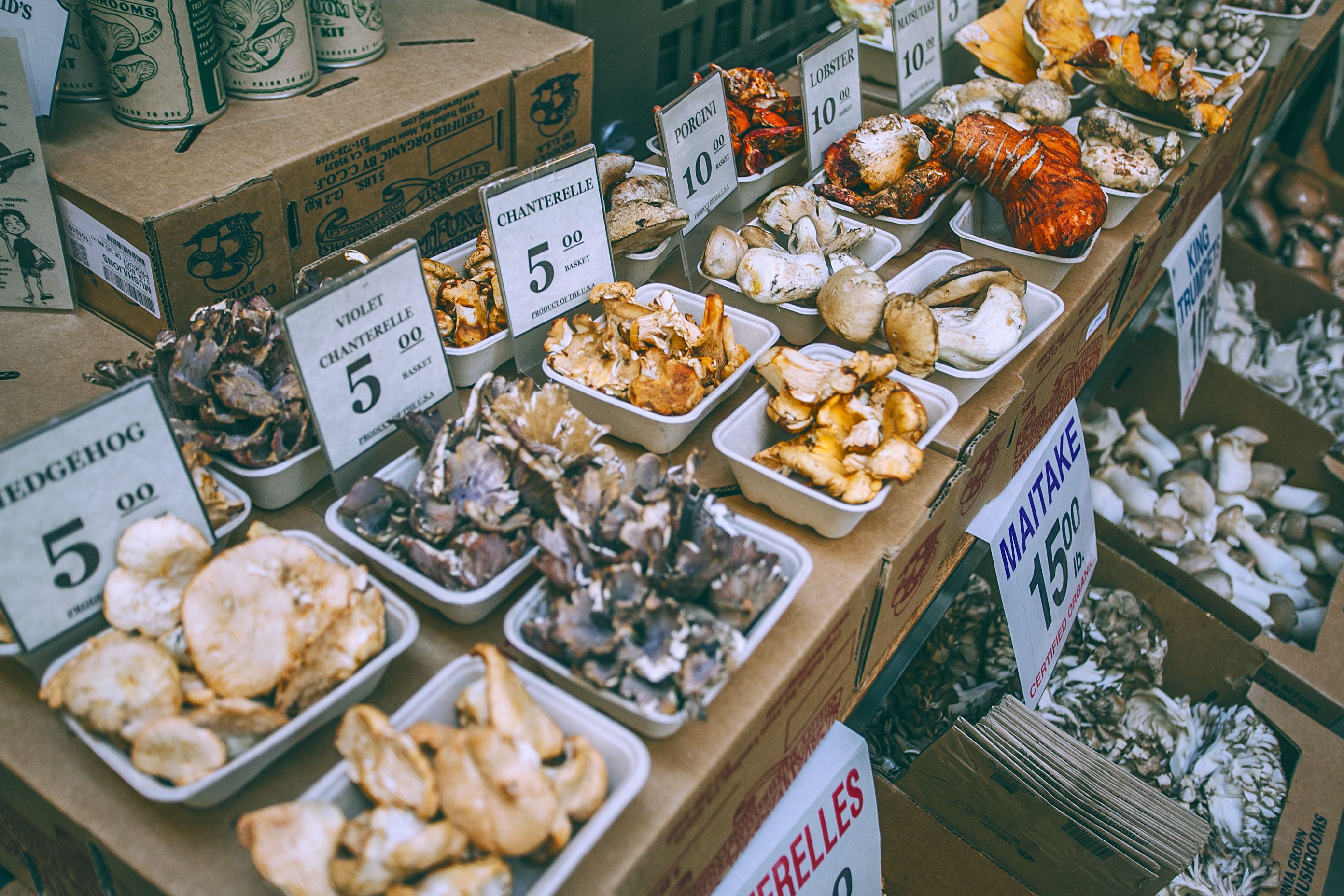
Maitake
The "dancing mushroom" — D-fraction β-glucan, immunomodulation, and the Japanese macrobiotic tradition.
In 1 minute
What does it provide? The world's most-researched β-glucan source — Grifola's D-fraction is immunomodulating (activating NK cells, macrophages, dendritic cells), improves glycemic control, and was studied in Japanese Phase II oncology trials as a chemotherapy adjuvant in breast, colon, and gastric cancer.
How much? In the kitchen, 75–200 g fresh or 5–10 g dried mushroom per meal, 2–3×/week. As a supplement, standardized D-fraction extract 35–70 mg daily (by body weight ≈ 0.5–1 mg/kg), with meals.
When to avoid? Active autoimmune flare, during immunosuppressant treatment, high-dose anticoagulant therapy, supplement doses during pregnancy.
The name "maitake" means "dancing mushroom" in Japanese — legend has it that old Japanese mountain foragers would dance with joy when they found a single large specimen, sometimes weighing 20–30 kg, in the forest, since in the feudal Edo period maitake was exchanged for an equal weight of silver at the shogun's court. In Chinese healing tradition, it appears as "hui-shu-hua" (gray flower of the trees), and according to Ming-dynasty herbals it "gives strength and calms the spirit." For centuries it was obtained only through wild collection, since cultivation was developed only in the early 1980s by Japanese mycologist Hiroaki Nanba.
Modern research began with Professor Nanba's 1984 breakthrough at Kobe Pharmaceutical University: he was the first to isolate D-fraction — the Grifola β-glucan-protein complex that stimulates the innate immune response via the dectin-1 receptor. The Japanese Phase I-II clinical trials that followed (Kodama, Kobayashi, and others) in the 1990s and 2000s, with adjuvant dosing alongside chemotherapy in oncology patients, showed improving quality of life, NK-cell activity, and tumor-marker responses. In Konno et al.'s 2001 trial, fasting blood glucose and HbA1c levels decreased in type 2 diabetic patients with regular maitake consumption. The US FDA granted D-fraction "Orphan Drug" status in 2009 for adjuvant treatment of myelodysplasia. (PubMed, AJCN, Mycoscience)
🔬 Scientific Background
Maitake's main bioactive complex is the D-fraction, a high-molecular-weight (~ 1000 kDa) β-1,6-branched β-1,3-glucan protein conjugate. Upon reaching the gut, it activates the dendritic cells and macrophages of the Peyer's patches via dectin-1 and complement receptor 3 (CR3) receptors, which induces a TH1-directed cytokine response (IL-12, IFN-γ), enhances natural killer (NK) cell cytotoxicity, and pushes tumor-associated macrophages from M2 toward M1 polarization. This mechanism explains the results of the oncology adjuvant trials.
The glycemic control effect has a separate mechanism: maitake polysaccharides slow small-intestine glucose absorption, modulate insulin receptor sensitivity, and the SX-fraction (Soluble Xyloglucan fraction) has PPAR-γ agonist effects. In Konno's 2001 human pilot study, daily dosing of 200 mg/kg body weight maitake powder over 2 months produced an average 30% fasting blood-glucose decrease in T2DM.
At the microbiome level, β-glucans reaching the colon are not directly fermented (Bacteroides and Faecalibacterium can do so partially), but they send a direct signal at the receptor level — on gut immune cells. Human studies with regular consumption have described increases in the relative abundance of Bifidobacterium and Lactobacillus, as well as enhanced butyrate and propionate synthesis. Cooking (≤ 90 °C, 20–30 minutes) preserves the β-glucan structure, but high-temperature drying (> 70 °C) partly degrades the protein component.
- + Vitamin C-rich foods (peppers, lemon, broccoli): according to Kodama et al., vitamin C is synergistic with D-fraction biological activity — the immunomodulating effect is more pronounced.
- + Vitamin D (fatty fish, egg yolk, sunlight): maitake contains ergosterol, which converts to vitamin D2 under UV light; together with dietary D3, more complete immunomodulation.
- + Healthy fat (olive oil, butter, ghee): maitake's terpenoid components (ergosterol, grifolin) are fat-soluble.
- + Other immunomodulating mushrooms (shiitake, turkey tail): complementary β-glucan profile, immunologically complementary.
- + Onion, garlic: sulfide and quercetin synergy, antioxidant effect.
- + Fiber-rich diet (oatmeal, legumes): total β-glucan intake has additive LDL-lowering and glycemic effects.
- Diabetes medications (insulin, sulfonylureas, metformin): maitake has a moderate blood-glucose-lowering effect — additive hypoglycemia risk. Blood-glucose monitoring needed for diabetics.
- Antihypertensives (ACE inhibitors, ARBs): modest hypotensive effect — rarely orthostatic hypotension.
- Immunosuppressants (tacrolimus, ciclosporin, corticosteroids): maitake is immune-activating — opposite pharmacological effect. Avoid after organ transplantation.
- Anticoagulants (warfarin, DOACs): moderate antiaggregant effect at high doses — culinary amounts safe, supplement doses with caution.
- High dose on empty stomach: moderate stomach irritation — take with meals.
- Active autoimmune disease (SLE, RA, MS, Crohn's, IBD flare): the immune-activating effect may be counterproductive in autoimmune contexts — avoid during flare.
- After organ transplantation: opposite pharmacology to immunosuppressive treatment — absolute contraindication for supplement doses.
- Around bone marrow transplant: theoretical rejection risk.
- Hypoglycemia-prone diabetes: careful titration, blood-glucose measurement.
- 2 weeks before planned surgery: stop supplement (immunological and bleeding risk).
- Pregnancy: human safety data missing for supplement doses — culinary consumption likely safe.
- Mushroom allergy: rare, but cross-reaction possible in Basidiomycota allergics.
- Active tuberculosis, HIV with high viral load: immunomodulation direction is not well documented.
Serving: 75–200 g fresh fruiting body per meal, 2–3×/week. From dried mushroom 5–10 g (after pre-soaking).
Preparation: Separate the wavy, "cloud"-shaped leaves of the maitake by hand, do not cut them with a knife. Dry-toast in a hot pan for 2 minutes (water release), then 1–2 tbsp butter/olive oil, garlic, salt — 5–7 minutes on medium heat. The texture is crisp-tender, the flavor profile is earthy-umami.
Classic patterns:
- Maitake tempura — Japanese classic, deep-fried in light batter (don't fry above 175 °C).
- Miso soup with maitake and tofu — water-soluble β-glucans leach into the broth.
- Maitake sautéed in garlic butter — simple, mobilizes the lipophilic bioactives.
- Maitake risotto — fiber + β-glucan + fat combination.
- Slow-cooked maitake broth — 1–2 hours cooking, full complex extraction.
Storage: Fresh, refrigerated, wrapped in paper, max 7 days. Dried (≤ 60 °C dehydration) in an airtight jar 12 months. Frozen (after pre-sautéing) 6 months.
What not to do: Don't roast above 200 °C for 20+ minutes (β-glucan-protein complex denaturation). Don't eat raw — chitin matrix is indigestible. Don't soak/rinse for long in water (water-soluble bioactives are lost).