
VI.9 Porcini
The premium mushroom of European forests — high ergothioneine, glutamate amino acid, and the combined punch of the umami bomb.
In 1 minute
What does it provide? Porcini is one of the most valuable food mushrooms of European forests: a complete plant protein source with outstanding ergothioneine (a sulfur-containing amino acid derivative, microbiome-derived antioxidant; the literature also uses "ergothionein" — same compound) and selenium content. In traditional Central European cuisine, "pilgrim's soup," paprikash porcini, and dried "lord's mushroom" are part of the heritage. How much? Fresh: 100–250 g/serving, 2–3×/week, in season (August–October). Dried: 10–25 g (rehydrated equals 100–250 g). When to avoid? Gout, high uric acid (purine content!); severe renal failure; known mushroom allergy; when foraging it can be confused with the bitter bolete (Tylopilus felleus — not poisonous but inedible) and more rarely with the toxic Satan's bolete (Rubroboletus satanas) — in case of doubt, have an expert check.
Porcini is one of the most important mushrooms of European folk foraging. The name "lord's mushroom" (úrgomba in Hungarian) reflects that by tradition it was reserved for the gentleman's table — even in peasant cuisine it was considered a delicacy. The Italian "porcini" (little pig) and the French "cèpe" denote the same species. From the European Middle Ages onward, it was preserved pickled, dried, and acid-cured; pilgrim's soup (porcini, vegetables, sour cream) was an autumn dish of Marian pilgrimages. In Upper Hungary and Transylvania, home-dried porcini had monetary value; in the early 1900s, dried "lord's mushroom" sticks were among the most expensive dry goods on Budapest markets, sold alongside coffee.
Modern nutritional science places porcini in the top category of plant protein sources: according to Reis 2012 (Food Research International) analysis, 100 g dried Boletus edulis contains 24.7 g protein, and the PDCAAS (Protein Digestibility-Corrected Amino Acid Score) is better than that of wheat protein. Its ergothioneine content (1.5–2.5 mg/g dried) places it among the top-3 natural sources on the ergothioneine map according to Halliwell 2018 (FEBS Lett). Of regional relevance: European forestry research institutes and universities have repeatedly studied the heavy metal accumulation of Boletus populations.
🔬 Scientific Background
The protein profile of porcini is outstanding among forest mushrooms: the essential amino acid ratio (especially leucine, lysine, threonine) approaches that of milk protein. This makes it a meat substitute in vegetarian/vegan diets, especially in Islamic and Catholic fasting traditions.
Ergothioneine: porcini is one of the richest sources. Ergothioneine is a sulfur-containing amino acid derivative that the human body does not synthesize, but takes up via a specific transporter (OCTN1/SLC22A4) and accumulates in the tissues most exposed to oxidative stress (red blood cells, liver, kidney, gut, testes). According to Beelman and Kalaras (Penn State, 2017), there is an inverse correlation between ergothioneine intake and cognitive decline — the "longevity vitamin" hypothesis.
The β-(1,3)/(1,6)-glucan content (about 4–8% dry weight) is immunomodulating and prebiotic. Ergosterol converts to vitamin D2 under UV-B radiation — sun-dried porcini is thus also a D2 supplement.
Selenium content: porcini is a high-selenium accumulator (about 2–10 µg/g dry, soil-dependent), which in selenium-deficient regions (a large part of Central Europe) makes a significant contribution to glutathione peroxidase activity.
Microbiome: specific human RCTs with Boletus edulis are few (porcini is more food than extract material), but based on the β-glucan structure, supporting butyrate-producing bacteria is likely.
Caution: porcini is a heavy metal accumulator (Cd, Pb, Hg), so specimens collected near roads, industry, or mining areas should be avoided. EFSA-based estimates suggest that 200 g fresh porcini per week, even near highways, can be considered safe if the soil is clean forest soil.
- + Onion, garlic, parsley: classic Central European paprikash porcini — antioxidant synergy.
- + Sour cream: calcium synergy and creamy texture (classic sauce).
- + Olive oil, butter: aids absorption of fat-soluble carotenoids and ergosterol.
- + Wheat bread, polenta: complete amino acid profile (cereal protein + mushroom protein synergy).
- + Vitamin C-rich vegetables (peppers): aids iron absorption.
- Allopurinol or other uric acid-lowering drug with LARGE doses: purine content may be a burden.
- Certain MAOI antidepressants combined with high tyramine-content pickled/fermented mushrooms: theoretically crisis risk.
- Alone, with a lot of alcohol: the mushroom protein + alcohol combination is liver-loading, and in some sensitive individuals can cause a "Coprinus-like" reaction (flush, nausea) — rare with porcini, but described.
- Gout, hyperuricemia: purine content (about 50–80 mg/100 g fresh) is comparable to red meat — moderate consumption.
- Severe renal failure: due to potassium and protein content.
- Active inflammatory bowel disease (UC, Crohn's flare): fibrous, hard to digest — avoid in subacute phase.
- IBS sensitive subtype: mannitol and chitin can cause bloating.
- Severe mushroom allergy: absolute contraindication.
- Pregnancy: only from guaranteed clean sources (heavy metal uptake!).
- Young children (<3 years): mushroom fiber is hard to digest, small portions and well cooked.
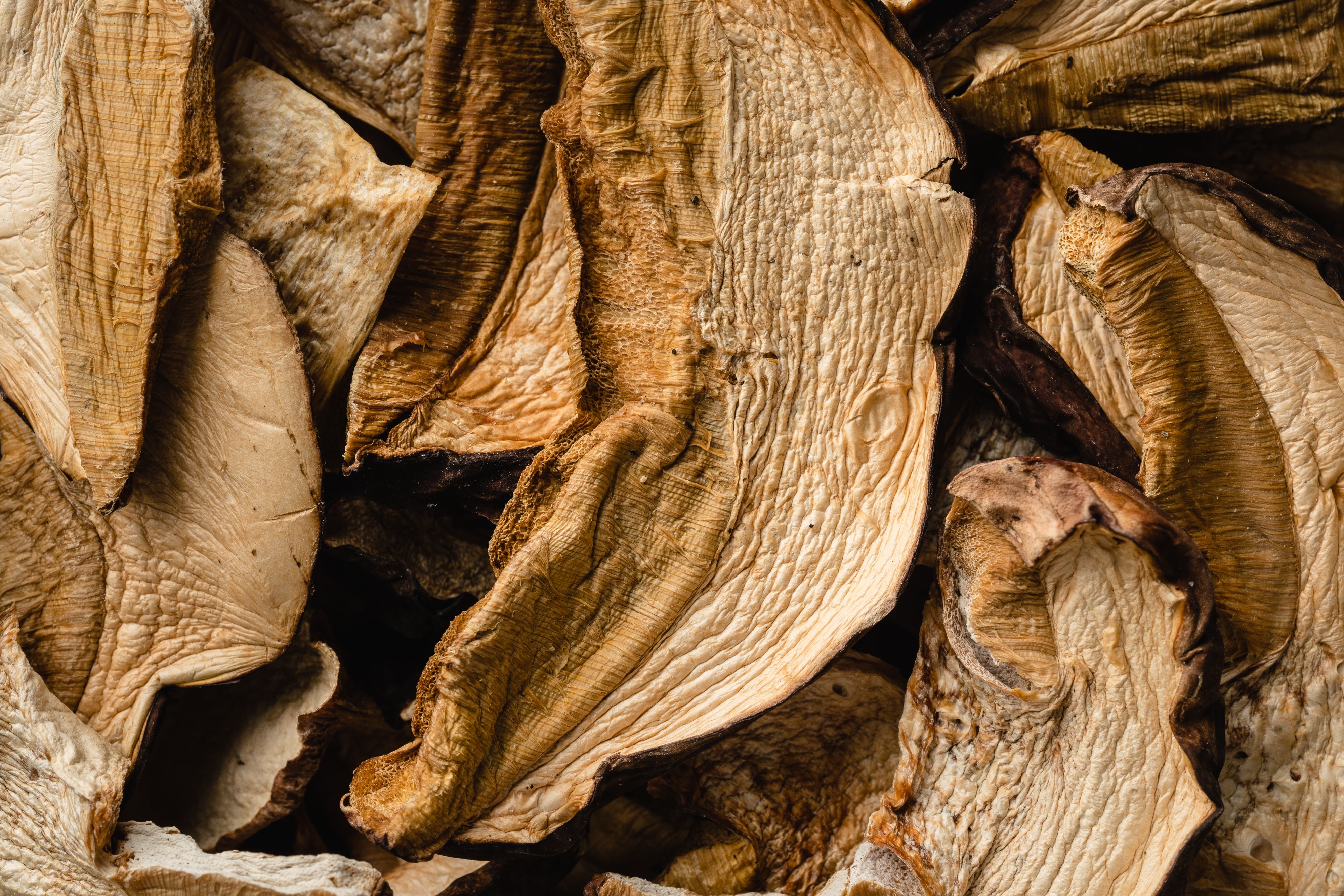
Classic paprikash porcini: 500 g fresh porcini sliced, 1 large onion diced, 2 tbsp lard or butter, 1 tbsp sweet paprika, 200 ml sour cream. Sauté the onion until translucent, add the mushroom, simmer in its own liquid for 10 minutes, season, add paprika, stir in the sour cream — serve with bread, dumplings, or noodles. Dried porcini: rehydrate in lukewarm water for 30 minutes — the soaking liquid is itself an umami concentrate, a soup base. Don't throw it out. Always cook or sauté fresh porcini for at least 8–10 minutes (raw it is poorly digestible and rarely causes mild gastrointestinal symptoms).
Vitamin D enrichment: dry fresh porcini cap-side up in the sun or under a UV lamp — after 30–60 minutes of UV-B exposure the D2 content multiplies.
Storage: fresh, refrigerated 5–7 days; dried in a dark, cool, dry place for 1–2 years.